REVIEW · ATHENS
Athens: Early Morning Guided Tour to Acropolis and Museum
Book on GetYourGuide →Operated by Key Tours · Bookable on GetYourGuide
Early morning makes the Acropolis feel personal. With early access, you’ll slip in before the worst heat and the biggest crowds, and you’ll get the stories from a licensed guide who keeps the myths, politics, and architecture tied together.
I especially like that this tour doesn’t rush you through the big monuments only—it also stops along the way (Dionysus and the theaters) so the climb feels like one coherent timeline. The one real consideration: the moderate uphill walk is demanding, especially in warm months, so you’ll want solid shoes and a steady pace.
In This Review
- Key Highlights
- Why Seeing the Hill and Museum on the Same Morning Works
- Early Morning Entry: Beat the Heat, Beat the Crowd, Get Better Photos
- The Climb Route You’ll Actually Understand: Hadrian, Dionysus, and Herodes Atticus
- Propylaea to Temple of Athena Nike: Framing the Entrance and the Big Dedication
- Parthenon Time: What to Watch During Your Main Stop
- Erechtheion and the Upper Courtyard Feel
- The Views and the 30-Min Break: Use It to Reset Your Legs
- Dionysiou Areopagitou: The Walk Toward the Museum
- Acropolis Museum: Natural Light, Original Pieces, and Under-Glass Clues
- Price and Value: $35 For Guide Time, Audio, and Less Wasted Waiting
- Guide Styles You’ll Want: Humor, Questions, and Clear Explanations
- Who This Tour Suits Best (And Who Should Pick Something Else)
- Should You Book This Acropolis and Museum Morning Tour?
- FAQ
- How long is the Athens Early Morning guided tour to the Acropolis and Museum?
- What time of day is the tour?
- Is there a guide, and what languages are offered?
- Does the tour price include entrance fees and skipping ticket lines?
- What if I book an option without entrance tickets?
- Are there any special ticket rules for free admission for young EU or non-EU citizens?
- How physically demanding is the tour?
- Is this tour suitable for people with mobility impairments or wheelchair users?
- What should I bring, and is anything not allowed?
- Is food and drinks included?
Key Highlights
- Early-entry timing that helps you see the hill in calmer conditions
- Guide-led mythology and context tied to what you’re looking at, not generic facts
- Iconic sight stops including the Propylaea, Temple of Athena Nike, the Parthenon, and the Erechtheion
- Acropolis Museum with natural-light viewing, plus artifacts recovered from the slopes
- Audio device so you can actually hear the guide on a windy, stone-filled hill
Why Seeing the Hill and Museum on the Same Morning Works
The Acropolis hits you in two ways: first with scale, then with meaning. From below, it’s a dramatic rock and skyline landmark. Up top, it’s a set of buildings, symbols, and design choices that made sense to people who lived in ancient Athens—just not to your modern eyes right away.
That’s where pairing it with the Acropolis Museum pays off. The museum is built around showing you what was actually found, and it helps you connect ruined fragments to whole ideas. When you’ve just stood near the Parthenon and then you step into the museum’s galleries, the details start snapping into place. You’ll recognize themes like dedication to Athena and how religion, civic life, and drama all shared the same public spaces.
Other Acropolis and Parthenon tours we've reviewed in Athens
Early Morning Entry: Beat the Heat, Beat the Crowd, Get Better Photos
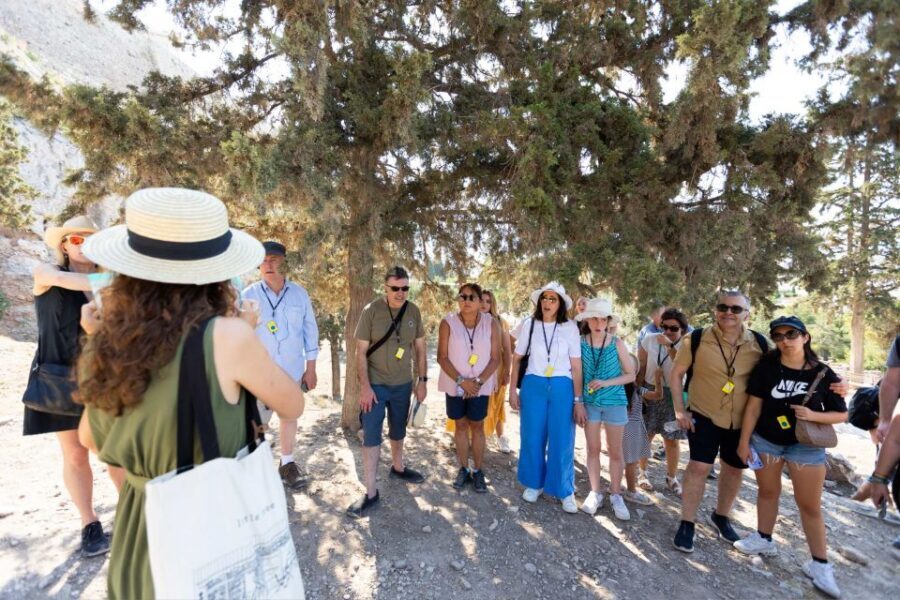
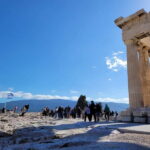
This is the kind of tour that makes timing feel like a feature, not a footnote. You start early enough that you’re on Acropolis Hill before the day fully warms up and crowds bunch in. It’s not just comfort. It changes what the site feels like.
With fewer people in your way, you can slow down at the points that matter—like the gate area and the temple viewpoints—without constantly weaving through groups trying to get the same photo. Early timing also helps with that one thing you can’t plan for: patience. If you’ve ever visited major ruins when the sun is high and everyone is pushing, you know it becomes about surviving the route. Here, you get a smoother rhythm: look, listen, then take a breath.
The Climb Route You’ll Actually Understand: Hadrian, Dionysus, and Herodes Atticus
The tour follows a smart walking path so you get more than the headline monuments. You’ll begin with an on-the-way stop at the Arch of Hadrian (a quick visit and sightseeing), which sets the stage for how Athens kept layering eras. Even if you only catch it in passing, it helps remind you that this hill wasn’t frozen in time.
Then the walk moves into the world of performance and public life. The Theatre of Dionysus is a standout stop because it connects directly to ancient drama. You’re not just hearing that Athenians loved plays—you’re standing near the setting where that culture mattered. Next you’ll reach the Odeon of Herodes Atticus, a related reminder that entertainment and civic identity were intertwined.
These stops matter for two reasons:
- They explain why the Acropolis was more than a temple collection.
- They make your uphill progress feel like a story, not just steps.
Propylaea to Temple of Athena Nike: Framing the Entrance and the Big Dedication
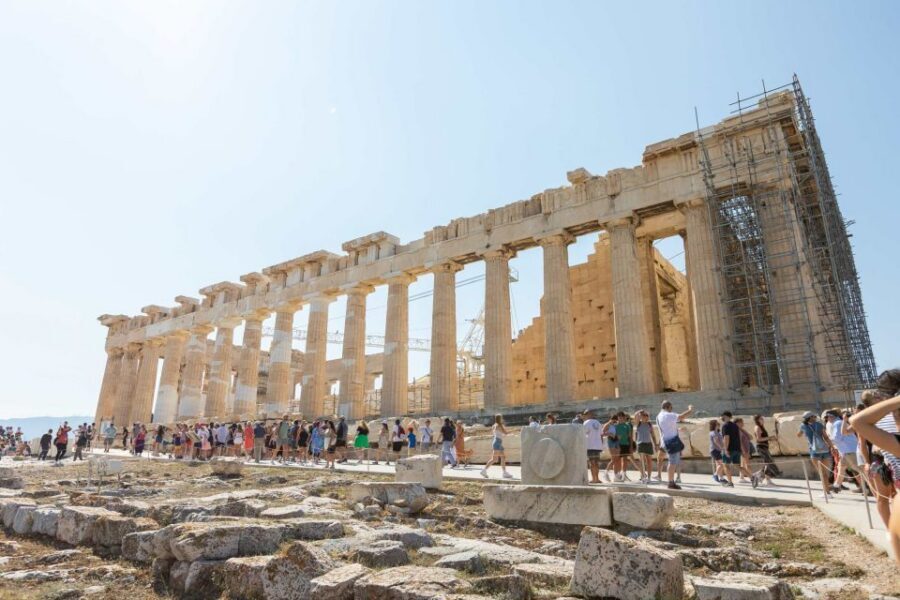
When you reach the top area, you’ll hit the Propylaea (the impressive marble gate). Expect a photo stop plus time with the guide, because this is where the sightlines start doing their job. The Propylaea frames the entrance and teaches you how the ancients choreographed movement—where you enter, where your eyes go, and how the buildings reveal themselves in sequence.
From there, you’ll visit the Temple of Athena Nike, dedicated to Athena. This small stop is worth paying attention to because it reinforces the theme of Athena as the city’s chosen symbol of wisdom and war. Even in ruins, you can see how design carried political meaning.
One practical tip: this is a great moment to slow your camera schedule. Don’t just shoot what looks dramatic. Instead, look for the guide’s cues about what the temple represents, then take a photo that includes the right angles. Your pictures will feel more like you understand the place later.
Parthenon Time: What to Watch During Your Main Stop
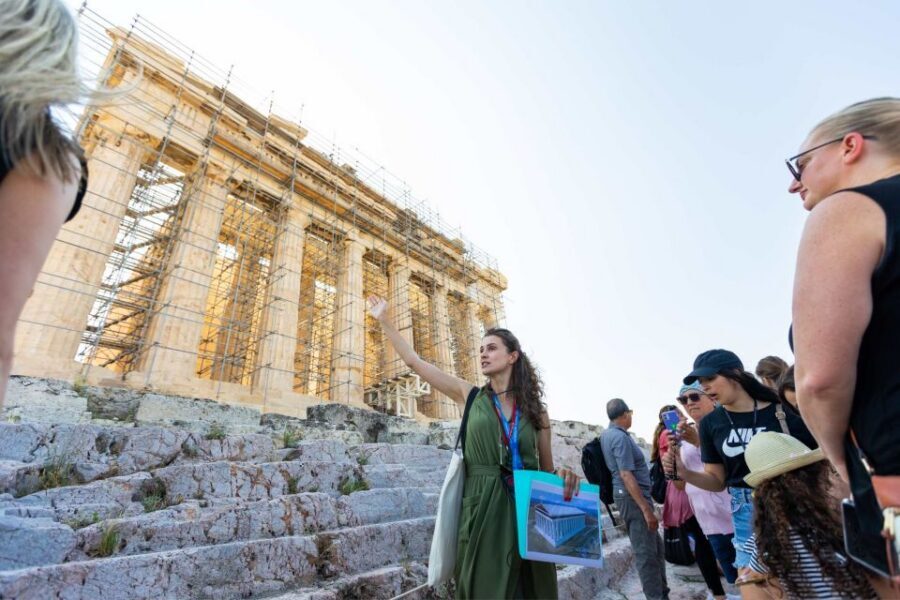
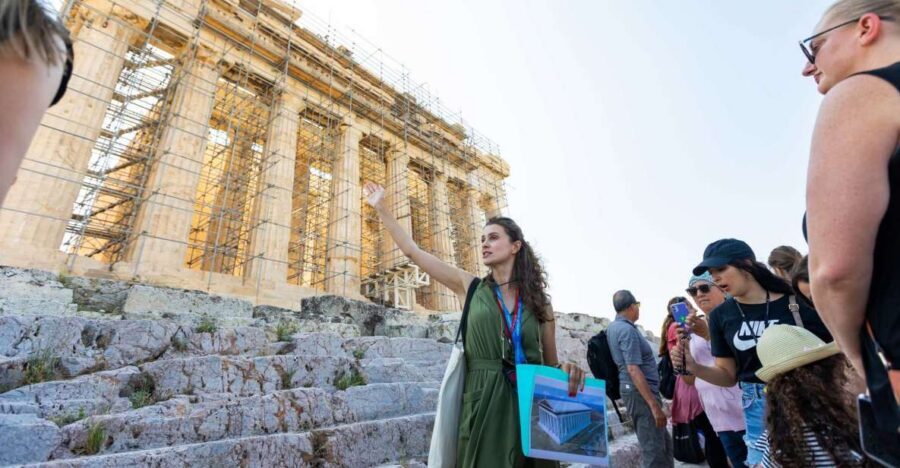
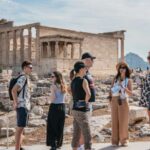
The Parthenon is the headline, yes. But the best part of a guided visit is what you notice once you know what you’re looking for. You’ll spend about 30 minutes on the Parthenon, with guided commentary during the visit.
Here’s what I’d focus on as you’re there:
- The dedication to Athena and how that shows up in the message of the building.
- The way the site’s layout makes you feel like you’re inside a designed space, not just outside ruins.
- The contrast between the remaining structure and what’s missing.
It also helps that the tour includes structured movement rather than an endless shuffle. You’ll have photo opportunities and viewpoints, and you’ll get breaks built into the pacing so your energy stays steady.
Other early-morning Acropolis tours we've reviewed in Athens





Erechtheion and the Upper Courtyard Feel
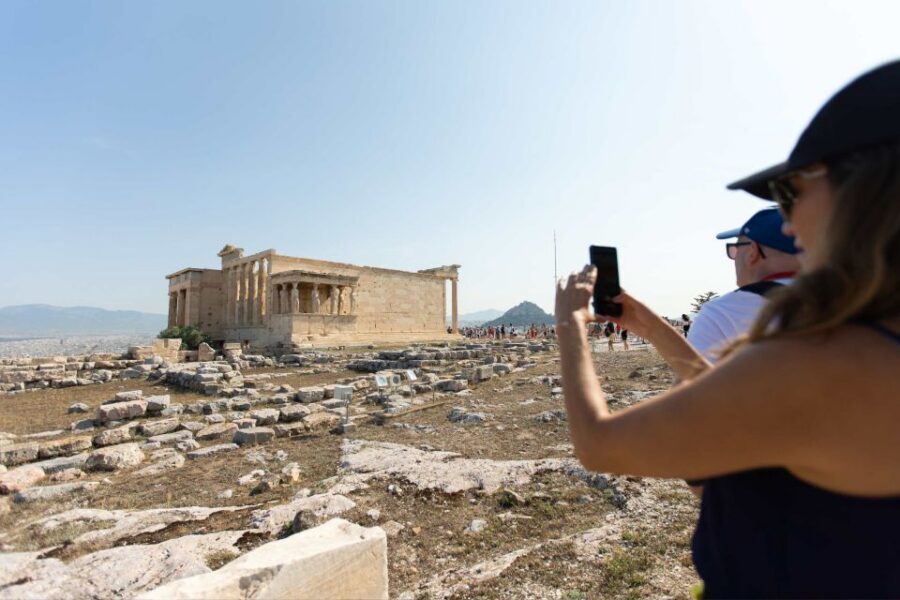
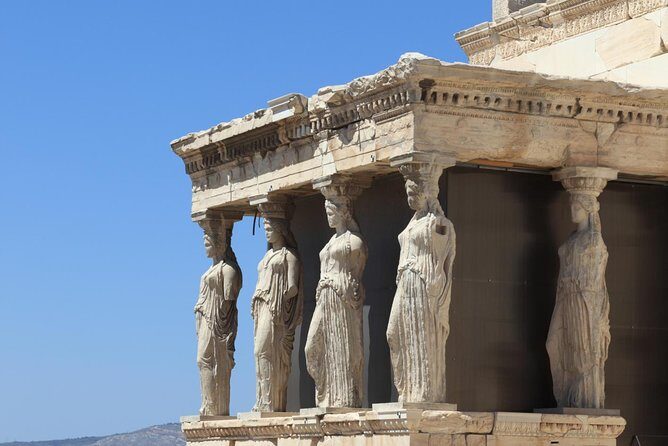
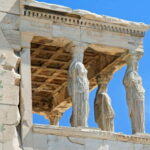
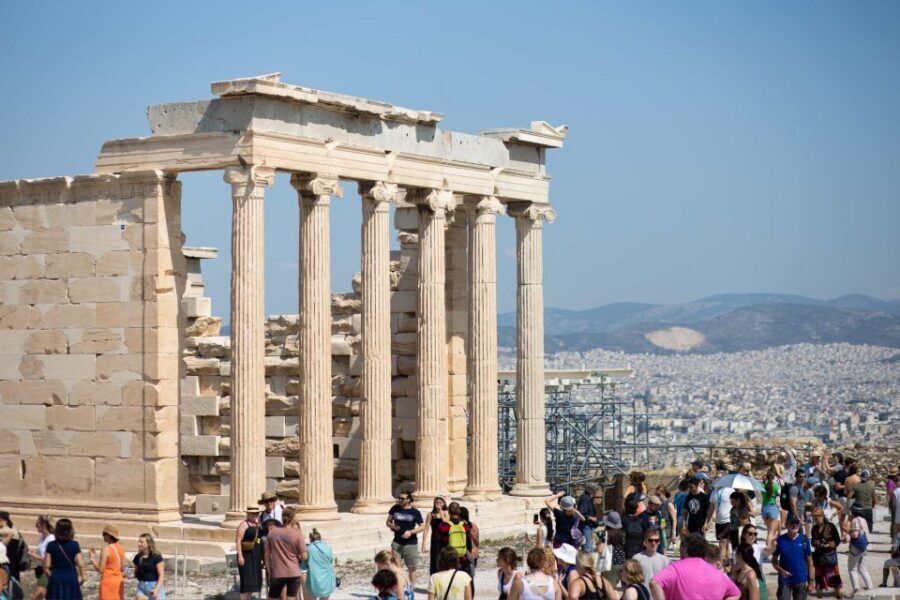
After the Parthenon stop, the tour continues to the Erechtheion. This is one of those places where the details reward you for looking longer than you think you need. The guide will help you connect the building to the broader religious significance of the Acropolis rather than leaving it as a decorative stop.
Erechtheion time is usually where visitors start feeling the “whole hill” idea. Earlier, you learned the hill’s roles and dedications; now you see how multiple sacred themes occupy the same space.
Also, expect the stone to be a reality. The marble can feel slippery and uneven. Reviews mention guides watching their groups on steps and slippery marble, and that’s exactly what you want—steady supervision and a pace that keeps everyone safe.
The Views and the 30-Min Break: Use It to Reset Your Legs
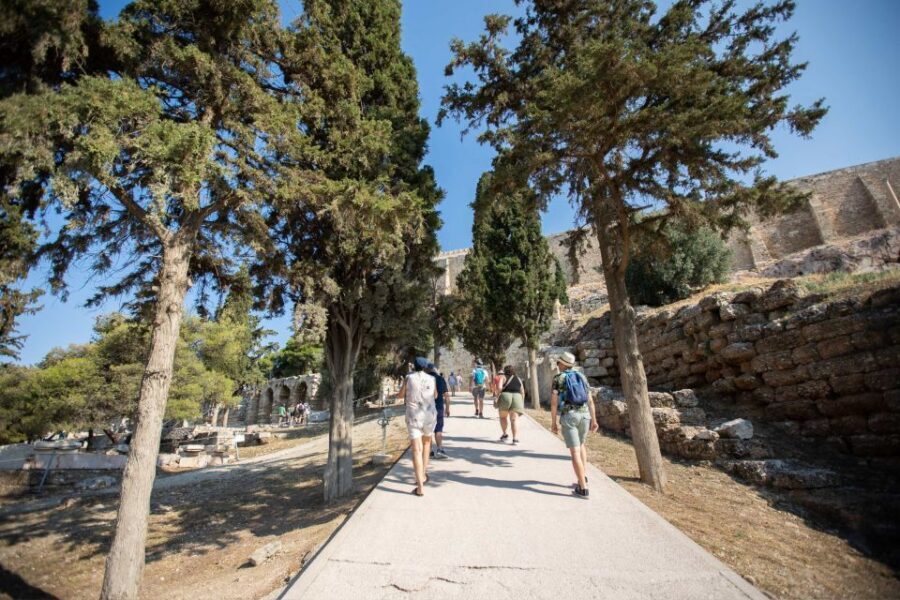
Your route includes a break period and photo time at the Acropolis (listed as 30 minutes). Use this as a reset, not just downtime. Drink water, plan your next photos, and give your feet a chance to recover from the climb.
If you’re traveling in warmer months, don’t treat this as optional. One reason early tours feel better is that you’re not only avoiding crowds—you’re arriving at the harder moments with your body less exhausted by the sun.
If you like golden-hour light, this is not a full sunset tour, but the early timing can still give you good city views. When you look out toward Athens from the hilltop, you’ll see why the Acropolis controlled the visual center of the city.
Dionysiou Areopagitou: The Walk Toward the Museum
After the hill portion, you’ll connect to the museum via a walk along Dionysiou Areopagitou (listed with sightseeing and walking time). This stretch is useful because it transitions you from “how the hill looks” to “how the hill was understood.”
Even if you’re not focused on city streets, it helps you keep your brain in history mode. Then you’re ready for the museum without feeling like you jumped from one attraction to another.
Acropolis Museum: Natural Light, Original Pieces, and Under-Glass Clues

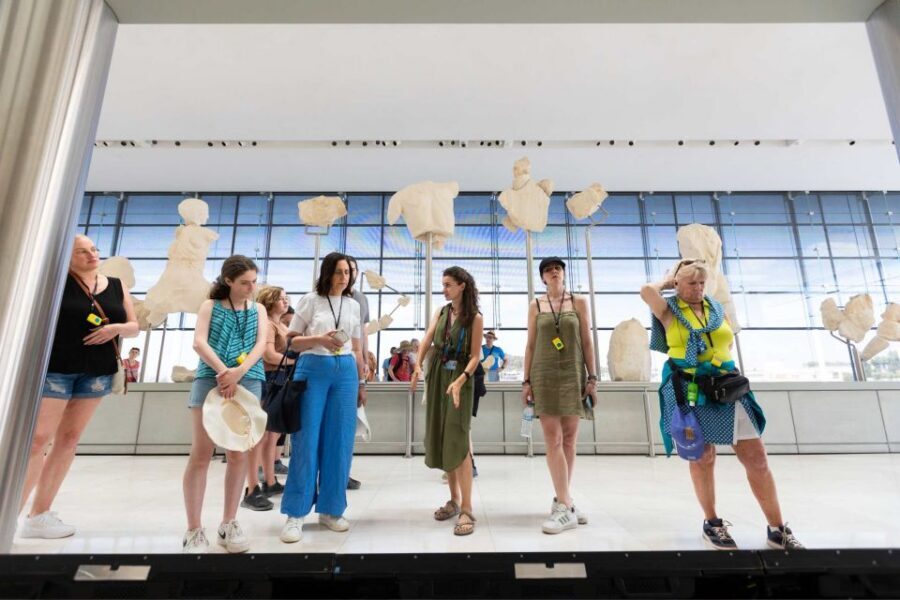
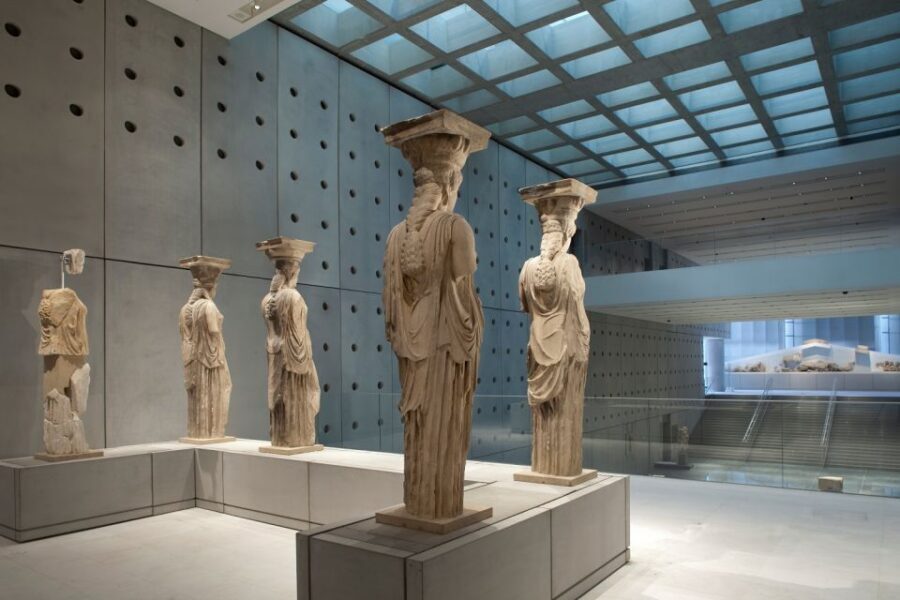
The Acropolis Museum is a big part of why this tour is better than doing only the ruins. You’ll spend about 1.5 hours inside with guided time across the museum spaces.
A few things to know before you go in:
- The museum has four galleries.
- You’ll see archaeological treasures retrieved from the Acropolis slopes, including items dating back to pre-historic times.
- The museum displays original surviving masterpieces from the temples of the Acropolis using natural light.
- Excavations are visible under glass floors and walkways, so you can look down and see how layers of the past were uncovered.
That natural-light approach is more than aesthetic. It changes how you understand form and surface. In the museum, you can slow down enough to study sculptures and fragments that can look confusing outdoors.
Now, a practical caution: one person noted that access to the excavations area was not available with their exact ticket option, suggesting some parts of the museum experience can depend on the ticket bundle you choose. If your booking offers different ticket configurations, I’d quickly confirm that the museum sections you care most about are included with your selected option.
Price and Value: $35 For Guide Time, Audio, and Less Wasted Waiting
At $35 per person for a 4-hour outing, you’re paying for more than entry. You’re paying for:
- early access timing,
- a licensed guide who ties the myths and architecture together,
- and the audio device so you can hear clearly even during crowded or windy moments.
If you tried to do this on your own, you’d spend a lot of time working through directions, ticket timing, and figuring out what to prioritize. Here, the route is planned around what you can realistically see without turning the day into a sprint.
Also, some options include skipping the ticket office line and including entrance fees, depending on what you choose. If you’re the type who hates queue time, selecting the option that reduces waiting can make the whole experience feel more relaxed.
Guide Styles You’ll Want: Humor, Questions, and Clear Explanations
What really makes or breaks a guided Acropolis visit is the guide’s style. In the feedback for this tour, several guides come up repeatedly—Irene, Petros, Eirini, Margarita, Maria, Harula, Elena, Sofia, Michael, and Chrysa—often described as enthusiastic and strong at making architecture and mythology click.
You’ll also see a theme: guides who ask interactive questions and keep the group engaged rather than reading from a script. Even if you’re not a super chatty person, this kind of pacing tends to help everyone follow along.
There’s one small listening note to keep in mind. If you’re seated farther back in the group, you might want to keep an eye on the guide’s microphone setup. One comment suggested audio clarity could be improved, so position yourself where you’ll hear best when the guide stops to explain.
Who This Tour Suits Best (And Who Should Pick Something Else)
This experience fits you if:
- it’s your first time in Athens and you want the must-see Acropolis highlights with context,
- you like stories and want mythology tied to actual buildings,
- and you want early access to avoid feeling fried in the sun.
It may not be a great fit if:
- you have mobility limitations or need wheelchair access (it’s not suitable),
- you get nervous on uneven or slippery marble,
- or you’re traveling with a lot of gear (large bags, luggage, and strollers aren’t allowed).
Because it’s described as moderate difficulty, I’d plan around physical comfort: take your time on steps, don’t rush your water intake, and let the guide set the pace.
Should You Book This Acropolis and Museum Morning Tour?
If you want the Acropolis plus museum in a single, well-paced package, I think this is an easy yes. The early start is the difference-maker: it helps you see the site with clearer focus, fewer obstacles, and less sun stress. The museum component then turns your rooftop photos into understanding.
I’d book it especially if you care about the story behind Athena, the significance of spaces like the Dionysus theater setting, and the way original pieces are presented under natural light. And I’d choose your ticket option carefully if you have strong opinions about what museum sections you want to access.
If you’re ready to walk, listen, and connect ruins to meaning, this $35 morning format is strong value for Athens.
FAQ
How long is the Athens Early Morning guided tour to the Acropolis and Museum?
It runs for about 210 minutes, which is roughly 4 hours.
What time of day is the tour?
It is an early morning tour with early access to the Acropolis and the Acropolis Museum at the first light of the sun.
Is there a guide, and what languages are offered?
Yes. You’ll have a live, professional and licensed guide. The tour is available in English and Spanish, and you’ll use an audio device.
Does the tour price include entrance fees and skipping ticket lines?
It depends on the option you select. Entrance fees to the Acropolis and skip-the-ticket-office line are included if you choose the option that includes tickets.
What if I book an option without entrance tickets?
If you choose the option without entrance tickets, you need to purchase the tickets before the activity at the time slot of the tour’s departure time so your group can enter together.
Are there any special ticket rules for free admission for young EU or non-EU citizens?
Yes. If you are an EU citizen under 25 or a non-EU citizen under 18, you must obtain your free admission ticket online from the official archaeological site. Because entries use timed slots, it’s strongly recommended to secure your ticket in advance.
How physically demanding is the tour?
The tour is described as moderate difficulty. The ascent to the Acropolis, especially in summer, is demanding and requires intense physical effort.
Is this tour suitable for people with mobility impairments or wheelchair users?
No. It is not suitable for people with mobility impairments or for wheelchair users.
What should I bring, and is anything not allowed?
Bring a passport or ID card, comfortable shoes, a sun hat, and water. Pets, baby strollers, and luggage or large bags are not allowed.
Is food and drinks included?
No. Food and drinks are not included.