REVIEW · ATHENS
Athens: Acropolis, Parthenon & Acropolis Museum Guided Tour
Book on GetYourGuide →Operated by Athens Walks Tour Company · Bookable on GetYourGuide
Acropolis facts feel human with an archaeologist leading. This walking tour guides you from the south slope of the Acropolis up to the Parthenon, then down into the New Acropolis Museum, where what you see outdoors suddenly makes a lot more sense. Along the way, you get the stories behind the stones, not just a list of dates.
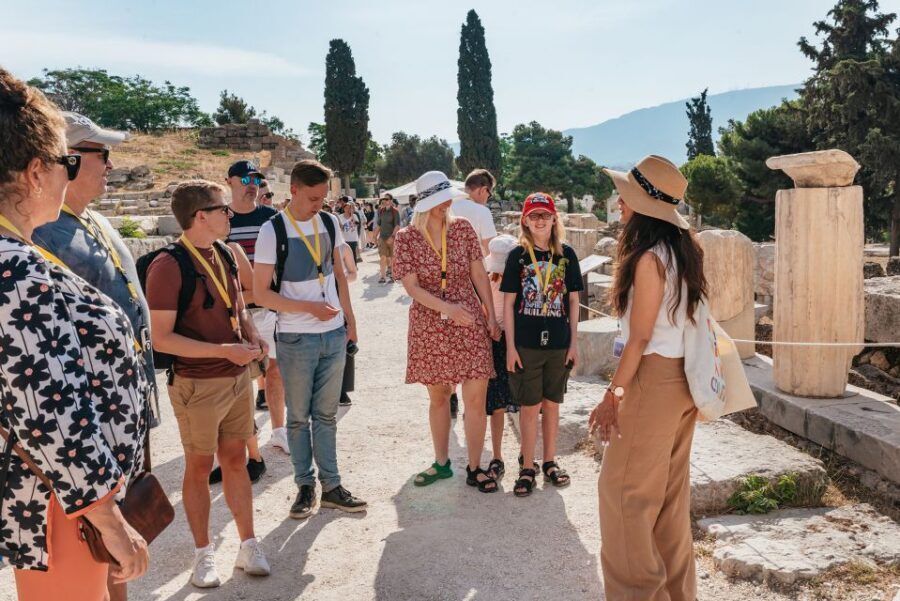
I especially like how the day connects big monuments to real daily life. You sit in the Theater of Dionysus area to picture ancient performances, and you also get time with artifacts and everyday objects inside the museum—where guides (like Petros, Dionissos, Anna, Demos, and Lisa) tend to keep the pace lively and easy to follow.
One possible drawback: this is a walking-heavy visit and not suitable for people with mobility impairments or wheelchair users. Even if the group size is manageable (often around 15–20), you’ll still be moving uphill and navigating a busy site.
In This Review
- Key things you’ll notice on this Acropolis + Museum tour
- Starting at Porinou 5: where the tour begins and how it runs
- The south slope climb: Theater of Dionysus, Odeon, and a stage Athens built
- From Asclepius to Temple of Athena Nike: healing rituals and victory in stone
- Propylaea and the Parthenon approach: photos, angles, and what to look for
- Erechtheion and the top-of-hill moment: taking it all in without rushing
- New Acropolis Museum: the payoff that makes the ruins click
- Price and value: what $41 gets you in real-world terms
- What to wear, what to expect physically, and how to plan your day
- Who should book this Acropolis + Museum tour?
- Should you book it: my honest take
- FAQ
- How long is the Acropolis, Parthenon & Acropolis Museum guided tour?
- Where do I meet the tour guide?
- Is the tour guide English-speaking?
- Does the tour include entrance tickets to the Acropolis and Acropolis Museum?
- Do I skip the line?
- Are wireless hearing devices provided?
- What should I bring to the tour?
- Is the tour suitable for wheelchair users or people with mobility impairments?
- What is the cancellation policy?
Key things you’ll notice on this Acropolis + Museum tour
- Skip-the-line entry and wireless listening so you spend less time stuck and more time seeing
- A south-slope route that changes the feel of the climb and keeps the order logical
- Theater of Dionysus + a photo-friendly setup that helps you imagine the performances
- Odeon of Herodes Atticus, still used for the Athens Festival from May to October
- New Acropolis Museum glass galleries where archaeology shows up under your feet
- Time built into the plan for photos, short breaks, and a museum guided tour worth doing
Starting at Porinou 5: where the tour begins and how it runs
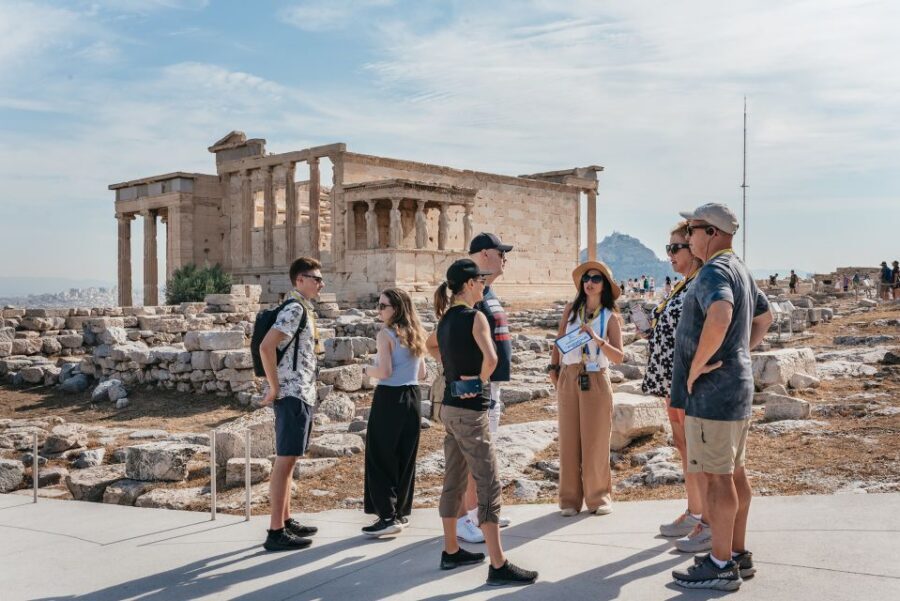
The experience starts at the Athens Walks office on Porinou 5 (ground floor). Plan to arrive a few minutes early so you can meet your guide, get settled with the group, and get your wireless listening gear sorted out before you start climbing.
This tour uses wireless hearing devices, which matters more than you might think on the Acropolis. It’s crowded. People are talking. Wind is loud. With the headset, you can actually catch the details your guide is sharing at each stop—especially when the group tightens up near monuments or photo points.
It’s also a skip-the-line setup when you choose the option that includes entrance tickets. That reduces one of Athens’ biggest stressors: waiting while the sun climbs and the line barely moves.
One practical tip: bring a passport or ID, comfy shoes, and a sun hat. The walk includes uneven stone paths and long stretches with very little shade, so dressing for comfort helps you enjoy the history instead of fighting your footwear.
Other Acropolis and Parthenon tours we've reviewed in Athens

The south slope climb: Theater of Dionysus, Odeon, and a stage Athens built
You don’t start at the top. You start on the approach, and that’s a smart way to see the Acropolis because you build the story as you go.
The day commonly begins with the Theater of Dionysus area. Your guide explains why it mattered and what kind of performances were staged there. You’ll also pause on a stone seat to imagine the view from the audience side—where you can almost feel how the crowd would have looked and sounded. It’s the kind of moment that turns the Acropolis from scenery into a living place.
Your guide typically names major Greek playwrights tied to the theater tradition—Aeschylus, Sophocles, and Euripides. Even if you don’t know their work, hearing the names in context makes the theater feel real, not like trivia.
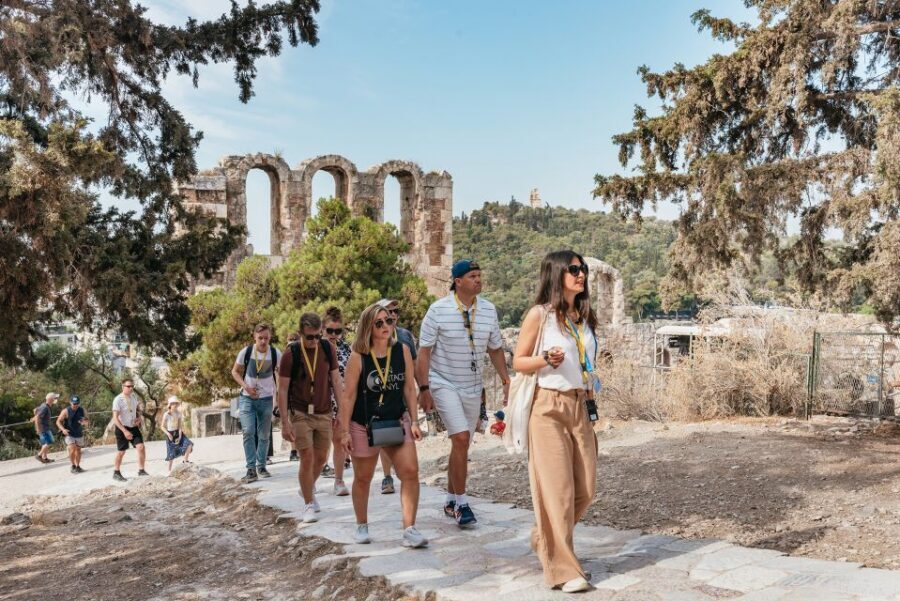
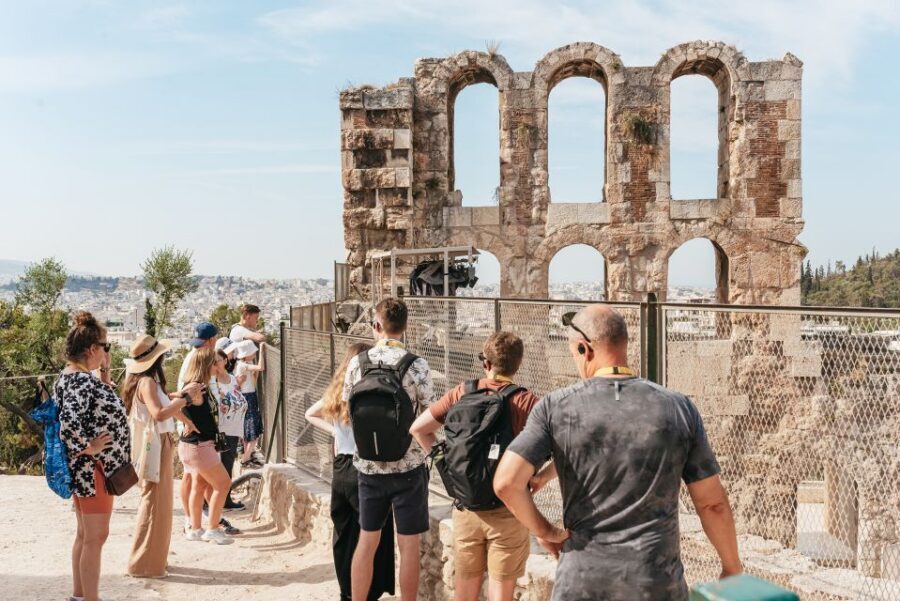
Next comes the Odeon of Herodes Atticus. This is where you get a nice connection between ancient architecture and modern Athens. The space is still used today for performances during the Athens Festival from May to October. That continuity is one of the tour’s best tricks: it helps you read the Acropolis as something that kept influencing the city long after antiquity.
As you walk, you’ll pass through areas that are part of the Acropolis complex but often missed if you go fast on your own. The guide’s job is to slow you down at exactly the right moments—enough to understand what you’re looking at, without turning the walk into a lecture.
From Asclepius to Temple of Athena Nike: healing rituals and victory in stone
After the theater stops, the route continues with temples and sacred spaces that explain Athens’ religious mindset.
You’ll visit an Asclepius healing temple area, tied to the god of medicine, Asclepius. This is a great shift in tone. One minute you’re thinking about plays and audiences; the next you’re looking at a place connected to healing and care. Guides often explain how these sites were meant to support hope and recovery, not just provide a building to look at.
Then you move toward the Temple of Athena Nike. Even if you only have a short walk here, the stop is useful because it trains your eyes. You start noticing the design choices that show up again and again around the Parthenon—how temples frame power, belief, and civic pride.
If you’re the kind of person who likes seeing architecture in layers, these stops do that work for you. Instead of jumping straight to the Parthenon, you learn how Athens structured its sacred landscape—so the main monument feels less like an isolated masterpiece and more like the center of a whole system.
Propylaea and the Parthenon approach: photos, angles, and what to look for
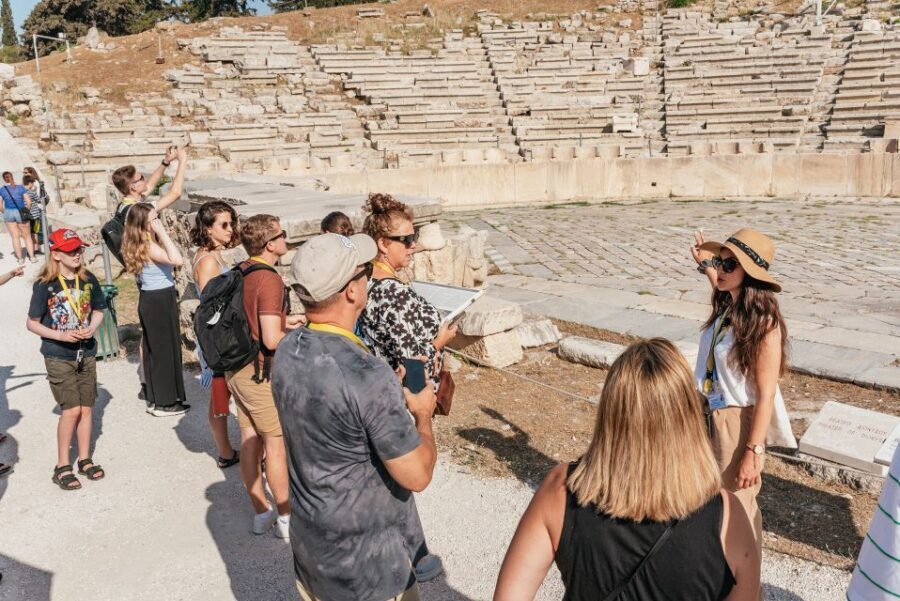
You’ll pass the Propylaea (often described as the monumental gateway area) with a photo stop and guided context. This is one of those spots where a guide earns their fee: they help you position yourself. From here, the Acropolis starts to open up visually, and you can understand how sightlines were shaped.
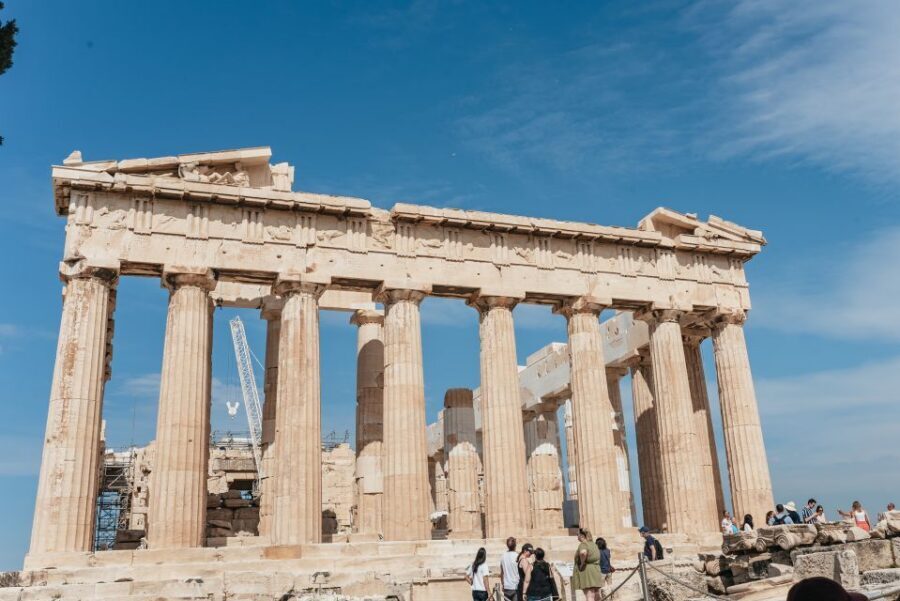
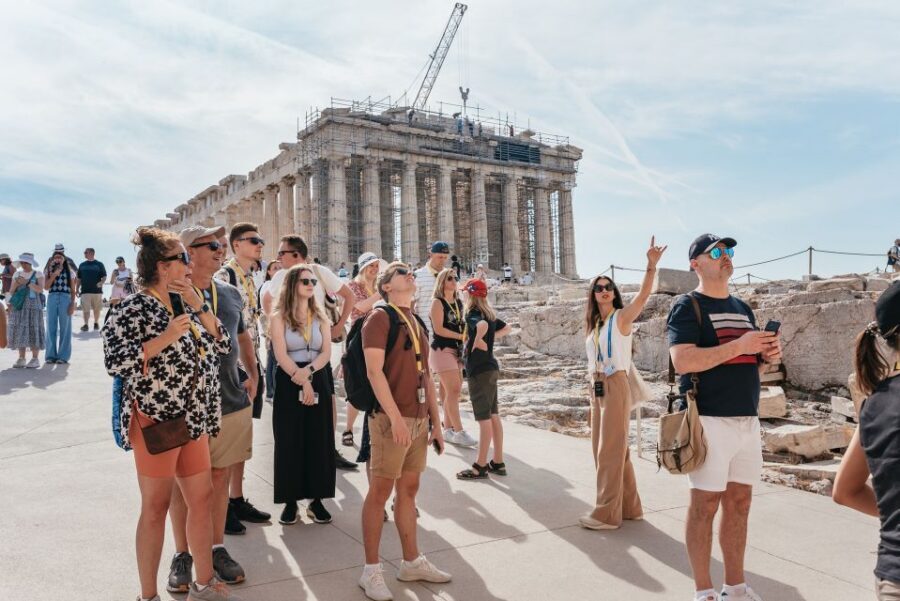
Then comes the big one: the Parthenon. You’ll have dedicated time there with a guided visit and sightseeing time. The value isn’t only that the Parthenon is stunning (it is). It’s that a guide explains how it fits into the broader Acropolis plan, including the earlier sacred spaces you just visited.
One of the most praised parts of these tours is the pacing. Many guides keep the group together while also giving moments to pause, look around, and take photos. That balance shows up in real guidance styles. People have highlighted guides who keep everyone moving smoothly through crowds, then slow down when something important needs attention.
Also, you’ll get Acropolis viewpoints where the skyline spreads out. The hilltop feeling is real—Athens looks bigger from here. It’s the kind of moment that makes the climb worth it, even if your legs are already plotting a dramatic exit.
Erechtheion and the top-of-hill moment: taking it all in without rushing
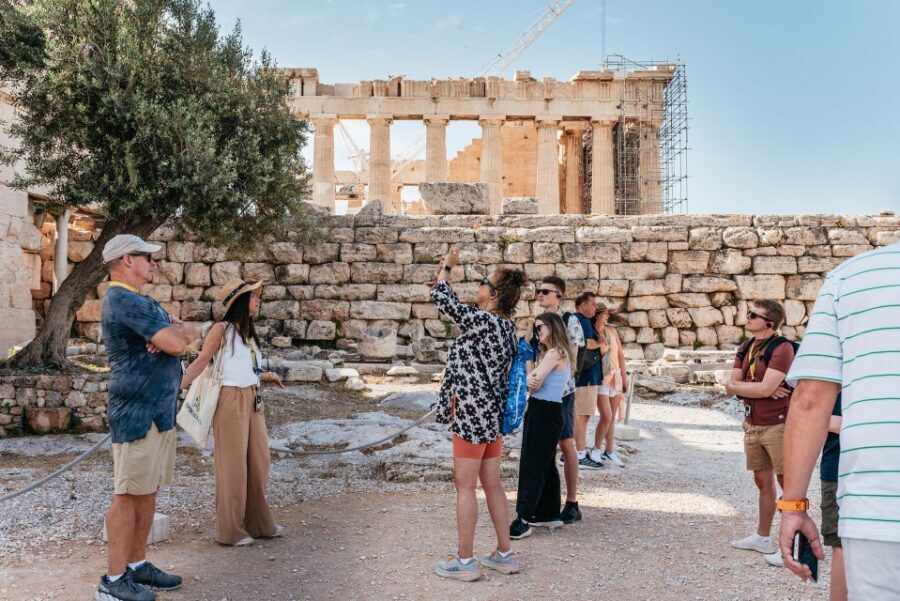
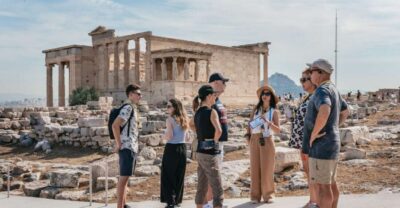
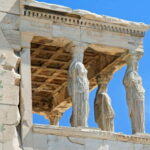
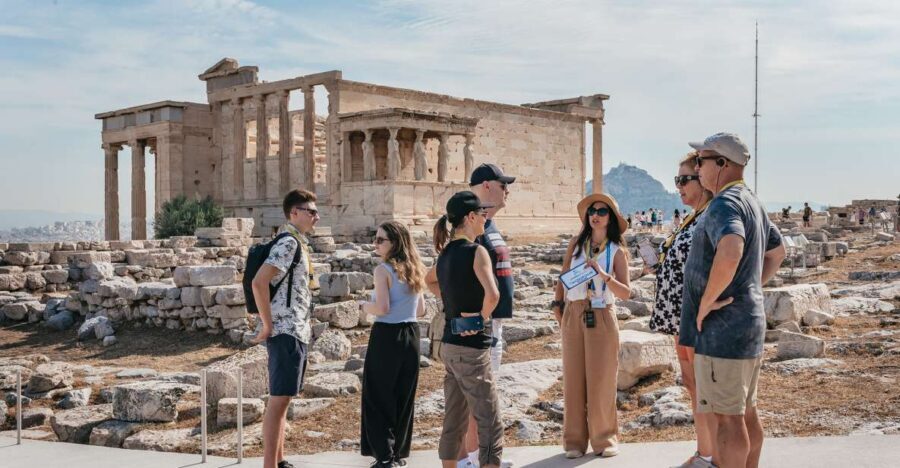
After the Parthenon, the tour continues with the Erechtheion. It’s shorter than the Parthenon stop, but it’s still part of what makes the Acropolis feel like a complex, not a single monument.
Your guide’s job here is to show you why this building belongs in the same conversation. You’ll get guided attention and then time for sightseeing at the stop. Depending on the pace of the group and crowd levels, you may also catch small architectural details that you’d likely miss if you only glance and move on.
There’s also a break/free-time window built into the experience later near the top area for photo-taking and short pauses. That matters because the Acropolis is physically demanding. Even strong walkers appreciate a moment to reset—water, breath, and a quick look around before you head to the museum.
If you’re taking photos, plan for the fact that angles change constantly with crowds and sunlight. A guided route helps because you’re not guessing where to stand. You stop where the site makes sense, not where the crowd just happens to be.
Other Acropolis Museum tours we've reviewed in Athens





New Acropolis Museum: the payoff that makes the ruins click
After the outdoor climb, you head into the New Acropolis Museum for about 1.5 hours of guided time. This is often the part that turns first-time Acropolis visits from impressive to understandable.
The museum is frequently ranked among the top 5 museums in the world, and walking in confirms why people talk about it. The layout helps you see the monuments as part of a larger story, and the glass-and-light design keeps the experience feeling modern without breaking the connection to the past.
A standout is the Gallery of the Slopes of the Acropolis. The glass floor can reveal archaeological excavation areas below. That’s a powerful idea: the museum doesn’t just display what was found—it shows how the digging relates to what stands above.
You’ll also spend time with collections connected to the Parthenon. The Parthenon temple glass gallery is a key feature, because it supports exactly what your guide is doing outdoors: connecting structure, sculpture, and sacred meaning.
Guides frequently explain how these objects fit into daily life and civic identity. Reviews and guide styles highlight a common strength: they break down the evolution of the statues and give context without drowning you in technical terms. If you’ve ever felt lost at museums, this kind of guided interpretation is the cure.
There’s a cafe inside too. You can take a break for refreshments there at your own expense, which is handy if you’re timing this around other parts of your Athens day.
Price and value: what $41 gets you in real-world terms
At around $41 per person, this tour can look like a lot before you count what it includes. Here’s the real value equation:
- You get an actual guide with deep expertise presented in plain language. That’s hard to replicate if you self-guide with an audio app.
- You get skip-the-line entrance for the Acropolis and skip-the-line museum entry (when you choose the ticket option).
- You get wireless hearing devices, which are a quiet but huge upgrade on a crowded site.
- You get guided time in both the monuments and the museum, so the museum isn’t just a bonus stop—it’s part of the story.
If you compare this to paying for entry on your own and then trying to make sense of the differences between temples, theaters, and sacred spaces, the guided structure saves you time and frustration. On the Acropolis, that matters. You don’t want to spend half your day trying to interpret stone you could have understood in five minutes with a good guide.
It also tends to offer a good group size and pacing, with many guides keeping the group together so you don’t lose people in crowds. When the schedule works, $41 starts to look like less of a fee and more like a shortcut to enjoyment.
What to wear, what to expect physically, and how to plan your day

This tour is best for people who can handle steady uphill walking and the uneven ground typical of ancient sites. It’s not suitable for wheelchair users or people with mobility impairments, and there’s no mention of an Acropolis elevator being included.
What you can do to make it easier:
- Wear comfortable shoes with solid grip.
- Bring a sun hat, especially in warmer months.
- Keep small items easy to access. The Acropolis area can mean extra crowd control and bag limitations.
You also should know what’s not allowed. Pets, baby strollers, oversize luggage, and large bags aren’t part of the plan. If you’re traveling light, that helps.
One more practical note from what people experience on-site: bottle rules can be strict. A review described needing to leave behind a water bottle because it wasn’t allowed (glass bottles were mentioned). If you want water, pack it in a way that complies with what’s permitted at the site.
As for timing, the activity is listed as 2–4 hours, but the pace you experience depends on the day’s crowds and how long you spend at each stop. The museum portion is planned to be substantial, so don’t schedule a tight connection immediately after. A relaxed finish helps.
Who should book this Acropolis + Museum tour?
Book it if:
- You’re seeing Athens for the first time and want the fast path to understanding the Acropolis.
- You like archaeology and mythology, but you want it explained in a human way.
- You prefer structured stops over wandering and guessing.
- You want the museum guided portion because it really ties your outdoor questions together.
Skip it (or think twice) if:
- You need wheelchair access or have significant mobility limitations.
- You hate guided groups and want total freedom with no set stops.
- You’re expecting a relaxed “sit and chill” experience. This is mostly walking and viewing, with short breaks.
It’s also a solid choice for families who can handle walking. Several reviews mention guides engaging kids effectively, which suggests the best guides know how to keep attention without turning the tour childish.
At the end, the drop-off is at the Acropolis area and around Areopagus Hill (Λόφος Αρείου Πάγου). That’s convenient if you plan to keep exploring nearby after the museum.
Should you book it: my honest take
Yes, if your goal is to understand what you’re seeing and you want less guesswork on one of the world’s most complicated sites. This tour offers a strong two-part design: monuments outdoors, then meaning and context indoors at the New Acropolis Museum. The result is that the Parthenon stops feeling like one famous building and starts feeling like the centerpiece of a whole religious and civic world.
Also, the small extras matter: wireless listening, guided pacing, and skip-the-line entry when you choose tickets. They help you enjoy Athens instead of wrestling crowds.
If you’re mobility-limited, this isn’t the right pick. But if you can walk uphill, bring your hat, and you want the Acropolis explained with care, this is the kind of tour that turns a checkmark site into a real story you’ll remember.
FAQ
How long is the Acropolis, Parthenon & Acropolis Museum guided tour?
The duration is listed as 2–4 hours.
Where do I meet the tour guide?
You meet at the Athens Walks tour office on Porinou 5 (ground floor).
Is the tour guide English-speaking?
Yes. The live tour guide language is English.
Does the tour include entrance tickets to the Acropolis and Acropolis Museum?
It depends on the option you select. Skip-the-line entrance tickets are included if you book the option with entrance tickets, and skip-the-line entry to the Acropolis Museum is also included. If you book without entrance tickets, you are told to order your entrance tickets online before you arrive at the meeting point.
Do I skip the line?
Yes. The experience includes skip-the-line entry through a separate entrance (for the Acropolis, and skip-the-line entry to the Acropolis Museum).
Are wireless hearing devices provided?
Yes. Wireless hearing devices are included.
What should I bring to the tour?
Bring your passport or ID card, wear comfortable shoes, and bring a sun hat.
Is the tour suitable for wheelchair users or people with mobility impairments?
No. It is not suitable for people with mobility impairments or wheelchair users.
What is the cancellation policy?
There is free cancellation up to 24 hours in advance for a full refund.