REVIEW · ATHENS
Athens Private Walking City Tour : Acropolis, Ancient Agora and The Agora Museum
Book on Viator →Operated by CRISPY LOCAL MONOPROSOΡΙ Ι.Κ.Ε. · Bookable on Viator
Athens makes more sense on foot. This private walking tour strings together the Acropolis and the Ancient Agora with a certified guide’s commentary, so you see the big monuments and also how people lived, debated, and worked.
I love the stop-by-stop focus: you’ll spend real time around the Theatre of Dionysus, Odeon of Herod Atticus, and then head downhill to the Agora where Plato and Socrates taught and lectured. One thing to consider: entrance tickets for the Acropolis, the Ancient Agora, and the Attalos Museum are not included, so you’ll want to budget for those separately.
In This Review
- Key highlights worth planning for
- Athens Acropolis and Ancient Agora: the walking tour that connects the dots
- What value you get from a private guide here
- The main trade-off
- Acropolis time: Theatre of Dionysus to the Temple of Erechtheion
- Theatre of Dionysus and the feel of the civic center
- Temple of Asklipios: linking religion and daily belief
- Odeon of Herod Atticus and the major sightline moments
- Propylaia as the hinge between entry and viewpoint
- Temple of Athena Nike and the power of small details
- Erechtheion: the kind of stop you remember
- Practical drawback at the Acropolis
- Ancient Agora: where Plato and Socrates taught in the community center
- Hephaestus Temple: preservation that makes understanding easier
- Church of the 12 Apostles: layers of use over time
- Temple of Apollo Patroos, Stoa of Zeus, and the social side of the Agora
- A real consideration: time pressure vs. ticket lines
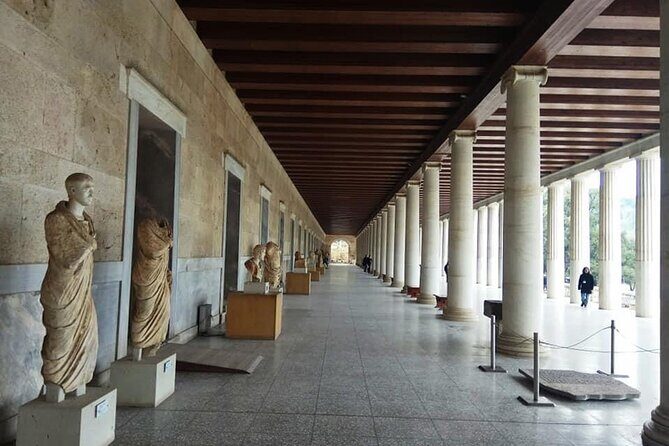
- Attalos Museum: the 30-minute stop that makes the market feel real
- Why 30 minutes can be the right amount
- Ticket reality check
- Guide style and pacing: what you should expect on a private tour
- How to get the most from your guide
- The “group discount” detail
- Price and value: is $289.40 per person fair for this route?
- Where you meet and how to set your day up
- What to do with your tickets
- Who this Athens private walking tour suits best
- Should you book this tour?
- FAQ
- How long is the Athens Private Walking City Tour?
- Is this tour private?
- What’s included in the price?
- Are entrance tickets included for the sites?
- Do I get a mobile ticket?
- Where do we meet and where does the tour end?
- What is the cancellation policy?
- Is this tour suitable for most people?
Key highlights worth planning for
- A private certified guide keeps the route tight and the explanations clear
- Acropolis monuments in a logical walking flow, not a chaotic hop-and-skip
- Philosophy in the marketplace at the Ancient Agora, tied to daily life
- Attalos Museum adds practical details, like identification items and weights/measures
- Family-friendly explanation is possible, with at least one guide (Ourania A) tailoring for children
- Tickets are your responsibility, since site admissions aren’t included
Athens Acropolis and Ancient Agora: the walking tour that connects the dots
This is the kind of Athens tour that helps your brain stop treating everything as separate sights. You start up on the Acropolis with major landmarks, then you work your way into the Ancient Agora, the place that functioned as a community center. That change of setting matters. It’s how you go from seeing stone and views to understanding why Athenians gathered, argued, worshipped, and traded.
The tour runs about 3 to 4 hours, and it’s private, meaning only your group participates. That’s a big deal if you want a calm pace, questions answered on the spot, or you’re traveling with kids and need explanations at the right speed.
Other Acropolis and Parthenon tours we've reviewed in Athens
What value you get from a private guide here
At Athens’ top sites, it’s easy to stand in front of ruins and feel like you’re missing the story. A good guide turns the “What is this?” into “Oh, that fits.” In this tour, the guide’s role is especially useful because you’re covering three linked areas: the Acropolis, the Ancient Agora, and the Attalos Museum.
You also get built-in time to move around instead of rushing. The itinerary is structured, so you don’t spend your energy deciding what to see first.
The main trade-off
Entrance tickets are not included. That doesn’t make the tour bad—it just means your total trip cost includes site admissions. If you’re the type who likes everything bundled, you’ll need to plan that part yourself (or add enough time to buy tickets in advance).
Acropolis time: Theatre of Dionysus to the Temple of Erechtheion
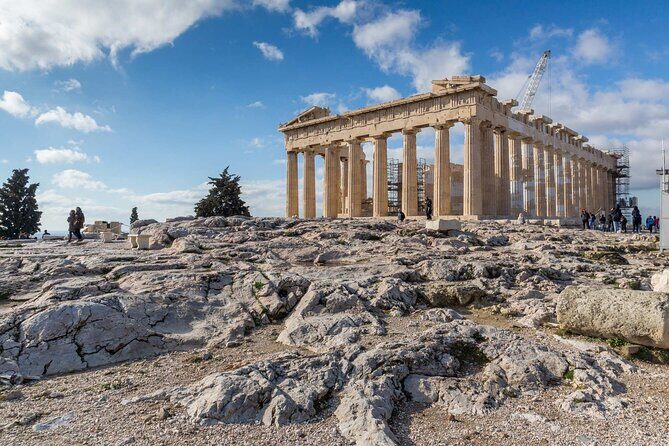
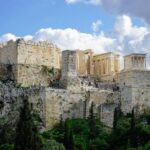
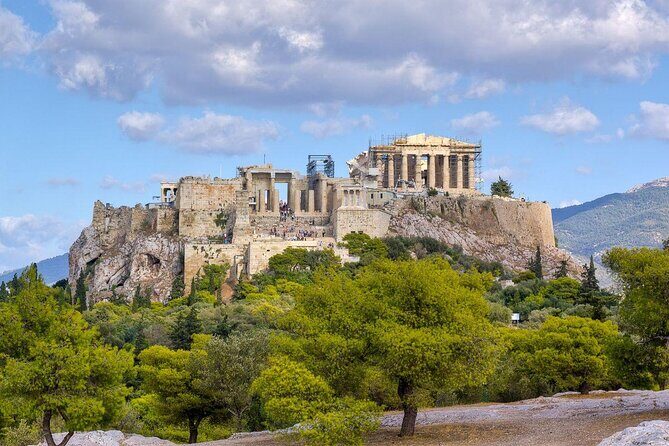
Your Acropolis portion is about 2 hours. You’ll see a focused lineup of landmark stops: the Theatre of Dionysus, Temple of Asklipios, Odeon of Herod Atticus, Propylaia, Temple of Athena Nike, and the Temple of Erechtheion.
The best part of this setup is variety. You’re not stuck in one corner. You get a sense of how different buildings shaped civic and religious life on the hill, and your guide ties each stop to how Athenians made sense of their world.
Theatre of Dionysus and the feel of the civic center
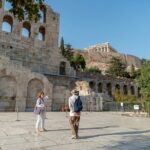
You’ll start at the Theatre of Dionysus. Even if you don’t know all the details beforehand, it’s the kind of place that instantly feels tied to public gathering. This is where your guide’s commentary really helps—without it, a theatre and a temple can blur together as just “old stuff.”
If you like learning through physical space, you’ll do well here. Seeing the architecture in sequence helps you remember it later.
Other private Acropolis tours we've reviewed in Athens


Temple of Asklipios: linking religion and daily belief
Next comes the Temple of Asklipios. This is a great stop if you enjoy understanding what people believed, not only what rulers built. It’s also a nice pace-changer from the large open spaces—guides can make the connections to culture and daily life in ways that feel practical rather than textbook-only.
Odeon of Herod Atticus and the major sightline moments
Odeon of Herod Atticus is a big visual anchor. Expect this portion to include moments where you pause and look around at how the hill opens up. The key is that it’s not just a photo stop. Your guide uses the buildings to explain how Athenians organized their public spaces.
Propylaia as the hinge between entry and viewpoint
Propylaia often acts like the transition point in the Acropolis story. It’s where the tour naturally shifts from “approach and enter” into “explore what the Acropolis represents.” If you’re walking with someone who likes to understand flow, this is where the tour becomes easy to follow.
Temple of Athena Nike and the power of small details
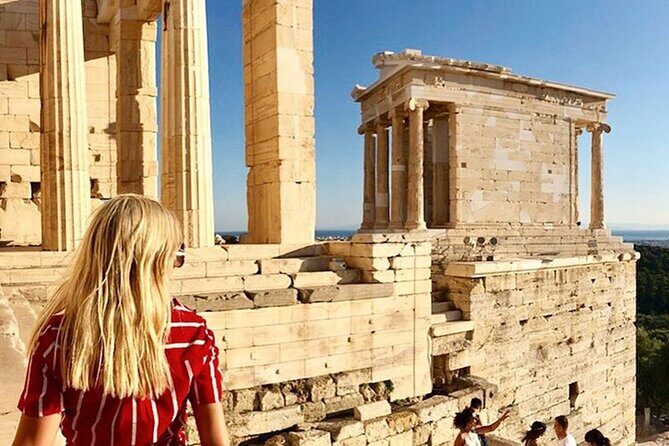
Temple of Athena Nike gives you a different kind of Acropolis experience. Some structures on the hill reward closer attention, not just broad views. Your guide can help you notice what you’d otherwise miss.
Erechtheion: the kind of stop you remember
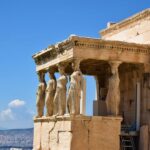
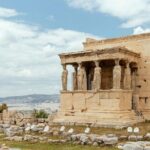
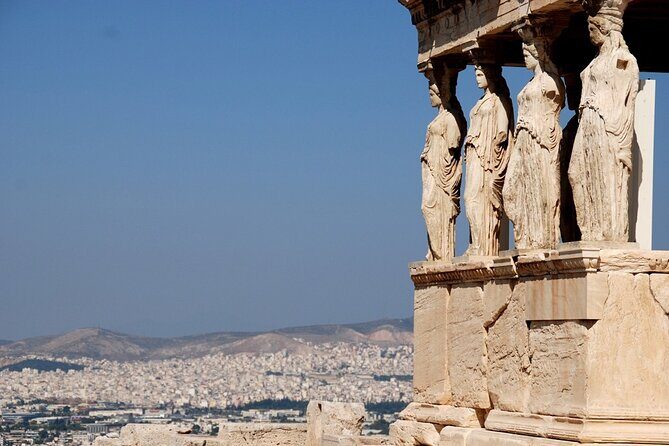
Finally, Temple of Erechtheion. This is one of those places where your brain goes: I’ve seen pictures, but seeing it in person is a different thing. With the guide’s narrative connecting it back to broader Athenian life, the stop feels less like random ruins and more like a chapter with meaning.
Practical drawback at the Acropolis
It’s a walking tour with uneven ground and lots of steps. Most people can participate, but you’ll still want comfortable shoes and a steady pace. If anyone in your group has mobility issues, you should plan for short breaks and slower tempo with your guide.
Ancient Agora: where Plato and Socrates taught in the community center
After the Acropolis, the tour heads into the Ancient Agora for about 1 hour. This is the heart of why this tour works. The Agora wasn’t just “another archaeological site.” It was a community center, and it’s also tied here to lectures by Socrates and Plato.
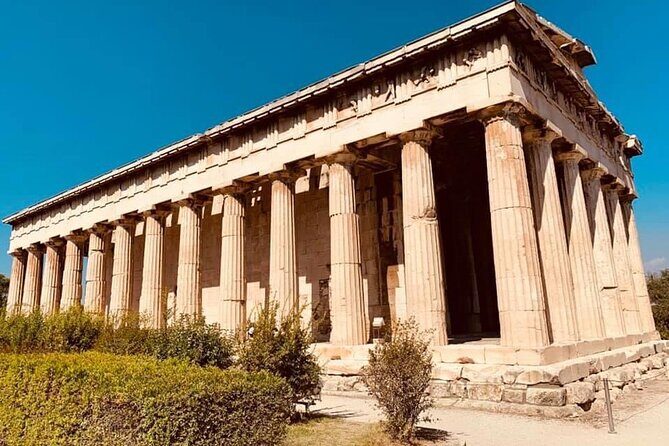
You’ll see the Hephaestus Temple (noted as the best preserved Greek temple from the 5th century BC), plus the Church of the 12 Apostles, the Temple of Apollo Patroos, the Stoa of Zeus, and the Altar of Zeus.
Hephaestus Temple: preservation that makes understanding easier
A well-preserved structure is a teacher. Hephaestus Temple gives you a clearer sense of how the temple would have looked and how the space worked. When a site is in better condition, your guide can point out features with less guesswork.
If you’re the kind of visitor who likes taking away mental images, this stop helps you build one.
Church of the 12 Apostles: layers of use over time
The Church of the 12 Apostles adds an important layer: the site didn’t stop mattering after ancient Athens. Your guide can help you understand this as continuity in how people used sacred space.
This is also a good moment for photography, since churches and ancient structures create visual contrasts in the same frame.
Temple of Apollo Patroos, Stoa of Zeus, and the social side of the Agora
These stops make the Agora feel like a place where people actually moved through their day. The Temple of Apollo Patroos and Stoa of Zeus are especially helpful for connecting why gathering spots matter. Your guide ties the area to the lived experience of ancient Athenian citizens, not just ceremonial worship.
And yes, this is where the tour’s philosophy angle lands. The Agora is described as a location tied to lectures by Plato and Socrates. Hearing that while standing in the space where civic life happened makes the idea stick better than reading about it later.
A real consideration: time pressure vs. ticket lines
Ancient Agora admission is not included. If you arrive without planning, you might spend extra time dealing with entry. Since your time here is limited to about an hour, keeping ticket logistics smooth will help you get the most out of the guide’s commentary.
Attalos Museum: the 30-minute stop that makes the market feel real
The tour finishes at the Attalos Museum for about 30 minutes. This short museum time is a smart choice because it grounds what you see outside. Instead of only walking through ruins, you get artifacts and evidence related to everyday life in the Agora.
The highlights mentioned for this museum are especially memorable:
- ancient Greek identification cards
- original weights and measures used by market inspectors
That’s a great pairing with the Agora. We often think of ancient sites as grand and symbolic, but these objects point to routine, regulation, and practical life—who bought what, how sellers were checked, and how identity and commerce intersected.
Why 30 minutes can be the right amount
Museum time can balloon fast, especially on a first day in Athens. Here, the tour keeps it focused. You won’t have hours to wander, but you’ll get targeted context that helps your outdoor walking stops make sense.
If you love museums and want more time, you might choose to return later on your own. But as part of this tour, 30 minutes is a solid add-on.
Ticket reality check
Museum admission is also not included. Plan on buying it separately so you don’t eat into your last chunk of time.
Guide style and pacing: what you should expect on a private tour
Because this is a private walking tour with an experienced certified guide, the learning feels more interactive than a big group. The best guided tours don’t just tell facts. They help you look. They also keep the pace humane, especially when you’re mixing hillside walking and flat-market spaces.
A good sign here: in one family-focused experience, Ourania A was described as an excellent guide who tailored the visit for children. That matters because a lot of Athens storytelling can become too abstract for kids. Having a guide who can adjust makes the entire route more enjoyable.
How to get the most from your guide
To squeeze more value from the time, come with at least one question. For example:
- Which stop best shows how daily life worked here?
- How does the Agora connect to the big ideas people learned and argued about?
When you ask, you’ll get explanations shaped to what you care about, not just a fixed script.
The “group discount” detail
The tour notes group discounts. Since this is private, discounts often apply when you book multiple people or share the private cost. If you can travel with companions, that’s the easiest way to make the overall price feel more reasonable.
Price and value: is $289.40 per person fair for this route?

The price is $289.40 per person for an approximately 3 to 4 hour private walking experience. That number is not “budget Athens,” but it’s also not trying to be. You’re paying for a certified guide plus a structured, low-drama route through three major areas.
Here’s where the value can make sense:
- You avoid spending time figuring out what to see and how to connect it.
- You get guided storytelling at the Acropolis, the Agora, and then a museum tie-in with Attalos Museum artifacts.
- You can keep the pace tailored to your group, since it’s private.
Here’s the cost caveat:
- Entrance tickets for the Acropolis, Ancient Agora, and Attalos Museum are not included. Your final spend will be higher once you add site admissions.
If you’re traveling solo, the per-person price can feel steep compared with group tours. If you’re traveling with companions, splitting the private cost can help the value snap into focus.
Where you meet and how to set your day up
The tour starts at Dionysos Zonar’sRovertou Galli 43, Athina 117 42, Greece and ends at the Ancient Agora of Athens, Athens 105 55, Greece.
Two timing tips from the structure of the day:
- Plan for the Acropolis portion to be the most physically demanding part.
- Save the easiest sightseeing or café time after the tour, since the route ends in the Ancient Agora area.
What to do with your tickets
Since admissions aren’t included, you’ll want to handle tickets in advance or at least plan your timing so you don’t lose time at the entrances. The tour is short enough that delays can be noticeable.
Who this Athens private walking tour suits best

This is a strong fit if:
- You want guided context, not just photos.
- You like connecting big sites like the Acropolis to everyday places like the Agora.
- You’re interested in the link between public spaces and philosophy, including the lectures connected to Socrates and Plato.
- You want a private format where your group can move at a comfortable pace.
It’s also a good option for families if your guide is able to tailor explanations. Ourania A is one example of that kind of kid-friendly approach.
If you’re already an Athens architecture expert who doesn’t need commentary, you may decide you’d rather do a self-guided route. But if you want the story told clearly while you walk the ground, this tour is built for that.
Should you book this tour?
Yes, book it if you want a guided Athens loop that actually connects the Acropolis to the Ancient Agora, then wraps up with museum artifacts that explain the practical side of life. The private format and certified guide make a difference, especially for visitors who want a story they can hold onto after the trip.
I’d think twice only if you strongly prefer fully bundled pricing. Since admissions to the Acropolis, Ancient Agora, and Attalos Museum aren’t included, your total cost will be higher than the headline tour price.
FAQ
How long is the Athens Private Walking City Tour?
It’s listed as about 3 to 4 hours.
Is this tour private?
Yes. It’s a private tour/activity, and only your group will participate.
What’s included in the price?
The tour includes a private experienced certified tour guide.
Are entrance tickets included for the sites?
No. Acropolis entrance tickets are not included, Ancient Agora entrance is not included, and Attalos Museum admission is also not included.
Do I get a mobile ticket?
Yes, the experience includes a mobile ticket.
Where do we meet and where does the tour end?
The tour starts at Dionysos Zonar’sRovertou Galli 43, Athina 117 42, Greece, and ends at the Ancient Agora of Athens, Athens 105 55, Greece.
What is the cancellation policy?
You can cancel for free up to 24 hours in advance for a full refund. If you cancel less than 24 hours before the start time, the amount paid is not refunded.
Is this tour suitable for most people?
The experience notes that most people can participate.