REVIEW · ATHENS
Acropolis and Acropolis Museum Private Tour with Licensed Expert
Book on Viator →Operated by WARMPENGUIN · Bookable on Viator
The Parthenon clicks with the right guide. This private 3-hour experience pairs the Acropolis with the Acropolis Museum, so you don’t just look at stones, you learn what they meant and why they were made. You get a licensed expert who can stay with your questions, point out what matters, and keep the pace comfortable.
I especially like the format: about 80 minutes on the Acropolis monuments, then about 80 minutes in the museum where the originals and reconstructions help the site make sense. The other big plus is that the tour is set up for real understanding, from the myth behind the buildings to practical orientation at the start near the Acropolis wall. One consideration: you’ll pay separate entrance fees for the Acropolis and museum on top of the tour price, and there is some walking and stair climbing involved.
In This Review
- Key highlights at a glance
- Where you meet: fast start near the Acropolis Museum wall
- The Acropolis route: 80 minutes that make Parthenon architecture readable
- Theater of Dionysus: the first big wow moment
- Up toward Propylaea: greeting Athena and framing the climb
- Temple of Athena Nike: the view and the focus
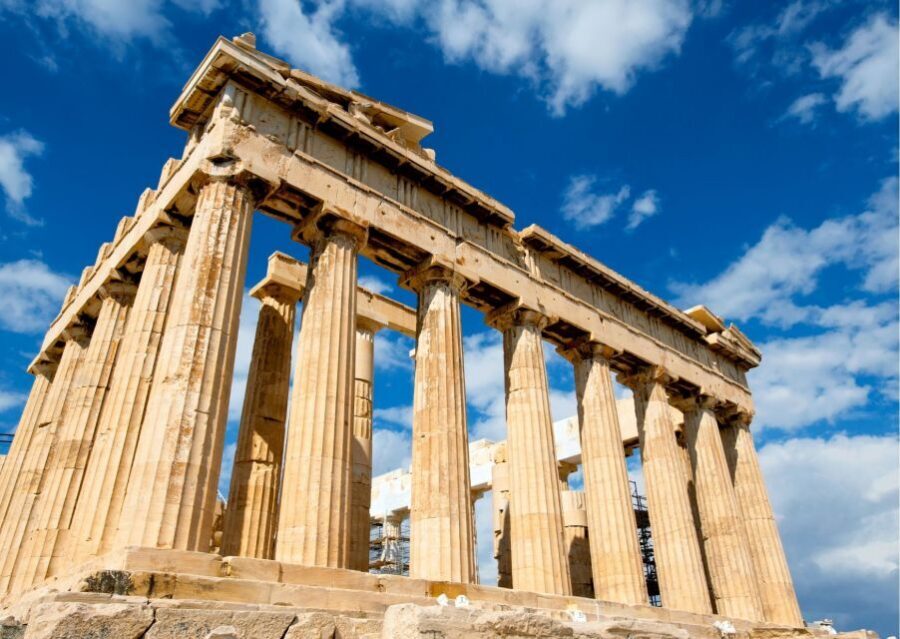
- Parthenon: time spent on construction and meaning
- Erechtheion: myths tied to the place
- Odeon of Herodes Atticus: history that still performs
- The Acropolis Museum: where originals and models finish the story
- A smart order option: museum first when it’s hot
- Private guide energy: licensed experts, real storytelling, and a human pace
- Price and ticket reality: what you pay for beyond the entrance fees
- Upgrade options: Agora time and the wider Athens city tour
- Acropolis only option
- Add the Ancient Agora
- City tour by luxury vehicle (5 hours)
- Timing, crowds, and heat: when to go and how to cope
- Ending your tour: where you’ll get dropped off
- Should you book this Acropolis and Museum private tour?
- FAQ
- How long is the Acropolis and Acropolis Museum private tour?
- Where do we meet the guide?
- Is admission to the Acropolis included in the price?
- How much are the entrance fees?
- Does the tour offer skip-the-line tickets?
- What does the Acropolis portion include?
- What will we do at the Acropolis Museum?
- Is this tour private?
- Is there a communication system for hearing the guide?
- What if the weather is bad?
Key highlights at a glance
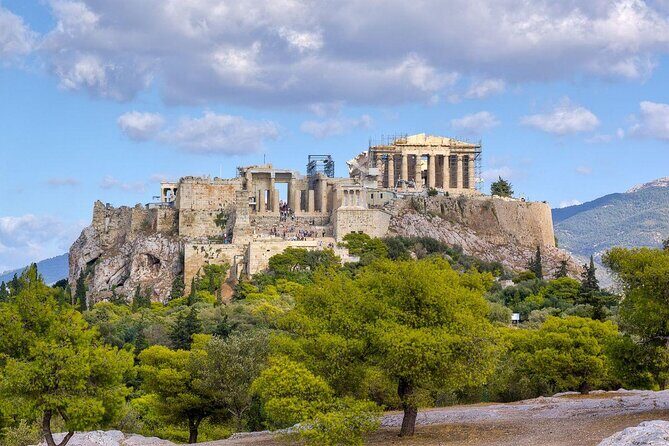
- Licensed expert access and on-site storytelling you can actually ask questions about
- Acropolis + museum pairing so sculptures and artifacts reinforce what you saw outside
- A detailed Acropolis route including Propylaea, the Theater of Dionysus, Athena Nike, Erechtheion, and the Parthenon viewpoints
- Small-group feel with no big-bus vibe and a whisper communication system for groups of 6+
- Upgrade options for the Ancient Agora or a wider city tour by luxury vehicle
Where you meet: fast start near the Acropolis Museum wall
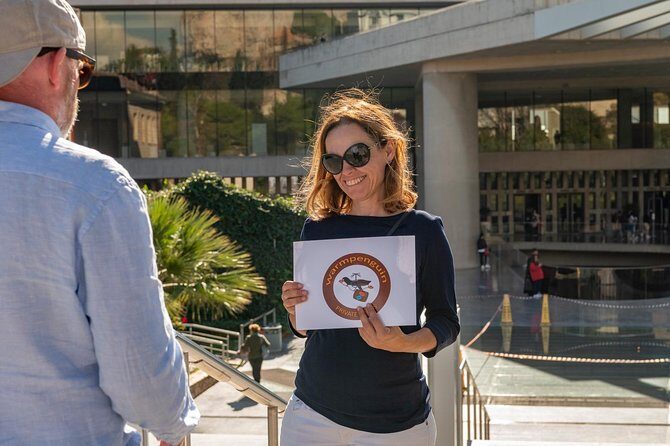
Meeting near the Acropolis Museum is a smart way to begin. Your guide waits at street level at the Acropoli Metro Station, at 7 Makrygianni Street, very close to the museum. That matters because it gets you into the right headspace quickly: you start with orientation instead of wandering.
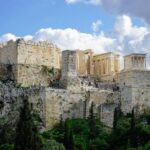
A nice touch here is the perspective at the beginning. You’ll get a look at the surrounding Acropolis wall tied to earlier Mycenean civilization, then you’ll be set up with a clear intro to the Acropolis as the heart of ancient Athens’ public and religious life. Even before you head upward, you learn how to read what you’re about to see.
This also helps if you’re short on time. With a private guide, the “where do we go first” stress drops. You can move as a group, pause for questions, and adjust if you’re taking photos or stopping to catch your breath.
Other Acropolis and Parthenon tours we've reviewed in Athens

The Acropolis route: 80 minutes that make Parthenon architecture readable
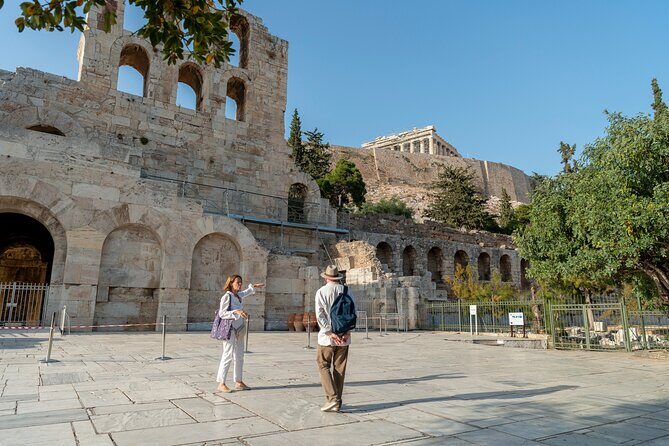
On the Acropolis portion, you’re typically on-site for about 80 minutes, and the goal is not to rush. You’ll see the main temples and major buildings, including the monumental Propylaea (gateway), the Odeon of Herodes Atticus, the Temple of Athena Nike, the Erechtheum, and the famous Parthenon area.
What I like about this kind of guided pacing is that it turns the Acropolis from a checklist into a story you can follow with your eyes. Instead of only being impressed, you learn what to notice: proportions, placement, and how the buildings relate to ceremonies and myths.
Here’s how the route feels in real time:
Theater of Dionysus: the first big wow moment
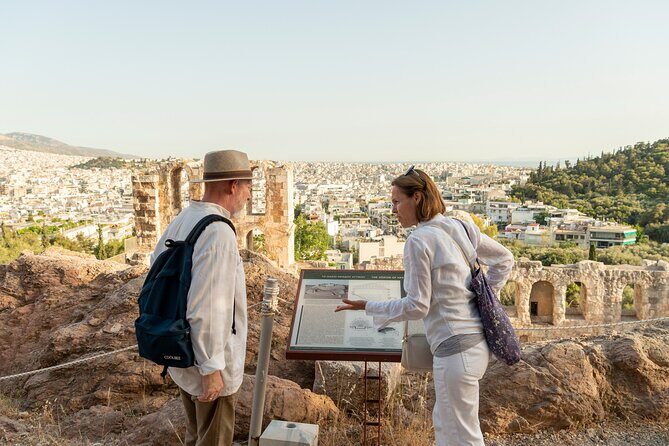
One of the earliest stops is the Ancient Theater of Dionysus. It’s built into the natural amphitheater on the Acropolis slopes and is considered the world’s oldest theater. With a capacity often cited as around 25,000, it’s a reminder that Athens didn’t just build monuments for tourists later, it built spaces for culture, performance, and civic life.
And the connection to plays is key. Your guide will point out that many famous Greek dramas would have premiered here. Once you hear that, the site stops being quiet. You start picturing the audience, the stage, and the way stories were shared as public events.
Up toward Propylaea: greeting Athena and framing the climb
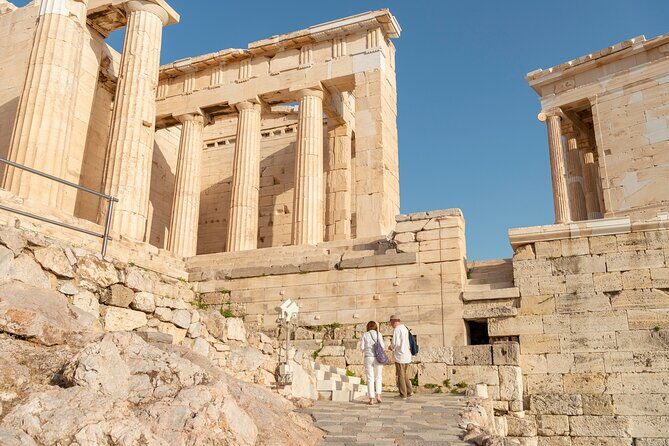
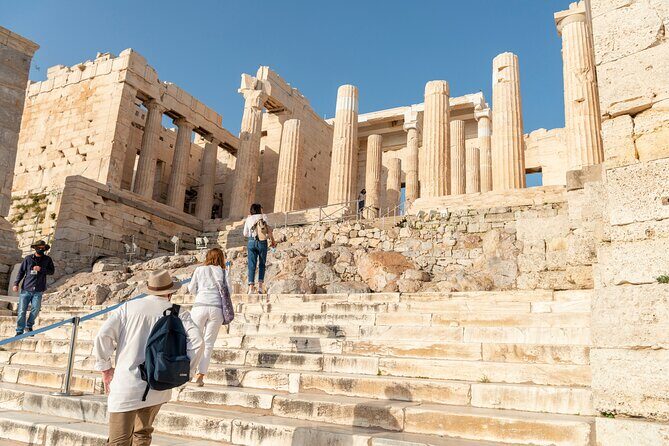
Then you ascend toward the Propylaea, the monumental gateway and entrance. This is one of those spots where the guide’s storytelling can make a huge difference, because you’re not looking at just an entrance. You’re stepping into a sacred approach.
You’ll hear about the legend of a huge decorated bronze statue of Athena, with her spear tip said to be visible by incoming ships in sunlight. Whether you picture the exact scenario or just get the symbolism, it helps you understand why this area mattered beyond religion.
Temple of Athena Nike: the view and the focus
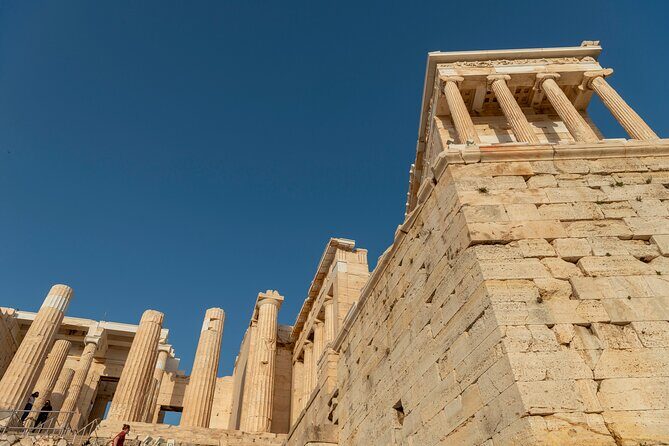
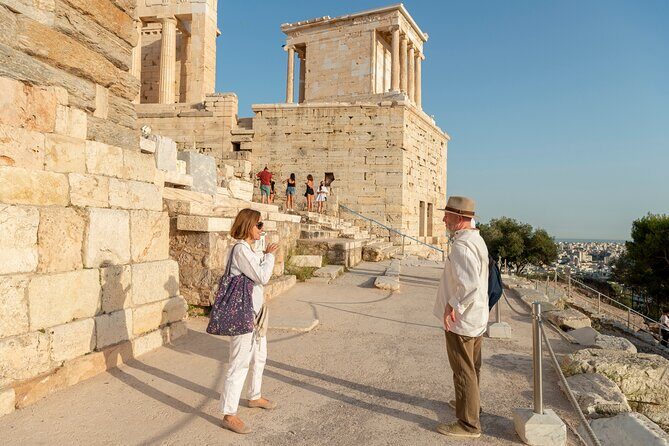
Next comes the Temple of Athena Nike, built around 420 BC. Your guide will explain its placement and why it overlooks the city so prominently. This is a great stop for learning how the Acropolis communicated power and protection. You’re also in a spot where it’s easy to take in the city views while your guide keeps explaining what the temple is doing there.
Other private Acropolis tours we've reviewed in Athens





Parthenon: time spent on construction and meaning
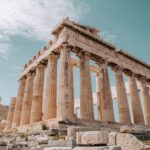
The centerpiece is the Parthenon, and you’ll take time here rather than rushing past it. Expect an overview of construction, mythology, and historical importance. The value of a good licensed guide at the Parthenon is that you don’t just hear trivia. You learn what choices ancient builders made and why.
This is also where private pacing helps. If someone in your group wants extra time to look closely at details, you can slow down. If someone else needs to sit for a minute, the guide can adapt.
Erechtheion: myths tied to the place
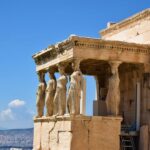
You’ll also visit the Erechtheion, dedicated to both Zeus and Athena. Your guide will connect the site to mythology and point out key aspects, including statuary you can later connect to what you’ll see in the museum. The Erechtheion is often the kind of place where a guide turns confusion into clarity: you start seeing not just individual structures, but a web of beliefs and local identities.
Odeon of Herodes Atticus: history that still performs
Near the end of the Acropolis portion is the Herodes Atticus Marble amphitheater, built in AD 161 in memory of his wife. The big detail your guide will likely emphasize is that it continues as a working theater to the present day. That continuity is part of the magic: this isn’t a dead set. It’s a place where performance still happens.
The Acropolis Museum: where originals and models finish the story
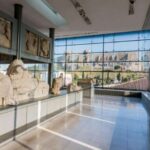
After the outdoor monuments, you move on to the Acropolis Museum for about 80 minutes. This is where the tour becomes more than sightseeing. The museum holds many original masterpieces and uses models, videos, and interactive installations.
What I love about this pairing is that it answers the classic question: so what am I actually looking at?
Your guide will highlight the museum pieces that matter most and explain the myth and historical context behind them. That means when you remember something like a temple feature from outside, you’re not guessing what it was. You see the related artifacts and get better at connecting sculpture to architecture.
A smart order option: museum first when it’s hot
If you’re doing an Acropolis + museum format, I’d take advantage of any chance to keep momentum while staying comfortable. One practical tip you’ll hear from this company’s approach: for some guests, touring the museum first can feel better, especially when the Acropolis is hot and crowded. The museum experience can be a welcome break since the interior conditions are typically more comfortable than the open-air site.
Private guide energy: licensed experts, real storytelling, and a human pace
This is a private tour, meaning only your group is involved. That changes everything: you don’t have to compete with other groups for attention, and you can ask questions naturally as you walk.
The best part is how different guides can shape the experience. You might get a guide like Eva, praised for being flexible and efficient, or Betty, recognized for making Athens history feel alive and personal. Some guides you could be lucky enough to learn from include Nicole (excellent storytelling), Lisa (helpful suggestions like museum-first), Lydia (personal and enjoyable), Catherine (archaeology-level insight), Vicki (skilled navigation in a busy site), and Valia (especially good with families). The theme is consistent: licensed expertise and clear communication.
One more practical detail: the tour is set up so you can hear your guide without a big-bus feel. For larger groups, a whisper communication system is included for groups of 6 or more, which helps keep everyone on the same page.
Price and ticket reality: what you pay for beyond the entrance fees
The listed price is $188.65 per person for the private 3-hour experience. On paper, that can look steep, but you’re not only buying access. You’re paying for:
- A licensed expert guide who can enter with you
- A guided route that points out what matters (instead of wandering)
- Dedicated museum time where artifacts connect back to the outdoor monuments
Now add the non-included entrance fees. Plan for about €50 total for the Acropolis (€30) plus the Acropolis Museum (€20). If you upgrade to include the Ancient Agora, there’s an additional €20 per person entrance fee. So the true total cost depends on which option you select.
My practical way to judge value: if you’re the kind of person who wants understanding, not just photos, this pays off fast. The cost of paying for museum time and paying for a guide separately would often be higher than this bundled approach. And with a private guide, you don’t lose time repeating explanations or waiting for a group to catch up.
Upgrade options: Agora time and the wider Athens city tour
This tour is flexible. You can keep it focused or expand.
Acropolis only option
There’s an Acropolis only option. You’ll be on-site for about 90 minutes (also described as a shorter option around 2 hours). If you choose this, it’s recommended to book after lunch for a crowd-free experience and better light—the kind of golden, honey-colored view that makes the stone glow.
Add the Ancient Agora
If you upgrade to Acropolis & Ancient Agora, the added history is the point. You’ll still cover major Acropolis highlights, then continue with the Agora’s deeper layers of ancient life. One consideration: there’s walking distance between the sites with rough cobbles, so this option is not recommended for limited mobility.
City tour by luxury vehicle (5 hours)
For a bigger day, you can upgrade to a 5-hour private city tour by vehicle with return transfers. Besides the Acropolis and museum with a licensed guide at those stops, the broader tour can include the Temple of Zeus, Hadrian’s Arch, the Olympic Stadium, Athens Trilogy, and Syntagma Square with the Guards.
This is a good fit if you want more of modern Athens and the surrounding landmarks without stringing together multiple taxi rides.
Timing, crowds, and heat: when to go and how to cope
Athens can be intense in summer. The Acropolis is outdoors, and the museum is an excellent break point, but you still need a plan.
If you’re visiting in warm months, aim for an earlier start. In late July, one of the clearest real-world tips from the experience style of this tour approach is that morning hours keep the site manageable, while later in the day, crowds and heat can stack up. If your schedule allows, early arrival helps you enjoy the views without feeling constantly rushed.
Bring water, wear shoes with real grip, and expect some uphill walking. Even when the tour is private and paced well, you’re still climbing. For guests who take their time and keep a steady pace, the experience becomes much more enjoyable.
Ending your tour: where you’ll get dropped off
The tour ends based on the option you select:
- For the Acropolis + museum option, you’ll either return to the original meeting point or you may finish at the museum
- For Acropolis only, your tour may end inside the Acropolis so you can linger for photos and city views
- For Acropolis + Agora, the tour ends at the Agora
This matters because it affects your next move. If you’d like to continue independently, ending inside the Acropolis can be a great chance to soak up the atmosphere after the guide has set the context.
Should you book this Acropolis and Museum private tour?
Book it if:
- You want the Acropolis to make sense, not just look impressive
- You value a licensed guide who can answer questions as you go
- You plan to spend real time at the museum instead of rushing through it
- You’re traveling with family members or in a group where one set pace works better than mass-tour chaos
Skip it or reconsider if:
- You’d rather go fully self-guided and spend your money on other parts of your trip
- Your budget can’t handle both the tour price and the entrance fees (about €50 for Acropolis + museum, plus €20 extra if adding Agora)
- You need a low-walking itinerary and are considering the Agora add-on (rough cobbles and distance are part of that version)
If you’re unsure, choose the Acropolis + museum pairing. It’s the most “complete” way to connect architecture to artifacts, and that’s what turns one famous site into a real understanding of Athens’ Golden Age.
FAQ
How long is the Acropolis and Acropolis Museum private tour?
The tour is about 3 hours total, usually split into roughly 80 minutes at the Acropolis and about 80 minutes at the Acropolis Museum.
Where do we meet the guide?
Your guide meets you at the Acropoli Metro Station at street level, at 7 Makrygianni Street, near the Acropolis Museum.
Is admission to the Acropolis included in the price?
No. Entrance fees are not included. You’ll need to budget separately for the Acropolis and the museum.
How much are the entrance fees?
The Acropolis entrance fee is €30 per person and the Acropolis Museum fee is €20 per person. If you add the Ancient Agora, that entrance fee is €20 per person.
Does the tour offer skip-the-line tickets?
After booking, the provider will contact you to ask whether you need help purchasing Skip-The-Line Tickets so your guide has them ready. If you do not reply, it is assumed you purchased the correct tickets yourself.
What does the Acropolis portion include?
You’ll see major monuments and buildings such as Propylaea (gateway), the Theater of Dionysus, Odeon of Herodes Atticus, the Temple of Athena Nike, the Erechtheion, and time with the Parthenon.
What will we do at the Acropolis Museum?
You’ll tour the Acropolis Museum and focus on key masterpieces, with explanations of stories, myth, and historical context. The visit is about 80 minutes.
Is this tour private?
Yes. It’s a private tour, so only your group participates.
Is there a communication system for hearing the guide?
A whisper communication system is included for groups of 6 or more.
What if the weather is bad?
The experience requires good weather. If it’s canceled due to poor weather, you’ll be offered a different date or a full refund.