REVIEW · ATHENS
Athens: Acropolis and Parthenon Guided Walking Tour
Book on GetYourGuide →Operated by ATHENS WALKING TOURS · Bookable on GetYourGuide
The Acropolis makes more sense with a guide. You’ll tackle the south slope, hit the Parthenon area with context, and hear it all clearly with headphones—including the myths that shaped how Athenians saw these stones. One catch: entry timing and security can be strict, so you’ll want to arrive early and plan for possible waiting.
What I like most is the way the walk builds up like a story, not a checklist. Stops like the Theatre of Dionysus and the Erechtheion don’t just get pointed out—they get explained, often with helpful visuals from guides (like Victor’s photos) and clear, patient pacing (like Dory keeping a group moving smoothly).
My second favorite thing is the payoff at the top: you’re guided through the key structures, and you end with the kind of wide Athens views that make photos look effortless. Do a tour like this if you want to understand what you’re seeing fast—just come ready for crowds, heat, and a fair amount of walking.
In This Review
- Key Highlights You’ll Actually Feel During the Walk
- Why This Acropolis Walk Costs $38.39 (and Where the Value Comes From)
- Meeting Point, Timing, and the Crowd Reality at the Acropolis
- South Slope Warm-Up: Dionysus Sanctuary, Theatre, and the Asklepieion
- Theatre of Dionysus: where drama meets stone
- Asklepieion of Athens: healing in a religious setting
- Quick context stops: what you’re passing and why
- Odeon, Propylaea, and Temple of Athena Nike: the Walk That Sets Up the Main Hits
- Odeon of Herodes Atticus: a performance backdrop
- Propylaea: the grand gateway effect
- Temple of Athena Nike: a quick stop with a big meaning
- Erechtheion and Parthenon: How to Read the Marble Without Getting Overwhelmed
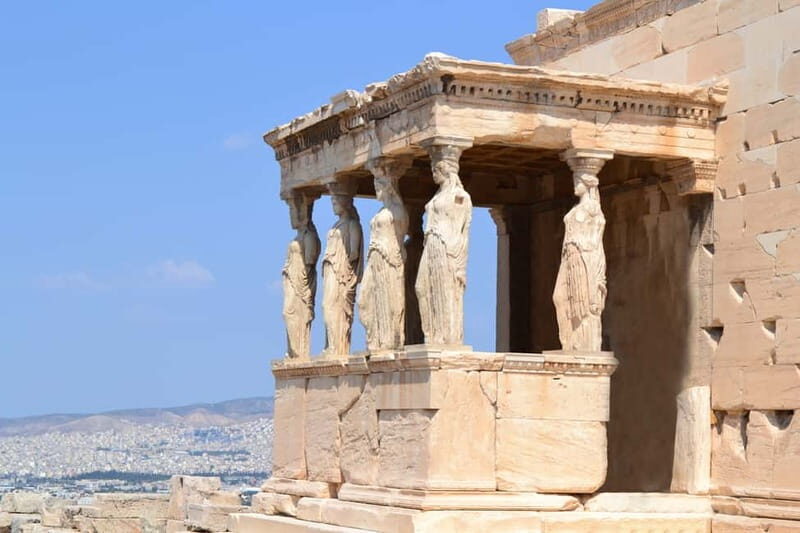
- Erechtheion: myths in the details
- Parthenon: the payoff, with time to actually take it in
- Views Over Athens, Plus Extra Landmarks You’ll Recognize Later
- Should You Book This Acropolis and Parthenon Walking Tour?
- FAQ
- How long is the Athens Acropolis and Parthenon guided walking tour?
- Where do I meet the guide?
- What time should I arrive before the tour starts?
- Is Acropolis admission included in the price?
- Do I need to buy tickets for the Acropolis Museum too?
- What does the tour include for hearing the guide?
- Does the tour include a skip-the-line entry?
- Will the tour run in the rain?
- What should I bring, and what isn’t allowed?
- Is the tour in English?
Key Highlights You’ll Actually Feel During the Walk
- Licensed local guides: you’re hearing the site from people who know how to interpret it on the ground.
- Headsets with clear audio: it cuts through crowd noise so the explanations land.
- Myth + history at the right stops: Dionysus to Erechtheion to Parthenon, in a logical path.
- Time on the Parthenon: you get a focused chunk, not a rushed peek.
- Panoramic photo moments: views over Athens from the Acropolis top help you see the city’s layout.
- Maps and an Athens Guide magazine: useful for building the rest of your day after the tour ends.
Why This Acropolis Walk Costs $38.39 (and Where the Value Comes From)

For $38.39 per person, the value isn’t just that you’re paying for access to famous ruins. You’re paying for a licensed guide, a guided route that keeps you oriented, and headphones so you don’t lose details when the group tightens up. It’s also set up to save you time with skip-the-ticket-line entry, which matters at peak hours.
Your cost can stretch further depending on the ticket option you pick. If you choose the option that includes tickets, the Acropolis entry ticket (and possibly the Acropolis Museum ticket and museum tour) are handled for you. If you choose the option without tickets, you’re responsible for buying your own Acropolis admission online and matching it to the tour time—right timing is non-negotiable here.
Also, you’re not just walking from point A to point B. You’re given an Athens map and the Athens Guide magazine with extra ideas, so you can keep exploring after the tour ends back at the meeting point. That’s a practical value-add for visitors who want a plan.
Other Acropolis and Parthenon tours we've reviewed in Athens

Meeting Point, Timing, and the Crowd Reality at the Acropolis
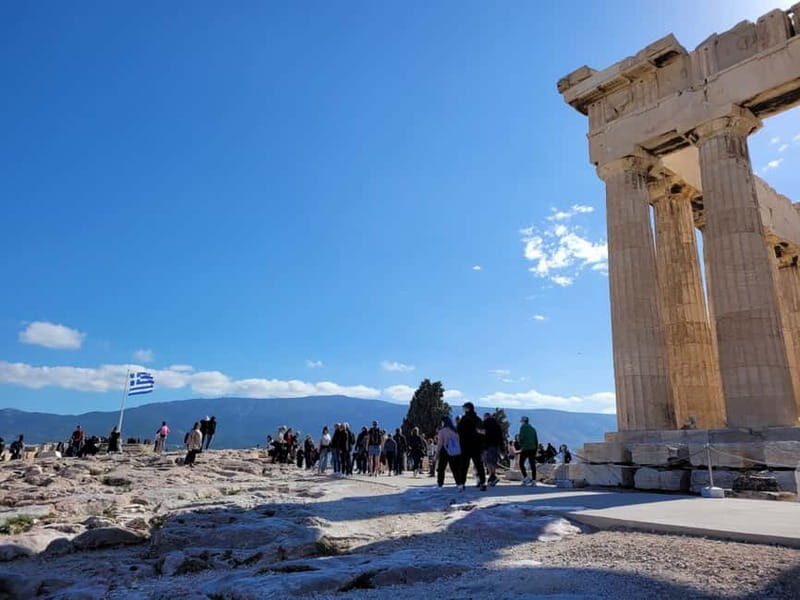
You’ll meet at 3 Dionyssiou Areopagitou Street, look for the orange sign that says Athens Walking Tours. The practical tip: arrive 20 minutes early, not “when you get there.” The tour enters the Acropolis immediately after it begins, and entry times are strict—latecomers don’t get waited for.
Plan around security too. Expect airport-style checks, and during busy periods that can mean 30+ minutes of waiting. If you’re going at a popular time (late afternoon and evenings can be tempting), keep your schedule flexible so one hiccup doesn’t scramble your whole day.
What helps: the route is designed as a steady walk from the south slope up to the main structures. Good guides keep groups together and moving at a comfortable pace. Reviews often highlight how guides like Antonis and Andrea helped people stay together even with heavy foot traffic, and how the headsets made it easier to stay connected to the story while walking.
South Slope Warm-Up: Dionysus Sanctuary, Theatre, and the Asklepieion
This tour starts with the approach—so you don’t feel like you’re plopped in front of marble with no way to read it. You begin on the south slope and work your way upward, with stops that set the stage for the Acropolis as a whole.
Theatre of Dionysus: where drama meets stone
One of the early stops is the Theatre of Dionysus. This is a big deal because it ties the Acropolis to something everyday Greeks cared about: performance, public storytelling, and civic life. Instead of treating the theater like a relic, your guide frames it as part of a living tradition of myth and public culture.
A practical note: theaters are exposed and you’ll likely feel sun and wind here. Bring your hat and sunglasses, because you’ll be standing around while your guide explains what you’re looking at.
Asklepieion of Athens: healing in a religious setting
Next you’ll reach the Asklepieion of Athens. Even if you’ve never studied ancient medicine, this stop gives you a lens for understanding the Acropolis as more than architecture. It shows how religion, health, and daily beliefs could intersect in a sacred space.
Why this stop matters: it breaks the pattern of only focusing on temples. When you hit later structures like the Erechtheion, you’ll understand more of the Acropolis as a network of sanctuaries—not a single monument.
Other Acropolis walking tours we've reviewed in Athens






Quick context stops: what you’re passing and why
Along the way, your guide helps you connect the Acropolis to the wider city view. You’ll hear about important landmarks you can spot conceptually from the area, including things like the Ancient Agora and the National Observatory of Athens, plus the city hills such as Filoppapos, Mars, and Pnyx. You don’t need to sprint between distant sights—this tour builds those connections so you know what you’re seeing later in Athens.
One thing to be aware of: these stops are short guided segments with walking between them. If you love lingering, just know the tour is paced for flow. The upside is you’ll cover a lot without feeling lost.
Odeon, Propylaea, and Temple of Athena Nike: the Walk That Sets Up the Main Hits
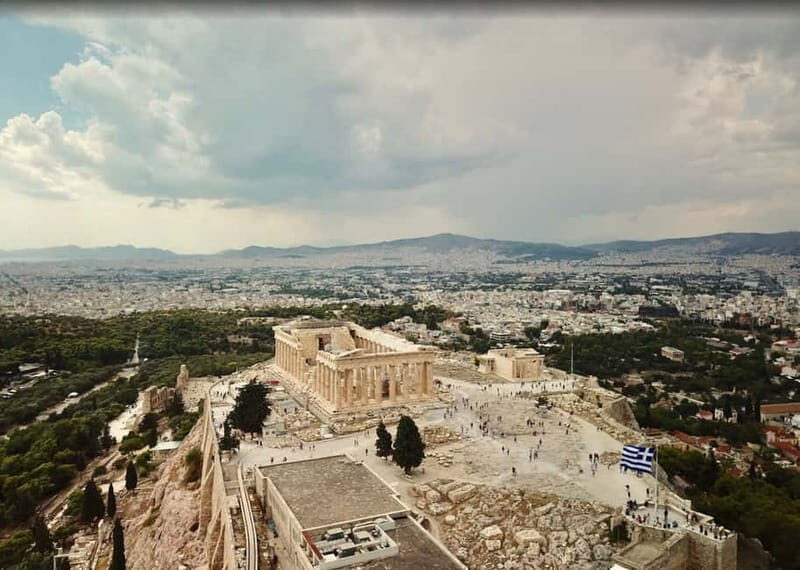
As you move up, the route tightens into the classic Acropolis experience: ceremonial entrances, dramatic transitions, and the feeling that you’re stepping onto a stage.
Odeon of Herodes Atticus: a performance backdrop
You’ll visit the Odeon of Herodes Atticus. This stop is one of the “click” moments for many first-timers, because it reinforces how central performance and public gatherings were to the ancient city. Even if you don’t hear a full explanation of acoustics, you’ll understand why this space mattered.
If you’re into photos, this is a strong spot for framing the monumental elements with the modern city in the distance.
Propylaea: the grand gateway effect
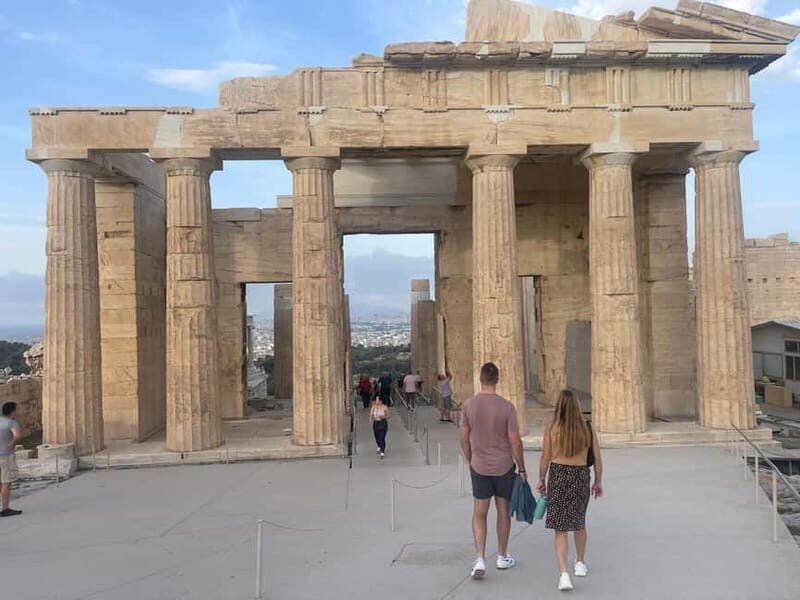
Then comes the Propylaea, the gateway that helps you shift from the approach into the heart of the complex. Your guide uses this moment to orient you—where you are, what the space was designed to do, and how the main temples relate to the route you’re taking.
This is also a good place to slow down mentally. Once you understand the gateway concept, the rest of the walk makes more sense.
Temple of Athena Nike: a quick stop with a big meaning
Next is the Temple of Athena Nike. It’s a short guided segment, but don’t treat it like a filler stop. This temple connects the story of Athena directly to the idea of victory and civic identity, which helps when you later stand near the Erechtheion and Parthenon and realize how much symbolism is baked into the design choices.
Erechtheion and Parthenon: How to Read the Marble Without Getting Overwhelmed
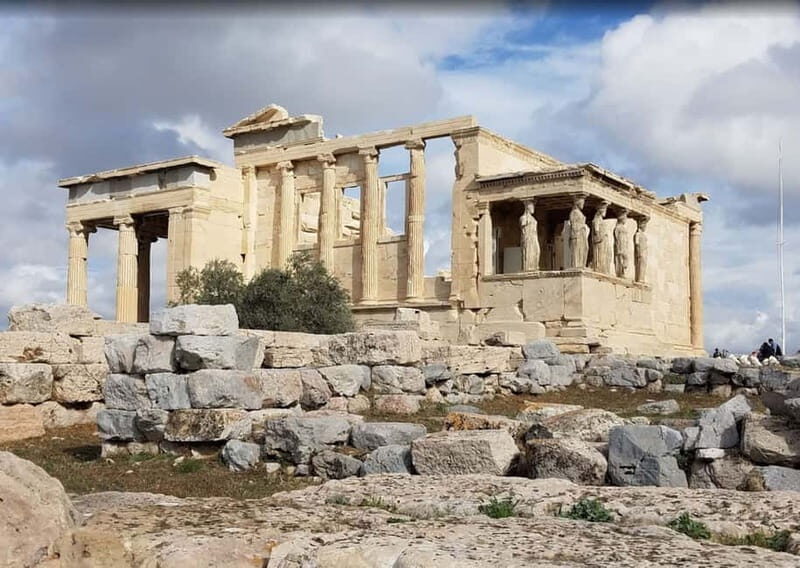
This is where the tour earns its keep. The best guides don’t just point out structures—they help you understand why each one looks the way it does.
Erechtheion: myths in the details
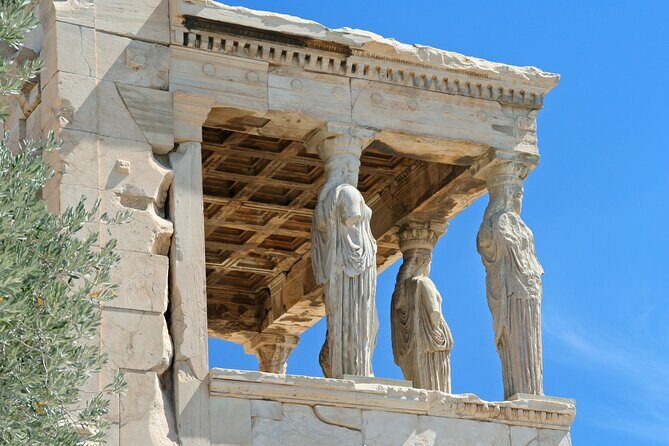
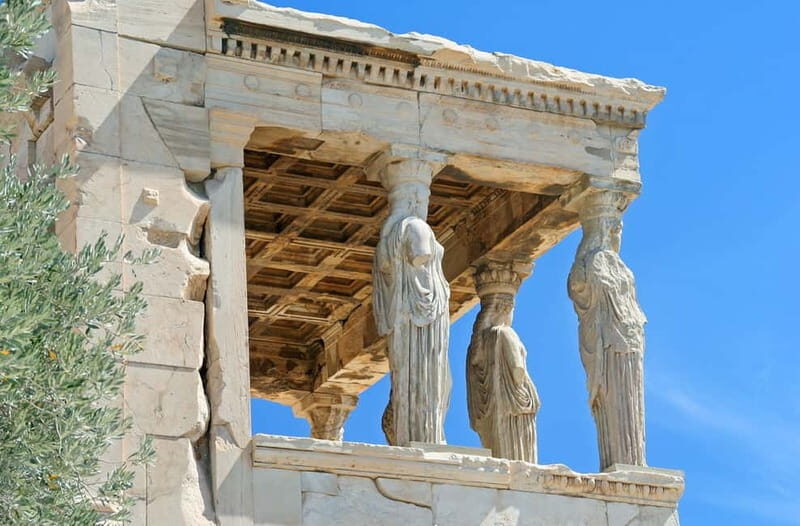
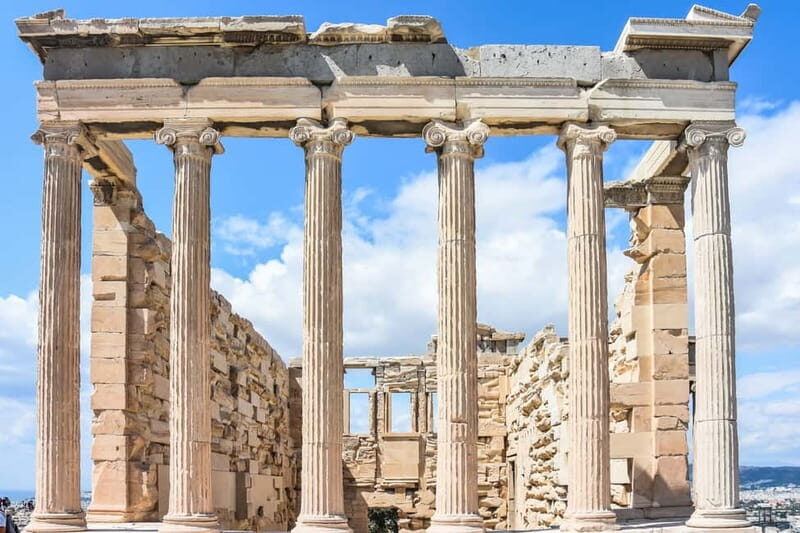
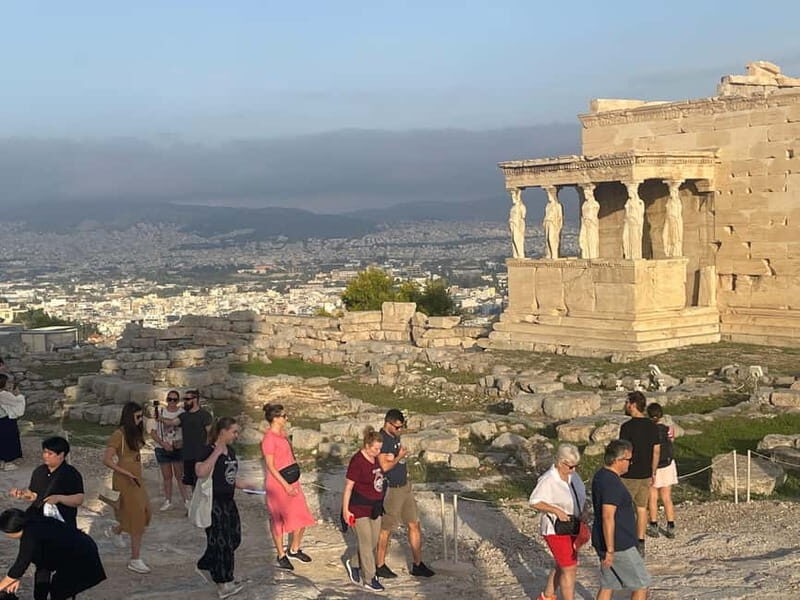
You’ll spend time at the Erechtheion. This stop is often where the tour turns from sightseeing to interpretation. Your guide explains the significance of the monument and weaves in the myths tied to what you’re seeing.
It’s also a spot where you’ll notice how different parts of the Acropolis can feel distinct but still connected. That contrast is helpful: it prevents the site from feeling like one long blur of stone.
From the experience side, I love that this tour gives you enough time here to actually look. In particular, guides described in reviews—like Maria keeping three kids engaged—are often great at changing tone and attention without losing accuracy. You may see that kind of “keep everyone with you” storytelling vibe in your group.
Parthenon: the payoff, with time to actually take it in
Finally, you reach the Parthenon. You’ll have about a focused guided segment here, and that matters because without context the Parthenon can feel like a photo backdrop. With the guide’s explanations, the structure becomes easier to read as an intentional statement—political, religious, and artistic all at once.
Your guide also helps you connect the Parthenon to what you saw earlier: the route, the sacred spaces, and the civic setting. That’s how the day sticks in your head.
If you’re sensitive to heat, this is where you’ll feel it most—so your “bring a hat and water-ready plan” matters. You’re also better off aiming for photo angles when crowds shift, since the top can get packed.
Views Over Athens, Plus Extra Landmarks You’ll Recognize Later

One reason this tour works is it builds a mental map of Athens while you’re up at the Acropolis. You’ll get broad views of the city, which help you understand where major hills and districts sit relative to the monuments.
Expect the tour to reference scenic areas and sights like Filoppapos, Mars, and Pnyx, plus major points such as the Ancient Agora and the National Observatory. Even if you don’t walk to those places during the tour, you’ll leave with better orientation—and that makes later self-guided exploring less stressful.
Photo-wise, the panoramic views are built into the experience. The Instagram value is real, but the bigger win is understanding how Athens spreads beneath the Acropolis. That’s the kind of context that turns a set of pictures into a story.
One more plus: if you like how stories land, some guides add fun, kid-friendly elements. For example, reviews mention guides using a Lego-style Acropolis reconstruction to help children grasp the layout. If you’re traveling with kids, that kind of creative reinforcement can be a genuine help, and it’s one reason this tour can work for families when shorter attention spans kick in.
Should You Book This Acropolis and Parthenon Walking Tour?
Book it if:
- You’re seeing Athens for the first time and want the fastest path to understanding what you’re looking at.
- You hate the feeling of standing in front of the Parthenon with zero idea what matters most.
- You want a guided route with headphones so you don’t fight the crowd noise.
- You like myth and story, not just dates and facts.
Skip or consider something else if:
- You’re extremely heat-sensitive and know you’ll struggle with open-air stops.
- You need mobility support, since this tour isn’t suitable for wheelchairs or people with mobility impairments.
- You’d rather spend your whole time at one spot and linger without a set route.
For most visitors, this is a strong value. At $38.39, what you’re buying is clarity: a logical path up the Acropolis, short guided stops that keep momentum, and the kind of explanations that turn famous ruins into something you can actually interpret.
FAQ
How long is the Athens Acropolis and Parthenon guided walking tour?
The tour runs about 2 to 3.5 hours. Starting times vary, so check availability for the exact schedule.
Where do I meet the guide?
Meet at 3 Dionyssiou Areopagitou Street. Look for the orange sign displaying Athens Walking Tours. The meeting point is by the start of the pedestrian walkway that leads toward the Acropolis from Hadrian’s Arch.
What time should I arrive before the tour starts?
Arrive about 20 minutes early. Acropolis entry times are strict, and the tour enters the site right after it begins.
Is Acropolis admission included in the price?
It depends on the ticket option you choose. With tickets, the Acropolis entry ticket is included. Without tickets, you must purchase your own Acropolis admission online.
Do I need to buy tickets for the Acropolis Museum too?
Only if you select the option that includes museum tickets. The museum entry ticket and museum tour are included when that option is chosen.
What does the tour include for hearing the guide?
You’ll be given headphones (earsets) to hear the guide clearly during the walking tour.
Does the tour include a skip-the-line entry?
The tour is advertised as skipping the ticket line.
Will the tour run in the rain?
Yes. Tours run rain or shine.
What should I bring, and what isn’t allowed?
Bring your passport or ID, comfortable shoes, sunglasses, sun hat, and sunscreen. Baby strollers and luggage or large bags are not allowed.
Is the tour in English?
Yes, the live guide provides the tour in English.