REVIEW · ATHENS
Athens Acropolis and Parthenon Walking Tour
Book on Viator →Operated by Athens Walking Tours · Bookable on Viator
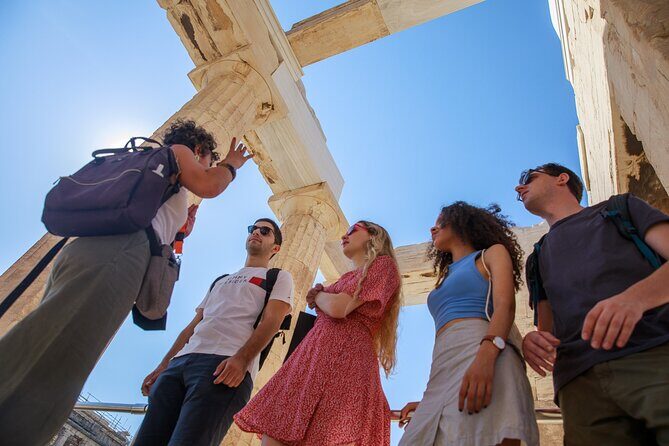
That climb up to the Acropolis is the heart of Athens. This guided Acropolis and Parthenon walk turns a big, crowded site into a clear storyline, with a licensed guide and earsets that keep the myths, monuments, and architecture easy to follow.
I love the simple structure: you’ll hit the major landmarks on the hill without feeling lost, plus you get an Athens map and a guide magazine for the rest of your trip. I also love the earset system, which helps you hear the guide clearly while you’re moving between stops. One possible drawback: the route is uphill and uneven, and the Acropolis doesn’t offer the comfort stuff you might expect, like toilets on-site.
In This Review
- Key things to know on this Acropolis walk
- Why a 2-hour Acropolis walk is such good value
- Meeting at the base: tickets, earsets, and what to expect right away
- The Acropolis climb, minus the guesswork: Dionysus to the Parthenon
- Acropolis grounds: where the big monuments start making sense
- Theatre of Dionysus: the birthplace of drama
- Temple of Asclepios: a calm break from monuments
- Odeon of Herodes Atticus: an ancient theater still in use
- Philopappos Hill: a viewpoint moment you’ll remember
- Temple of Athena Nike: victory in miniature form
- Propylaea: the grand gateway that sets the mood
- Erechtheion: the Caryatids and the art side of Athens
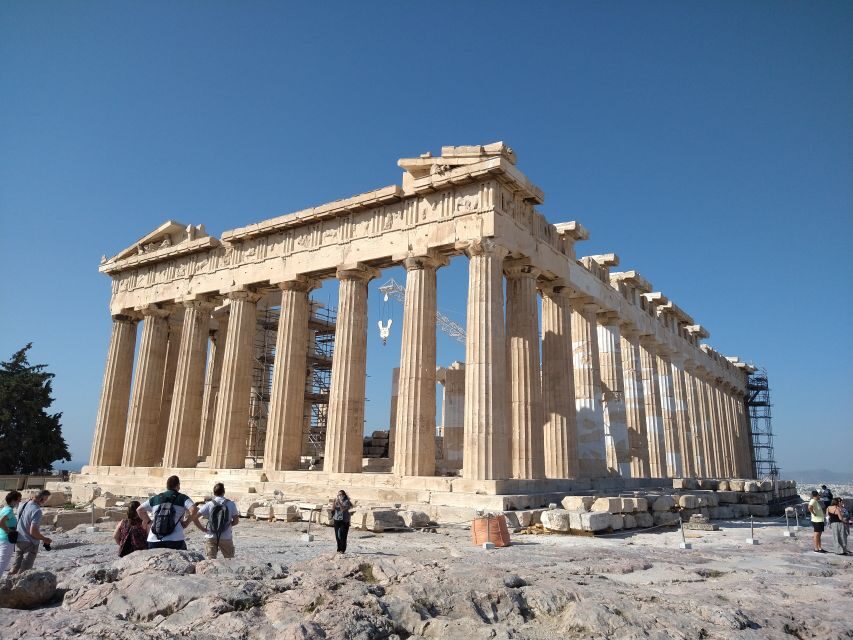
- Parthenon: the masterpiece everyone came for
- How the guide changes everything (and how to use that superpower)
- Watch for headset issues
- Photos, weather, and the “no surprises” comfort checklist
- Price and logistics: what you’re paying for beyond the ticket
- Who should book this Acropolis and Parthenon walking tour
- Should you book this Acropolis and Parthenon walking tour?
- FAQ
- Do I need an Acropolis admission ticket to join?
- What’s included in the $41.12 price?
- Where do we meet for the tour?
- How long is the walk, and how strenuous is it?
- Are earsets provided during the tour?
- What should I bring or wear?
Key things to know on this Acropolis walk
- Licensed guide + earsets mean you’re not guessing what you’re looking at while you’re climbing
- The focus is the Acropolis hill circuit, including the Parthenon area, with plenty of stops for photos
- There’s an optional upgrade that includes admission ticket handling (otherwise you’ll be instructed how to pay for entry)
- Expect a steep walk and irregular ground—comfortable shoes matter
- The group size is limited to 24 travelers, which helps the pace feel controlled
- You’ll finish with a better sense of where to go next in Athens, thanks to the map + guide magazine
Why a 2-hour Acropolis walk is such good value
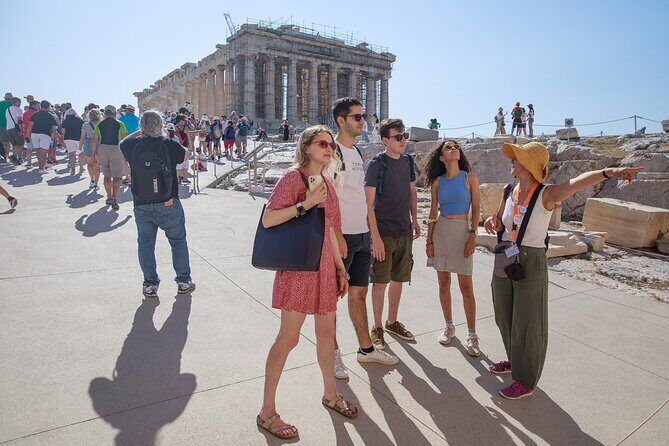
Even with short time in Athens, the Acropolis is non-negotiable. The trick is not just seeing the big postcard buildings, but understanding why they were built and how they fit together. That’s what makes this tour practical: you get a guided route that connects the key monuments into one story instead of a checklist.
At $41.12 per person for about 2 hours, the price can be a bargain if you factor in what you’re really buying: guide time, an easy-to-follow flow through the hilltop, earsets so you can hear in crowds, and support for ticket entry when you choose that option. If you don’t select the admission-tickets option, entry is an additional €30 per person—so you’ll want to decide based on how much you hate dealing with ticket lines and time slots.
This is especially worth it if you want the highlights now and keep your schedule flexible later. You’ll leave with a map and guide magazine so you can decide what to do next, whether that’s walking the Plaka streets, grabbing a souvlaki lunch, or planning the Acropolis Museum.
Other Acropolis and Parthenon tours we've reviewed in Athens

Meeting at the base: tickets, earsets, and what to expect right away
You’ll meet your guide and group at LUKUMAΔΕΣ, Dionysiou Areopagitou 3, Athina 117 42. That’s near the base of the Acropolis, so you can start the climb without a long transfer. The meeting time is set by your booking option, and the tour follows strict entry timing—so arrive on time. The site uses airport-style security, and in peak season, waits can run 30+ minutes, so plan to be relaxed, not rushed.
The tour uses earsets (small personal audio receivers) so you can hear the guide clearly even when you’re surrounded by other groups. That matters more than you might think. The hill is windy sometimes, and stone echoes can make outdoor group commentary hard to catch without audio support. In a few cases, people reported intermittent headset issues—so if you’re someone who hates missing words, keep an earset comfortable and pay attention to volume early.
Ticket handling depends on your selected option. If you booked without entrance tickets, you’ll need to give the guide cash at the start (the guide has prepaid, so you’re not lining up for tickets yourself). If you choose the upgrade, the tour includes the ticket setup and also lists skip-the-line support for Acropolis & Museum entry. Either way, you’ll be connected to the right entry process for your time slot.
The Acropolis climb, minus the guesswork: Dionysus to the Parthenon
This tour’s flow makes sense physically and historically. You’ll go up the hill to the UNESCO World Heritage–listed core, passing major points along the way like the Propylaea and the Dionysus Sanctuary. The route keeps you oriented: each stop explains not only what you’re seeing, but what that space did in classical Athens.
Here’s how the story unfolds on the walk:
Acropolis grounds: where the big monuments start making sense
First stop: the Acropolis itself (about 20 minutes). This is the moment where you stop treating everything like separate ruins and start seeing the plan. A good guide will connect the geography—where temples sit, how sightlines work, and how different religious and civic spaces relate. You’ll also get a sense of scale: the hilltop feels like a small city, not a single building.
Theatre of Dionysus: the birthplace of drama
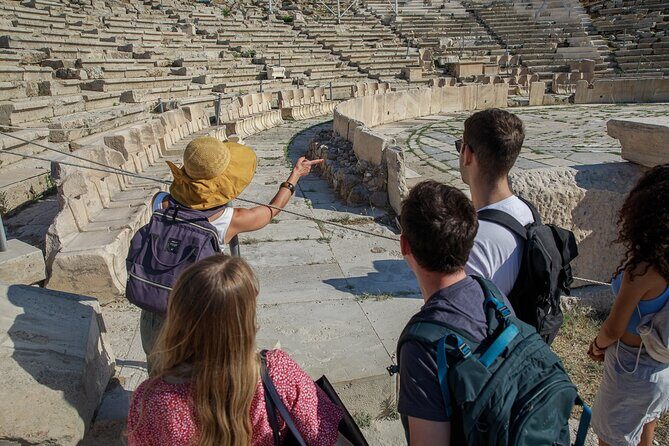
Next is the Theatre of Dionysus (about 15 minutes). This is one of those sites where the guide’s storytelling really helps. It’s tied to the beginnings of Greek theater—where Aeschylus, Sophocles, and Euripides’ works were first performed. Even if you don’t know the plays, standing in the general area where drama took root makes the myths feel less like bedtime stories and more like public life.
Practical note: this area can be windy and crowded, so the earsets do their job here.
Other Acropolis walking tours we've reviewed in Athens





Temple of Asclepios: a calm break from monuments
Then you’ll visit the Temple of Asclepios (about 10 minutes). Unlike the big political and religious power centers, this sanctuary was associated with healing. It’s a nice pause because it changes the emotional tone of the tour: you’re not only looking at triumph or civic identity—you’re thinking about health, ritual, and relief. If your group likes a bit of variety (not just stone after stone), this stop delivers.
Odeon of Herodes Atticus: an ancient theater still in use
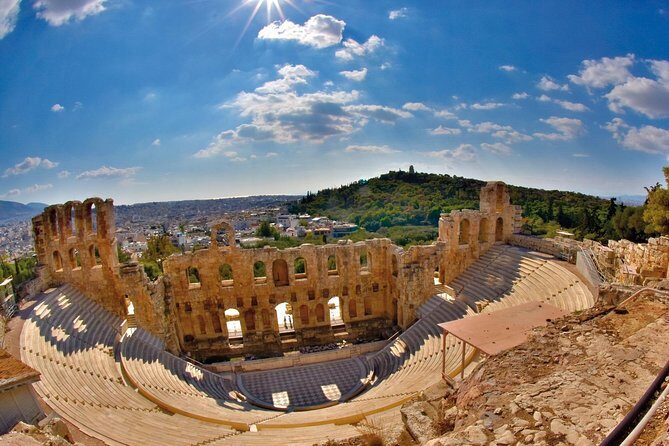
The Odeon of Herodes Atticus (about 10 minutes) brings time travel vibes without pretending it’s magic. Built in 161 AD, it’s still used for performances. That “then and now” connection is exactly why guides earn their pay here: the building feels meaningful beyond its age.
Philopappos Hill: a viewpoint moment you’ll remember
After that, you’ll have a stop at Philopappos Hill, also called the Hill of the Muses. You’ll pause for photos and city views with the striking monument of Philopappos. This is one of the best chances to breathe, reset your camera, and take in Athens from above so the rest of your trip feels more connected.
Temple of Athena Nike: victory in miniature form
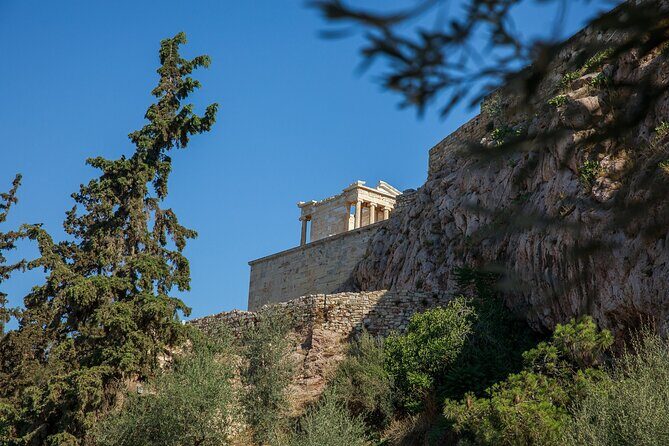
Next: Temple of Athena Nike (about 5 minutes). It sits on the southwestern edge of the Acropolis, dedicated to Athena as the goddess of victory. It’s a smaller temple compared to the Parthenon, but it’s a strong contrast—and the view from there helps you place the hilltop layout in your mind.
Propylaea: the grand gateway that sets the mood
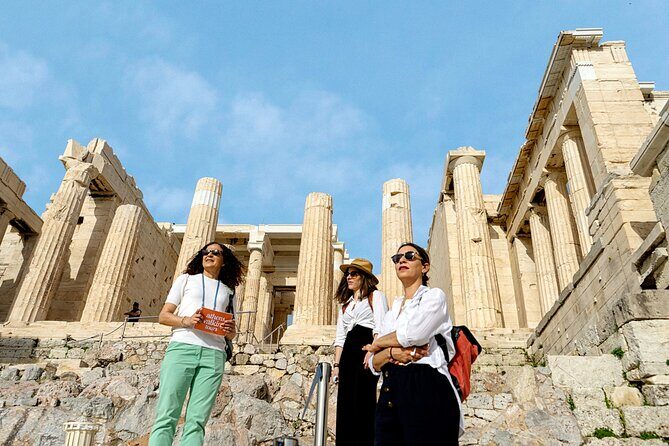
Then you’ll pass through the Propylaea (about 5 minutes), the marble gateway into the Acropolis. Even in a quick stop, it matters. It creates the sense of entering a world with rules, rituals, and status. Think of it as the threshold between regular Athens and the monumental stage.
Erechtheion: the Caryatids and the art side of Athens
The Erechtheion (about 15 minutes) is where the tour turns more artistic and architectural. It’s dedicated to both Athena and Poseidon, and the headline feature is the Caryatid Porch, with six female statues acting like columns. This stop helps you see that Athenian building wasn’t only about size—it was also about sculptural elegance and meaning in form.
Parthenon: the masterpiece everyone came for
Finally: the Parthenon (about 25 minutes). This is the undisputed star, dedicated to Athena Parthenos. A strong guide ties it back to the wider hilltop plan: what it symbolized, why Athena mattered so much, and how the Parthenon fit into classical civic identity. You’ll get time to stand back and take it in—not just snap a photo and rush.
How the guide changes everything (and how to use that superpower)

A self-guided Acropolis visit can work, but a guide makes the place click faster. The best guides do three things well.
First, they keep the pace. People often mention not getting exhausted by the time they reach the top, which is a real quality-of-life win when the route is steep. One review-style tip you should take seriously: uneven ground is part of the deal, so follow your guide’s timing rather than stopping randomly.
Second, they answer questions in plain language. I really like it when a guide doesn’t just recite facts. In this tour’s spirit, guides like Dora, Alexia, Elena, Andrea, Phillipa, Victor, Hermes, and Annie are repeatedly praised for making mythology and architecture feel understandable. That’s where you’ll get the payoff: you ask something, and suddenly the stones have context.
Third, they manage comfort. There are stories of guides keeping groups in shade and even helping with weather moments. If it’s raining or windy, your best chance of a good experience is being with someone who can adjust the flow.
Watch for headset issues
Two separate concerns show up in the feedback: intermittent earset function and wind making sound harder to hear. The system usually helps a lot, but if you notice static or low volume early, tell the guide right away so you can get it sorted.
Photos, weather, and the “no surprises” comfort checklist
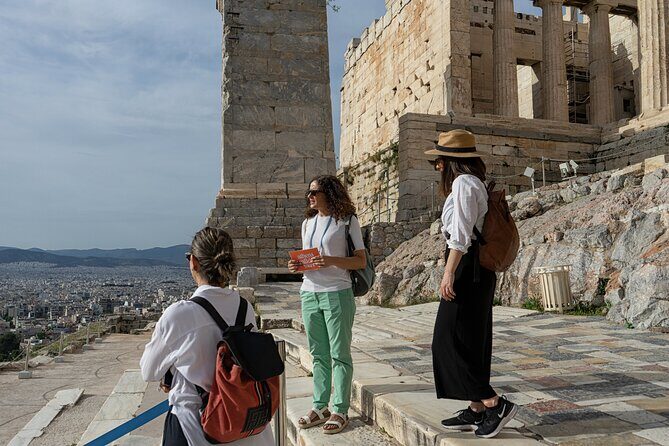
Let’s be honest: the Acropolis is not a gentle stroll. Even though the tour is only about two hours, you’ll be walking uphill over irregular surfaces. Some reviews specifically mention it being doable for seniors in their 70s, while others point out it’s not for the lazy. Your best move is to come prepared for the physical reality.
Here’s what I’d plan for:
- Comfortable, grippy shoes (unstable stone happens)
- Sunscreen and a hat
- A bottle of water
- Layers if weather changes, since wind and rain can hit fast
Also note the practical limits: you should expect no toilets once you’re inside the site. That’s the kind of detail that can ruin a day if you ignore it.
Baby stroller note: strollers aren’t allowed on the Acropolis archaeological site, and there’s no cloakroom at the side entrance used. If you’re traveling with a very young child, a baby pouch is recommended over a stroller.
Weather matters too. The tour requires good weather, and if it’s canceled due to poor conditions, you’ll be offered a different date or a full refund.
Price and logistics: what you’re paying for beyond the ticket
This tour is priced at $41.12 per person, and the admission ticket cost is usually separate unless you choose the upgrade option. The key value question isn’t just the dollar amount—it’s how much stress and time you avoid.
Here’s what the price is buying you:
- A licensed guide who helps you interpret what you’re seeing
- Earsets that keep your audio clear in crowds
- A planned route across the hilltop so you don’t spend energy wandering
- A map and guide magazine to keep you moving after the tour
- Skip-the-line support for ticket offices when the admission option is selected
The group size limit of 24 travelers also matters. Big tours can feel chaotic. This one aims to keep the group together without turning the experience into a sprint.
One more budgeting detail: the price notes that when Acropolis entrance is free, the entrance fee is already deducted from the tour price. So you’re not paying twice for the same access when pricing rules change.
Who should book this Acropolis and Parthenon walking tour
Book it if:
- You’re short on time and want the major monuments in one efficient walk
- You want mythology and architecture explained in context, not just photographed
- You like hearing stories while you’re walking, using the earsets to cut through crowd noise
- You’d benefit from a structured plan plus a map for what comes next
Consider a different option if:
- You want a slow, museum-heavy day. This tour is built around the hilltop route in about two hours.
- You can’t handle uphill walking or uneven surfaces.
- You’re traveling with a stroller (strollers aren’t allowed on-site).
Should you book this Acropolis and Parthenon walking tour?
Yes, if your goal is to see the essentials with less guesswork and more meaning. The combination of licensed guidance, earsets, and a logical stop-by-stop route is a great match for first-time Athens visitors and anyone who doesn’t want to spend half the day figuring out where everything is.
The main “watch-outs” are straightforward: the walk is uphill, the ground is uneven, and hearing can suffer if the system has issues or wind is intense. If you come prepared with solid shoes, water, and patience for security, this tour gives you one of the best uses of limited time in Athens.
FAQ
Do I need an Acropolis admission ticket to join?
You can book this tour either with admission tickets or without. If you choose the option without tickets, you’ll be required to give the guide cash at the meeting point. You must have a valid entrance ticket to join the tour.
What’s included in the $41.12 price?
The tour price includes a local professional licensed guide, Athens guide magazine, an Athens map, earsets for better hearing, and skip-the-line support for ticket offices to the Acropolis of Athens & Museum if you select the admission-ticket option.
Where do we meet for the tour?
You meet at LUKUMAΔΕΣ, Dionysiou Areopagitou 3, Athina 117 42, Greece. The tour ends at Acropoli, Athens 117 42, Greece.
How long is the walk, and how strenuous is it?
The tour lasts about 2 hours. You should have moderate physical fitness because it involves uphill walking and uneven surfaces on the archaeological site.
Are earsets provided during the tour?
Yes. Earsets (personal audio devices) are provided so you can hear the guide clearly while moving between stops.
What should I bring or wear?
Wear comfortable shoes and clothes, and bring sunscreen, a hat, and a bottle of water. The site requires good weather, so dress for the conditions you’ll face on the day.