REVIEW · ATHENS
Acropolis Museum E-Ticket and Multilingual Audio Guide
Book on Viator →Operated by Clio Muse Tours · Bookable on Viator
Crowds at the Acropolis Museum can steal your focus. This combo of a prebooked e-ticket and a downloadable, offline audio tour helps you move through the galleries on your own schedule, without wrestling with Wi‑Fi. You’ll still see the museum’s biggest stories clearly—Archaic roots, Parthenon-era drama, and even what’s waiting below the floor.
I especially like two things here: first, the fast entry with a scanned ticket, so you don’t lose time in the mess at the door. Second, the self-guided format with an offline interactive map and audio, which lets you linger where you care and skip what you don’t.
One caution: the audio experience depends on smart prep. If you don’t download the app and tour ahead of time, you can end up troubleshooting a phone right when you’d rather be looking at stone and sculpture.
In This Review
- Key things to know before you go
- Why the Acropolis Museum audio setup beats a rushed visit
- Getting in fast: your e-ticket scan at the museum entrance
- Setting up Clio Muse offline: do this before you leave your hotel
- The route through the galleries: Archaic to Parthenon storytelling
- Archaic Gallery: gods, heroes, monsters, and the human body
- Parthenon Gallery: the Panathenaic Procession comes into focus
- Going deeper than the main floors: underground archaeology and video context
- Crowds, pacing, and why your time estimate might change
- Price and value: what $40.32 buys you (and what it doesn’t)
- Who this suits best (and who should rethink it)
- Book it or pass? My straight answer
- FAQ
- Do I need to pick up tickets somewhere else?
- Does the audio work offline?
- What phone types are supported?
- How much storage do I need?
- Are headphones included?
- Is there a live guide during the visit?
- How long is the museum visit with the tour?
- Where does the activity start and end?
- Is the museum ticket included in the price?
- Wondering about reduced admission?
Key things to know before you go

- Skip-the-line style entry using a prebooked e-ticket sent to your email
- Offline audio + offline interactive map to avoid roaming charges and weak signal
- Easy “no pickup point” flow: just go to the museum entrance and scan
- Headphones make a big difference (smartphone + audio is the whole point)
- No live guide included, so you’re in charge of pacing
Why the Acropolis Museum audio setup beats a rushed visit

At the Acropolis Museum, the building is the teacher. The museum is packed with artifacts arranged like a guided argument about how Athenians thought, built, and worshiped—so the key is not just seeing objects, but understanding what order to see them in.
This experience is built for that. With a self-guided phone tour, you can pause when something grabs you—like monster imagery in the Archaic Gallery or the myth scenes tied to the Parthenon displays—and you don’t have to keep up with a group.
Still, the big tradeoff is control. You won’t have a person to answer questions on the spot, and if you don’t fully enjoy audio narration, you may feel like you’re getting less than a live guide.
Other Acropolis and Parthenon tours we've reviewed in Athens



Getting in fast: your e-ticket scan at the museum entrance

The entry system here is simple in theory: you prebook the e-ticket, it arrives by email, and you go directly to the museum entrance to get it scanned. The guidance says you can bring your ticket either printed or downloaded on your phone, and then use the expedited line to enter.
That matters in Athens, where time evaporates quickly at major sites. Reviews also highlight the ease of admission, especially when you’re trying to fit the museum into a shorter schedule.
Plan for reality, though. There’s a security check on arrival, and the museum asks you to avoid large bags and luggage to reduce delays. If you show up with a heavy load, your “skip the line” benefit can shrink.
Setting up Clio Muse offline: do this before you leave your hotel
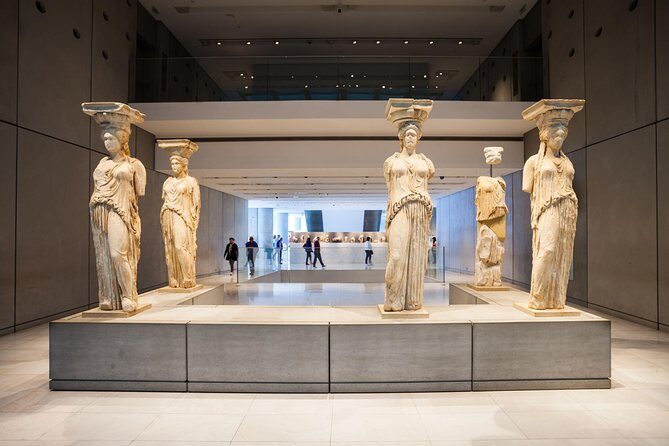
This tour’s superpower is offline access through the Clio Muse App. You’re expected to download the tickets and the audio tour in advance, then use headphones inside the museum.
Here’s what you should take seriously before you go:
- You need an Android or iOS smartphone. The tour is not compatible with Windows phones, iPhone 5/5C or older, iPod Touch 5th gen or older, iPad 4th gen or older, or iPad Mini 1st gen.
- You should have about 100–150 MB of free storage.
- Use your headphones to hear it properly; the experience does not include them.
- The app and tour can be used online or offline later, but downloading ahead is the smart move.
Some visitors ran into problems when the audio wouldn’t load because of connection limits. The fix is boring but effective: download while connected to a strong network before you arrive, and keep your phone charged.
One more practical note: you’ll receive email instructions after booking. Check your spam folder, because missing that message is a common way to create last-minute stress.
The route through the galleries: Archaic to Parthenon storytelling

You’ll spend about 1 hour 30 minutes (approx.) inside the museum with a self-guided flow. You can move faster or slower, but the tour’s structure is designed to follow a clear path through key exhibits.
Archaic Gallery: gods, heroes, monsters, and the human body
You start by working your way through the Archaic Gallery, where the stories feel like they’re alive. Expect to see imagery of monsters, heroes, gods, and repeated focus on how the human body is represented.
This section is more than decoration. It helps you understand how Greek art develops—how artists learn, copy, experiment, and then start building visual “languages” for power, myth, and identity. If you’re new to Greek sculpture, the Archaic Gallery is a great place to get your bearings.
The only drawback: if the museum is crowded, you can still feel a bit pressed for space between people. The audio gives you a way to keep your personal pace anyway, but shoulder-to-shoulder moments still happen.
Other Acropolis Museum tours we've reviewed in Athens





Parthenon Gallery: the Panathenaic Procession comes into focus
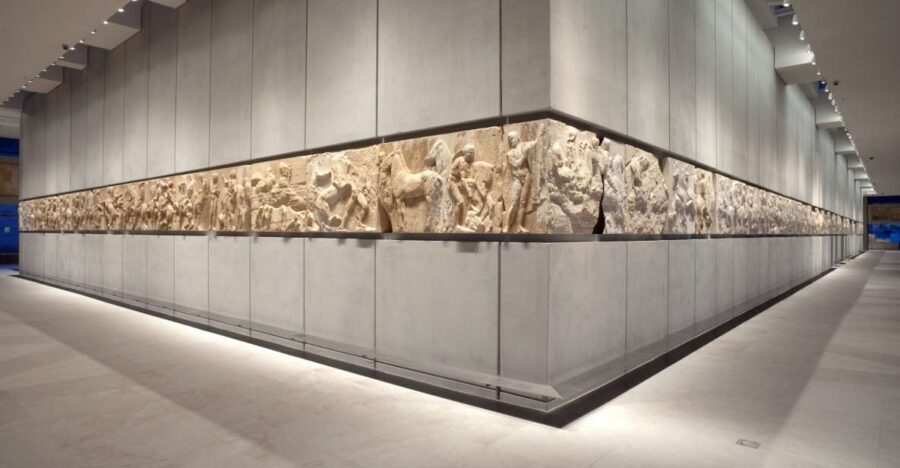
Next is the Parthenon Gallery, where the museum zeroes in on the Parthenon’s story. You’ll see the narrative tied to the Panathenaic Procession, including the way the frieze stitches the event together like a continuous scroll.
Then the audio shifts to the Parthenon’s myth scenes—birth of Athena and the battle of the Centaurs are specifically mentioned. You also get metopes and pediments explained through the lens of Greek mythology.
What I like about this structure is that it turns a flat list of artifacts into a storyline. Even if you skip sections, you’ll still come away with clearer context for why these pieces were made and what they were meant to communicate.
Going deeper than the main floors: underground archaeology and video context
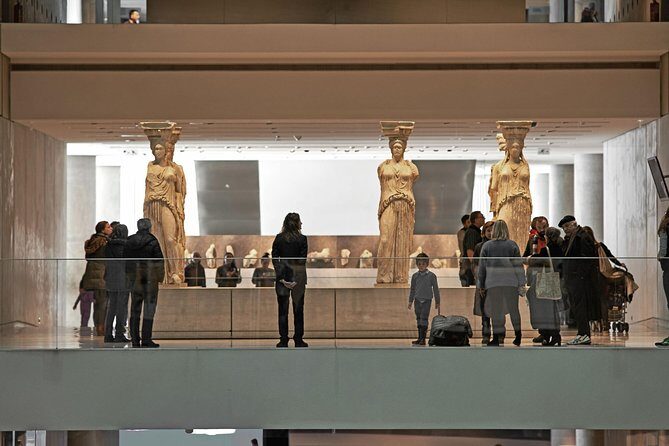
The Acropolis Museum isn’t only about what’s on display above ground. There’s an archaeological site in an open-air pavilion beneath the museum, and it’s included with your museum admission.
If you only do the “main galleries,” you may miss a huge part of what makes this place special. The underground area gives you a physical sense of place—like the museum isn’t just a storage room for antiquities, but a building built around discoveries.
A helpful tip from the experience: on the third floor, there are two video presentations. If it’s your first time here, it’s recommended to watch them before you interpret the rest of the exhibits. You’re not required to do this, but it can make the later sculptures and architectural details feel more connected.
Crowds, pacing, and why your time estimate might change

The stated duration is about 1 hour 30 minutes, but you should treat that as a minimum that works when you’re moving steadily. Some people enjoy a quicker loop when they’re short on time; others end up lingering because the audio encourages you to stop and look.
Also, the museum can get busy. Several visitors described it as crowded at their time of visit, which can make things feel rushed even when you’re free to move at your own discretion.
My practical advice: aim for more like 2–3 hours if you want a relaxed experience that includes the underground level and enough time to re-read details in the cases. If you’re only using the audio tour highlights and skipping deeper sections, 1.5 hours can feel just right.
Price and value: what $40.32 buys you (and what it doesn’t)

At $40.32 per person, you’re paying for two things: the admission ticket plus a prebooked e-ticket service, and the self-guided audio tour with offline content. You’re also getting a simpler entrance flow—no confusing pickup point, and you scan at the museum.
For many visitors, that’s the value equation: you’re buying time and sanity. If you would otherwise spend energy figuring out ticket lines and then reading plaques from a distance, the combination of expedited entry and audio can feel worth it.
But it’s not a live tour. No guide accompanies you, and some people felt the audio didn’t cover every exhibit. If you’re the kind of person who wants interactive explanations, you might prefer a traditional guided tour.
Also, the experience doesn’t include the smartphone or headphones. If you’re traveling light with no headphones, budget for that.
Who this suits best (and who should rethink it)

This is a strong fit if you want:
- Control over pacing in a big museum
- A way to understand key sections without hunting for explanations on your own
- Offline audio you can use even if signal is weak
It can also work well for families with older kids, because the audio runs on their own phones and lets them navigate without needing a guide hovering nearby.
You might reconsider if:
- You strongly dislike audio narration and would rather read plaques at your own speed
- You want a Q-and-A style experience with a person
- You’re likely to forget the prep steps (download before arrival is crucial)
Book it or pass? My straight answer
If you’re planning to visit the Acropolis Museum once and you want the easiest route to meaningful context, this is a good booking. The prebooked e-ticket reduces wasted time at the door, and the offline audio tour gives you structure without forcing group pacing.
I’d pass if audio is likely to annoy you, or if you’re counting on last-minute downloading support. The setup matters here, and the experience is built around having your phone ready.
If you do book, set yourself up for success: download everything ahead of time, bring headphones, keep your phone charged, and use the museum route in order so the Parthenon story lands the way it’s meant to.
FAQ
Do I need to pick up tickets somewhere else?
No. The ticket is sent to your email as an e-ticket, and you go to the museum entrance to get it scanned in the expedited line.
Does the audio work offline?
Yes. The tour includes offline content, including an offline interactive map, so you can avoid roaming charges.
What phone types are supported?
The audio tour works on Android and iOS smartphones. It is not compatible with Windows phones, iPhone 5/5C or older, iPod Touch 5th gen or older, iPad 4th gen or older, or iPad Mini 1st generation.
How much storage do I need?
You should have about 100–150 MB of storage available on your device.
Are headphones included?
No. You need to bring headphones.
Is there a live guide during the visit?
No. This is a self-guided audio experience with no live guide included.
How long is the museum visit with the tour?
It’s listed at about 1 hour 30 minutes (approx.), though your pacing will affect how long you stay.
Where does the activity start and end?
It starts at the Acropolis Museum, at Dionysiou Areopagitou 15, Athina 117 42, Greece, and ends back at the meeting point.
Is the museum ticket included in the price?
Yes. Your admission ticket for the Acropolis Museum is included along with the e-ticket service and the audio tour.
Wondering about reduced admission?
Reduced admission is available for senior citizens from EU countries (65 and older) with identification, but they have to wait in line. Reduced admission for young persons under 18 from non-EU countries is also mentioned with identification, and they too wait in line.