REVIEW · ATHENS
Private 4-hour Walking Tour of Acropolis and Acropolis Museum in Athens
Book on Viator →Operated by Tour Travel & More · Bookable on Viator
Up on the Acropolis, time moves differently. This private 4-hour walk pairs the Acropolis Museum first with a guided climb to the Parthenon and key temples, with admission included so you skip the ticket-line headache. I like that the pacing is small-group friendly (you can go at your pace) and that your guide connects myths, politics, and architecture instead of handing you a stack of facts; one thing to consider is it is still uphill walking, so bring water.
The museum half is where you get your bearings fast: the building’s setup helps you understand what you’re seeing outside, and you’ll spend time with the Parthenon sculptures in context. For the Acropolis portion, having a guide matters because it is easy to wander aimlessly among terraces and ruins, especially when crowds swell. If you hate group logistics, this format is private, and guides on this tour have been praised for staying relaxed and flexible with the group.
In This Review
- Key things to know before you go
- Why the Acropolis Museum first makes the whole climb click
- Entering the Acropolis without wasting time on ticket lines
- Parthenon: the headline, and also the lesson
- Temple of Athena Nike: the small one with big narrative
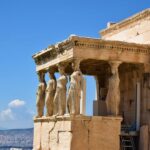
- Erechtheion and the Caryatids: the architecture that had to adapt
- The quiet stops: why Rome, Artemis, and the gate are worth your time
- Sanctuary of Artemis Brauronia
- Temple of Rome and Augustus
- Monument of Agrippa
- The gate near the Propylaea
- Walking time, pace, and what to bring for 4 hours of Greek sun
- Price and value: when a private guide is worth $383.55
- Who this Acropolis and museum combo is best for
- Should you book this Acropolis walking tour?
- FAQ
- How long is the private walking tour?
- What is included in the price?
- Is admission to the Acropolis and museum included or do I buy tickets separately?
- Is this tour private?
- Do you offer pickup, and where does the guide meet you?
- What language is the tour offered in?
- What should I plan for that is not included?
- Is there a minimum number of participants?
- Can I cancel for a full refund?
Key things to know before you go
- Admission is included for both the Acropolis and the Acropolis Museum, which saves time and stress.
- Museum first helps the climb: you’ll see key finds and themes before you reach the temples.
- A guide keeps the site intelligible: you’ll get myth and history tied to what’s right in front of you.
- You’ll hit the big set pieces: Parthenon, Temple of Athena Nike, Erechtheion, plus several smaller structures.
- Expect some uphill walking and plan for heat and stamina; water is a smart idea.
Why the Acropolis Museum first makes the whole climb click
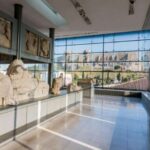
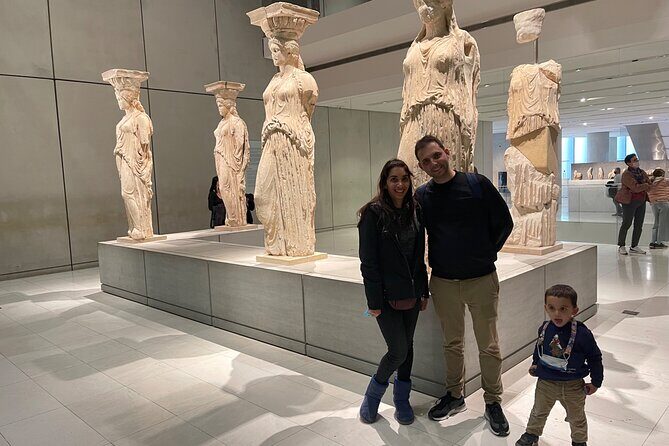
Starting at the Acropolis Museum is practical, not just nice. The museum gives you a framework before you enter the sacred hilltop maze. You’ll see sculptures and objects from excavations—stone and bronze—without needing to guess what came from where.
The permanent exhibition is organized into five sectors, and that structure helps your brain. You move from everyday items and votive offerings to earlier periods like the Archaic era, then into the Parthenon’s own sculptural program. Later sectors cover spaces connected to the Propylaea, Athena Nike, and Erechtheion, and then the long sweep from the 5th century BC through Roman times. If you’ve ever visited ruins and felt like you were looking at disconnected fragments, this museum layout fixes that problem.
One extra detail I’d pay attention to: this museum was designed so its orientation and dimensions relate to the Parthenon. Plus, excavations from the building site are made visible through the floors. That means you get a sense of the ground itself as part of the story, not just a display room.
Other Acropolis and Parthenon tours we've reviewed in Athens
Entering the Acropolis without wasting time on ticket lines
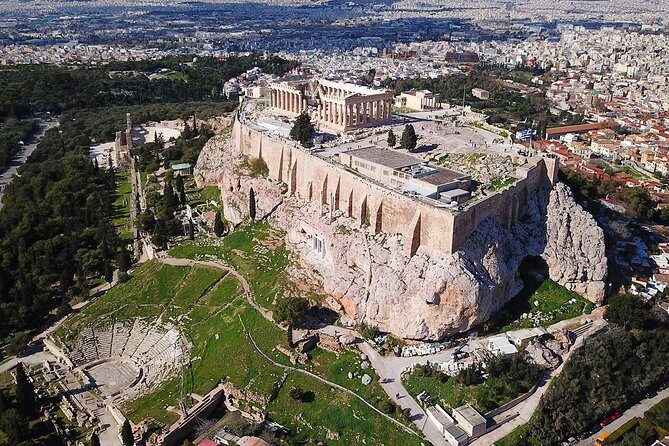
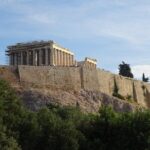
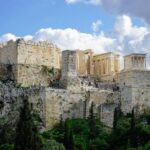
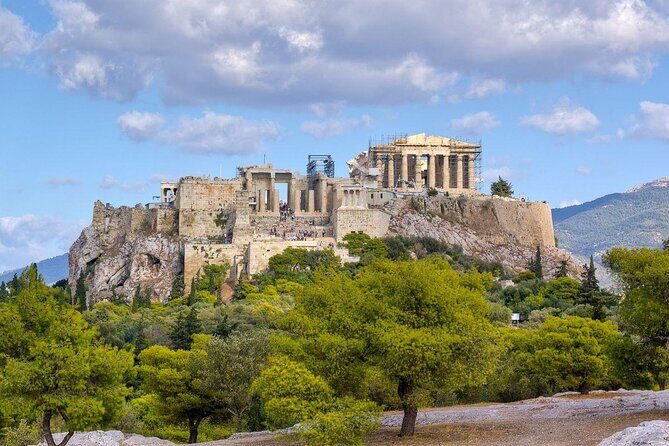
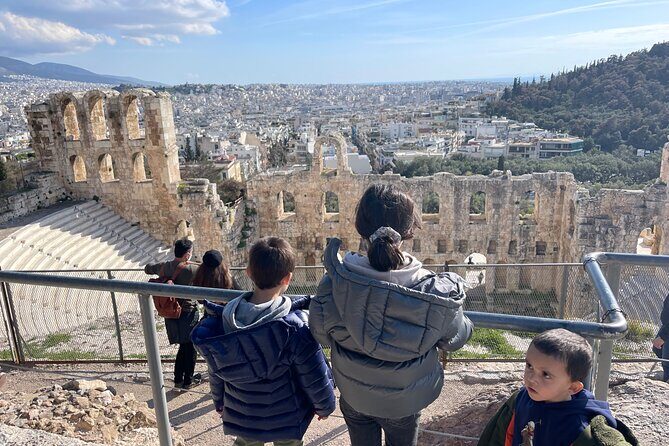
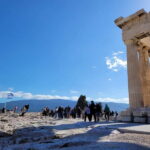
Once you head up to the Acropolis, you immediately understand why it is Athens’ power point. The hill sits about 156 meters above sea level, and historically it dominates the city around it. The sacred precinct was once walled and fortified, and the monuments follow the land instead of fighting it.
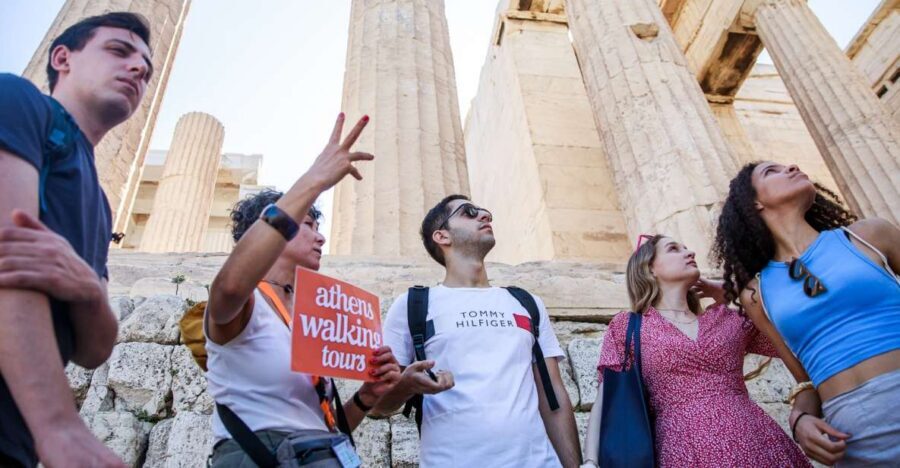
Here’s the value of a guided private walk: you don’t just stand at viewpoints. You’re led through the site in a way that keeps the plan logical, so you don’t get lost among terraces, stairways, and reused stones.
And because admission tickets are included, you avoid the common time-wasters. On a busy day, skipping long lines can make the difference between seeing the highlights and racing through them. A mobile ticket is also offered, which generally makes check-in smoother if you’re traveling on a tight schedule.
Parthenon: the headline, and also the lesson
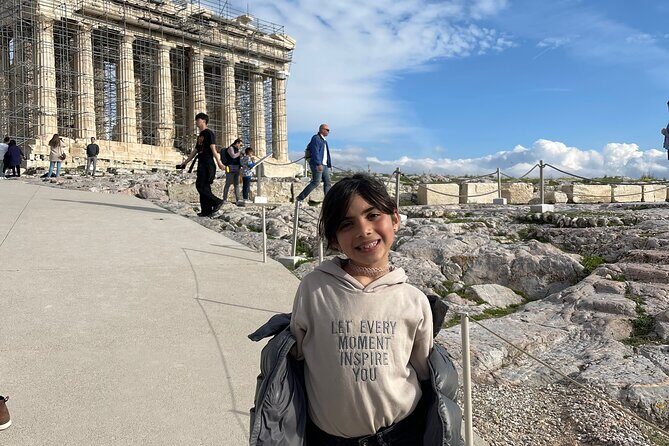
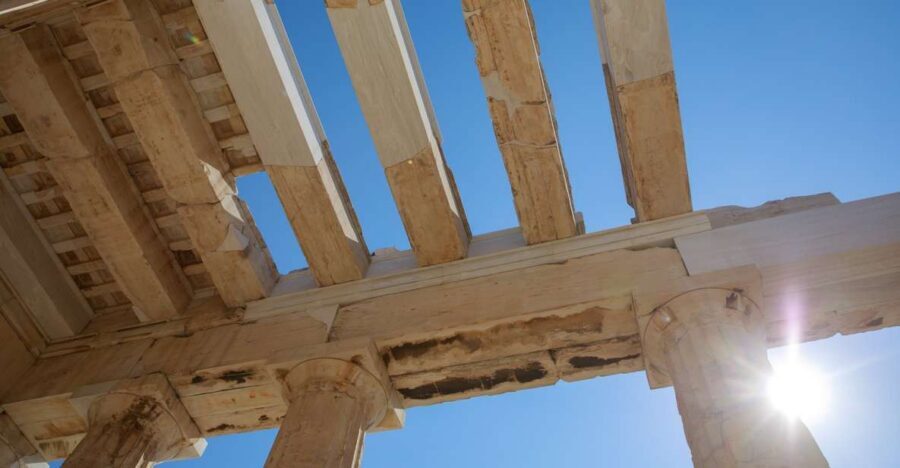
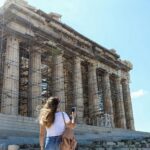
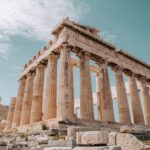
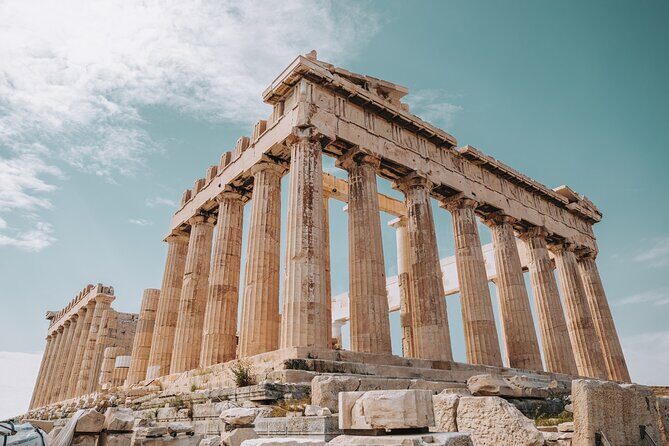
The Parthenon is the main event, built between 447 and 432 BC in Doric style. It originally housed a colossal cult statue of Athena Parthenos made with materials like wood, ivory, and gold. That detail matters because it reminds you this wasn’t just a monument for tourists; it was a centerpiece of religious life.
Even if you only spend around twenty minutes at the Parthenon stop, you’re not meant to see it as a single photo opportunity. A good guide will connect the architecture to the civic identity behind it—how Athens wanted the world to read the city’s strength and taste. You’ll also be positioned to understand how the surrounding structures frame the Parthenon rather than sitting in isolation.
If you’re sensitive to crowds, arrive ready to work around them. The Acropolis can get packed, and your best move is to lean into what a guide can do: choose moments to look closely and then move before you get stuck in a traffic jam of bodies.
Temple of Athena Nike: the small one with big narrative
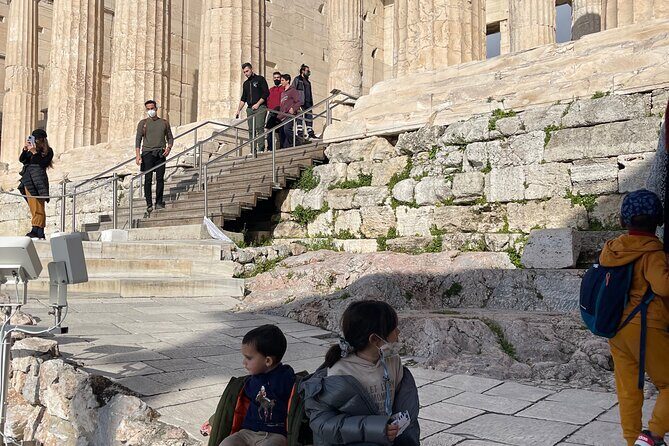
The Temple of Athena Nike is easy to underestimate because it is not as visually massive as the Parthenon. But it has a powerful sculptural and symbolic program. The temple you’ll see was built between 426 and 421 BC, replacing older structures, with a relief frieze that covers different themes on each side.
You’ll hear how the east side relates to the gods around Zeus, while other sides focus on warfare scenes—Greeks versus Persians, and also conflict among Greeks. The temple’s south side even references the Battle of Marathon in 490 BC, led by the Athenians. These are not random decorations; they’re messages shaped for civic memory.
One useful thing to know before you go: there is evidence of an older Temple of Athena Polias with a different layout, damaged historically and never fully rebuilt. Remains of an altar can be seen in the bedrock east of the building, and sculptural pediment material associated with the Gigantomachy is displayed in the Acropolis Museum. A guided stop helps you see those layers as a timeline instead of confusion.
Erechtheion and the Caryatids: the architecture that had to adapt
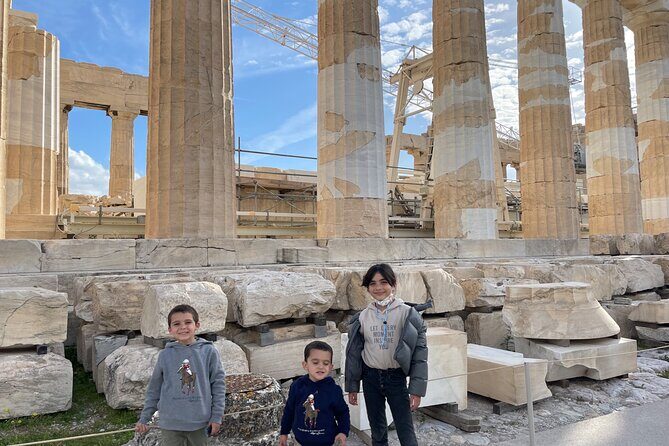
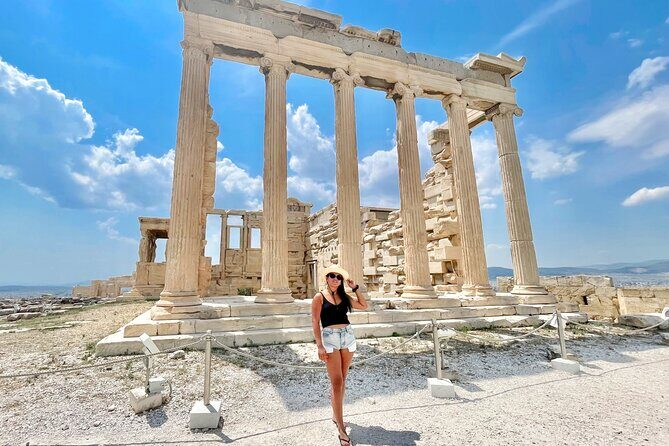
The Erechtheion is built for the real world, including uneven ground and sacred spaces already in use. That makes it different from a temple that was simply dropped on flat land. Here, the design works around religious shrines tied to gods like Poseidon and Hephaestus.
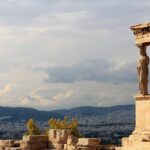
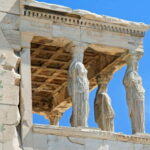
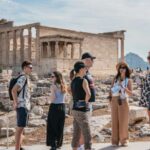
What you cannot miss is the Erechtheion’s porticoes. One part uses tall Ionic columns, but the signature feature is the southwest corner supported by six female statues known as the Caryatids. They look like they’re casually holding up a roof, but the point is bigger than aesthetics: this is how Athenians expressed power, artistry, and continuity in a complicated sacred landscape.
If you’re the type who loves explanations, this stop usually rewards you most. Your guide can connect why the building’s shape makes sense for rituals, and why the Caratyds became a lasting visual shorthand for the temple.
Other private Acropolis tours we've reviewed in Athens


The quiet stops: why Rome, Artemis, and the gate are worth your time
Some temple-hunters zoom past the smaller structures. I think that’s where a guided tour earns its keep, because the details fill in the bigger picture of Athens over centuries.
Sanctuary of Artemis Brauronia
The Sanctuary of Artemis Brauronia sits just south of the Propylaea within the Acropolis’ sacred precinct. It honored Artemis Brauronion, connected to women preparing for birth and those who had just given birth. The sanctuary likely functioned alongside a larger Artemis sanctuary in Attica.
The physical layout is worth picturing: a pi-shaped Doric stoa with ten columns along the facade, plus enclosed wings that stored treasures. A triangular courtyard held offerings by worshippers, and a second statue of the goddess was placed there too. Today, only foundational cuttings in the bedrock remain visible, and the head of the goddess statue is exhibited in the museum.
Temple of Rome and Augustus
The Temple of Rome & Augustus brings the story into the late 1st century BC. It’s dedicated to the goddess Rome and to Octavian Augustus, according to an inscription on the temple’s epistle. The temple itself is small and circular, with a single row of nine Ionic columns, and a white marble entablature and conical roof.
Why include it on a 4-hour walk? Because it shows you that the Acropolis wasn’t frozen in time. It kept being used, renovated, and reinterpreted long after the classical Greek peak.
Monument of Agrippa
The Monument of Agrippa is tall and dramatic on paper. The preserved pedestal stands 8.91 meters high, and the monument commemorated victories in the Panathenaic games—first by Eumenes II of Pergamon, and later dedicated by the city of Athens to Marcus Agrippa. The bronze quadriga on top has changed over time, but the pedestal is what survives.
This stop works well if your goal is to see more than the obvious postcard landmarks. It’s a reminder that monumental commemorations shaped public life, not just religion.
The gate near the Propylaea
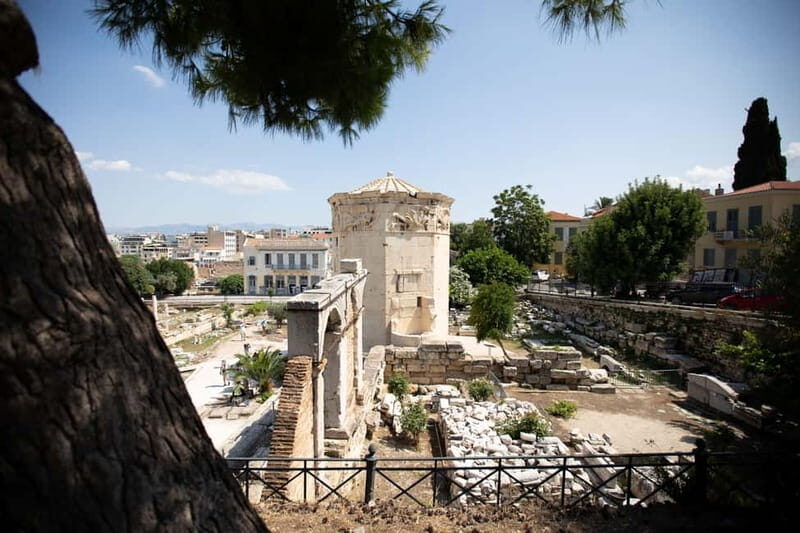
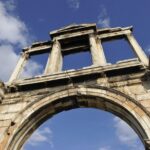
There’s also an Acropolis gate west of the Propylaea that’s framed by two rectangular towers. Built in the 3rd century AD to protect the sacred precinct after the destructive invasion of the Herulians, it reused building material from older structures. Even the wall inscriptions tied to victory are embedded above key parts of the gate.
This is the kind of stop where a guide can make you look twice, because reused stone can feel like background texture unless someone explains what it came from.
Walking time, pace, and what to bring for 4 hours of Greek sun
This tour is listed as about 4 hours, and the site itself makes timing flexible. Key stops include around an hour in the museum and about an hour on the Acropolis grounds, with shorter spurts at each monument (often 10 to 20 minutes each).
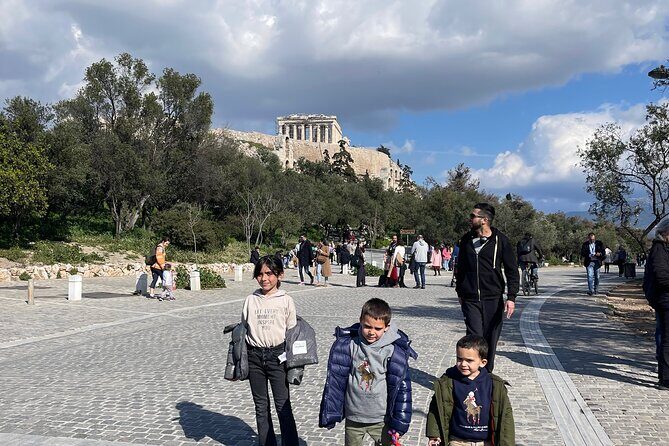
The walking is not just scenic strolling. You are climbing to a hilltop with steps and uneven surfaces, so plan your energy. One practical note from a helpful experience: take water, and you can buy it up there if needed. If you prefer to move slowly, the private format helps—you aren’t locked into a fast moving herd.
What I’d do: wear comfortable shoes with grip. If you’re traveling in summer heat, start early in the day if you can. Even with a guide managing the route, your body still has to climb.
Price and value: when a private guide is worth $383.55
At $383.55 per person for a private 4-hour experience, this is not a budget add-on. So ask one simple question: are you paying for logistics—or for insight?
You are paying for several high-value items at once:
- A private official guide for 4 hours
- Entrance tickets included for both the Acropolis and the Acropolis Museum
- Local taxes included
- Pickup is offered (your guide meets you in front of the museum or nearby)
- Group discounts are listed, and this tour is often booked about 66 days in advance, which suggests demand
If you’re the kind of visitor who wants to actually understand what you’re seeing—why things were built, what stories they carried, and how later eras layered onto the original sacred site—then the guide is the heart of the value. If you’re fine wandering with a map and a few guidebook paragraphs, you could spend less by going on your own.
But here’s the practical bottom line: skipping ticket lines and getting help staying oriented on such a complex site can easily justify the extra cost, especially if you’d otherwise be spending time figuring out where to go and what to prioritize.
Who this Acropolis and museum combo is best for
This tour fits best if you want the classics without the chaos. It is ideal for:
- Couples or small groups who want control over pace
- First-time visitors who want the major monuments explained in a connected way
- Travelers who care about context, not just landmarks
- Anyone who prefers a guide to prevent the walk from turning into random wandering
It may be less ideal if you hate any uphill walking or want a totally free-form visit with no structure. The format is structured, even if your guide is flexible, and it does involve moving between stops.
Should you book this Acropolis walking tour?
If you want a smooth, guided route that covers the Acropolis Museum plus the key monuments without ticket-line delays, I think this is an excellent way to spend your time in Athens. The museum-first strategy is smart, and the guide-led approach helps you read the site instead of just looking at it.
Book it if your priority is understanding: mythology, sculpture programs, and how different eras left their marks. Skip or modify expectations if you’re trying to minimize walking effort or you’re happy with a self-guided overview.
FAQ
How long is the private walking tour?
The tour is approximately 4 hours.
What is included in the price?
The price includes a private official tour guide for 4 hours, local taxes, entrance tickets to the Acropolis, and entrance tickets to the Acropolis Museum.
Is admission to the Acropolis and museum included or do I buy tickets separately?
Admission tickets are included for both the Acropolis and the Acropolis Museum, so you do not need to buy them separately for this tour.
Is this tour private?
Yes. It is a private tour/activity, and only your group participates.
Do you offer pickup, and where does the guide meet you?
Pickup is offered. The guide meets you in front of the Acropolis Museum or at a nearby place.
What language is the tour offered in?
The tour is offered in English.
What should I plan for that is not included?
Food and drinks are not included, and transportation is not included.
Is there a minimum number of participants?
Yes. A minimum of 2 people per booking is required.
Can I cancel for a full refund?
Free cancellation is available. You can cancel up to 24 hours in advance for a full refund.