REVIEW · ATHENS
Acropolis of Athens and Acropolis Museum Tour
Book on Viator →Operated by Athens Walking Tours · Bookable on Viator
Ancient Athens starts with one steep climb. This tour strings together the Acropolis’ best-known monuments and the museum that explains what you’re looking at, with a real guide and timed entry options that help you beat some of the worst waits. If you like your mythology and architecture tied to real stone, this one hits.
I especially like the small-group feel (max 24) and the fact that you get earsets, so you don’t have to crane your neck or guess what your guide is saying. I also like that the stops are placed strategically—The Parthenon and the key gates aren’t just photo breaks; they come with clear context, from the Theatre of Dionysus to the Erechtheion.
One drawback to keep in mind: the Acropolis is strict about timed entry and you’ll be on uneven, sometimes slippery marble. If you’re late, you’re out of luck, so plan to arrive early, wear grippy shoes, and don’t assume you can move slowly and still catch everything.
In This Review
- Key things about this Acropolis + Museum tour
- Getting in: security, the side entrance, and why timing matters
- Acropolis stops you’ll actually remember (and why each one matters)
- Parthenon views and the photo window you need
- Odeon and Asclepeion: smaller stops that add up
- Acropolis Museum: why this tour does the museum right
- Price and ticket upgrades: what you’re really buying
- Group size, earsets, and pacing on steep, uneven ground
- What to bring (and what to skip) for a smooth day
- Who this tour suits best (and who should be cautious)
- Should you book the Acropolis + Acropolis Museum tour?
- FAQ
- Are the Acropolis and museum entry tickets included in the price?
- What does the skip-the-line or prebook ticket upgrade do?
- How long is the tour, and is there enough time to see the Parthenon?
- What’s the physical demand of this tour?
- Does the tour run in bad weather?
- Where do I meet the guide, and where does the tour end?
- Can I bring a stroller or backpack?
Key things about this Acropolis + Museum tour

- Skip-the-line ticket upgrade: Prepay options help reduce waiting after security, though lines can still happen.
- Earsets for real listening: You can stay with the group and still focus on the details your guide points out.
- It’s built as a story: Ruins first, then the museum turns sculptures and fragments into meaning.
- Multiple named landmarks, not just Parthenon: Theatre of Dionysus, Athena Nike, Erechtheion, and more get their time.
- Time-efficient but not rushed: Expect about 3.5 to 4 hours with short stops and viewing pauses.
Getting in: security, the side entrance, and why timing matters
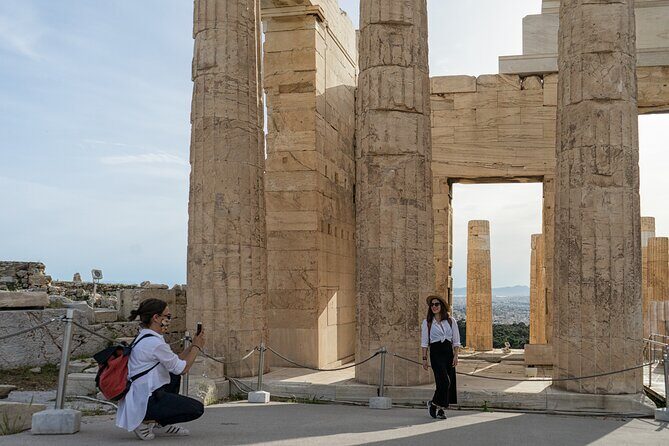
Meet at Dionysiou Areopagitou 3 (Athina 117 42). From there, you’ll walk a short distance to the Acropolis area, clear airport-style security, and then enter the archaeological site using a skip-the-ticket-line service when you choose the ticket option. The key point: Athens can have waits, and the tour is built around fixed entry times.
This is one of those tours where arriving early is part of the value. The site can be busy, and the Acropolis runs rain or shine. Also note the practical limits: backpacks aren’t allowed, and the strict entry schedule means you can’t count on the guide waiting for late arrivals.
In the reviews, guides like Dimitris, Rina, and Yolanda were praised for making the time count once you’re inside—so the “extra effort” you put into being on time pays off quickly.
Other Acropolis and Parthenon tours we've reviewed in Athens

Acropolis stops you’ll actually remember (and why each one matters)
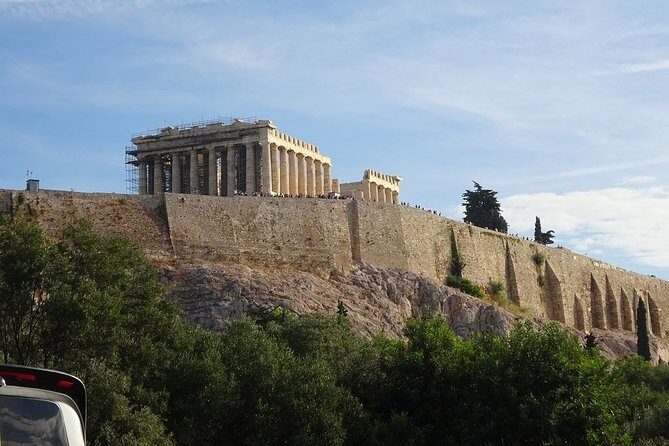
The walking portion is where this tour earns its keep. You’re not just passively looking; you’re positioned to notice design, function, and symbolism, then you move on before boredom sets in.
The ascent and opening moments at the Acropolis
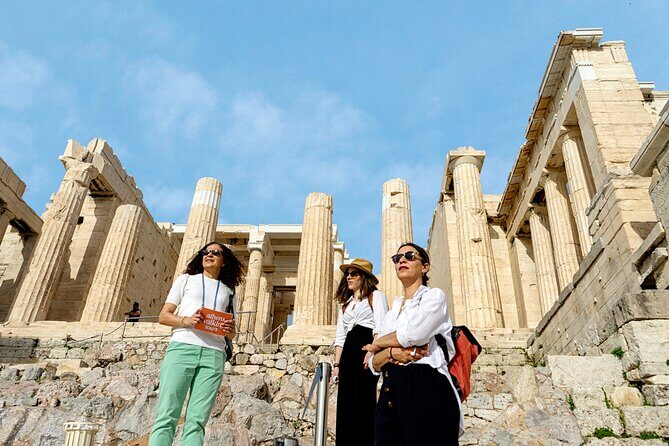
You start on the sacred hill after security. The big win here is that you get help reading the site’s logic—why certain monuments were built where they were, and what they were meant to do. With the guide’s stops, you’ll get to the main viewpoints without wandering in confusion.
The Theatre of Dionysus: where Greek drama started
One stop focuses on the Theatre of Dionysus, with its seating carved into the hillside. This is a great place to understand that “theater” wasn’t entertainment in the modern sense—it was a civic and religious event. If you’re the type who likes the human side of history, this stop usually lands.
The Odeon of Herodes Atticus: a Roman echo on a Greek hill
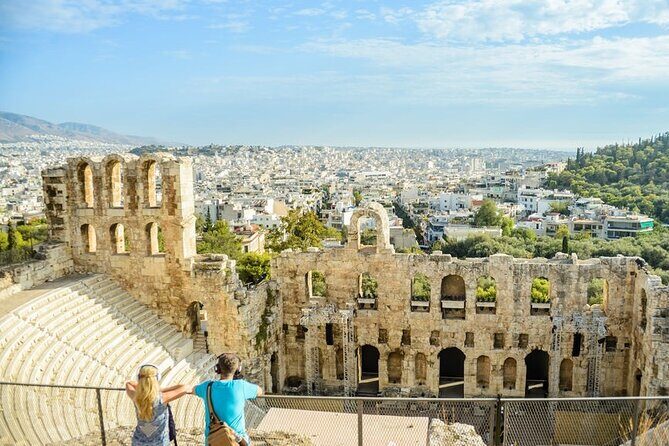
Next comes the Herodes Atticus Odeon, a Roman theatre still used today for performances. It’s a strong reminder that the Acropolis wasn’t frozen in time; people kept using these spaces even after the original eras changed.
Temple of Athena Nike: victory in Ionic detail
At the Temple of Athena Nike, the emphasis is on the Ionic style and the famous friezes. It’s also one of the better spots for panoramic looks over Athens—so you’re pairing art details with real geography.
Erechtheion: myth made architectural
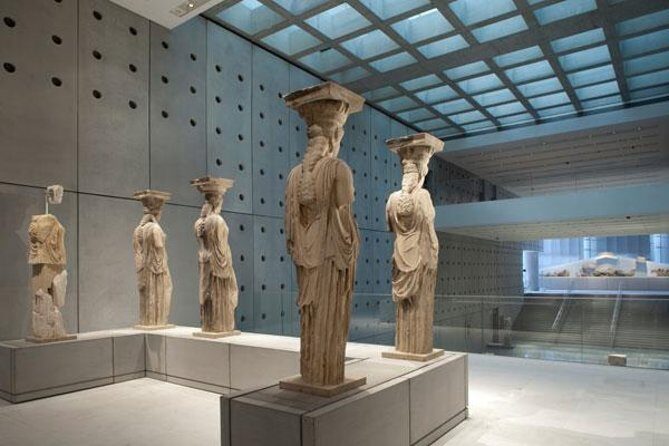
The Erechtheion is where you’ll hear Athenian legends connected to this sacred area. You’ll also see the famous Caryatid maidens up close, which makes the monument feel less like a “textbook picture” and more like something built to be touched by the eye.
The Parthenon: the main event, with guided looking
Yes, you get the Parthenon—time on the site is built around it. Your guide points out the Doric columns, the intricacies on the friezes, and the surrounding structures that helped define the whole complex. Expect a guided walk-and-pause rhythm rather than a slow, long crawl.
One practical note: in heat, the Acropolis floor can be slippery (especially with marble). Guides in the reviews—like Maria, Margarita, and Nicoletta—were specifically praised for handling the terrain carefully and keeping the group together.
Parthenon views and the photo window you need
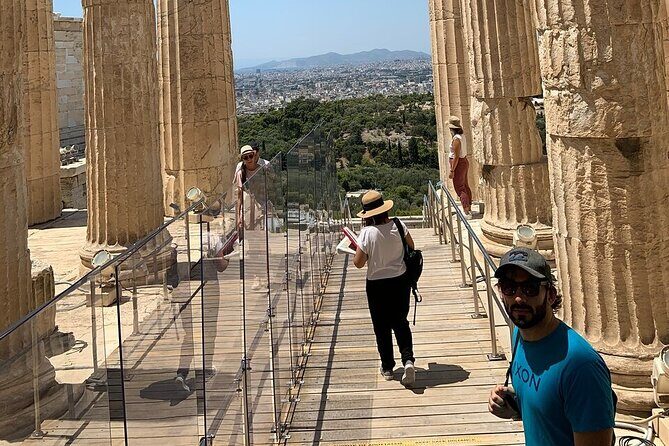
The best part of the Parthenon stop isn’t just the monument—it’s the moment the city opens up around it. You’ll pause to admire the view of Athens and get explanations timed to where you’re standing, so the architecture makes sense in relation to the skyline.
Photo time usually comes after the main viewing points. One review even called out about 15 minutes for pictures, which is about right for getting your shots without turning the experience into a stairway traffic jam.
My advice: treat photos as quick, not frantic. If someone stops mid-stairs for five minutes, it can ripple into the whole group’s pace—especially with strict timed movement between the Acropolis and museum.
Odeon and Asclepeion: smaller stops that add up
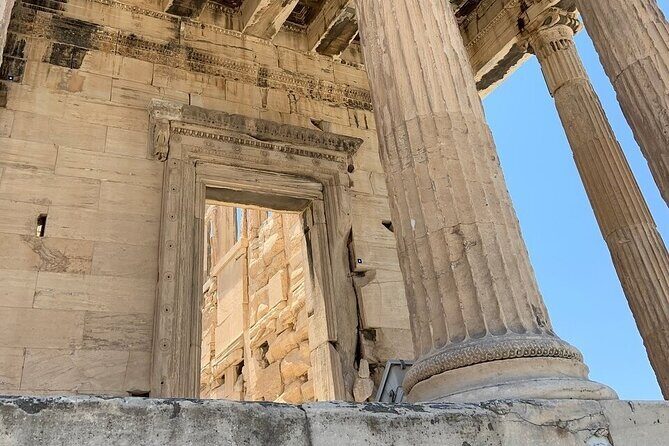
Besides the headline sights, the tour includes a guided look at the Asclepeion area. This matters because it rounds out the “Athens was only temples” myth. It helps you see the Acropolis as a multi-purpose sacred zone with different functions over time.
These smaller stops can feel brief, but that’s the point of a highlights tour. You get key context without spending all day on one monument. If you want a deep-specialized, all-day archaeology dive, you’d look elsewhere; for most visitors, this structure delivers the best ratio of explanation to walking.
And if you happen to get a guide like Niobe, the pacing gets called out in reviews—breaking up the uphill feel into manageable bits. It’s not magic, but it can make a noticeable difference.
Acropolis Museum: why this tour does the museum right
The museum leg is where your brain connects the dots. The Acropolis is wide open and built for views; the museum is built for looking closely at what survives, what’s preserved, and what you can understand from surviving fragments.
You’ll spend about 1.5 hours in the Acropolis Museum, in a guided route focused on major artifacts. Your guide explains them as a continuation of what you just saw—so you’re not just admiring statues and plaques, you’re linking story to stone.
This is also where the “highlights only” design shines. The museum is huge, and a full day is easy to spend—so the guided route helps you hit the most important pieces first. Several guides were singled out for doing exactly this, including Rina, Maria, and Margarita.
At the end, you can exit together or linger inside to explore more on your own. Either way, you’ll likely leave with a clearer sense of why the Acropolis looked like it did and how the sculptures fit the larger civic picture.
Other Acropolis Museum tours we've reviewed in Athens





Price and ticket upgrades: what you’re really buying
The base price is listed at $56.84 per person for an English small-group tour of about 3 hours 30 minutes. Entrance fees for the Acropolis (€30) and the museum (€20) are not included unless you pick the ticket option.
So your real cost depends on what you choose:
- If you book the tour with ticket option, you’re paying for the guided experience plus the entry tickets.
- If you book without ticket option, you’ll still need to get those tickets yourself (and the voucher instructions tell you how).
Why the “upgrade” matters: you’re offered a way to prepay tickets so you can reduce (not always eliminate) waiting at the entry point after security. In practice, that can be a big deal because the Acropolis can have waits up to 30+ minutes in peak season.
Is it worth it? If you care about maximizing time on the monuments (instead of standing in line), it usually is. Also, you’re paying for expert guidance plus earsets, which often changes how much meaning you get out of the stones—especially on the Parthenon and the museum connection.
Group size, earsets, and pacing on steep, uneven ground
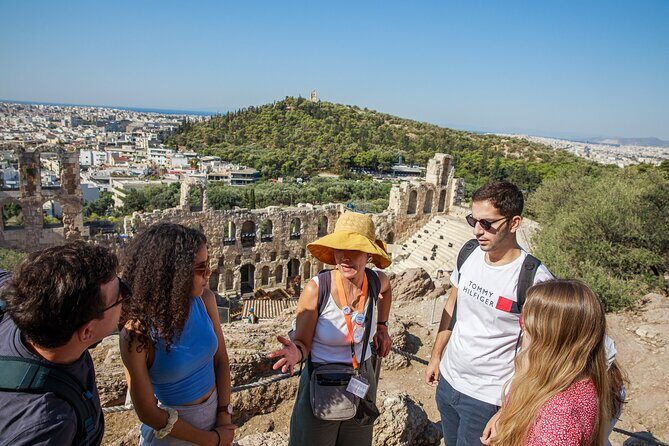
This tour keeps group size tight—maximum 24 travelers. That helps with crowd flow and makes it easier for the guide to manage where everyone stands, especially on narrow paths and steep steps.
You’ll also get earsets, which are designed so you can hear the guide without constantly turning your head. A review noted that the earset setup supports hearing even when you step a bit away, which is handy if you need a moment to rest or angle yourself for a better view.
Still, be realistic. This is not a gentle stroll. You should have moderate physical fitness. Shoes matter a lot: bring sneakers with grip, because the marble can be slippery when it’s hot or damp.
One more hard limit: baby strollers are not allowed on the Acropolis archaeological site, and there’s no cloakroom at the side entrance used. If you’re traveling with a baby, plan on a pouch instead of a stroller.
What to bring (and what to skip) for a smooth day
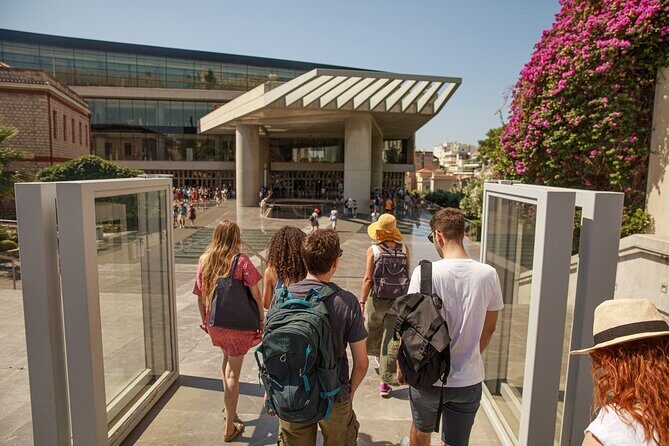
Start with the obvious basics: comfortable shoes, hat, sunscreen, and a bottle of water. Reviews strongly stress hydration in the heat, and they also mention that water access inside the walking portion may be limited, so it’s smart to come prepared.
Also:
- Bring a water bottle you’ll actually finish.
- Skip backpacks (not allowed).
- Expect a lot of standing and some stairs.
- Wear clothes you can move in, because rain or shine means the walking happens.
If you’re traveling with kids, go heavy on sun protection and plan for breaks. The Acropolis doesn’t have a lot of shade, and even good pacing can’t fix the physics of heat on open stone.
Who this tour suits best (and who should be cautious)
This tour fits you best if you want:
- a highlights route that covers the major landmarks,
- expert explanations tied to where you’re standing,
- and the museum connection that turns sculptures and fragments into something coherent.
It’s also a good fit for first-timers and repeat visitors who want a different angle. Several reviews praised it as their favorite Acropolis experience, even if they’d visited before.
Be cautious if you have mobility limits. One review explicitly said wheelchair guests can’t be accommodated because the only wheelchair-accessible route is through an entrance on the other side. If you need accessibility accommodations, it’s worth asking before you book and double-checking the route.
Should you book the Acropolis + Acropolis Museum tour?
I think this is a strong buy for most people because it tackles the two biggest problems at the Acropolis: getting value from the monuments and making sense of what the museum holds. The small-group size, earsets, and a guided flow from the ruins to the artifacts mean you don’t waste hours figuring things out on your own.
If you’re the type who enjoys architecture, mythology, and clear explanations (like the guides named Dimitris, Rina, Yolanda, Maria, Margarita, Nicoletta, and Margarita again—because she pops up a lot), book it. If you’re very sensitive to stairs, heat, or strict timing, then think twice and plan your alternatives carefully.
FAQ
Are the Acropolis and museum entry tickets included in the price?
The listed tour price does not include entrance fees unless you select the ticket option. The Acropolis entry fee is €30 per person and the Acropolis Museum entry fee is €20 per person.
What does the skip-the-line or prebook ticket upgrade do?
With the ticket option, you get skip-the-ticket line service after security. The upgrade is meant to reduce waiting time, though it may not fully eliminate it during busy periods.
How long is the tour, and is there enough time to see the Parthenon?
The tour is about 3 hours 30 minutes on average. The Parthenon stop includes guided viewing and time to admire the view and take photos without rushing straight through.
What’s the physical demand of this tour?
It’s recommended for travelers with moderate physical fitness. You should wear comfortable shoes, expect a climb to the summit, and know that uneven and slippery marble is part of the experience.
Does the tour run in bad weather?
Yes, the tour runs rain or shine.
Where do I meet the guide, and where does the tour end?
Meet at Dionysiou Areopagitou 3, Athina 117 42, Greece. The tour ends at the Acropolis Museum, Dionysiou Areopagitou 15, Athina 117 42, Greece.
Can I bring a stroller or backpack?
Backpacks are not allowed. Baby strollers are not allowed on the Acropolis site, and there’s no cloakroom at the side entrance used; a baby pouch is recommended instead.