REVIEW · ATHENS
Combo Ticket: Acropolis & 6 Sites with optional self-guided tours
Book on Viator →Operated by Keytours - Greece · Bookable on Viator
Seven Athens ruins in one ticket is practical. This digital pass groups major stops like the Acropolis and Ancient Agora so you can spend less time wrestling lines and more time looking at real stone. I like that the pass is flexible (you can spread it across 5 days) and that the self-guided audio adds structure when you’re moving site to site. One thing to plan around: the Acropolis entry is tied to a specific date and time slot, so arriving late can derail your day.
The best part of this ticket is the pacing. You get to “stack” several huge landmarks—Parthenon area views, agora streets, Roman civic sites—without committing to a rigid guided tour schedule. The trade-off is that self-guided also means you should show up ready to navigate using your phone for the audio and ticket info.
In This Review
- Key highlights to know before you go
- How the 5-day multi-pass actually helps your Athens day
- The Acropolis time slot: your one non-negotiable entry
- Ancient Agora and Agora Romaine: civic Athens in two styles
- Hadrian’s Library and the Olympieion: the Roman grand scale
- Kerameikos and Aristotle’s Lyceum: cemeteries, workshops, and walking philosophers
- Audio tours that make self-guided easier (and what can trip them up)
- Getting around: how to plan routes without losing your day
- Price and value: does $129 make sense for you?
- Who this combo ticket suits best
- Should you book this Acropolis and 6 Sites combo pass?
- FAQ
- What’s included with this combo pass?
- Is the Acropolis visit the only timed entry?
- How long is the pass valid after I use it?
- Is the Acropolis Museum included?
- Do I need headphones for the self-guided audio?
- Can I start at a site other than the Acropolis?
- Where does the Acropolis visit start?
Key highlights to know before you go
- Acropolis is the only timed stop on a selected date and time slot; everything else is flexible.
- Valid for 5 days once scanned, so you can fit sites around your weather and energy.
- Skip-the-line is a big promise, but you’ll still deal with security and controlled entry at the Acropolis.
- Optional audio tours can cover Athens Old Town/Plaka, plus Acropolis/Parthenon and English audio for Ancient Agora and Kerameikos (depending on your option).
- No earphones or physical device included, so bring your own headphones.
- Acropolis Museum isn’t included, so plan that separately if it’s on your must-do list.
How the 5-day multi-pass actually helps your Athens day
This combo ticket is built for one simple goal: cut down the number of times you stand around buying tickets and queuing at separate attractions. In Athens, where the biggest archaeological sites can feel like magnets for tour groups, saving time at multiple stops adds up fast. Even if you only use a couple of the sites well, you’re still using the pass as a time-saver rather than just a souvenir ticket.
You also get flexibility in how you schedule the day. The admission for the Acropolis has a specific time slot, but the other sites are flexible. That means you can group sites that are near each other—like the Acropolis area, then the nearby Roman and civic spaces—or you can spread things out if you want calmer mornings and less heat.
Other Acropolis and Parthenon tours we've reviewed in Athens


The Acropolis time slot: your one non-negotiable entry

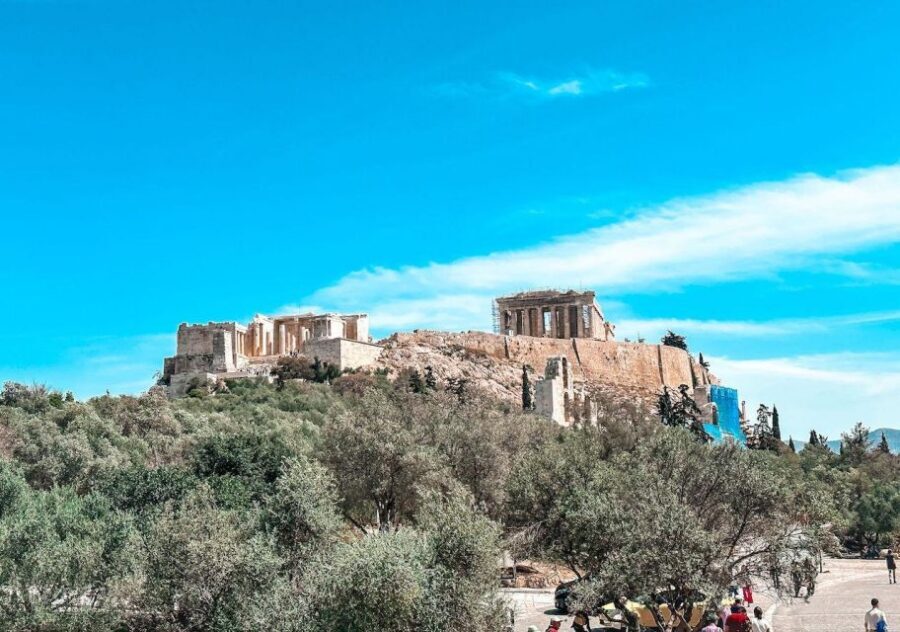
Let’s talk about the only part you must treat like an appointment. Your Acropolis admission is one-time and tied to the exact date and time slot you choose. The ticket is meant to be scanned and used during that window, and your visit needs to start from the Acropolis of Athens meeting area (Athens 105 58, Greece).
Practical advice: build in buffer time. If your bus is late or your feet are slow that day, it can still matter. One of the frustrations people report is arriving around the time they think is fine and being turned away because entry is controlled by the slot. Athens is hot, and even 10 minutes can feel like a world.
What you’ll see once you’re in is the core “wow” sequence:
- The Parthenon area dedicated to Athena
- Propylaea (the grand entrance)
- The Temple of Athena Nike
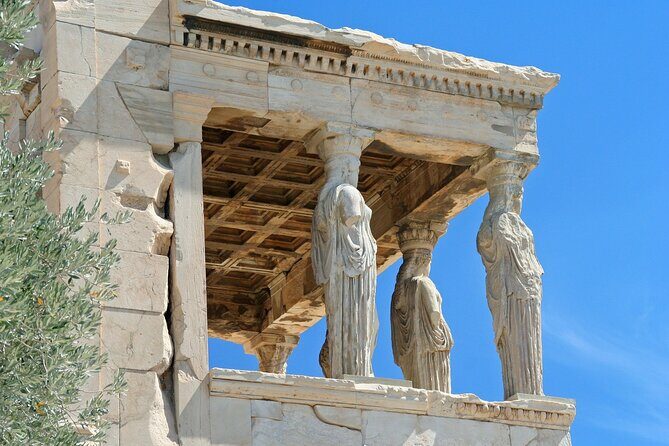
- The Erechtheion (famous for its distinctive form)
- The views from higher spots toward surrounding hills and the city
Even without a guided talk, this is one of those places where your brain fills in the blanks. The real value of the pass here is not the story—it’s getting in with less friction so you can actually enjoy the place instead of sprinting between checkpoints.
Ancient Agora and Agora Romaine: civic Athens in two styles
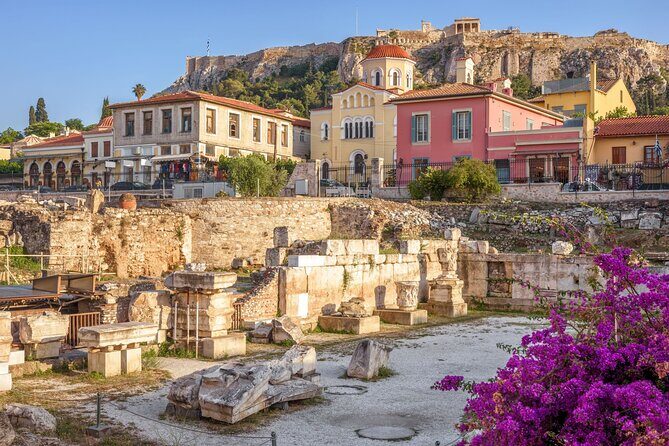
Right after the Acropolis, the vibe shifts from gods-on-mountains to people in the streets. The Ancient Agora of Athens sits on the north-west slopes of the Acropolis. This is where the city met, traded, debated, and performed its daily civic life. Most Ancient Greek cities had an agora, but Athens’ is one of the best for seeing how the city worked as a physical space.
A smart way to use this stop is to think in “functions.” Look for where gathering would happen, where movement would funnel, and how buildings would face public areas. Even if you can’t map everything at once, you’ll start to feel why this place mattered beyond sightseeing.
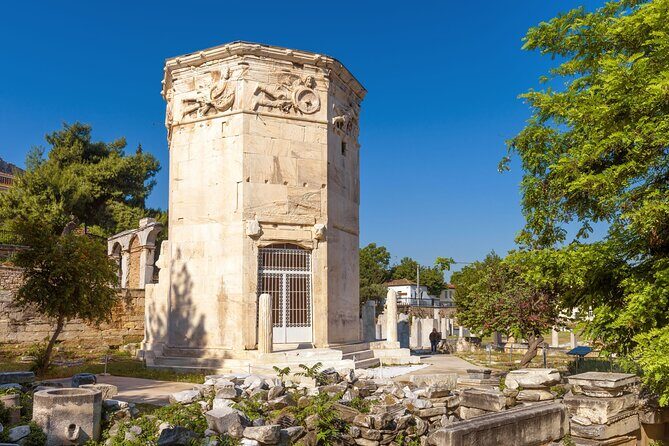
Next you’ll visit the Agora Romaine (Roman Agora). This is north of the Acropolis and focuses on a later layer of civic life. Under Rome, the public square wasn’t just for local routine. It was a stage where merchants sold goods and where orators and philosophers walked and talked through ideas.
If you’re doing this as a single chain—Acropolis → Ancient Agora → Roman Agora—plan on taking breaks. The sites are not enormous in walking distance, but the experience is mentally dense, and heat can turn “one more stop” into “one stop too far.”
Hadrian’s Library and the Olympieion: the Roman grand scale
Then you shift into imperial ambition. Hadrian’s Library is built to impress, with marble touches and high walls. It wasn’t only a book place. It functioned as a civic center, so it belongs in your mental picture of Athens as a city that kept reinventing itself.
When you stand in the ruins, watch how your eyes travel across remaining structures. The space helps you grasp what “public building” meant under Roman patronage—big, formal, and designed for visibility.
From there it’s on to the Temple of Olympian Zeus (Olympieion), famous because it stayed under construction for a long time. Construction began in the 6th century BC, but it wasn’t completed until around the 2nd century AD under Emperor Hadrian. That long timeline is part of the story you’ll feel on site: this wasn’t a small project that got finished quickly.
Practical tip: don’t just look for the “main columns” from one spot. Walk to different angles. Ruins can look flat when you’re standing in one place too long. You’ll start to see the temple’s scale when you change your viewpoint.
Kerameikos and Aristotle’s Lyceum: cemeteries, workshops, and walking philosophers
Two stops here feel a bit less tourist-easy than the Acropolis, and that’s exactly why they’re worth your time. Kerameikos Archaeological Site is an ancient cemetery stretching near the Eridanos River. The name “kerameikos” comes from ceramics, because the area connected to pottery workshops before it became a burial landscape.
If you like the quieter archaeological feeling—less photo frenzy, more “how did people live and die around here”—Kerameikos is a solid choice. It also gives your itinerary variety. After the big temple and agora spaces, Kerameikos brings you back to the ground-level human scale.
Then comes Aristotle’s Lyceum. This is tied to the Peripatetic School of Philosophy, where Aristotle reportedly liked to walk among trees while discussing ideas with students. Whether you know the philosophy background or not, the Lyceum site fits naturally into the story of Athens as a place where learning was part of public life.
A useful way to experience these two stops together is to focus on “places of process.”
- Kerameikos: long-term memory, work zones, and city boundaries
- Lyceum: learning as movement and conversation
This combination makes your day feel less like a checklist and more like a map of how Athens worked across centuries.
Other Acropolis ticket options we've reviewed in Athens






Audio tours that make self-guided easier (and what can trip them up)

You have audio options, and this is where the ticket can feel either smooth or slightly annoying depending on your phone setup. The experience includes self-guided audio tour in English for Athens Old Town, Plaka for all options. If you select the right option, you can also get a multilingual self-guided audio tour for Acropolis and Parthenon, and English self-guided audio for Ancient Agora and Kerameikos.
Two important practical notes:
- There’s no physical audio device and no earphones included. Bring your own headphones and make sure your phone battery is healthy.
- Some audio experiences are formatted like a track that moves forward as you progress. If you stop walking or wait too long in one area, you might feel like it’s “skipping” ahead.
What I’d do: download or test everything before you step into the Acropolis area. The Acropolis is not the place for troubleshooting. If your audio doesn’t cooperate, you can still move through the sites with your eyes and basic context.
Even in cases where the audio app acts weird, having some written context in the experience can help you go back and catch the parts you missed. It’s a good backup mindset: even if audio is imperfect, you’re not completely blind.
Getting around: how to plan routes without losing your day

Your pass is designed for stacking, and that means route planning matters more than it does on a single museum visit. Here’s a simple strategy:
- Morning: Acropolis time slot and the areas around it
- Later: Agora and Roman civic stops nearby
- Afternoon: Hadrian’s Library and Olympieion
- Second half of the trip: Kerameikos and Lyceum when you want a slower pace
This approach also helps with heat. Athens can punish late afternoons, and walking between sites without a plan can turn “enjoying ruins” into “surviving sidewalks.”
One more thing: site access can change. In your planning window, consider that strikes or closures can happen and may affect which parts are open. If a stop is closed, your flexible pass still lets you pivot to other included sites as long as you can visit them within the ticket’s valid usage rules.
Price and value: does $129 make sense for you?

At about $129 for multiple major admissions, the value depends on whether you’ll actually use several stops. If you only do the Acropolis and skip the rest, the pass is likely not the best deal for you. You’re paying for access to seven sites, so you’ll feel the value when you treat it like a plan, not an optional add-on.
Where it tends to pay off:
- You want to visit Acropolis plus at least a few other included sites
- You prefer a route you control (self-guided, your pace)
- You want to reduce time spent buying multiple tickets separately
Where it’s weaker:
- You want just one or two sites
- You dislike phone-based ticketing or audio and would rather do ticket booths and paper maps only
- Your schedule is tight enough that missing the Acropolis time slot would ruin the day
If you do like structure but not group pressure, this pass hits a sweet spot. It gives you “permission” to explore around the biggest names without turning Athens into a constant line battle.
Who this combo ticket suits best
This ticket is a good fit if you:
- Want to see major Athens landmarks without booking separate admissions
- Like self-guided wandering but still want audio structure
- Have moderate walking ability and can handle a day of uneven, archaeological terrain
- Prefer starting from the site you choose, as long as Acropolis timing is respected
It may not be ideal if you:
- Are traveling with a tight timeline and can’t reliably make the Acropolis slot
- Expect a fully guided experience with an escort and problem-solving on the spot
- Don’t want to manage app-based audio/ticket info
Should you book this Acropolis and 6 Sites combo pass?
I’d book it if you’re aiming to cover most of the “big Athens” without paying for each site separately and without feeling like you’re stuck on a tour clock. The pass shines when you use the flexibility of the other stops and treat the Acropolis entry slot as your anchor appointment.
Skip the ticket if you’re only doing the Acropolis, or if your day is so unpredictable that you can’t realistically arrive for your chosen entry time. In that case, you’d probably get a better experience buying only what you’ll use.
If you do book, your best move is simple: charge your phone, bring headphones, and give yourself extra time for Acropolis entry. That’s where the whole day is won or lost.
FAQ
What’s included with this combo pass?
It includes one-time admission to the Acropolis on your selected date and time slot, plus flexible one-time admission to Ancient Agora and museum (as part of that stop), Roman Agora, Hadrian’s Library, Olympieion, Kerameikos and museum, and Aristotle’s Lyceum. It also includes self-guided audio: English for Athens Old Town and Plaka for all options, and additional audio options depending on what you selected.
Is the Acropolis visit the only timed entry?
Yes. The Acropolis admission is tied to your chosen date and time slot. The rest of the included sites have flexible one-time admission.
How long is the pass valid after I use it?
The ticket is valid for 5 days once scanned.
Is the Acropolis Museum included?
No. Admission to the Acropolis Museum is not included.
Do I need headphones for the self-guided audio?
You should plan on using your own headphones. A physical audio device or earphones are not included.
Can I start at a site other than the Acropolis?
Yes. You can start your visits from the site of your preference. Just remember the Acropolis still needs to be used during your selected time slot.
Where does the Acropolis visit start?
It meets at Acropolis of Athens, Athens 105 58, Greece, and the experience ends back at the meeting point.