REVIEW · ATHENS
Athens: Acropolis, Parthenon & Acropolis Museum Guided Tour
Book on GetYourGuide →Operated by Athenian Tours · Bookable on GetYourGuide
The Acropolis makes even daylight feel ancient. On this Athens guided tour, I love the convenience of skip-the-line ticket offices and the clarity a licensed guide brings as you move from the Theater of Dionysus to the Parthenon.
One thing to plan for: it’s a walking-heavy day on Acropolis Hill, and there’s no elevator there, so comfortable shoes and realistic stamina matter.
In This Review
- Key Things You’ll Notice Right Away
- The Acropolis Feels Like a Story When Someone Has the Map
- Starting on Acropolis Hill: Dionysus Theater and the Human Stage
- Moving Toward the Big Names: Propylea, Temple of Nike, and Erechtheion
- Parthenon Time: Democracy in Stone, Pericles in Context
- The Short Break Before the Museum (Use It Smart)
- New Acropolis Museum: Where Original Pieces Make Sense
- Caryatids and the Parthenon Frieze: What You’ll Really Remember
- Tickets, Skip-the-Line, and Real Value for $40
- Pacing, Audio, and Crowd Reality on a Timed Classic
- Who This Tour Is Best For
- Should You Book the Acropolis, Parthenon & Museum Guided Tour?
- FAQ
- How long is the Athens Acropolis, Parthenon and Museum guided tour?
- Does this tour include tickets to the Acropolis and the Acropolis Museum?
- Do I skip the line at the ticket offices?
- Is there a separate entrance to the Acropolis site?
- What language is the guide?
- Are earphones included?
- What should I bring for the tour?
- Is food or drinks included?
- Is the tour suitable for wheelchair users or people with mobility impairments?
- Is there free cancellation?
Key Things You’ll Notice Right Away

- Skip-the-line ticket offices at both the Acropolis and Acropolis Museum when that option is chosen
- Theater of Dionysus framing ancient drama as part of civic life, not just ruins
- Acropolis-to-museum pacing with a short break for bathroom time before you head to the museum
- New Acropolis Museum highlights: glass-floor excavations and original pieces shown in natural light
- Earphones for larger groups (disposable only if the group is more than 8) to keep the guide’s voice clear
- Distinct entry setup: the museum has a separate entrance, while the Acropolis does not
The Acropolis Feels Like a Story When Someone Has the Map
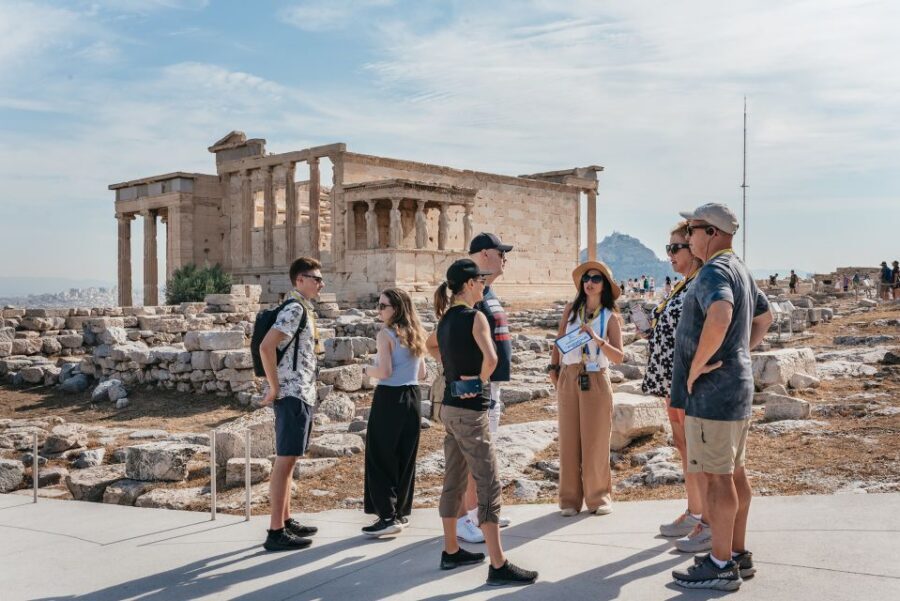
The Acropolis isn’t just a pile of ancient stone. It’s a layered site where the same hill can explain mythology, politics, religion, and art—if you know what you’re looking at. That’s where this kind of guided format shines: you don’t just see the big monuments, you understand why they were built, how they relate, and what changed over time.
I especially like the way a licensed, field-focused guide helps you keep your bearings as the tour moves. You’ll hear the histories behind the monuments in a way that turns scattered details into a timeline you can actually hold in your head. And if you’re lucky enough to land with a strong guide—names that came up include Sotos, Jason, Chrysa, Giota, Ioannis, and Julia—you’ll feel the difference right away.
You should also know the day can run closer to 3 to 4 hours, depending on group pace and weather. The order of stops may shift to avoid discomfort, which is helpful on a hot day or if the crowd pressure builds.
Other Acropolis and Parthenon tours we've reviewed in Athens

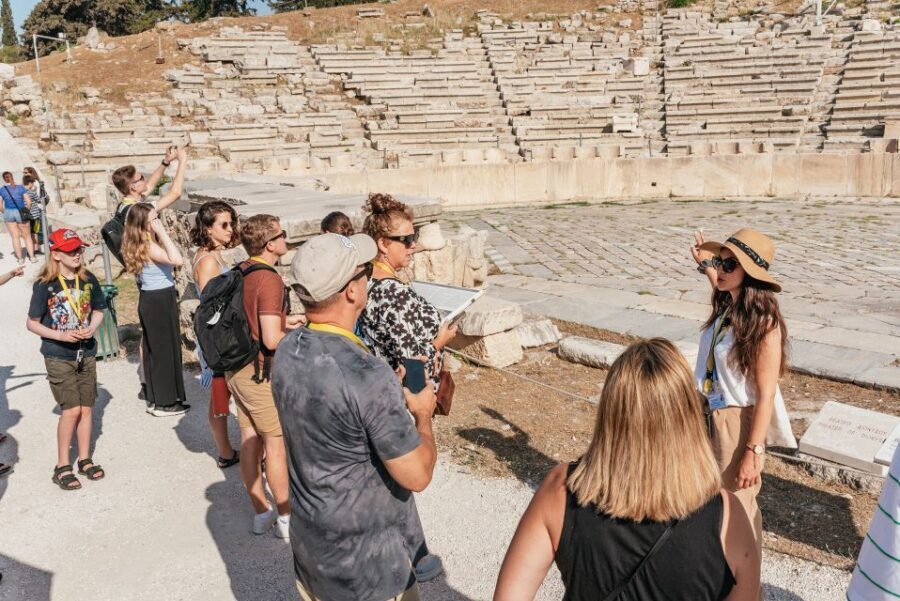
Starting on Acropolis Hill: Dionysus Theater and the Human Stage
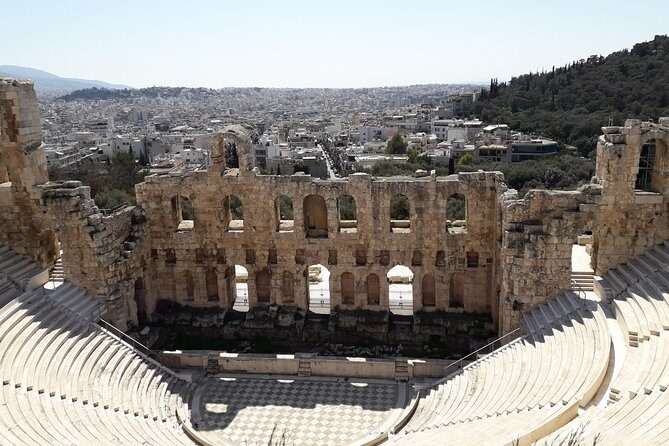
The tour begins on Acropolis Hill, and the early payoff is how the guide frames the area around performance and civic life. One of the standout stops is the Theater of Dionysus, often described as the first theater of humanity. Even if you’ve read about ancient drama, this stop helps you place it in context: tragedy and comedy weren’t just entertainment. They were tied to public culture, religious festivals, and how people talked to each other.
From there, you’ll connect other key spots on the hill, including the Odeon of Herodes Atticus and the sanctuary of the healing god Asclepius. These aren’t random detours. The way they’re explained makes it easier to see the Acropolis as a working sacred complex with different purposes—performance, healing, worship—coexisting in the same dramatic setting.
Tip for your photos: early on the hill, you’ll likely have more flexibility before the busiest angles get swamped. If your group has photo time built in, treat the first stretch as your chance to catch the broader lines before you get focused on close-ups.
Moving Toward the Big Names: Propylea, Temple of Nike, and Erechtheion
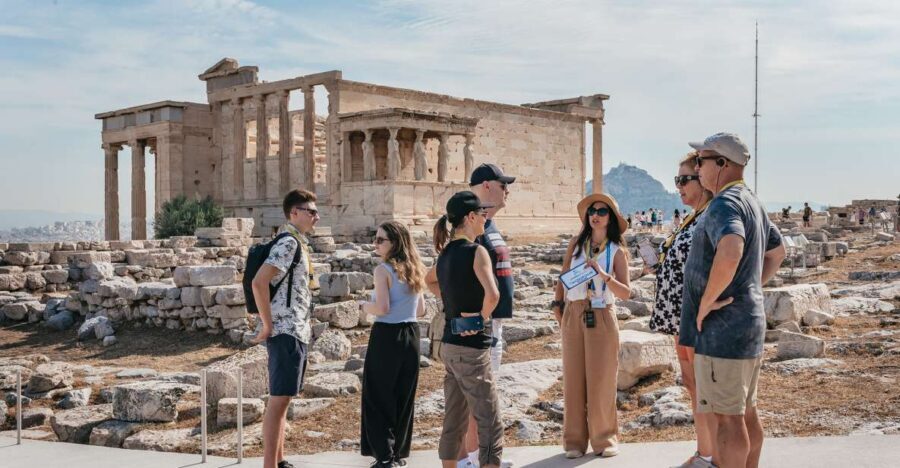
Once the tour is rolling, you’ll walk past the Propylea and the Temple of Nike area. This section matters because it’s part of how the Acropolis functioned as an approach—people didn’t simply walk up and then stare. They moved through gateways and ceremonial spaces that shaped the experience.
Then the tour typically brings you to the Erechtheion Temple, famous for its iconic design. Even if you don’t memorize every architectural term, the guide’s storytelling helps you read the site in a human way. You’ll understand what each structure meant to Athenians at the time, and how later centuries changed what survived.
A practical note: this is one reason the tour format is so popular. When you’re on your own, it’s easy to get overwhelmed. With a guide, you’re not trying to identify everything at once. You’re seeing a curated path that hits the core monuments and the reasons they matter.
Parthenon Time: Democracy in Stone, Pericles in Context
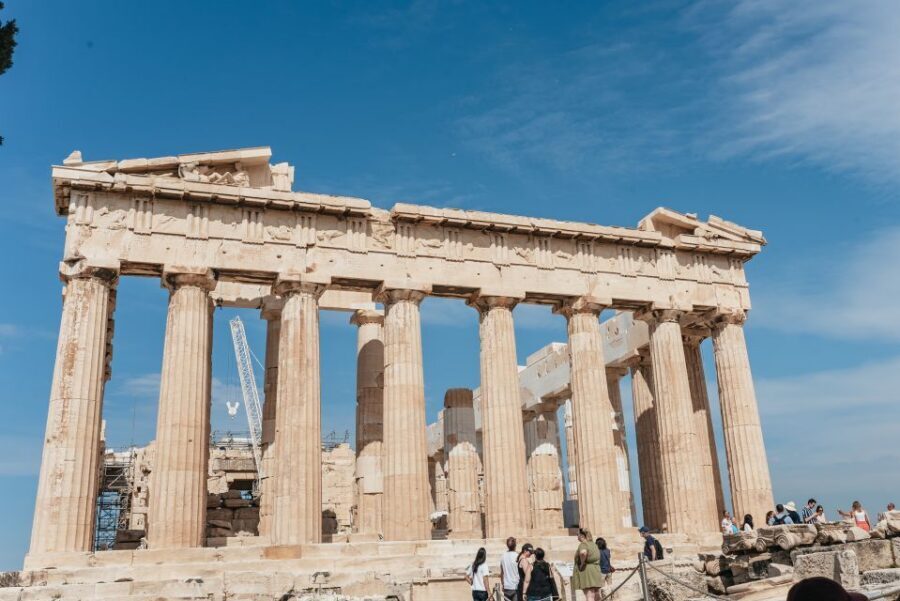
No Athens day on the Acropolis is complete without the Parthenon, and this tour treats it like the centerpiece it is. You’ll get the explanation behind why it’s often linked to democracy and western civilization, along with the timeframe: the 5th century, the Golden Age of Pericles.
Here’s what you’ll likely appreciate most: the guide doesn’t just throw labels at you. They help you connect what the Parthenon represents to what you’re physically seeing—position on the hill, scale, and how the temple’s design supported a powerful civic message.
If you’re the kind of traveler who likes to pause and actually look, you’re in luck. The tour includes time for breaks for your own pace. Still, plan for walking between viewpoints and stairs/uneven ground. If you’re wearing shoes with a good grip, you’ll feel more confident on the tighter sections.
The Short Break Before the Museum (Use It Smart)
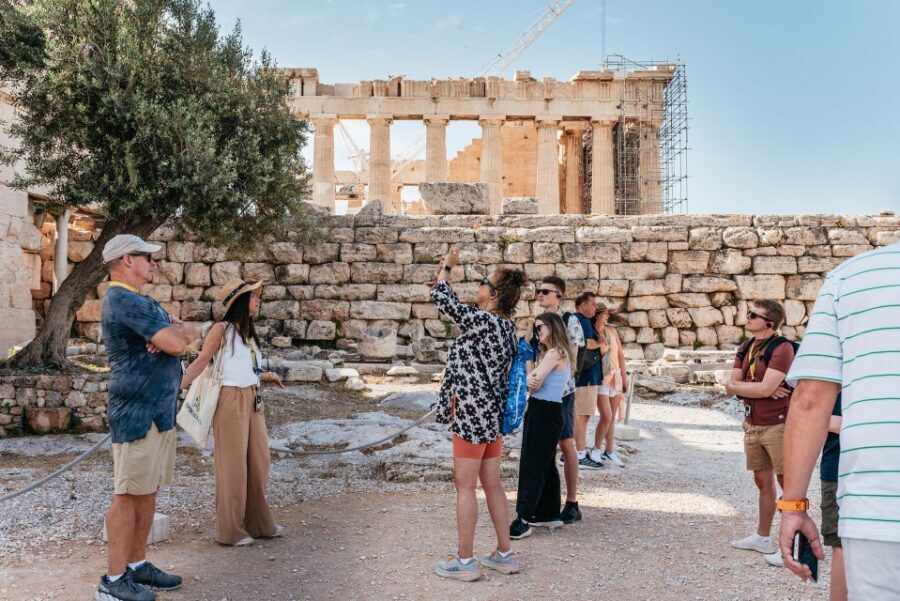
Midway through, you’ll get a short break before heading to the Acropolis Museum, including bathroom time. I like that this isn’t rushed. You’ll be walking under sun and stone, and you’ll likely want water, a reset, and a clean moment before stepping indoors.
If you can, use this break to do two things:
- Refill your water bottle if you need it
- Take a quick breath and decide how you want to experience the museum: slow read mode or “hit the highlights” mode
Your guide may also adjust the order of stops depending on comfort and crowd conditions, so keeping your energy steady helps you enjoy the museum part fully.
Other Acropolis Museum tours we've reviewed in Athens





New Acropolis Museum: Where Original Pieces Make Sense

The Acropolis Museum is a major reason this tour often feels like a one-day storyline rather than two separate visits. It’s also a different kind of experience: less about climbing and more about seeing artifacts in a way that explains how the Acropolis worked.
First, you’ll notice the architectural concept. The museum uses natural light to display original surviving masterpieces from the Acropolis temples. That matters because the museum isn’t asking you to squint. It’s letting you see sculptural details and surfaces under light that behaves more like daylight than a dim gallery setup.
Second, pay attention to the glass-floor design. You’ll be able to see excavations under the glass floors and walkways, which is a quiet but powerful reminder that archaeology is still happening. You’re not only looking at finished art—you’re also seeing the layered process of discovery.
Caryatids and the Parthenon Frieze: What You’ll Really Remember
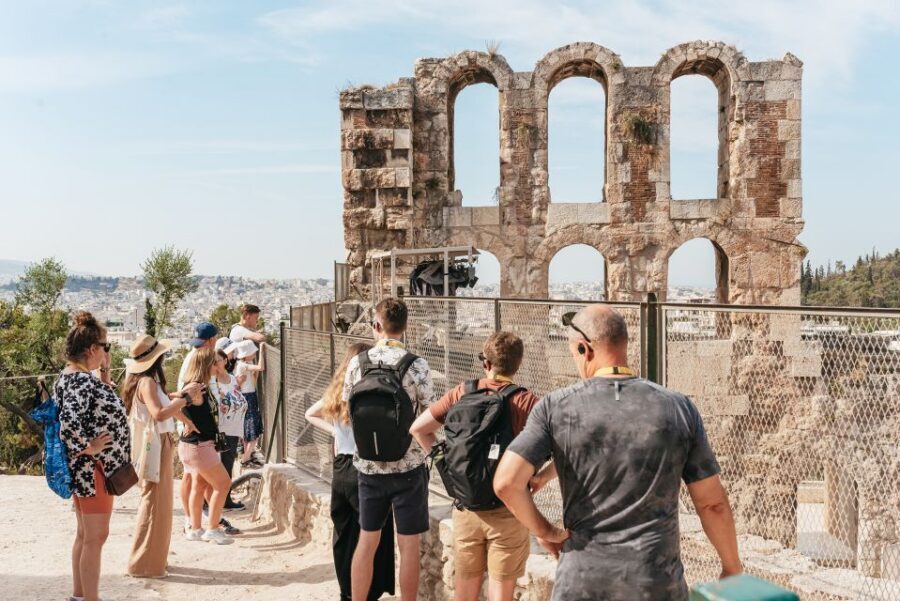
On the museum’s first floor, you’ll see the Caryatids: five of them are in this museum, with the sixth in the British Museum. Seeing them here changes how you understand their role. They aren’t just a famous photo spot; they’re tied to specific architectural storytelling that makes the Acropolis feel coordinated instead of fragmented.
Then there’s the Parthenon frieze and a recreation of the Parthenon, which helps you picture what the monument looked like as a whole. You’ll also get a top-floor viewpoint area with a striking view back toward the Acropolis.
If you’re trying to decide whether to do the museum on the same day as the Acropolis, this is one of the best arguments for doing it together. The museum explanations come right after the physical walking, so the details click.
Tickets, Skip-the-Line, and Real Value for $40

At around $40 per person, this tour can be good value if you value time and interpretation. The main reason is the skip-the-line ticket office benefit for the Acropolis and the museum when you choose the option that includes those tickets.
That said, it’s not a magical cheat code. Important detail: there is no skip-the-line separate entrance to the Acropolis itself. You’re skipping the ticket office lines, but you’ll still experience the site entry and crowd flow like everyone else.
The museum experience is the more streamlined part: the tour includes entry through a separate entrance to the Acropolis Museum. So if your priority is reducing friction and maximizing actual sight time, combining these two stops in one guided block makes practical sense.
Also consider what’s included versus what’s not:
- You get a guide and disposable earphones for groups over 8
- You don’t get hotel pickup/drop-off or food/drinks
- There’s no elevator at Acropolis Hill, so your comfort depends on walking and stairs
Pacing, Audio, and Crowd Reality on a Timed Classic
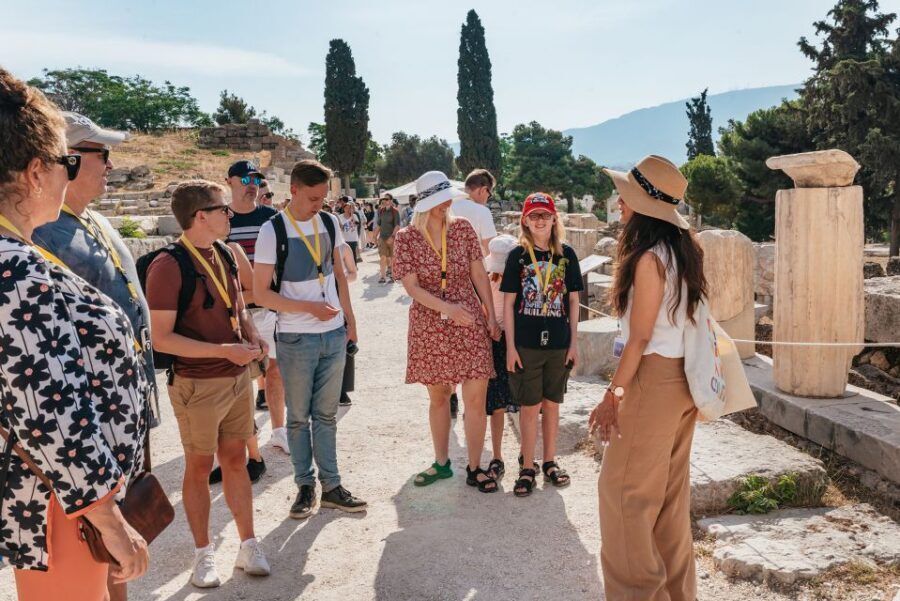
Even with skip-the-line advantages, the Acropolis and museum are crowd magnets. That affects how smoothly the tour feels. The tour is described as lasting 2 to 4 hours, but in practice it can stretch toward 3 to 4 hours depending on the group pace and weather.
Audio is another real-world factor. Disposable earphones are provided for groups larger than 8, but the audio quality may be affected by other groups’ equipment during crowded times. If you’re sensitive to audio issues, it helps to stand where you can hear the guide clearly and not assume the earphones will perfectly cancel the chaos.
Finally, guides may change the order of site visits to avoid discomfort. I like this approach because it means you’re not blindly stuck in one rigid route when the sun, stairs, or crowd pressure makes things unpleasant.
Who This Tour Is Best For
This tour is a strong fit if you want a guided Athens primer that covers the core Acropolis monuments plus the museum’s key context. It’s also a good choice if you like a structured route where you don’t have to decide what to skip.
It’s available as a private group or shared tour, so you can choose the vibe:
- Shared tends to be social and cost-effective
- Private can be calmer and easier to customize, especially if you have specific photo goals
On the other hand, it’s not suitable for certain travelers. It’s listed as not suitable for:
- children under 6
- people with mobility impairments or wheelchair users
- people with heart problems
And operationally, the tour doesn’t allow pets, baby strollers, and luggage or large bags. Plan your day light, and you’ll avoid stress at entry points.
Should You Book the Acropolis, Parthenon & Museum Guided Tour?
If your goal is to see the big monuments and understand what you’re seeing without spending hours building your own game plan, this is a solid pick. The combination of Acropolis + New Acropolis Museum on the same day is where the value really shows, because the museum makes the ruins easier to interpret right after you’ve stood in their shadow.
I’d especially recommend it if:
- you want skip-the-line ticket office convenience
- you like guided storytelling that connects sites like Theater of Dionysus to the wider civic and myth world
- you don’t want to guess which museum objects matter most, including the Caryatids and Parthenon frieze
Skip it or look for a different format if you need step-free touring or if walking the hill is a deal breaker due to comfort or medical concerns.
FAQ
How long is the Athens Acropolis, Parthenon and Museum guided tour?
The duration is listed as 2 to 4 hours, and it can run about 3 to 4 hours depending on the group’s pace and weather conditions.
Does this tour include tickets to the Acropolis and the Acropolis Museum?
It depends on the option you select. The tour can include skip-the-line Acropolis and Acropolis Museum tickets if that option is chosen.
Do I skip the line at the ticket offices?
Yes, the tour highlights skip-the-line access at the ticket offices for both the Acropolis and the Acropolis Museum when the ticket option is selected.
Is there a separate entrance to the Acropolis site?
The tour information says there is no skip-the-line separate entrance to the Acropolis, even though there is entry through a separate entrance to the Acropolis Museum.
What language is the guide?
The guide is provided in English.
Are earphones included?
Disposable earphones are included for groups of more than 8 people.
What should I bring for the tour?
Bring comfortable shoes, a hat, water, and comfortable clothes.
Is food or drinks included?
No. Food and drinks are not included.
Is the tour suitable for wheelchair users or people with mobility impairments?
No. The tour is listed as not suitable for wheelchair users and people with mobility impairments.
Is there free cancellation?
Yes. You can cancel up to 24 hours in advance for a full refund.