REVIEW · ATHENS
Guided Walking Tour of the Acropolis in Athens in Spanish
Book on Viator →Operated by Secrets of Greece · Bookable on Viator
The Acropolis can feel like a blur without help. This guided walking tour in Spanish gives you a clear path, the right context, and stops that make the monuments easier to understand and photograph, with an official guide leading the way. I like that it starts on the southeast side to dodge the worst crush at the main entrance, and you still get the big-ticket highlights like the Parthenon.
Two things I’d put at the top of the value list are the excellent guide pacing (enough story to matter, plus time for photos) and the practical way the route connects temples into one human story of Athens. The only real drawback to plan around is that the Acropolis entrance ticket isn’t included (listed as €20), so your final cost will be higher once you add it.
In This Review
- Key things to know before you go
- Why a Spanish-Guided Acropolis Walk Works So Well
- Meeting at Makrigianni: How to Get Started Smoothly
- The 90-Minute Loop: What You’ll See Without Feeling Rushed
- Parthenon and Erechtheion: The Symbols You Can Actually Place
- The Parthenon: the crowned temple on the rock
- Erechtheion: sacred space and the Caryatids
- Athena Nike, Propylaea, and the Views Over Athens
- Temple of Athena Nike: the protective goddess
- Propylaea: the access point into the fortification
- Views: Athens from the sacred rock
- Dionysus Theater and the Asclepios Sanctuary: More Than Just Temples
- Theater of Dionysus: where ancient drama took center stage
- Temple of Asclepios: a sanctuary for healing
- Herodes Atticus Odeon: Why This One Gets Mentioned
- Price and Tickets: Figuring Out Your Real Cost
- Pace, Photos, and Comfort: Make It Enjoyable on Real Legs
- Who This Tour Suits Best
- Should You Book This Acropolis Walking Tour?
- FAQ
- Is the tour guided in Spanish?
- How long is the guided walking tour?
- What is included in the price?
- Do I need to buy Acropolis entrance tickets separately?
- Where does the tour start and where does it end?
- Do I get a mobile ticket?
- How big is the group?
Key things to know before you go
- Southeast start to avoid the busiest entrance and keep the walk more pleasant
- Spanish-speaking official guide who explains legends and what you’re looking at
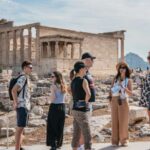
- Small group size (maximum 15) so questions and conversation are easier
- Built-in monument stops that cover the Parthenon, Erechtheion, Athena Nike, and more
- Mobile ticket helps you keep things simple on-site
- You’ll still climb and walk, so comfortable shoes matter
Why a Spanish-Guided Acropolis Walk Works So Well
The Acropolis isn’t just one building. It’s a whole sacred complex, layered with centuries of religion, politics, and art. A guided walk helps you connect what you see—columns, walls, and temple ruins—to why people in ancient Athens built them.
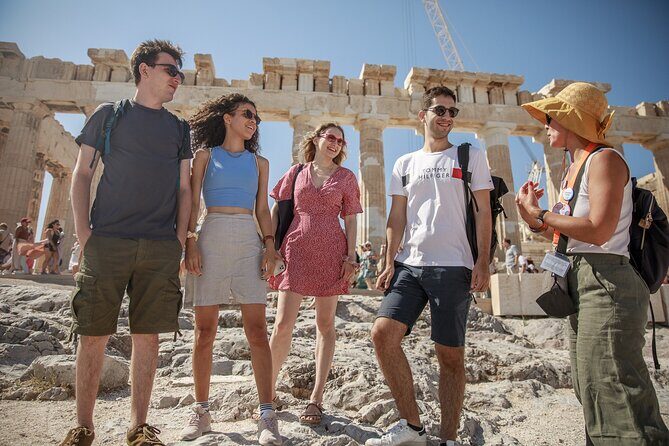
I also like the fact that this is a Spanish tour with an official guide. When you’re reading a temple’s details while someone explains the legends and meanings in your language, the site clicks faster. You don’t have to “figure it out” alone while the crowd pressure pushes you along.
One smart operational choice: the tour begins on the southeast side. That matters because the main entrance is typically more packed, and getting stuck near slow-moving lines can drain your energy before you even reach the best viewpoints.
Other Acropolis and Parthenon tours we've reviewed in Athens
Meeting at Makrigianni: How to Get Started Smoothly
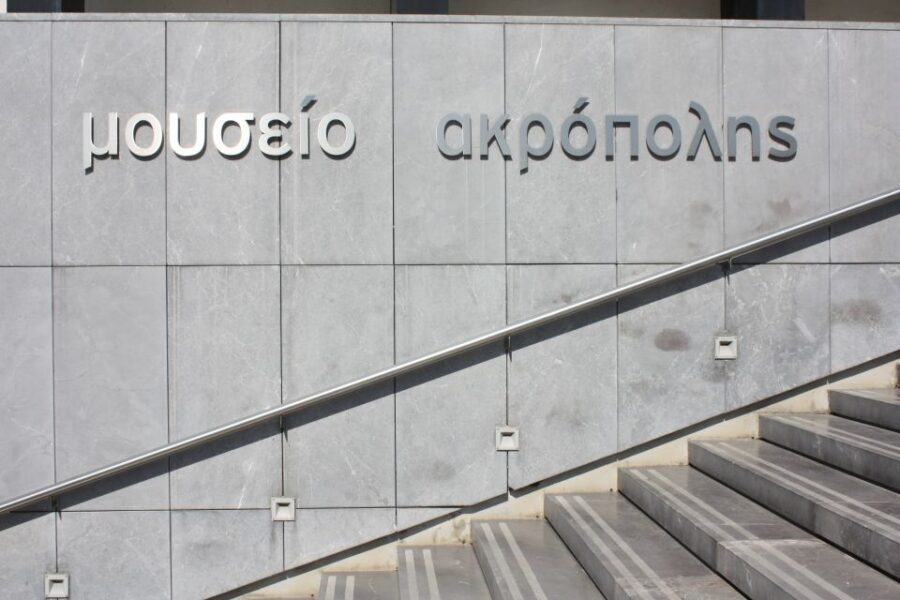
The tour’s start point is Makrigianni, Athina 117 42, Greece. If you’ve never navigated Athens on foot before, this is a good moment to slow down and confirm your exact meeting location on the map so you’re not scrambling with tired legs later.
Bring your mobile ticket info, since the tour uses a mobile format. Even if you’re not the type to overthink logistics, having your ticket ready helps you move quickly at check-in and keeps the group from waiting.
And do one small but important thing: pack water. The total time is about 1 hour 30 minutes, but the Acropolis is exposed, and you’ll feel it in the sun. A bottle makes the difference between enjoying the stops and cutting photos short because you’re thirsty.
The 90-Minute Loop: What You’ll See Without Feeling Rushed
This is a concentrated tour of the Acropolis that focuses on the essentials. You’ll walk the site, hear key stories, and stop at monuments long enough to understand their role—without turning the experience into an all-day grind.
The route includes a main segment at the Acropolis archaeological area, with additional short stops at specific structures. Many people love this format because it gives you a “greatest hits” view while still adding context that makes the monuments feel alive, not just impressive shapes.
Just remember: even with careful pacing, you’re still on ancient stone with uneven ground in places. If you’re sensitive to walking or standing, wear shoes with real grip and be ready for the climb.
Parthenon and Erechtheion: The Symbols You Can Actually Place
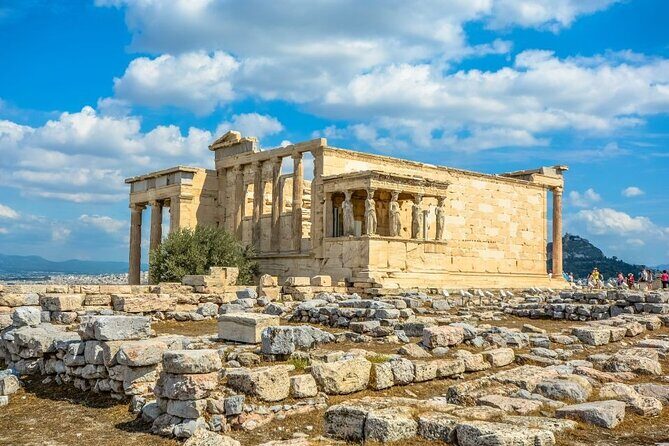
Two stops drive home why the Acropolis matters: the Parthenon and the Erechtheion.
The Parthenon: the crowned temple on the rock
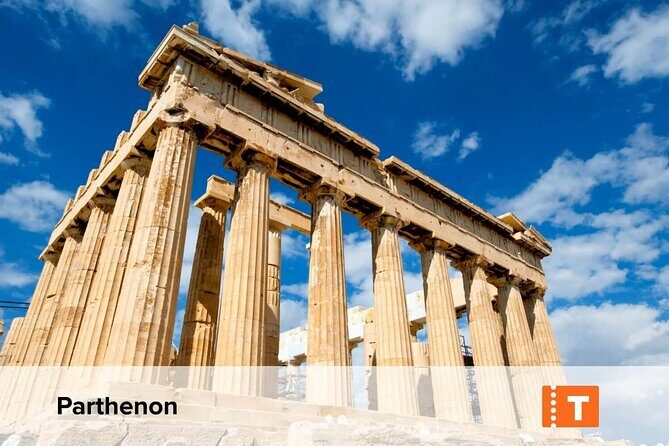
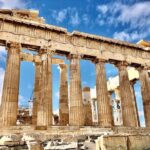
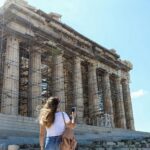
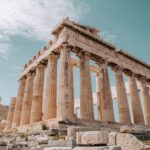
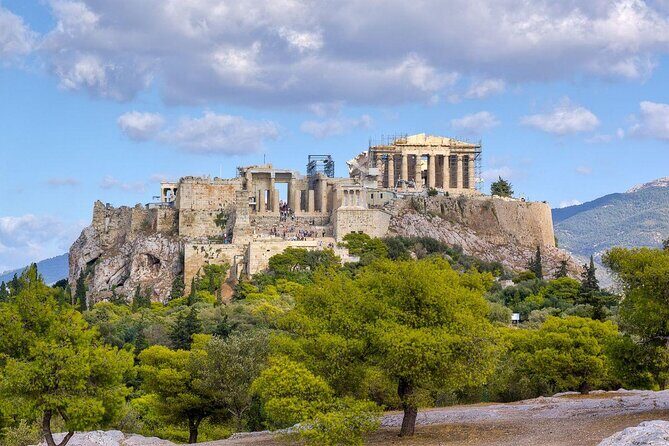
The tour gives the Parthenon a full 30 minutes, which is the right amount of time. It’s the most famous symbol of the entire archaeological site and the emblem of the city, so it’s easy to treat it like a single photo op. With a guide, you’re more likely to look at the details—its placement, its prominence, and how it dominates the sacred rock.
You’ll also benefit from the guide’s explanations, because the Parthenon can feel like “just a temple” until you understand what it represented for Athens. That’s where the storytelling makes your pictures more than souvenirs.
Other Acropolis walking tours we've reviewed in Athens


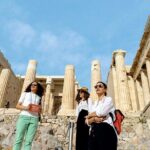
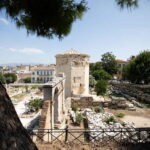
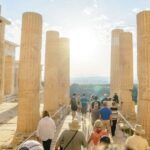

Erechtheion: sacred space and the Caryatids
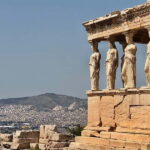
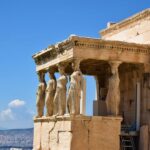
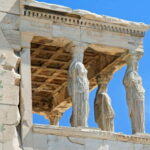
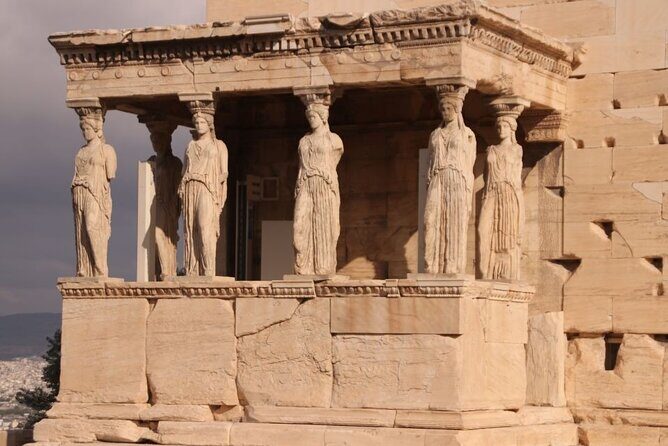
The Erechtheion is famous as the most sacred temple in the enclosure, and it stands out for the Caryatids (those iconic female figures used as sculpted supports). The tour includes about 10 minutes here, which is enough for you to notice the figures and understand why they’re so central to the site’s identity.
If you’ve been to other classical ruins, you’ll recognize that details like these weren’t random decoration. They were part of a message—about protection, sacred authority, and civic pride—carried through art.
Athena Nike, Propylaea, and the Views Over Athens
Not all the drama at the Acropolis is inside temples. Some of it is in entrances, positioning, and the way the hill frames the city.
Temple of Athena Nike: the protective goddess
You’ll stop at the Temple of Athena Nike, dedicated to the protective goddess of the city. The tour’s short stop here—about 10 minutes—works well because it’s focused. You can step back, orient yourself, and get the basic meaning of what you’re looking at without losing time you need for the bigger structures.
This is also a good time to pause for photos from the angles that show how the temple relates to the higher terraces.
Propylaea: the access point into the fortification
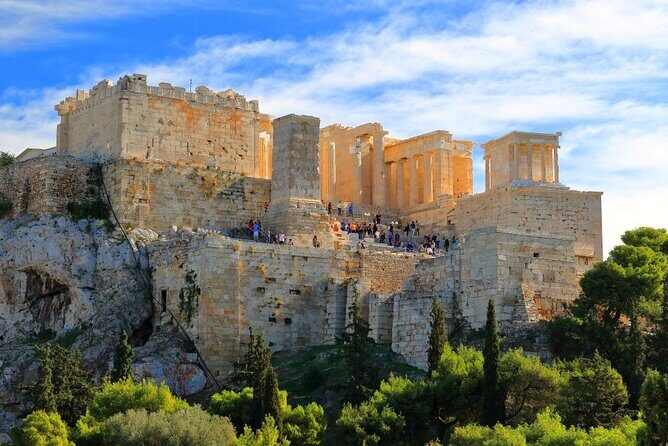
Then comes the Propylaea, described as the access point to the interior of the fortification of the Acropolis. That phrase is key. You’re not only looking at a building; you’re looking at a boundary—an architectural gate between ordinary life and sacred space.
If you’ve ever felt confused by where the Acropolis “starts” conceptually, a guide explanation fixes that in minutes. The Propylaea stop gives you a mental map for the rest of the complex.
Views: Athens from the sacred rock
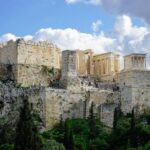
One of the best parts of any Acropolis experience is the view. Even when your feet are tired, you’ll get extraordinary perspectives over Athens. This tour explicitly builds in that sense of arrival—seeing the city from a height that ancient Athenians used to frame power and belonging.
Dionysus Theater and the Asclepios Sanctuary: More Than Just Temples
The Acropolis wasn’t only temples dedicated to Athena. This tour also points you toward other religious and cultural spaces that round out the hill’s story.
Theater of Dionysus: where ancient drama took center stage
At the Theater of Dionysus, you’ll hear that it was the largest theater in ancient Greece. The stop is about 10 minutes, which is enough to see the scale cues and understand why this location mattered.
Here’s the practical value: when you hear “largest theater in ancient Greece,” you start looking at seating layout and orientation differently. You stop thinking only in terms of “ruins” and start thinking in terms of crowds, performance, and civic life.
Temple of Asclepios: a sanctuary for healing
You’ll also visit the Temple of Asclepios, described as the sanctuary made in honor of Asclepius and Hygieia. This stop gives the Acropolis a different emotional tone. It’s not only about victory, protection, and art—it’s also about healing and spiritual wellbeing.
If you want the site to feel human rather than marble-cold, this is a great addition. A place like the Acropolis worked as a civic stage and a religious refuge, depending on what people needed.
Herodes Atticus Odeon: Why This One Gets Mentioned
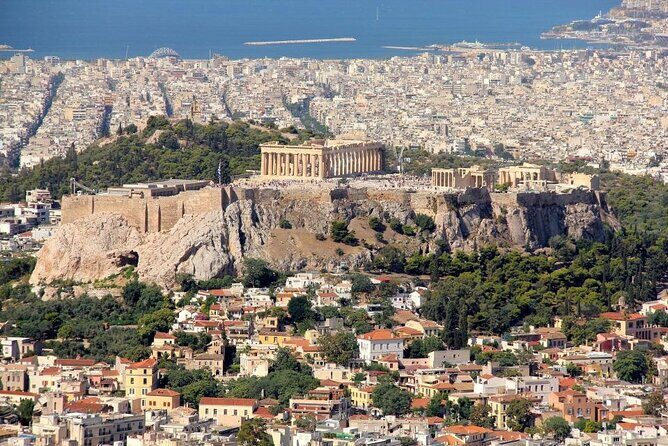
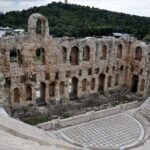
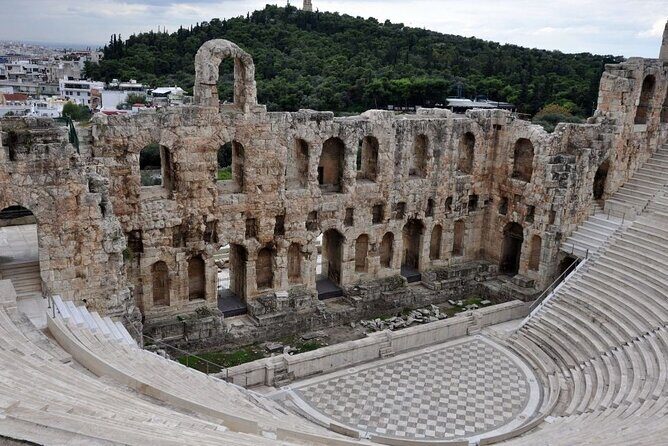
The Odeon of Herodes Atticus is widely described as the best preserved monument in the entire enclosure, and this tour includes a 10-minute stop there.
That preservation detail matters because it helps you visualize what the structure was like when it was active. Even if you can’t time-travel into a performance night, a well-preserved theater gives your brain a foothold. You’re not imagining everything from scratch.
From a photography standpoint, it’s also a useful counterpoint: after the more temple-focused stops, this feels like a different kind of ancient architecture—one designed for gathering and sound.
Price and Tickets: Figuring Out Your Real Cost
The tour price is $33.57 per person, and it’s booked fairly in advance (about 51 days on average). The duration is around 1 hour 30 minutes, which means you’re paying for guide time and a guided route that saves you from wandering and missing context.
But the important part for budgeting: entrance to the Acropolis is not included and is listed as €20. So your total cost will depend on the current ticket price and your exchange rate, but you should assume you’ll add the admission fee on top of the tour cost.
For value, I’d look at it this way: you’re paying to have an official Spanish-speaking guide connect multiple monuments into one coherent tour. If you’re the type who enjoys history when it’s told clearly (not just read off a plaque), this kind of guidance tends to be worth it.
If you’re coming for pure freedom and minimal talking, you might prefer a self-guided approach. But if you want the stories behind what you’re seeing, paying for guidance is what makes the experience feel smoother.
Pace, Photos, and Comfort: Make It Enjoyable on Real Legs
The best feedback from similar experiences is usually about pace and level of dialog—and that’s exactly what you should look for here. The tour is designed with enough explanation to matter, without turning every stop into a lecture. You should expect pauses that let you take photos and reset mentally as you move between monuments.
Still, set yourself up for success:
- Wear comfortable walking shoes with traction.
- Bring a bottle of water.
- Plan for standing and walking on uneven surfaces.
Also, note that the tour allows service animals and says it’s near public transportation. That’s useful if you’re coordinating the Acropolis with other Athens sights.
Who This Tour Suits Best
This walking tour is a strong fit if you:
- Want a Spanish-speaking guide so the legends and meaning land quickly
- Like structured routes with clear stops instead of wandering alone
- Are visiting for the first time and want key monuments covered in a tight time window
- Prefer small groups (maximum 15 travelers) so it doesn’t feel like a stampede
It may be less ideal if you:
- Want deep, hour-by-hour museum reading time at one single structure
- Have limited mobility and need long rests between stops (this tour involves walking across the site)
Should You Book This Acropolis Walking Tour?
I think it’s a smart choice if you want the Acropolis to feel understandable. The tour focuses on the major monuments—Parthenon, Erechtheion, Athena Nike, Propylaea, plus cultural and religious stops like Dionysus Theater and the Asclepios sanctuary—and it ties them together through a Spanish-speaking official guide.
If you’re on a schedule and want a route that avoids the main entrance crowd by starting on the southeast side, this format is practical. Just budget for the €20 Acropolis admission and wear shoes you trust. Do that, and you’ll leave with both photos and a clearer sense of what this place meant to ancient Athens.
FAQ
Is the tour guided in Spanish?
Yes. The tour includes a Spanish-speaking official tour guide.
How long is the guided walking tour?
The duration is about 1 hour 30 minutes (approx.).
What is included in the price?
Included are the Spanish-speaking official tour guide and the guided tour of the Acropolis.
Do I need to buy Acropolis entrance tickets separately?
Yes. Entrance to the Acropolis is not included and is listed as €20.
Where does the tour start and where does it end?
It starts at Makrigianni, Athina 117 42, Greece, and ends at the Acropolis of Athens (Athens 105 58, Greece).
Do I get a mobile ticket?
Yes. The tour uses a mobile ticket.
How big is the group?
The tour has a maximum of 15 travelers.