REVIEW · ATHENS
Visit of the Acropolis with an official guide in Spanish
Book on Viator →Operated by Toptoursgreece · Bookable on Viator
Two hours, and suddenly you get Athens. This guided visit packs the Acropolis story into one smooth morning walk, with an official Spanish guide plus wireless audio. I especially like that you hit the big monuments (including the Parthenon and the Erechtheion Caryatids) and still finish at the top for extra photos. Main catch: the Acropolis entrance ticket is not included, and you’ll need to plan your entry timing (8:00–9:00 as listed).
You’re not stuck with a long lecture either. It’s a tight, organized route (small group, max 27) that helps you understand what you’re looking at instead of just taking in views. Expect mostly uphill walking, so wear shoes you trust.
In This Review
- Key highlights worth planning for
- Why this starts at 8:30 and ends at the top
- Price and logistics: what your $44.03 covers (and what it doesn’t)
- How the route tells the Acropolis story in a logical order
- Stop-by-stop: what you’ll see and why it matters
- UNESCO Acropolis orientation (the “start here” moment)
- Parthenon: optical refinements and later life as church and mosque
- Propylaea: the marble gateway and a defensive design
- Temple of Athena Victorious: victories, then golden-age memory
- Erechtheion: Caryatids, sacred olive tree legend, and multiple divinities
- Herod Atticus Odeon: a restored Roman stage still used
- Temple of Asclepios: medicine, cures, and votive offerings
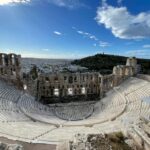
- Theatre of Dionysus Eleuthereus: marble, scale, and first performances
- The Spanish guide quality is the real engine
- Walking comfort and who this tour suits best
- What I’d do before you go (to make it feel effortless)
- Should you book this Acropolis guided tour?
- FAQ
- Is the entrance ticket to the Acropolis included?
- How long is the tour?
- What language is the guide?
- Does the price include the guide and audio?
- Is transportation included?
- Can I cancel for a refund?
Key highlights worth planning for
- Official Spanish guiding: explanations are led in Spanish only, not a mixed-language setup.
- Wireless audio system: you can actually hear the story at each stop.
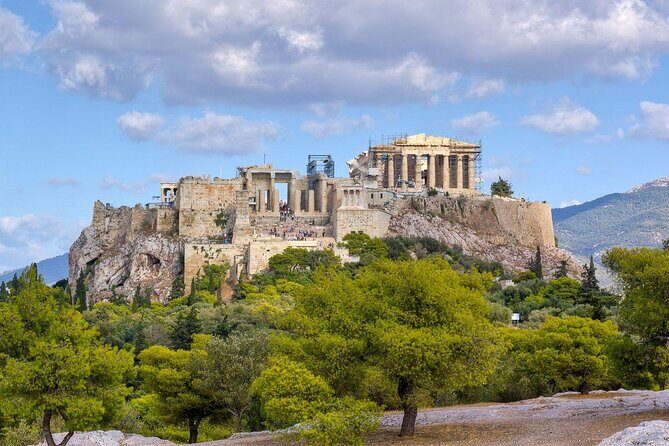
- All the core Acropolis monuments: Parthenon, Propylaea, Erechtheion, Odeon, Asclepios, and Dionysus’ Theatre.
- A finish near the top for photos: the tour ends where you can linger a bit and frame the monuments your way.
- Small-group pacing: up to 27 people, with short, focused time at each landmark.
Why this starts at 8:30 and ends at the top

This tour begins at 8:30 am at the Greek National Tourism Organisation Information Point on Dionysiou Areopagitou. Meeting early matters on the Acropolis, because you’ll be walking and reading stone with limited patience once the day heats up. Also, your entrance timing is keyed to a morning window (8:00–9:00), so starting at 8:30 keeps everything aligned.
The ending point is also smart. Instead of marching you back down, the experience finishes at Theorias 21 and specifically ends directly at the top of the Acropolis. That means you get a little freedom for photos right where the views pay off, without having to coordinate another long walk.
Other Acropolis and Parthenon tours we've reviewed in Athens
Price and logistics: what your $44.03 covers (and what it doesn’t)
At $44.03 per person, you’re paying for the guidance and systems that make this visit work. Included is an official Spanish guide, a wireless audio setup, and state taxes. You also get a mobile ticket, which is handy once you’re already on your phone all day.
What’s not included is the Acropolis entrance ticket. The tour explicitly says entry to the venue is not included, and an entrance ticket is required for the 8:00–9:00 time frame listed with the experience. If you don’t already have that sorted, you’ll lose the benefit of the guided flow. Do yourself a favor: plan the ticket timing before you show up at the meeting point.
Also note the format: there are no transfers, and the visit is done on foot. This is great if you like a walk-and-learn pace, but not ideal if you want a car-style tour or you’re worried about sustained stairs and uneven surfaces.
How the route tells the Acropolis story in a logical order
The best part of this tour is that the sequence helps you connect power, myth, and architecture. You start with context at the Acropolis summit area, then you move through the most famous monuments in a way that builds one idea at a time: what the Athenians built, why they built it, and what later rulers did to it.
The pacing is also practical. You’re looking at multiple UNESCO-recognized structures in about two hours, so each stop is focused: enough time to understand the big themes, not enough time to get lost in every crack and carving. Think of it like getting the Acropolis “cheat sheet” from someone who knows what to point at and where to stand.
Stop-by-stop: what you’ll see and why it matters
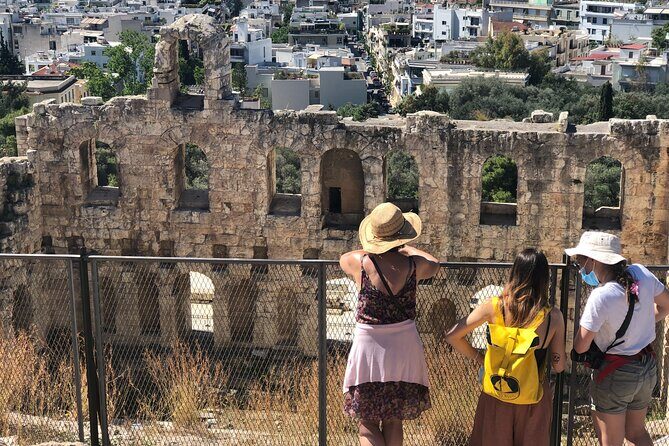
UNESCO Acropolis orientation (the “start here” moment)
You begin at the Acropolis itself with an official guide working in Spanish. The goal is to set the historical, mythological, social, architectural, and cultural context before you jump into specific buildings.
This is more than a warm-up. If you arrive knowing the names only, the Acropolis can feel like scattered monuments. With the guided context, you’ll see the layout as a statement, not just a collection of old structures.
Other licensed-guide Acropolis tours we've reviewed in Athens
Parthenon: optical refinements and later life as church and mosque
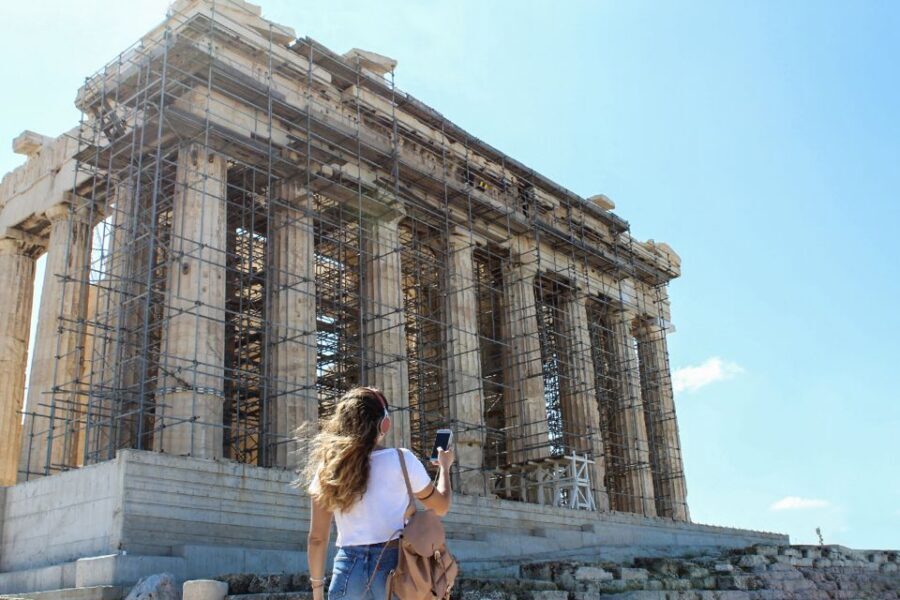
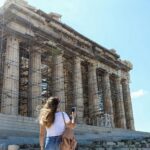
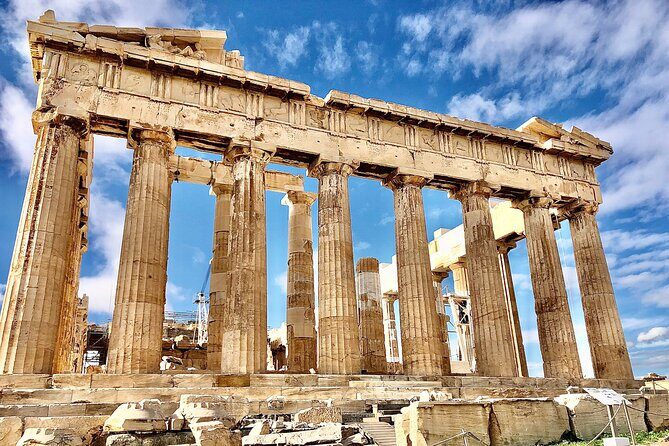
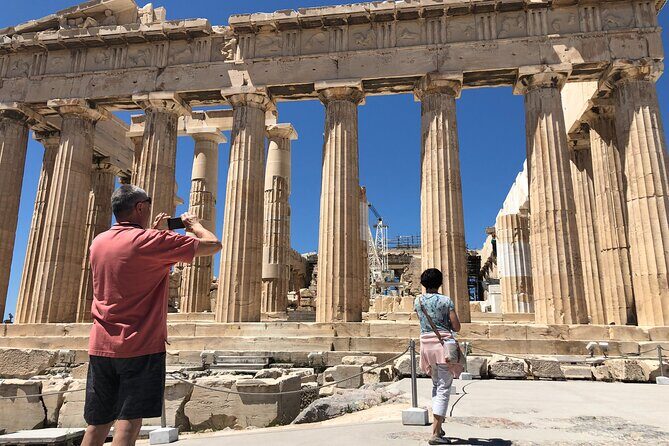
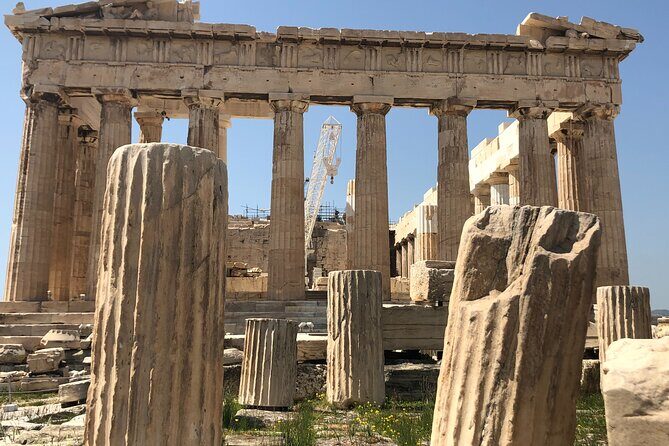
Next comes the Parthenon, one of the most important buildings of antiquity for its perfection and harmony. You’ll spend about 20 minutes here, with the guide explaining the construction phases and the famous details often missed when you’re just sightseeing.
A big reason this stop works is the “layers of time” approach. You’ll learn how the Parthenon became a church during the Byzantine period, and later a mosque during Ottoman occupation. The guide also covers its decoration, looting, and the restoration work that’s been ongoing.
Practical tip for your photos: use your time at the Parthenon to shoot from the same angle your guide uses for the explanation, then step a few feet to get a wider composition once you’ve heard why that spot matters.
Propylaea: the marble gateway and a defensive design
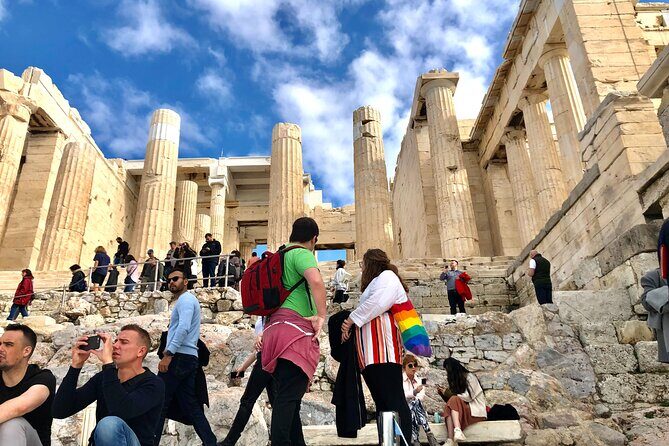
Then you reach the Propylaea, the monumental entrance built entirely of marble. You’ll have about 10 minutes at this stop.
Here the tour gets interesting fast: the guide connects the building’s marble “wow factor” to strategic purpose. Due to its positioning, the Propylaea functioned like a funnel in times of war, aided by the topography. You’ll also learn why it uses different types of columns, which turns a pretty facade into a clue about how the designers thought.
Temple of Athena Victorious: victories, then golden-age memory
After the Propylaea, you’ll pause at the Temple of Athena Victorious (also described as the honor to Athena Victorious). This is tied to moments just after victories against the Persians, and the story centers on how Athenians used architecture to preserve a turning point “from generation to generation.”
This stop is usually brief compared to the Parthenon or Erechtheion, but it’s a key link in the narrative. You’re moving from the grand entrance into the sacred messaging of victory and civic pride.
Erechtheion: Caryatids, sacred olive tree legend, and multiple divinities
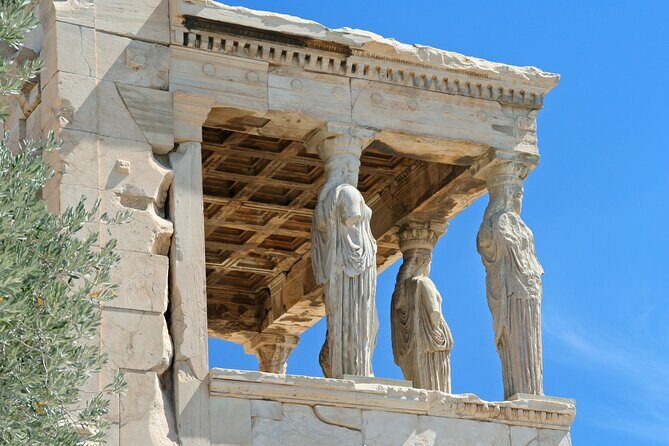
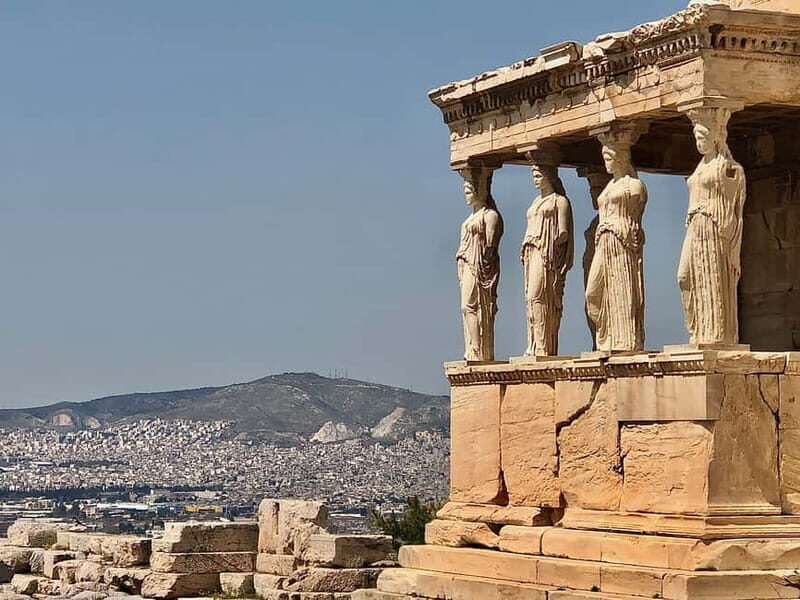
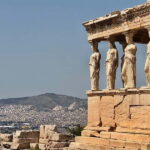
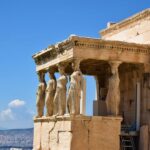
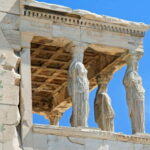
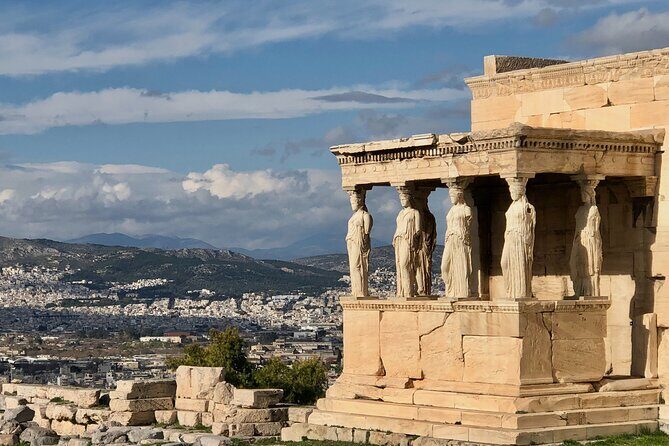
The Erechtheion is next, and yes, it’s one of the most photogenic spots on the Acropolis. You’ll get about 10 minutes here, with the focus on the Caryatids—female-shaped columns.
The tour also explains what this building was for spiritually. It was consecrated to several divinities, including Athena, Poseidon, and Erectios (listed as being the first mythological king of Athens). You’ll also hear the story behind the sacredness of the olive tree in this context, which is one of those details that makes the place feel less like ruins and more like lived belief.
Herod Atticus Odeon: a restored Roman stage still used
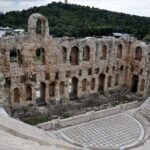
Next is the Herod Atticus Odeon, a Roman auditorium built to seat about 5,000 spectators. You’ll spend around 10 minutes here.
What makes this stop genuinely special is the “still in use” angle. The tour notes it’s the only fully restored ancient building in use today, and it’s the stage for outstanding performances during the famous Athens festival. If you’ve ever wondered what “ancient theatre” means beyond a picture, this is where the definition becomes real.
Temple of Asclepios: medicine, cures, and votive offerings
Then you step into the smaller, focused area of the Temple of Asclepios, dedicated to the god of medicine. Plan about 5 minutes here.
This isn’t a stone-anatomy stop. The guide explains how ancient Athenians treated patients and what kinds of votive offerings people gave in thanks. It’s a useful reminder that ancient sites weren’t only about politics or war. They were also about care, hope, and ritual.
Theatre of Dionysus Eleuthereus: marble, scale, and first performances
Finally, you reach the Theatre of Dionysus Eleuthereus. You’ll get about 10 minutes here, and the tour frames it as one of the oldest theaters in the world built entirely of marble.
The numbers help you picture the scale: around 17,000 spectators. The guide also explains how the theatre’s slope positioning helped with acoustics, which is why it worked so well for performances.
You’ll hear about the major playwrights whose works were presented here for the first time: Euripides, Aeschylus, Sophocles, and Aristophanes. If you only know these names from school, this stop connects them to a real stage and a real crowd.
The Spanish guide quality is the real engine
Language matters at the Acropolis. You can stand in front of the Parthenon and still miss the point if you’re reading only labels. This tour is exclusively in Spanish, and the guide is the main reason it’s consistently rated so highly.
In particular, names like Efi (Spanish-speaking) show up repeatedly in past experiences, often praised for passion and for building understanding through questions and imagination. Other Spanish guides mentioned include Ari, Simon, and Maria, with compliments focused on clarity, preparation, and keeping the group engaged even when the site is hot and busy.
One thing I’d treat as a rule: listen closely to the guide’s suggested photo spots, then take your shot fast. The tour is paced for understanding, so if you spend too long chasing the “perfect photo,” you’ll run out of time for the later monuments.
Walking comfort and who this tour suits best
This experience is for you if you can handle a walking route on foot and you have a moderate physical fitness level. The Acropolis is not flat, and the tour moves through multiple key points quickly.
You’ll enjoy it most if:
- You want a structured explanation instead of wandering alone
- You’re comfortable with Spanish (no English option is listed)
- You like small-group attention (max 27)
You might want to reconsider if:
- You need an English guide
- You’re hoping transfers will cover most of the route (there are none)
- You don’t want to manage a separate Acropolis entrance ticket for the morning entry window
What I’d do before you go (to make it feel effortless)
Here’s how I’d prep so the tour goes smoothly:
- Secure your Acropolis entrance ticket first, since it’s not included and entry is tied to a morning window.
- Wear grippy shoes. You’ll be on stone and stairs.
- Bring sun protection and water. The tour lasts about 2 hours, and you’ll spend it outdoors.
- Charge your phone for the mobile ticket and maps, since the meeting point is specific.
If you do those three things, this becomes a very efficient way to understand the Acropolis without turning it into a homework assignment.
Should you book this Acropolis guided tour?
Book it if you want the most efficient route to the Acropolis highlights with an official Spanish guide and wireless audio. The price is reasonable for what you get, especially because you’re covering multiple major monuments in one morning and finishing up at the top with time for photos.
Skip it (or plan differently) if you’re not ready to handle the separate Acropolis entrance ticket timing. Also, if Spanish is a problem, this is the wrong match since the tour is exclusively in Spanish.
If you’re a first-timer to Athens and you want to leave with more than a set of photos, this tour is a strong choice.
FAQ
Is the entrance ticket to the Acropolis included?
No. Entrance to the venue is not included, and an entry ticket is required for the time window listed as 8:00 to 9:00.
How long is the tour?
It runs for about 2 hours (approximately).
What language is the guide?
The tour is exclusively guided in Spanish.
Does the price include the guide and audio?
Yes. It includes the official tourist guide in Spanish, a wireless audio system, and state taxes.
Is transportation included?
No. There are no transfers, and the visit is done on foot.
Can I cancel for a refund?
Yes. There’s free cancellation, and you can cancel up to 24 hours in advance for a full refund. Changes inside 24 hours are not accepted.