REVIEW · ATHENS
Athens: Acropolis Guided Tour in Spanish-Option Tickets
Book on GetYourGuide →Operated by TOP TOURS GREECE · Bookable on GetYourGuide
Acropolis feels closer with Spanish guidance. A Spanish-speaking licensed guide leads you through the Acropolis, and I like how the talk connects buildings to real Athenian life, not just dates. You’re walking an iconic complex that’s around 2500 years old, but the guide makes it feel understandable and human.
I also love the practical setup: headphones help you hear every explanation even when the site gets noisy. The only real catch to know up front is that it’s not suitable for people with mobility impairments, so plan for a steady walk over uneven ancient surfaces.
In This Review
- Key highlights at a glance
- A 2-hour Acropolis route that actually makes sense in Spanish
- Price and value: what $36.14 buys you (and what it doesn’t)
- Where you meet and how the walking order keeps you oriented
- Theatre of Dionysus: the “birthplace of theater” stop
- Asklepieion of Athens: ancient medicine at the Temple of Asclepius
- Odeon of Herodes Atticus: a venue that still performs
- Propylaea and the Gallery of Eumenes: gateway energy
- Temple of Athena Nike: the viewpoint payoff
- Parthenon and the surrounding monuments you must not rush
- What kind of traveler this Spanish Acropolis tour suits best
- A few practical tips so you get the most out of every stop
- Should you book this Acropolis guided tour in Spanish?
- FAQ
- How long is the Acropolis guided tour?
- Is the guide Spanish-speaking?
- Are headphones included?
- Does the tour include an entrance ticket?
- Where does the tour start?
- Is the tour suitable if I have mobility limitations?
Key highlights at a glance

- Licensed Spanish guide that keeps the story clear as you walk
- Headphones included for easier listening around the crowds
- Theatre of Dionysus stop that explains why drama mattered in Athens
- Asklepieion of Athens focus on ancient medicine and the Temple of Asclepius
- Parthenon + Athens viewpoint as the late-tour payoff
A 2-hour Acropolis route that actually makes sense in Spanish
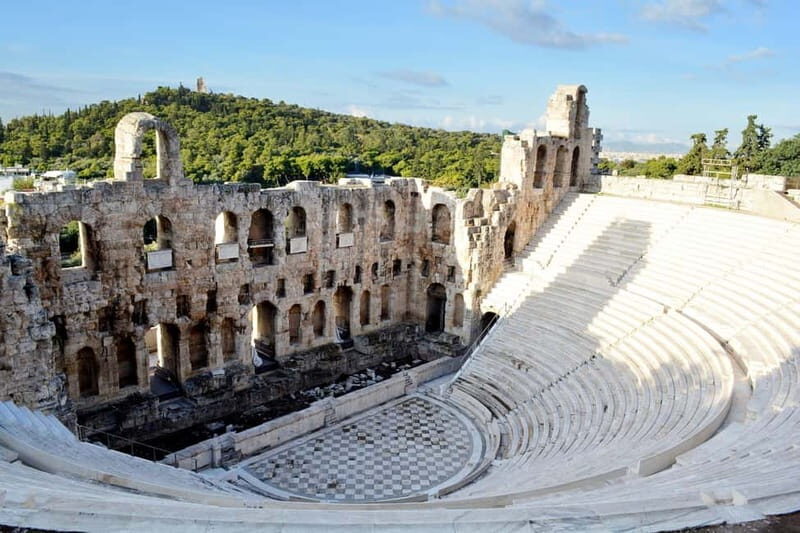
The Acropolis is one of those places where, without guidance, you can end up doing a lot of looking and not much understanding. This tour fixes that with a focused, timed route and a live Spanish guide who explains how the pieces fit together.
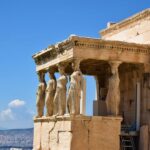
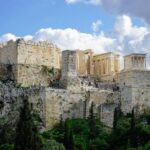
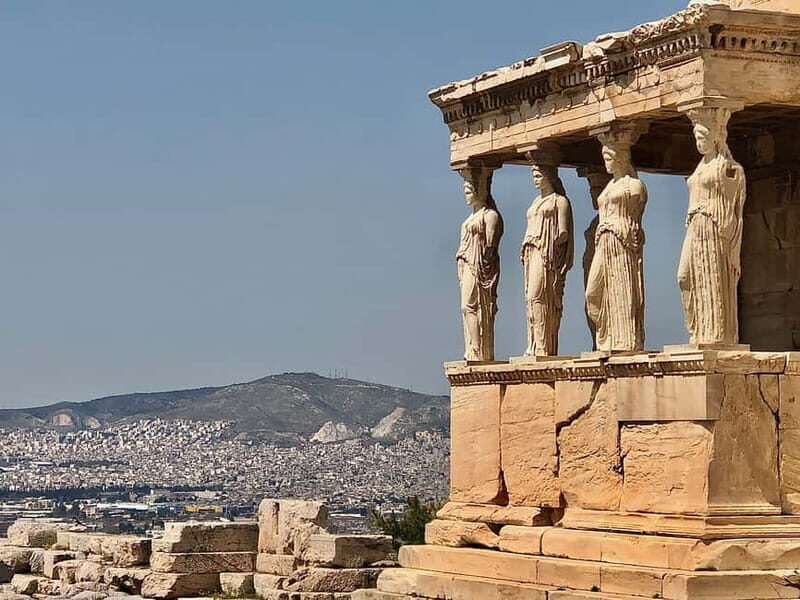
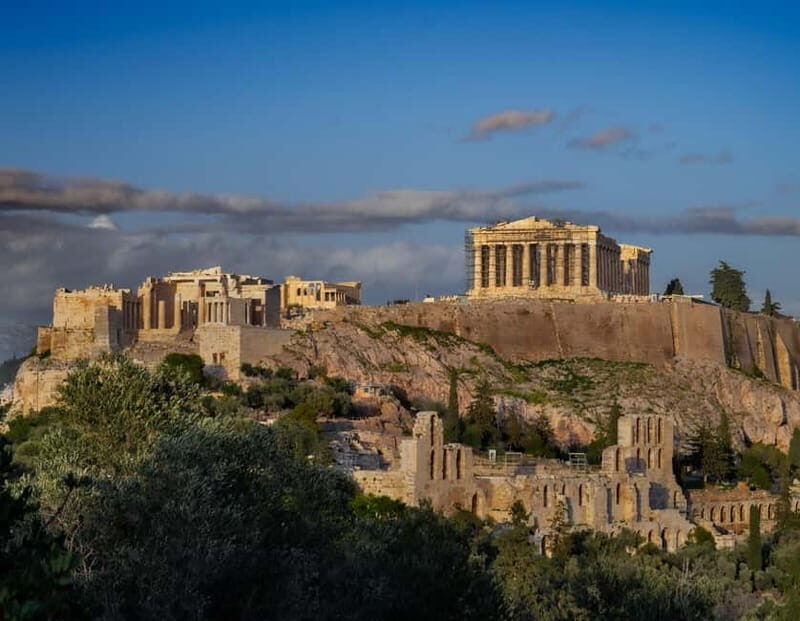
You get a walking tour through the major spots people come for: the Theatre of Dionysus, the Asklepieion of Athens (Temple of Asclepius), the Odeon of Herodes Atticus, and then up toward the heart of the complex—Propylaea, the Temple of Athena Nike, the Parthenon, the Erechtheion, and the Porch of the Caryatids. It’s not a slow museum shuffle. It’s a two-hour “see the core, learn the meaning” plan.
And since the guide is Spanish-speaking, it’s especially useful if English tours tend to move faster than you can process. This is the kind of guided experience where you can keep pace with the story while you’re still standing in the places the story is about.
Other Acropolis and Parthenon tours we've reviewed in Athens
Price and value: what $36.14 buys you (and what it doesn’t)
The price is $36.14 per person for a 2-hour guided experience. That’s a fair deal if you want more than a basic ticket: you’re paying for a licensed guide, plus headphones, which are genuinely helpful at a busy outdoor site.
What you should note is what’s included versus optional:
- Included: licensed guide and headphones
- Entrance ticket: included only if you choose that ticket option (the tour includes it in that case)
- Not included: hotel pickup/drop-off and food and drinks
In practical terms, you’re paying to save time and reduce guesswork. With the headset and a guide managing the flow, you don’t have to stop every few minutes to read signs or figure out what you’re looking at. For many visitors, that’s the best “value” at the Acropolis: the story sticks because you hear it right where it belongs.
Where you meet and how the walking order keeps you oriented
The start point can vary depending on the ticket option you book, but one meeting location is the Tourist Information Center Athens, Dionysiou Areopagitou 18. The tour ends back at the meeting point, so you’re not stuck figuring out a second location to connect your day.
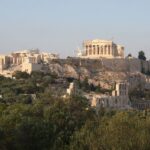
The route order matters. It’s designed to move you from early cultural sites into more sacred and ceremonial areas, then end with the monuments most associated with the Parthenon area. In other words, you’re not just bouncing randomly around the hill. You’re getting a sequence that builds toward the big moments—especially the Temple of Athena Nike and then the Parthenon viewpoint.
Also: plan for an active outdoor walk. You’ll want comfortable shoes and a sun hat. Strollers aren’t allowed, and there’s a no-food-and-drinks rule during the tour, so bring only what you can carry and use fast.
Theatre of Dionysus: the “birthplace of theater” stop
The tour kicks off at the Theatre of Dionysus. You’ll get about 10 minutes here, guided and focused.
This stop is valuable because it gives context before you hit the famous temple monuments. The Theatre of Dionysus is tied to Athenian drama—stories performed for the community, not just entertainment. When a guide points out how theater functioned in civic and religious life, you start seeing the Acropolis less like a pile of old buildings and more like a center of public meaning.
Practical tip: even though the time here is short, arrive mentally ready to look at the structure and imagine it as a functioning space. The big learning moment is how the design supported performance and audience life in ancient Athens.
Potential drawback: because this is an early stop, you may feel a little rushed if you arrive sweaty, late, or unprepared. If you want to savor this first segment, show up early enough to settle in.
Asklepieion of Athens: ancient medicine at the Temple of Asclepius
Next is the Asklepieion of Athens, again about 10 minutes. This is the part I like most when the guide leans into connections that people don’t expect.
The Temple of Asclepius brings in the idea of ancient medicine—healing, ritual, and belief—on a hill best known for politics and art. That contrast makes the Acropolis feel broader. It’s not only about emperors, philosophers, and gods of war. It also reflects how Athenians thought about health and recovery.
If you’re the type who enjoys “why this place matters” more than “what year was it built,” this stop can land really well. The guide typically ties the site’s purpose to the wider identity of Athens—why these spaces weren’t separate from everyday life.
Practical note: it’s still outdoors and still walking. Even if the stop is only 10 minutes, wear shoes that handle uneven ground.
Other Acropolis ticket options we've reviewed in Athens



Odeon of Herodes Atticus: a venue that still performs
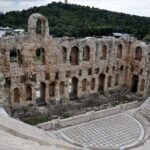
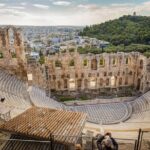
Then you’ll head to the Odeon of Herodes Atticus for about 10 minutes. This one stands out because the tour doesn’t treat the site like a dead artifact. The Odeon is described as a venue still used for Athens’ most important concerts and performances.
That detail changes the mood. It’s the same kind of “look at the shape, hear the purpose” moment. When you learn that this structure is still associated with performance culture, the theatre-and-drama thread from the Theatre of Dionysus feels connected rather than random.
If you love architecture that keeps finding new uses, you’ll appreciate this stop. It’s a reminder that ancient design wasn’t only for show—it was built for people to gather.
Possible consideration: because this is a short segment, focus on what the guide highlights rather than trying to capture everything in your camera. The headset makes it easy to listen; let the guide direct your attention.
Propylaea and the Gallery of Eumenes: gateway energy
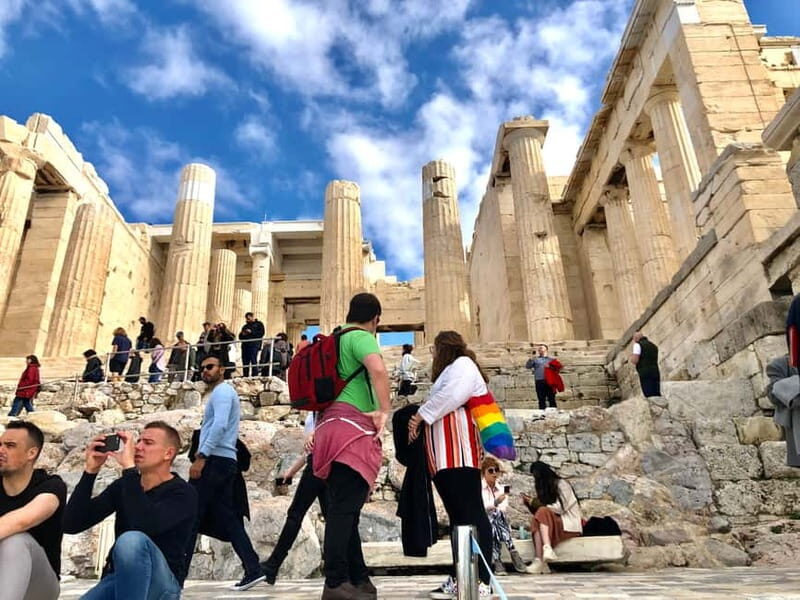
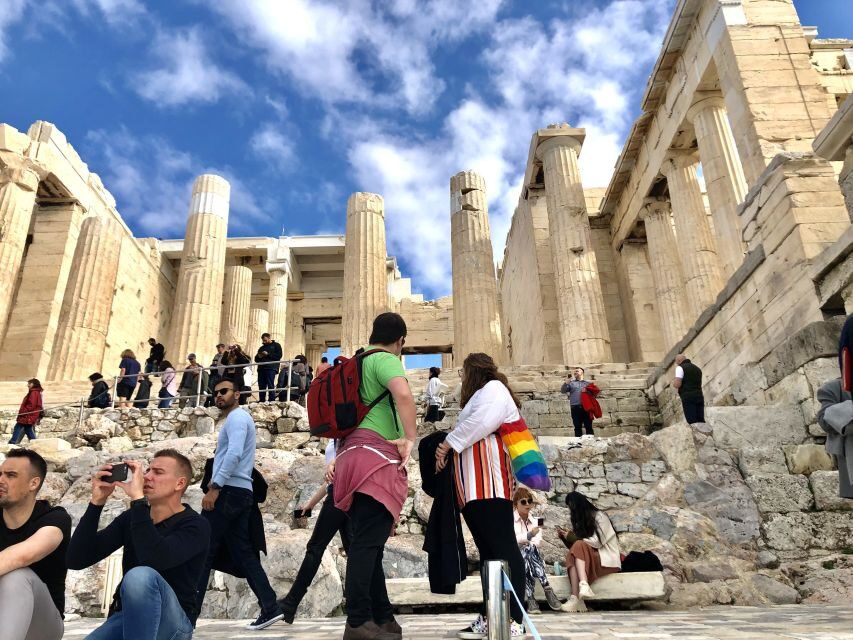
After that, you’ll move to Propylaea for about 10 minutes. This area functions like the formal gateway into the heart of the complex.
In the tour flow, you also pass through the gallery of Eumenes as you continue uphill and walk among the remains with explanations about the Acropolis’s importance. Even if you’ve seen photos, a guide helps you understand what you’re looking at in terms of movement and meaning. It’s not just “here are ruins.” It’s “here’s how you approach the sacred center.”
I like gateway stops because they often explain transitions—how a visitor’s mindset changes as you cross from civic space into a more ceremonial zone. If you’re building your understanding of the Acropolis as a place with rules and symbolism, Propylaea and the approach are a strong bridge.
Temple of Athena Nike: the viewpoint payoff
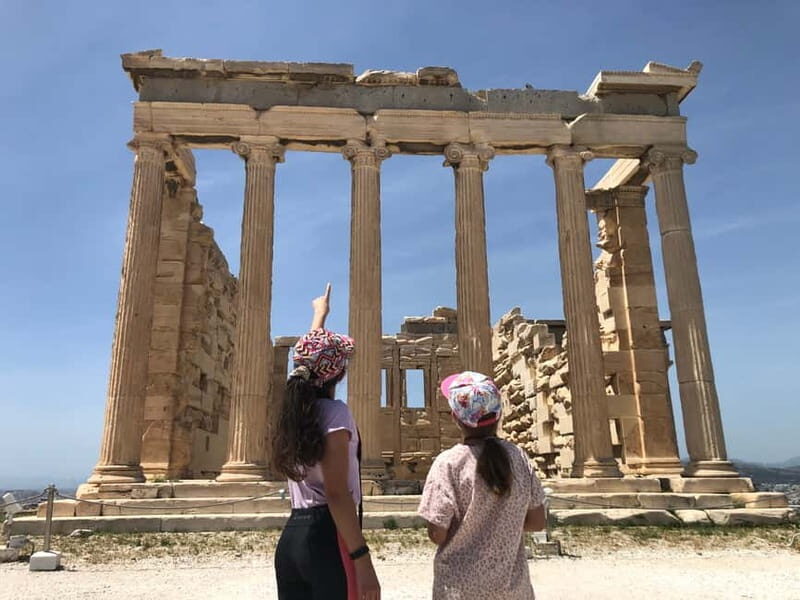
You then reach the Temple of Athena Nike for about 5 minutes. It’s brief by design, but it’s framed as a high point because you see it before moving toward the Parthenon and the view of Athens.
This is one of those places where the explanation plus the scene work together. Athena Nike ties into victory and identity, and the positioning gives you a clear sense of how elevated the Acropolis is. When the guide points out what to notice from this area, the Parthenon feels less like a single building and more like the final “destination” in a series of intentional steps.
Practical tip: since the guided time is short, stand where the guide asks and then take your photos right after. Don’t burn the best minutes trying to find the perfect angle.
Parthenon and the surrounding monuments you must not rush
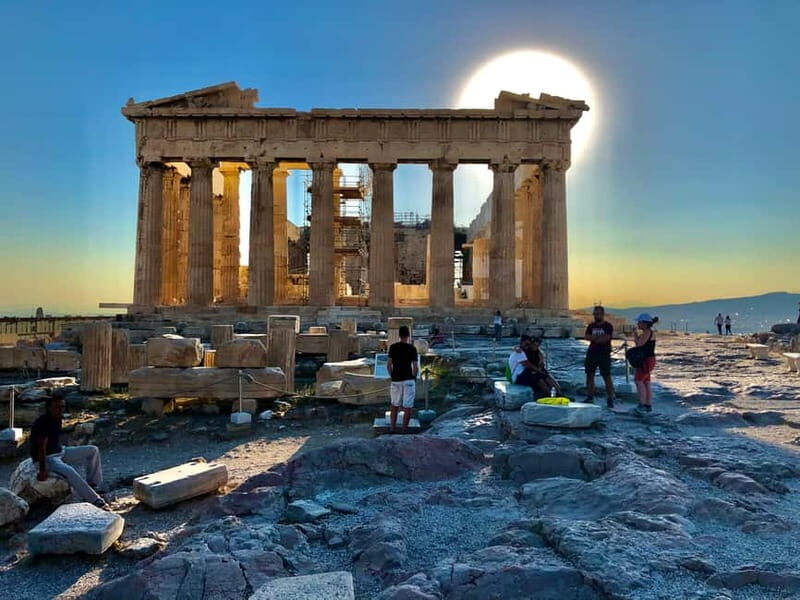
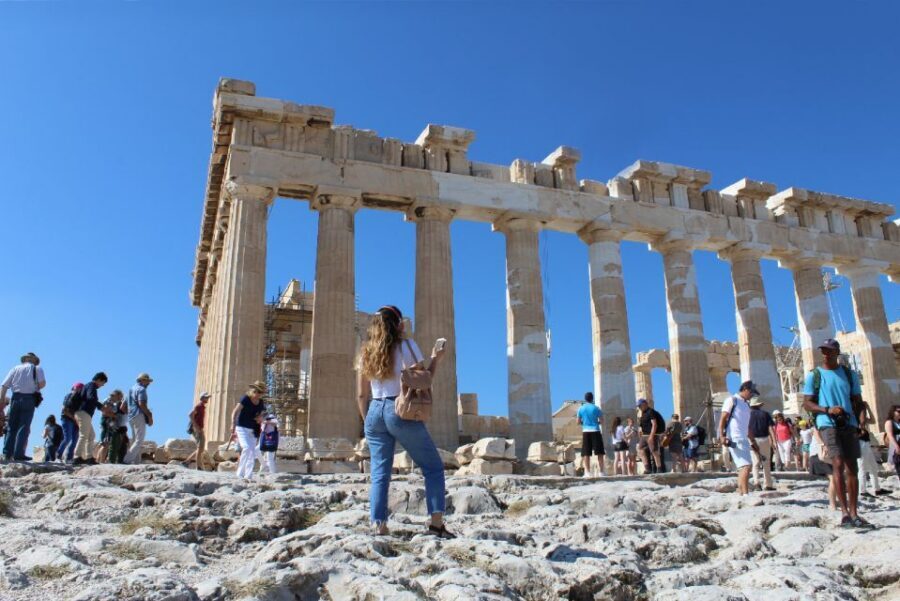
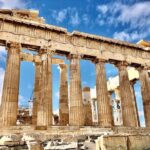
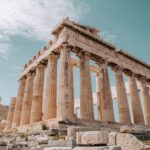
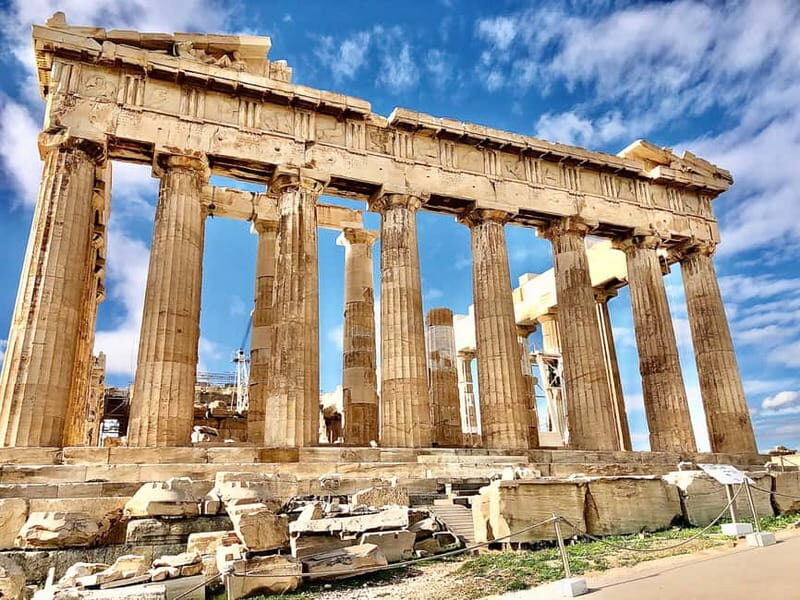
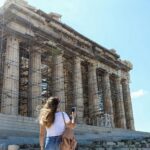
The Parthenon is next, with about 20 minutes. This is the biggest stop in the tour, and that time shows. You’re not just glancing at the exterior; you’re getting guided context so you can understand why this structure became the symbol it is today.
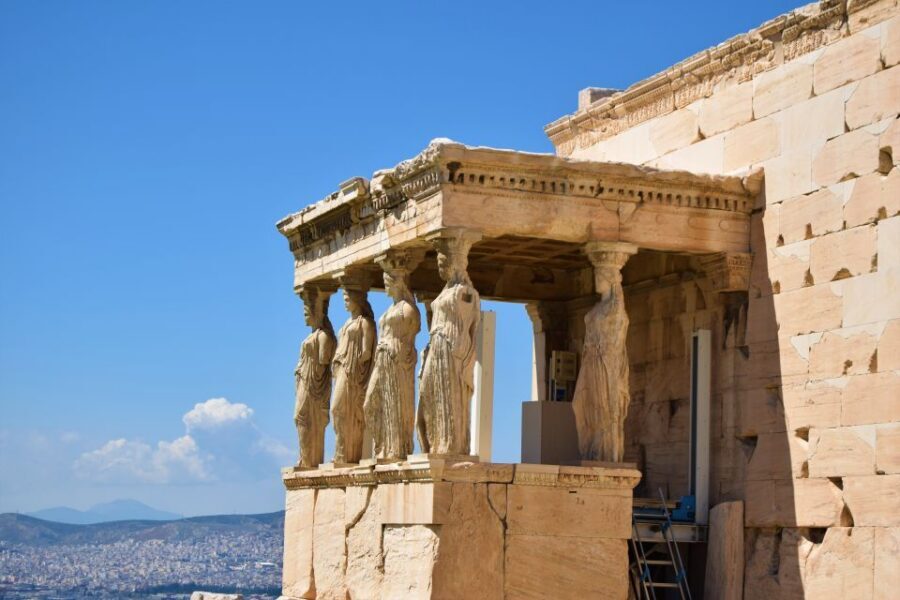
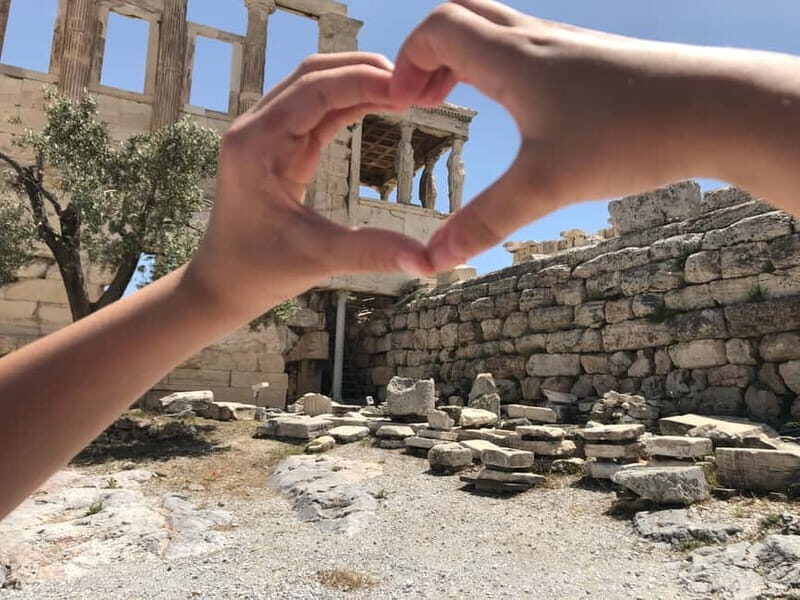
Then comes the Erechtheion for about 10 minutes and the Porch of the Caryatids for about 10 minutes. These later stops matter because they show variety. The Parthenon gets the headline, but the Erechtheion and the Caryatid porch add texture—different forms, different artistic details, and a sense that the Acropolis wasn’t built by one idea alone.
What you should look for (with the guide’s help) is how each structure fits the hill’s story:
- The Parthenon as a defining statement of civic and sacred space
- The Erechtheion as a different kind of monument within the complex
- The Caryatids porch as a moment where sculpture and architecture merge
I find that guides who add personal opinions—without turning it into a debate—make these final stops more memorable. The highest-rated feedback for this tour style tends to mention that the guide’s passion and discussion make the visit feel alive rather than like a script read at speed.
What kind of traveler this Spanish Acropolis tour suits best
This tour is a strong match if you:
- Want a Spanish guide and need the story in your language to keep up
- Prefer a guided route with headphones instead of reading your way through stone
- Enjoy theatre, medicine, performance culture, and civic symbolism—not just temples
- Have about two hours and want the main hits of the Acropolis without stress
It’s not a good fit if you have mobility limitations, since it’s specifically noted as not suitable for people with mobility impairments. It also bans baby strollers, and you can’t bring food and drinks during the tour.
A few practical tips so you get the most out of every stop
- Bring comfortable shoes. You’ll be on uneven historic surfaces.
- Bring a sun hat, especially in warmer months. Outdoor shade can be limited.
- If entrance ticket choice matters for your booking, double-check whether your selected option includes it. The tour includes it only if that option is chosen.
- Use the headset the moment you start. It helps you catch small details your eyes might miss.
And if you’re the kind of person who likes talking back—asking why something was built, or how the use of a site changed—this guide format can be a good fit. The tour tends to encourage engagement because the key ideas are explained right where you stand.
Should you book this Acropolis guided tour in Spanish?
If you want the Acropolis experience to feel understandable and not overwhelming, I think it’s worth booking. The combo of a licensed Spanish guide, headphones, and a structured two-hour route through major monuments is a solid value at $36.14. You get the big name sites like the Parthenon, but you also get less-expected stops tied to theatre and ancient medicine—ways of seeing the hill that go beyond the usual photo run.
Book it if:
- Spanish is your comfort language
- You want clear explanations in real time
- You want to cover the key monuments with a guide in only two hours
Skip it if:
- You need accessibility support not offered by this format (it’s not suitable for mobility impairments)
- You’re hoping for a very slow, do-it-at-your-own-pace visit
If your goal is to leave the Acropolis knowing what you saw and why it mattered, this is the kind of guided walk that makes that happen.
FAQ
How long is the Acropolis guided tour?
It lasts 2 hours.
Is the guide Spanish-speaking?
Yes. The tour is provided with a live Spanish guide.
Are headphones included?
Yes. Headphones are included to help you hear the guide during the tour.
Does the tour include an entrance ticket?
It includes an entrance ticket only if the chosen option includes it. If you don’t pick that option, the ticket is not included.
Where does the tour start?
The meeting point can vary by ticket option. One listed start location is the Tourist Information Center Athens, Dionysiou Areopagitou 18. The tour ends back at the meeting point.
Is the tour suitable if I have mobility limitations?
No. It is not suitable for people with mobility impairments. Also, baby strollers are not allowed, and food and drinks are not allowed during the tour.