REVIEW · ATHENS
Athens: The Acropolis Walking Group Tour with a French Guide
Book on GetYourGuide →Operated by Athens Walks Tour Company · Bookable on GetYourGuide
The Acropolis hits different at golden hour. This small-group, French-guided walk helps you connect the dots between monuments, sculptures, and Athens today, with a licensed guide and archaeologist leading the way. I especially liked how the stories (like what Myrto brought to life) turn stones into scenes, and how the route ends with the kind of views that make you slow down and look twice. One thing to weigh: the pace can feel a bit relaxed for some people, and an occasional mic/volume hiccup can happen.
You also get real benefits from timing. Going in the afternoon or early evening means you’re less likely to roast in the heat, and you may even catch that ceremonial flag moment—if timing lines up, you can see soldiers doing their routine around opening/closing hours. The downside is simple: this is an uphill walk over uneven ground, so you’ll want to plan for your comfort first.
In This Review
- Key highlights you’ll feel on this tour
- Why an Acropolis evening walk is smarter than a midday scramble
- Price and value: what $80 buys you (and what to double-check)
- Meeting point at Porinou 5: quick logistics that matter
- Your 90 minutes on the Acropolis hill: the stops that create the big picture
- Start with orientation: where the hill’s story begins
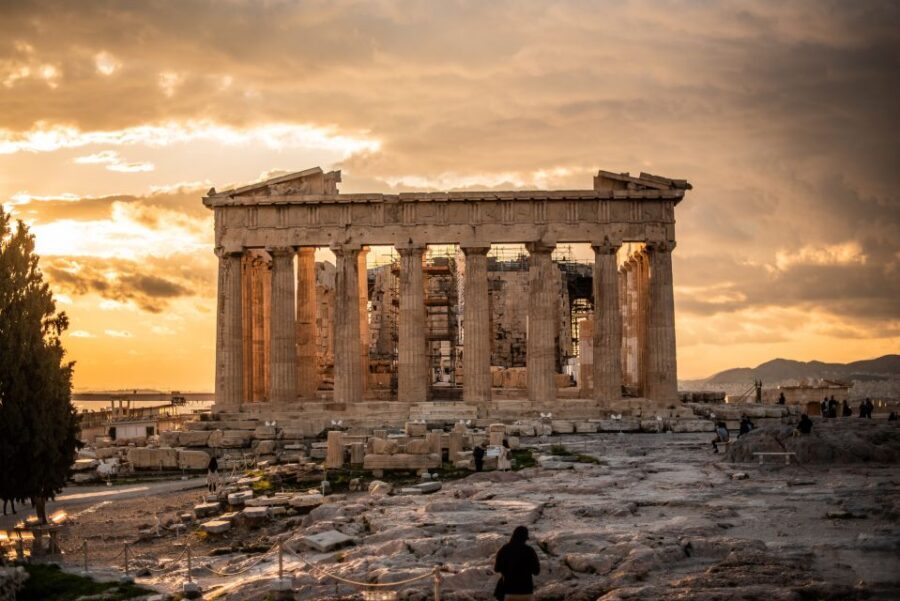
- Parthenon: the crowning stop and the skyline payoff
- Propylaea gateway and the logic of movement
- The sculpture story: theaters, healing temples, and why they mattered
- Theater of Dionysus: the stage that shaped public culture
- Healing Temple of Asclepius: religion with a practical side
- Odeon of Herodes Atticus: the later layer you shouldn’t miss
- Temple-by-temple details: Athena Nike, Propylaea, and the Erechtheum corner
- Temple of Athena Nike: wingless victory in plain sight
- Erechtheum: the Porch of the Caryatids
- The views: what to watch for when you time it right
- What to bring (so you don’t suffer) and what the rules mean
- Who this French-guided Acropolis walk suits best
- Is Myrto-level storytelling worth it for you?
- Should you book this Acropolis walking group tour?
- FAQ
- How long is the Acropolis walking group tour?
- Is hotel pickup included?
- Does the tour include an Acropolis entry ticket?
- What language is the guide?
- What should I bring to the tour?
- Is this tour suitable for wheelchair users?
Key highlights you’ll feel on this tour
- Calmer crowd timing with an evening-friendly schedule
- French storytelling led by a licensed guide with archaeologist context
- Classic stops in a smart sequence, including the Parthenon and key gateways
- Sculpture and theatre connections, from the Theater of Dionysus to later imperial-era venues
- Panoramic Athens views from up on the hill, often with sunset vibes
Why an Acropolis evening walk is smarter than a midday scramble
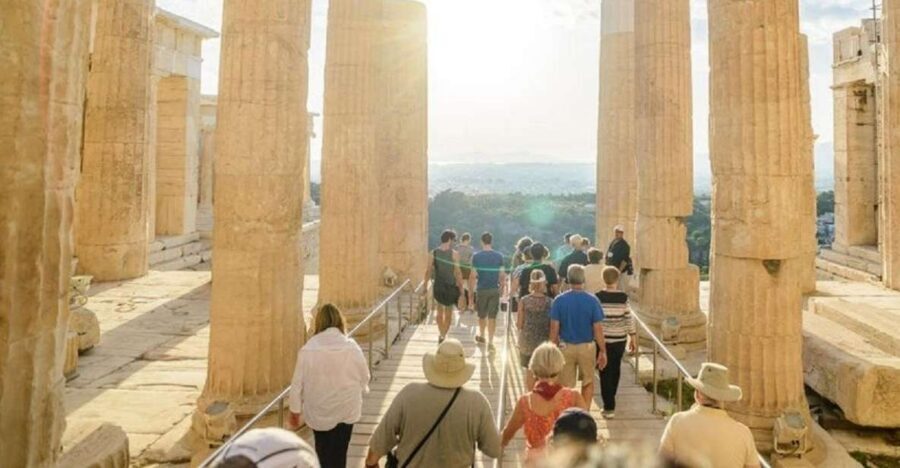
The Acropolis is the headline of Athens for a reason. But the hard part is the practical part: bright sun, steep steps, and crowds that can turn history into a traffic jam. This is built to avoid that. A 1.5-hour schedule in the afternoon/early evening helps you see the site while the lighting softens and the day’s worst heat eases off.
I love tours that respect your energy. On this one, the walking is uphill and the terrain can be slippery in places, but you’re not there for an all-day marathon. You get enough time to really understand what you’re looking at—especially if this is your first time on the hill—without feeling like you’re being hurried through.
Still, go in with clear expectations. This is not a sit-down museum experience. You’ll be on your feet, reading the landscape with your guide’s help. If you’re sensitive to stairs or uneven ground, you’ll need to think carefully, because the tour isn’t set up for wheelchair use and isn’t recommended for people with back problems or pregnancy.
Other Acropolis and Parthenon tours we've reviewed in Athens

Price and value: what $80 buys you (and what to double-check)
At about $80 per person, the value here comes from the combo: a licensed guide (with archaeologist background) plus an Acropolis entry ticket, all designed for an express entry flow. You’re also getting a language benefit—French—so you’re not translating mentally while trying to follow the story.
The one area to double-check is the entry fee. The included section says your Acropolis ticket is part of the package, but the practical notes also say the entrance fee may require pre-purchase unless your option includes it. When you book, look at your exact option and confirm whether the ticket is truly included for your date.
Also note what’s not part of the price: there’s no hotel pickup or drop-off, and you won’t have food on the route. Water is allowed in the archaeological area, but you should plan around that rule. In other words, this is pay-for-the-guide value, not a guided “see and snack” experience.
If you want the fastest way to get oriented at the Acropolis—without guessing why each ruin matters—this price tends to make sense. If you’re the type who already knows the site well and just wants photos, a self-guided approach can feel cheaper. But most first-timers will get more out of a guided storyline than from wandering.
Meeting point at Porinou 5: quick logistics that matter
You meet at the Athens Walks Tour Company office near the Acropolis, at Porinou 5 str., 11742. There’s no hotel pickup, so build in time to get there on your own (public transit, taxi, or a short walk depending on where you’re staying).
This is the kind of meeting point that’s handy if you’re staying central. It keeps things simple: you check in, you’re ready to go, and then you spend your energy where it counts—on the hill.
Two practical points to plan for:
- You’ll want comfortable shoes because you’ll be walking uphill on uneven, sometimes slippery surfaces.
- You’ll be in a secure, ticketed archaeological setting, so you’ll benefit from the express security check rather than lining up like everyone else.
Your 90 minutes on the Acropolis hill: the stops that create the big picture

The heart of this tour is not just seeing monuments—it’s understanding how the Acropolis functioned as the spiritual, cultural, and political center of ancient Athens. Your guide helps you read the complex like a timeline, then reconnects it to what you can still sense in modern Athens.
Start with orientation: where the hill’s story begins
You’ll begin by climbing the Acropolis hill and getting your bearings. That matters more than it sounds. From the top, the city layout stretches out below, and without guidance it’s easy to miss how different buildings relate to one another—especially the gates and temple placements.
The guide’s storytelling is the tool that makes the place make sense. You’re not just looking at a ruin; you’re learning what the site was built to do and how it changed over centuries.
Other Acropolis walking tours we've reviewed in Athens




Parthenon: the crowning stop and the skyline payoff
The Parthenon is the headliner, and it’s the place where the tour’s “why this matters” energy peaks. Your guide will connect the monument’s significance to the wider story of classical Greece and what it influenced in the western world.
Even if you’ve seen the Parthenon from a distance in photos, being up close changes everything: scale, materials, and how the building sits in the landscape. And then you get the payoff most people come for—the view. On a clear evening, it can feel like you’re scanning the whole city at once.
Propylaea gateway and the logic of movement
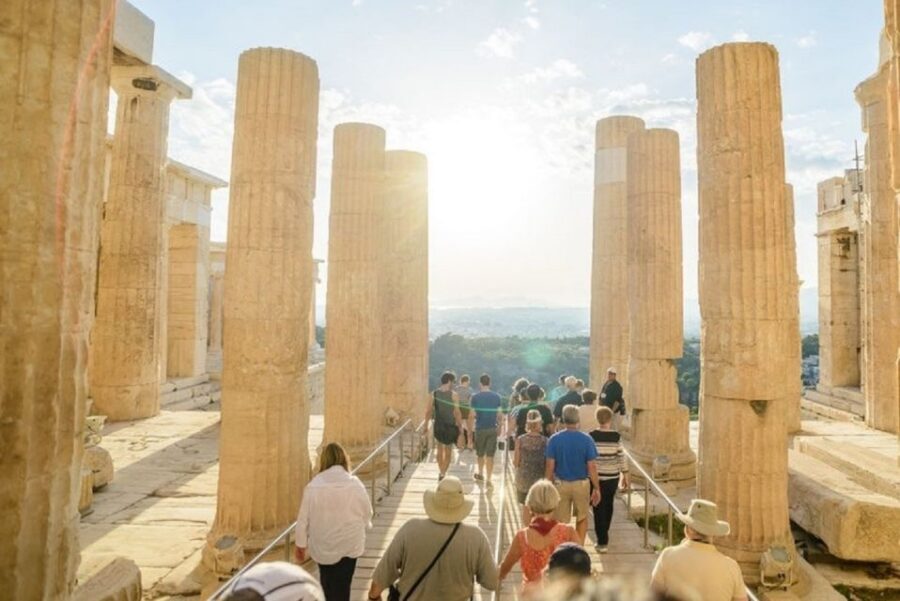
You’ll also see the gateway to the Propylaeum. This is one of those stops that might look like “just more stone” until your guide explains its role. Think of it as the controlled entrance into the most sacred zone. It helps you understand the site as something designed for processions and movement, not a random assortment of buildings.
A good guide turns those gates into a map in your head, so when you look around, you can place yourself in the ancient experience rather than just in the modern view.
The sculpture story: theaters, healing temples, and why they mattered
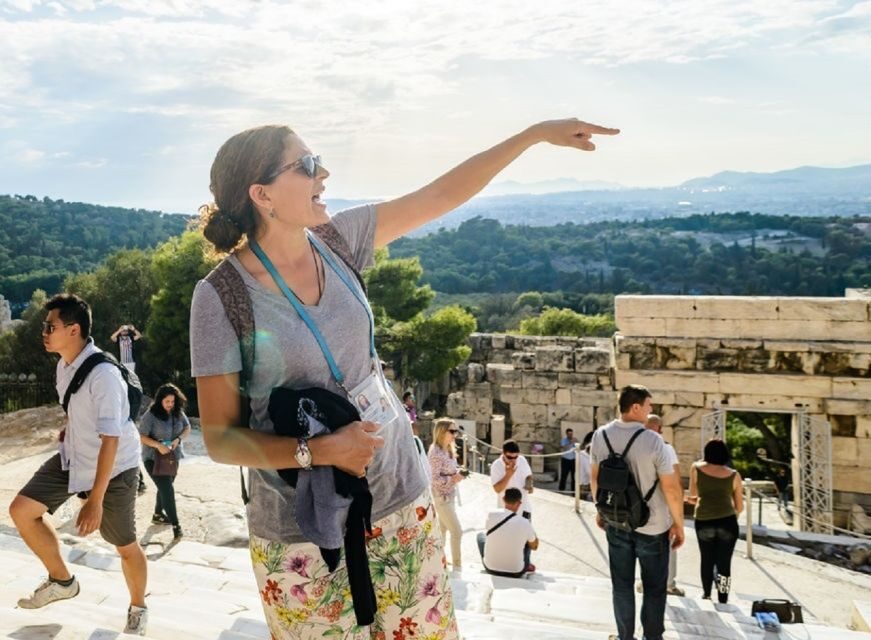
One of the best parts of this kind of guided Acropolis experience is that it doesn’t keep you stuck on temples only. This tour includes stops and explanations that connect major cultural ideas to the monuments—especially through the lens of what you can still see in the remains and how sculptures tell long-running stories.
Theater of Dionysus: the stage that shaped public culture
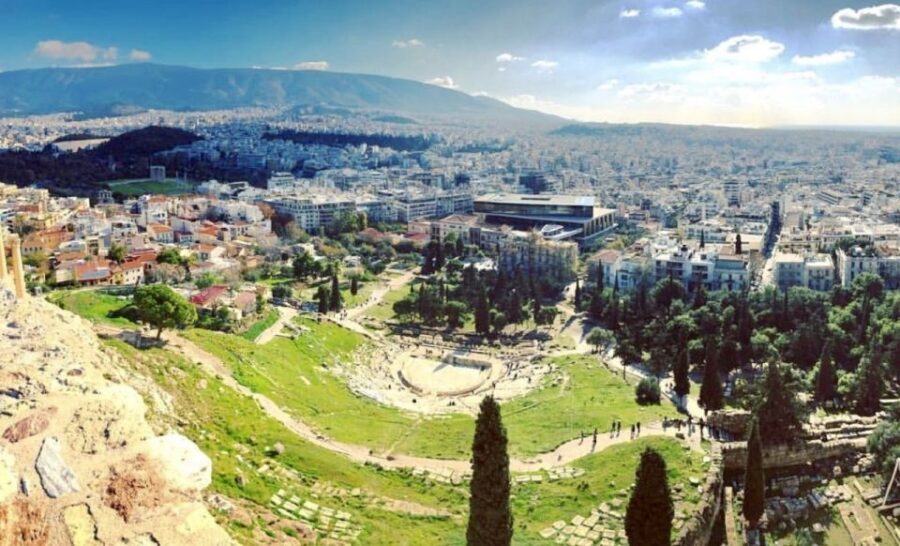
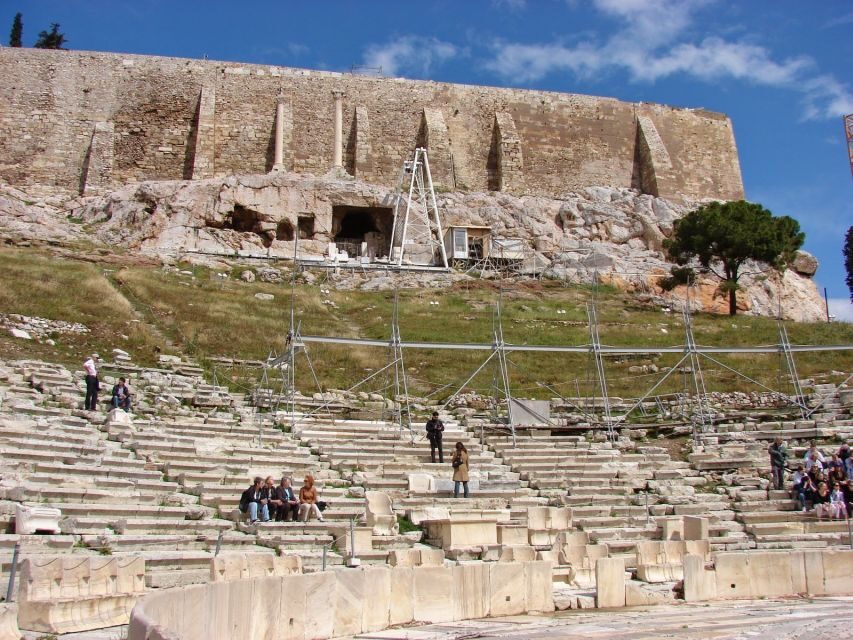
You’ll learn about the Theater of Dionysus, described as the 1st theatre of human civilization. Even if you don’t memorize the technical details, the concept lands: this wasn’t just entertainment. It was public life and cultural identity, performed in stone and designed for crowds.
Standing in the area connected to the theatre, it’s easier to imagine the sound carrying and the audience setting the mood. Your guide’s narrative helps you see why theatre belongs in the same conversation as religion and civic power at the Acropolis.
Healing Temple of Asclepius: religion with a practical side
Then comes the Healing Temple of Asclepius. This is where the site feels more human. Athens didn’t just build monuments for glory; it also created spaces for healing, rituals, and hopes for recovery.
When a guide explains the function of a place like this, you start noticing how the Acropolis operated like a network. Temples weren’t only symbolic—they were part of how people tried to manage real life.
Odeon of Herodes Atticus: the later layer you shouldn’t miss
You’ll also hear about the Odeon of Herodes Atticus. This adds a key layer: the Acropolis wasn’t frozen in time. Over centuries, the site kept getting used, repurposed, and reinterpreted—so the story stretches well beyond the “classical Athens” stereotype.
That helps you understand the sculpture collection and remains as something that holds 2,500+ years of memory, not just one era frozen in a textbook.
Temple-by-temple details: Athena Nike, Propylaea, and the Erechtheum corner
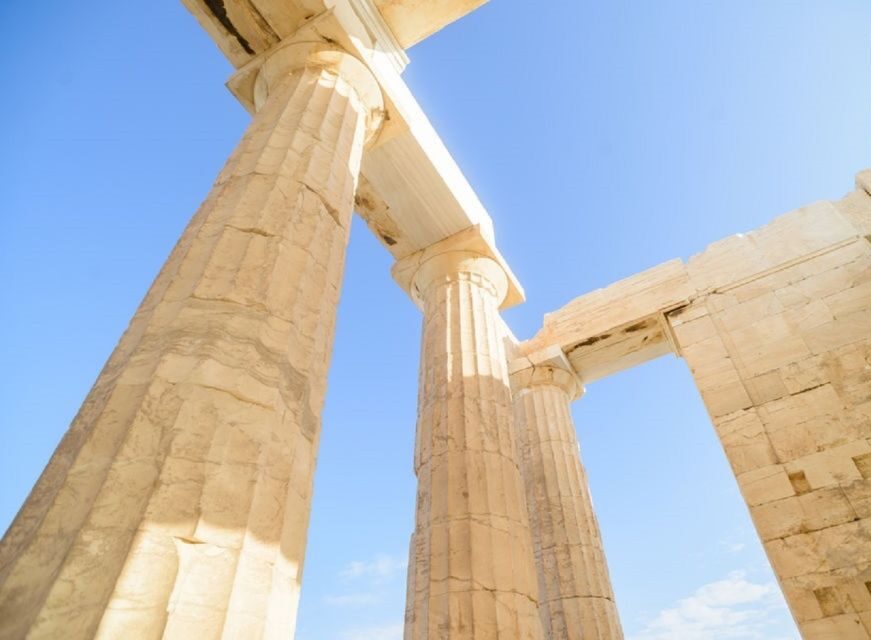
Some Acropolis tours feel like a checklist. This one works better if you enjoy “small but meaningful” stops—places where architecture and symbolism carry a message.
Temple of Athena Nike: wingless victory in plain sight
You’ll see the Temple of Athena Nike, often called the Temple of Wingless Victory. Your guide should connect that name to the idea of victory that stays—something grounded rather than flying away.
Even as ruins, the site around this temple is a reminder that Athena wasn’t only an abstract goddess. The Acropolis is where Athens told itself who it was.
Erechtheum: the Porch of the Caryatids
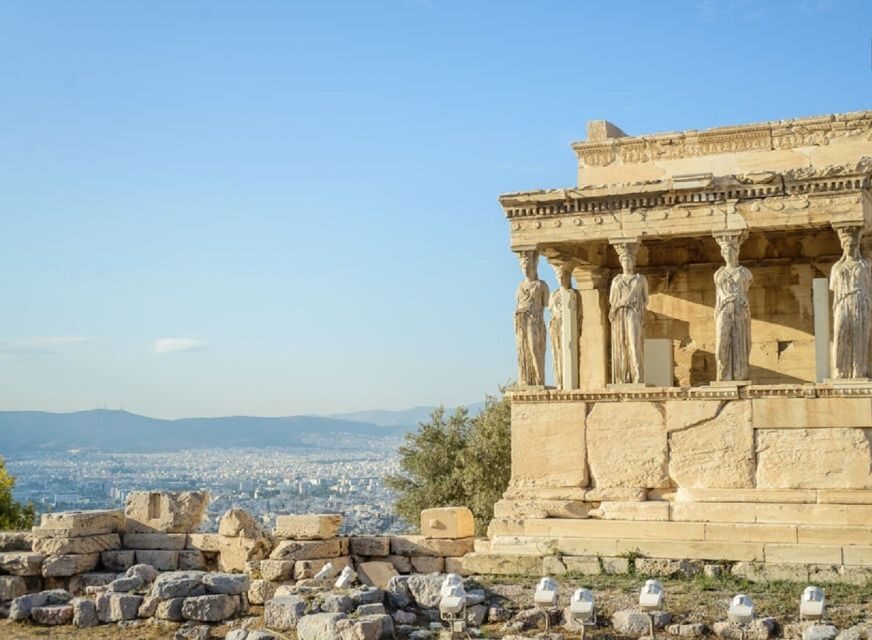
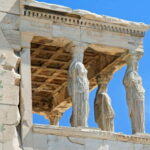
You’ll go to the remains of the Porch of the Caryatids at the Erechtheum. The Caryatids are iconic, and seeing the porch area on-site helps you understand why people obsess over them. They aren’t just decorative; they communicate power, craftsmanship, and a sense of order.
One caution: because you’re working on uneven terrain, take your time here. Don’t rush your photos. Let your guide’s explanation catch up to what your eyes are registering.
The views: what to watch for when you time it right
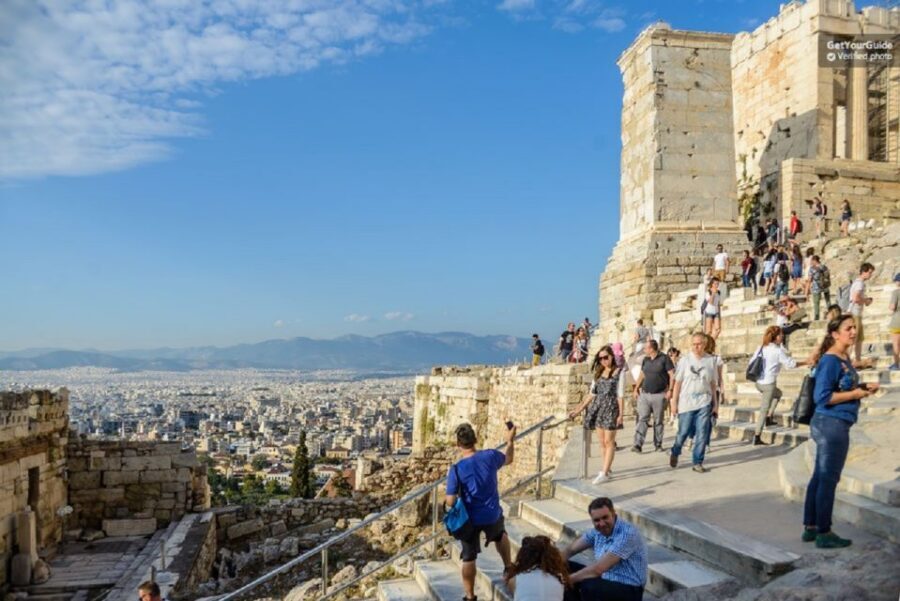
The famous views from the Acropolis aren’t just nice—they change how you understand the site. From up high, you can see how the hill dominates Athens, and how the city below is the modern continuation of the same geographic story.
The tour is also well-suited to evenings. In late afternoon, the light can start shifting fast. A really memorable moment is the chance to see the ceremonial soldier routine with the flag, which can happen on schedule around the opening/closing rhythm. Don’t plan your entire day on it, but if you’re there late enough, you might get a front-row glimpse of the ritual atmosphere that still surrounds the Acropolis today.
If you want photos, aim for a patient approach. Your guide’s pacing matters because stopping for views is part of the learning. If the microphone tech or audio is imperfect, you might need to look up and focus more on reading the guide’s gestures and where they point, not just the narration.
What to bring (so you don’t suffer) and what the rules mean
This is a short tour, but it’s not casual. Plan for the basics and you’ll enjoy it more.
Bring:
- Passport or ID card
- Comfortable shoes
- Sunglasses, sun hat, and sunscreen
Plan around the rules:
- No food and drinks in the archaeological area—water is allowed
- No baby strollers
- No luggage or large bags
Two more practical realities:
- The route includes uphill sections on uneven and sometimes slippery surfaces, so slow down on anything that looks shaded but slick.
- Summer heat can hit hard, so light clothing helps. Even an evening tour can still feel warm under direct sun before the air cools.
Who this French-guided Acropolis walk suits best
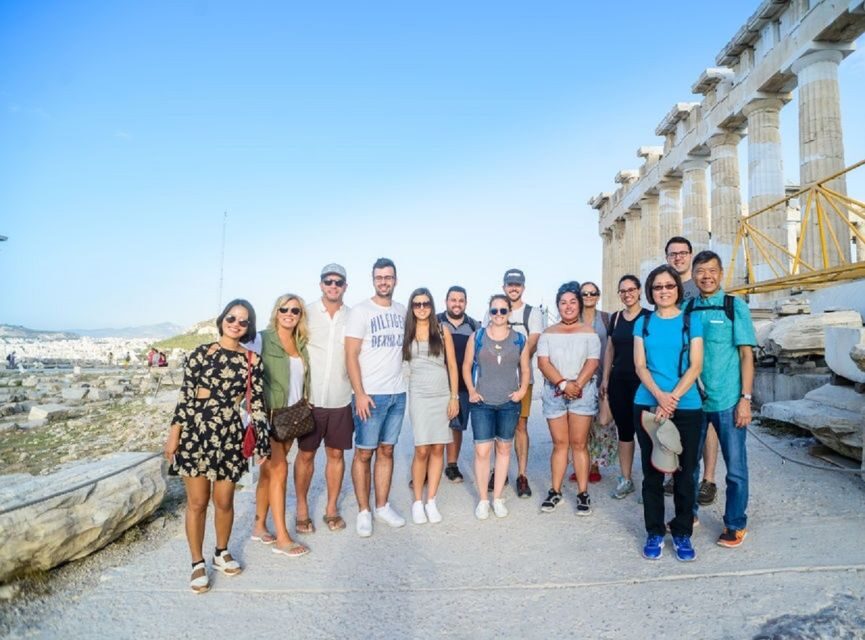
This is ideal if you want more than photos. You’ll enjoy it if you like:
- a guided storyline that ties the Parthenon to other parts of the site
- explanations of sculpture and cultural life, not just temple names
- a route that balances walking with viewpoints
It’s also a strong pick if your time in Athens is limited. A 1.5-hour tour means you can fit it into a day without sacrificing your whole schedule.
But you should think twice if you’re dealing with:
- back problems (uneven steps can be tough)
- pregnancy (not suitable per the tour info)
- wheelchair use (not suitable)
If you’re traveling with kids, this might work only if they can handle uphill walking. The tour info doesn’t call it out by age beyond an ID requirement for people under 25, so I’d still treat it as a “fit and mobile” experience.
Is Myrto-level storytelling worth it for you?
One standout detail is the emphasis on story-telling and clear explanations. In particular, I’d take note of guides like Myrto, who delivered historical anecdotes and made the place feel connected to Athens today. That kind of guidance is exactly what turns ruins into understanding.
Also, timing can make the visit feel more relaxed. If you’re choosing between morning and afternoon/early evening, you may find the later start less crowded. That can matter as much as the history, because crowds change how much you can actually absorb.
A fair warning: a small number of issues can pop up, like an audio/microphone glitch. When that happens, it’s not the content that’s wrong—it’s the delivery. Still, it’s smart to keep your expectations flexible.
Should you book this Acropolis walking group tour?
Book it if:
- you want a guided, story-driven version of the Acropolis
- you prefer a calmer evening pace over midday crowds
- you value a French-speaking licensed guide with archaeologist context
- you want skyline views without turning it into a half-day endurance event
Skip it (or consider a different style) if:
- you already know the Acropolis deeply and plan to rely on a self-guided route
- you struggle with uphill, uneven terrain
- you’re sensitive to walking for 1.5 hours even in the evening
If your goal is to leave the Acropolis with real context—knowing why the Parthenon, the theatre, healing rituals, and the gates belong together—this tour is a strong, practical choice.
FAQ
How long is the Acropolis walking group tour?
The tour lasts about 1.5 hours.
Is hotel pickup included?
No, there is no hotel pickup or drop-off.
Does the tour include an Acropolis entry ticket?
It can be included, but the provided notes say the entrance fee may need pre-purchase online unless your option includes tickets. Check what your booking option states.
What language is the guide?
The live guide speaks French.
What should I bring to the tour?
Bring a passport or ID card, comfortable shoes, sunglasses, a sun hat, and sunscreen.
Is this tour suitable for wheelchair users?
No. It is not suitable for wheelchair users, and it’s also not recommended for pregnant women or people with back problems.