REVIEW · ATHENS
Acropolis, Plaka & Ancient Agora Guided Tour
Book on GetYourGuide →Operated by ATHENS WALKING TOURS · Bookable on GetYourGuide
Crowds feel less crushing when you start smart. This tour works because you enter the Acropolis from the south slope and get a licensed guide who ties the Parthenon and other monuments together with a clear story, then you carry that context to the Ancient Agora with the Attalos Museum stop. One heads-up: entrance times are strict, and you’ll need to buy the right tickets (if you choose the Without Ticket option) and arrive early for security.
I like that the tour is built for real understanding, not just photos. You also get practical value for the price: the guide plus an Athens guide magazine and map, and a skip-the-ticket line service if you select the With Ticket option (though security waits can still happen).
The biggest consideration is your legs. This is a walking tour with inclines and steps, and it isn’t set up for wheelchair users or people with mobility impairments, even though the pace can work out well for many guests.
In This Review
- Key things to know before you go
- The Acropolis experience starts with a smarter entrance
- The Acropolis monuments: what your guide will help you notice
- Photo time after the guided portion (use it strategically)
- Snack stop matters because there’s no leisurely lunch
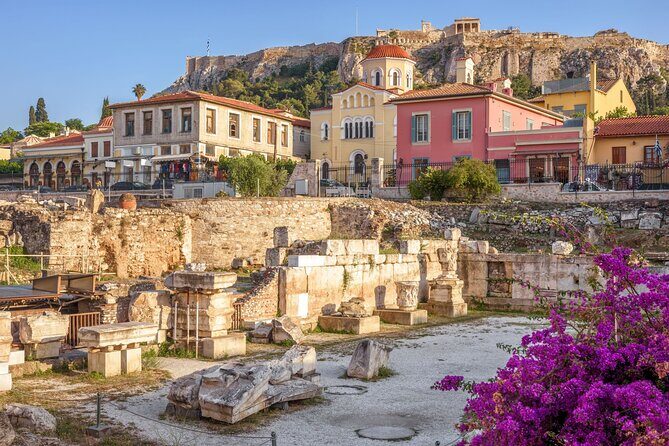
- Ancient Agora: why this “lower” area completes the Acropolis story
- Hephaestus Temple and the church of the 12 Apostles
- Seeing Socrates and Plato’s Athens in the right places
- Attalos Museum: artifacts that make the market feel concrete
- Skip-the-ticket line: helpful, but don’t plan around zero waits
- Price and value: what $66 buys you (and what it doesn’t)
- Timing: why the 11:00 start and 1:00 Agora access matter
- Meeting point you can actually find
- Who should book this tour, and who should skip it
- Should you book this Acropolis, Plaka & Ancient Agora guided tour?
- FAQ
- How long is the Acropolis, Plaka & Ancient Agora guided tour?
- Where is the meeting point?
- Does the tour price include entrance tickets?
- What time does the Acropolis part start?
- What time does the tour access the Ancient Agora?
- Is skip-the-ticket line access guaranteed?
- Is food included?
- What should I bring, and what is not allowed?
Key things to know before you go
- South slope entry helps you avoid some of the worst crowd pressure at the Acropolis
- Licensed guides explain what you’re seeing at each major monument, so stones make sense
- Dionysus Sanctuary and Theatre add depth beyond the headline temples
- Ancient Agora + Hephaestus Temple gives you the “daily life” Athens story right after the high drama
- Attalos Museum is worth the stop because it connects the Agora to market life with real artifacts
- Strict entry times mean you should line up your tickets to match the tour’s clock
The Acropolis experience starts with a smarter entrance
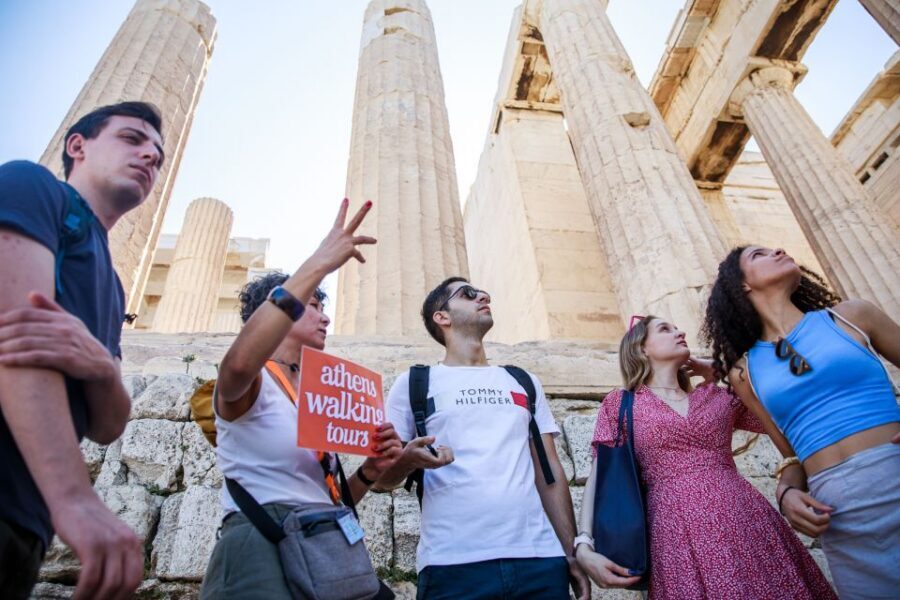
What makes this tour feel efficient is where it begins. Instead of pushing straight into the busiest routes, you enter the Acropolis from the south slope with the goal of reducing crowd stress. Even if you’re not a “structure nerd,” that route choice matters because the Acropolis is all about sightlines and pacing. When you aren’t fighting shoulder-to-shoulder congestion, you can actually process what you’re looking at.
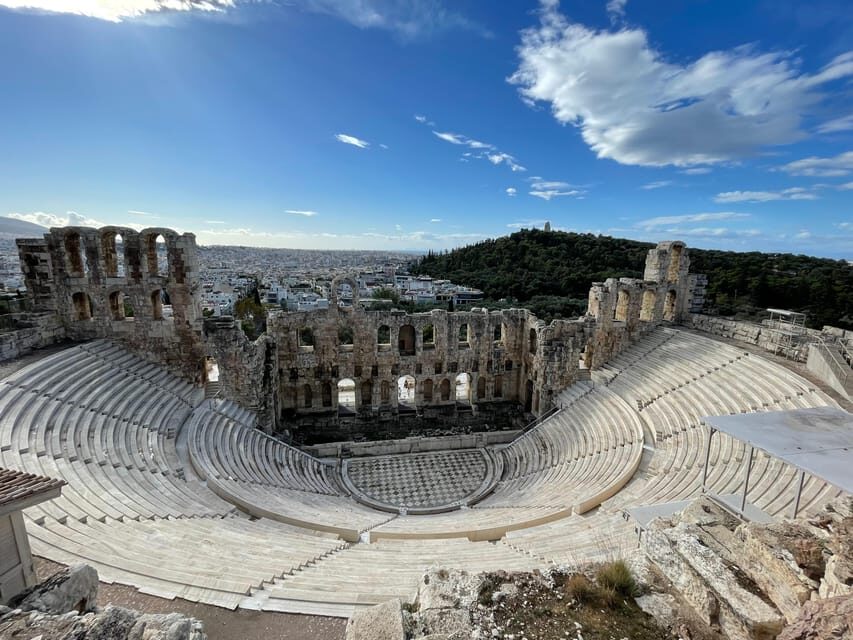
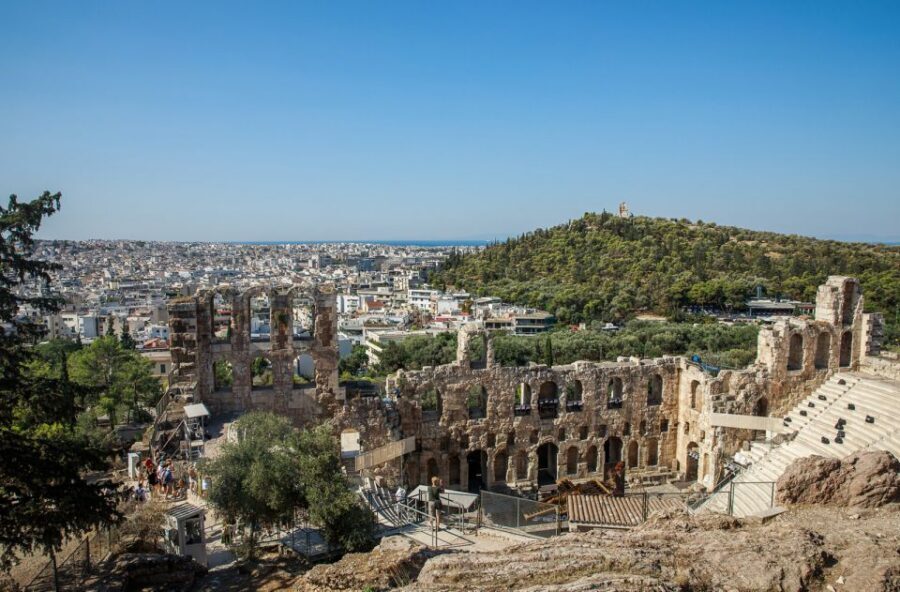
Your guide sets the stage early by pointing out key areas like the Dionysus Sanctuary and the Dionysus Theatre, built in the 5th century BC. That’s a great contrast to the Parthenon-centered postcard view. You’re not only seeing “what survived,” you’re learning what the Greeks used these spaces for—religion, performance, public life, and civic identity.
You also get a real city-to-hill transition. As you start ascending, the view of Athens below opens up, and that moment helps you understand why the Acropolis was such a powerful statement. It’s not just a museum on a hill. It’s a system: buildings, slopes, and sightlines working together.
Other Acropolis and Parthenon tours we've reviewed in Athens
The Acropolis monuments: what your guide will help you notice
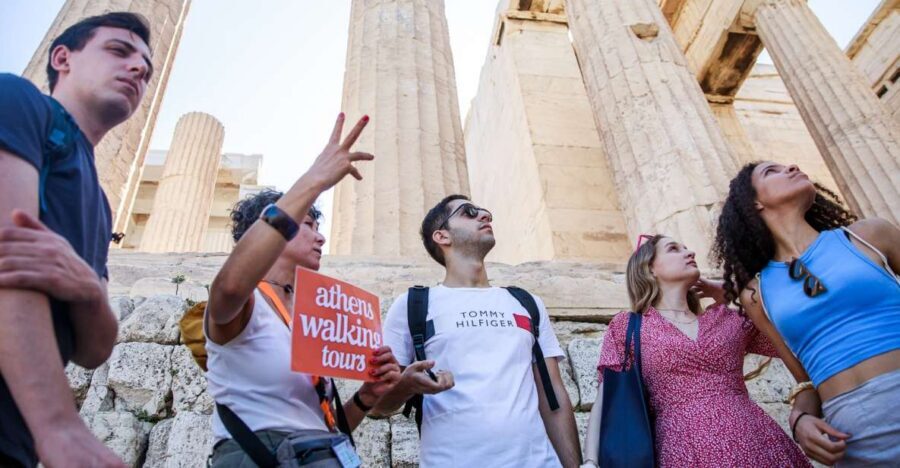
Once you’re on the sacred hill, the tour focuses on the monuments people come for—then adds the surrounding pieces that usually get missed when you’re on your own.
Here are the main sights you’ll be guided through:
- Parthenon
- Erechtheion
- Propylaia
- Temple of Nike
- Agrippa Monument
- The surrounding areas and structures such as Odeon of Herodes Atticus, the Observatory, Philopappos, Mars Hill, and Pnyx Hill
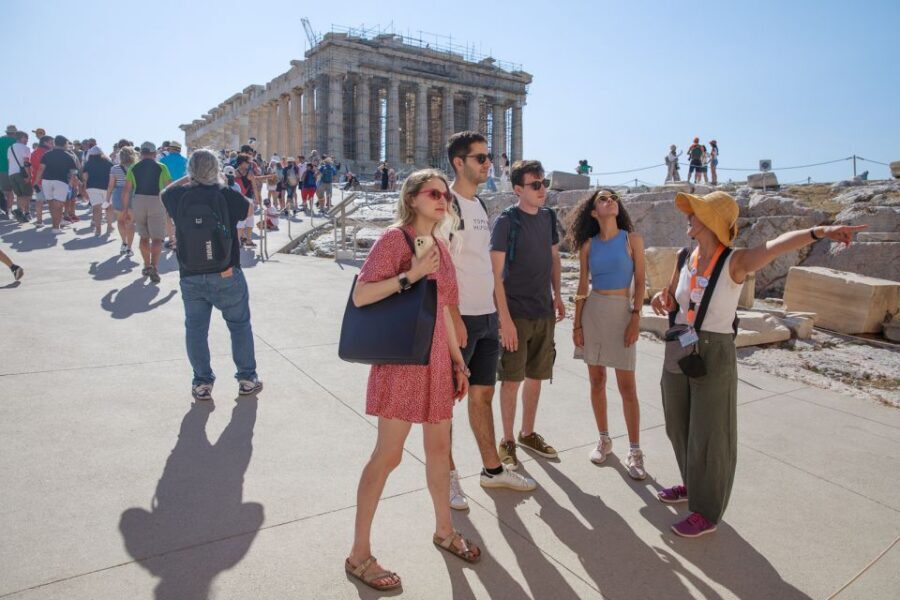
The practical value here is that your guide turns “a list of buildings” into a sense of layout. You learn what each site is, why it was important, and how it connects to the story of Athens. If you’ve ever felt like the Acropolis is impressive but hard to place, this is the fix. A good guide helps you keep your bearings fast so you can look up and know what you’re seeing.
Shade breaks also help a lot. In past groups, guides such as Vasaliki have been noted for pausing in comfortable spots to explain what’s in front of you. That kind of pacing isn’t just kindness—it changes how much you actually enjoy. You’re on stone steps and strong sun, so stopping to catch your breath while the guide explains a temple’s details makes the whole experience feel less exhausting.
Photo time after the guided portion (use it strategically)
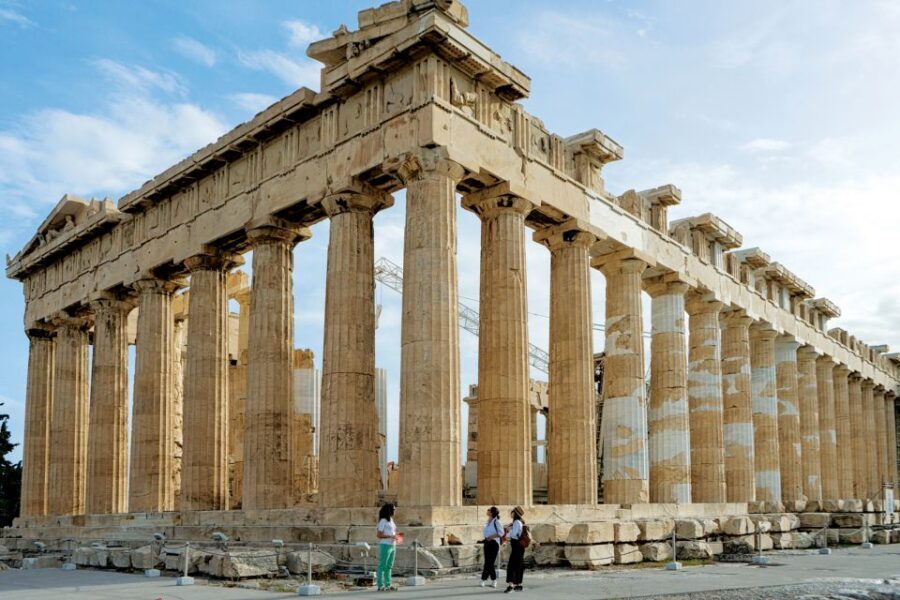
After the guided Acropolis section, you get free time for exploring and picture taking. This is where you stop relying on narration and start choosing what you want to see again.
My advice: use this time to redo your favorite views rather than trying to hit everything. The Acropolis rewards repeat looks. Stand where the guide placed you, then walk a few steps and compare angles—especially around the Parthenon and the spaces between the main monuments. If it’s hot, prioritize shaded areas when you can, then come back to open viewpoints when the light looks right.
This is also a good moment to check the route down. You’re about to shift from “top-of-hill temples” to the Ancient Agora area, so you’ll want to know your way back to keep the day from feeling rushed.
Snack stop matters because there’s no leisurely lunch
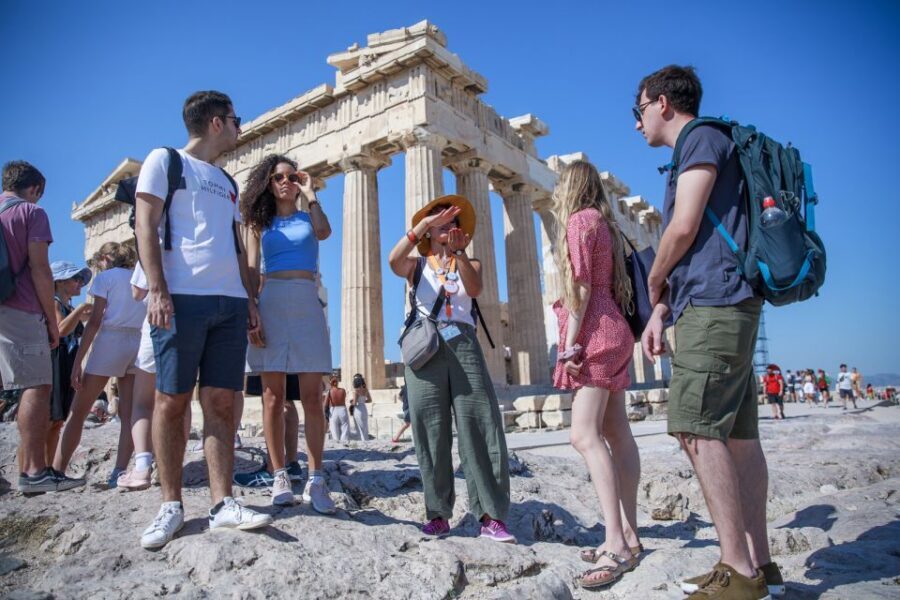
This is a real-world city tour, not a sit-down day. The schedule doesn’t include time for a leisurely lunch, so you’ll have brief breaks where you can grab a snack or drink from on-site canteen areas.
That matters because Athens heat can turn a historical day into a low-energy scramble if you wait too long to eat. Plan on something small and easy to carry—then refuel before the Agora walking section starts. You’ll appreciate it more when the tour moves from monuments and myths into the day-to-day Civic Athens story of the Agora.
Ancient Agora: why this “lower” area completes the Acropolis story
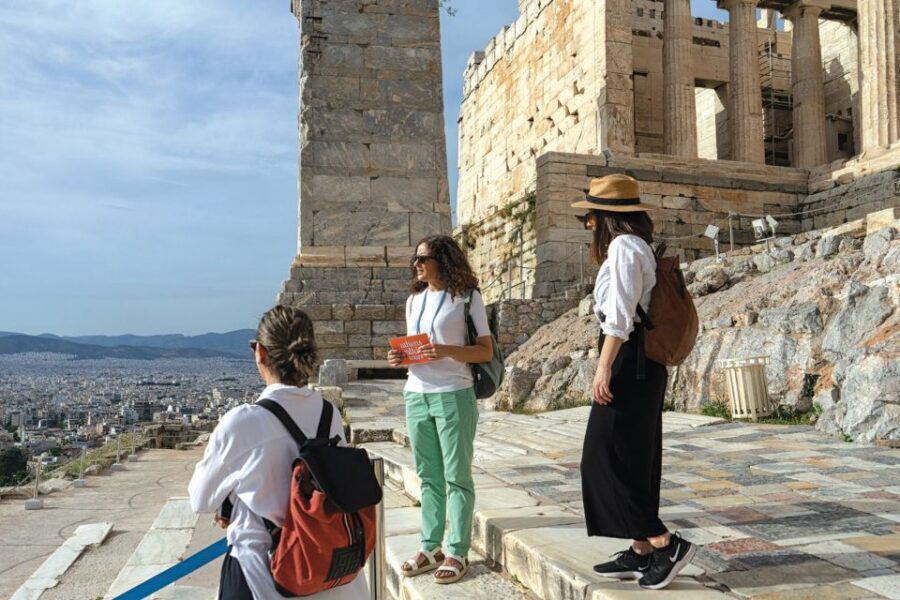
After Acropolis time, you head to the Ancient Agora at around 1:00 pm (13:00). This is the part that often makes the tour feel worth the money, because it changes the lens.
The Agora wasn’t just a pretty ruin field. It was the commercial, political, and financial center of Ancient Athens. So instead of thinking about temples as isolated icons, you start seeing how people lived around civic decisions, markets, and public debates.
The walking segment down also helps you feel the transition. You’re moving from high religious symbolism to the spaces where leaders met, goods traded hands, and philosophers walked. If the Acropolis gives you the “why Athens mattered,” the Agora gives you the “how Athens worked.”
Other Plaka and Monastiraki walks we've reviewed in Athens





Hephaestus Temple and the church of the 12 Apostles
At the Ancient Agora, you’ll visit several standout structures, including:
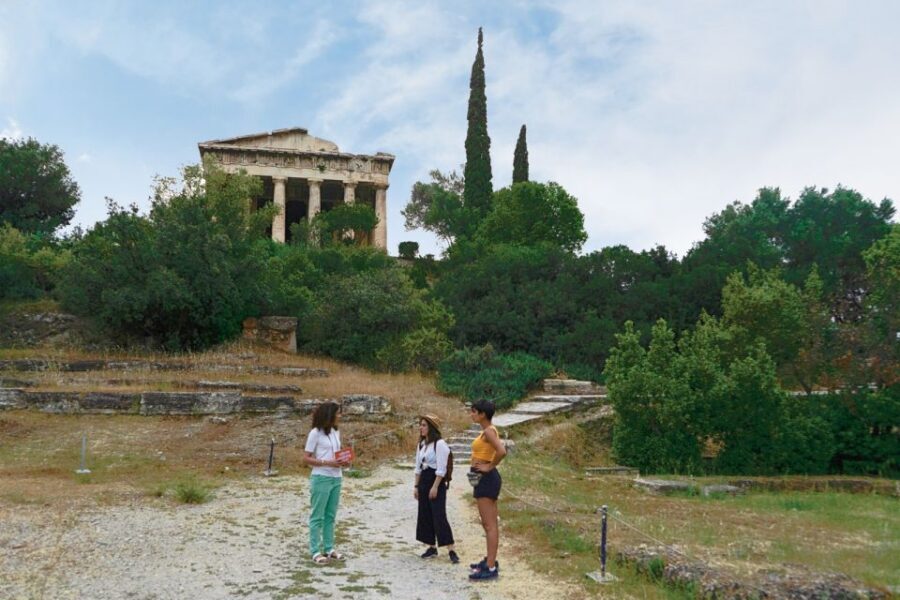
- Hephaestus Temple (described as the best preserved Greek temple from the 5th century BC)
- The church of the 12 Apostles
- Temple of Apollo Patroos
- Stoa of Zeus
- Altar of Zeus
The Hephaestus Temple stop is a big deal because it’s well preserved. That means you can make better sense of the building forms instead of staring at fragments and guessing. It’s one of those places where being guided helps immediately: your guide can point out what’s original, what’s distinctive, and why the preservation level changes how you interpret the site.
The church of the 12 Apostles is another practical reason to have a guide. When sacred spaces overlap across centuries, it can be confusing if you don’t have a frame. You’ll see how the site’s meaning shifted while the location stayed important.
Seeing Socrates and Plato’s Athens in the right places
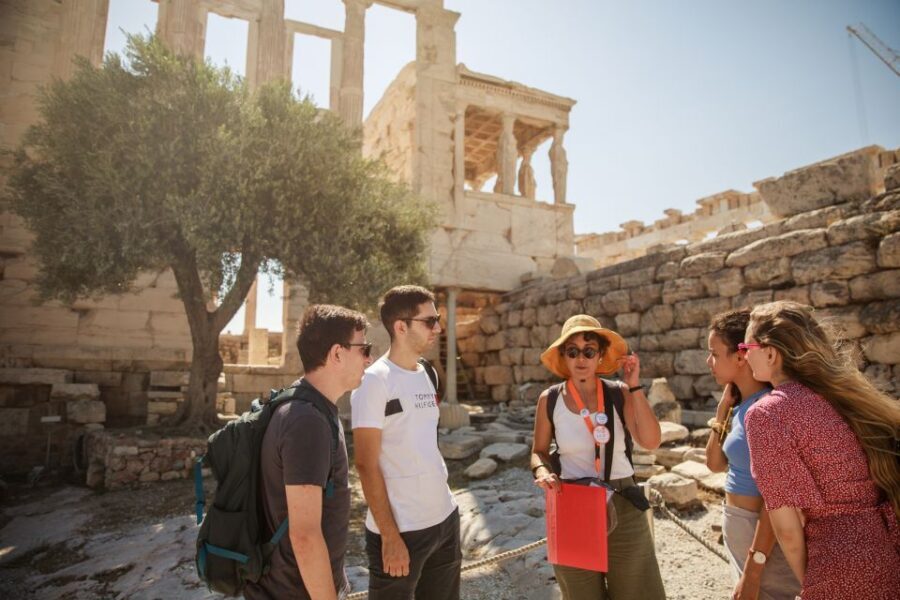
The Agora is where you get the philosopher connection. The area is linked with figures like Socrates and Plato, and your guide helps you connect those names to the specific spaces.
Here’s the value: philosophers are often taught as abstract ideas. On the ground, with the physical layout explained, they start to feel real. You can imagine the walk between meeting points, the public gathering energy, and the way public life shaped education.
If you’re coming with a history background, this section will feel like a reward. If you’re coming with only curiosity, it still works, because the guide keeps the focus on what you can see and how it functioned.
Attalos Museum: artifacts that make the market feel concrete
Near the end of the Agora portion, your licensed guide takes you to the Attalos Museum. This isn’t just “one more room.” It’s included because it connects the ruins to evidence from daily life.
The museum has artifacts of historical value such as IDs of the ancient Greeks and original measures and weights used by market inspectors. That’s a very specific type of detail, and it’s exactly what turns “ancient commerce” from a vague idea into something you can picture. Measures and weights are the kind of thing you don’t notice when you’re walking around ruins alone, but they’re central to how markets stay fair.
If you like museum stops at outdoor sites, this one tends to land well because it doesn’t fight the outdoor experience. It explains the logic behind what you saw outside.
Skip-the-ticket line: helpful, but don’t plan around zero waits
You can choose a ticket option that includes skip-the-ticket-line access, but it’s still not a magical force field. Security checks are still part of the process, and waiting times can vary based on visitor numbers.
A realistic approach is to arrive early and treat your day as if you could hit a 10 to 30 minute security wait. This is especially important because the tour uses strict entry windows for the Acropolis. If you’re late, the tour can’t wait, and that can ruin your day.
If you’re choosing the With Ticket option, the tour handles the skip-line experience as part of the service. If you’re choosing the Without Ticket option, you buy tickets yourself from the official site and must match your entry time to the tour’s schedule.
Price and value: what $66 buys you (and what it doesn’t)
At $66 per person, the headline price is reasonable for a 3.5-hour guided loop that covers two of Athens’ most important sites. Where the value shows up:
- You’re paying for a local licensed guide (the real difference between seeing stones and understanding them)
- You’re also getting the Athens guide magazine and map
- With the right ticket option, you get skip-the-ticket line access
What you should account for separately is entrance fees. Those depend on which ticket option you pick, and you’ll also need to budget for food and beverages since snacks are limited and there’s no full lunch included.
If you compare this to self-guided entry, the guide time is the main value. The Acropolis alone can feel like a workout plus a guessing game if you don’t have context. Adding the Ancient Agora and Attalos Museum in one connected story is what turns it into a smarter use of your time.
Timing: why the 11:00 start and 1:00 Agora access matter
The tour starts at the Acropolis around 11:00 am, and the Ancient Agora access is around 1:00 pm (13:00). That pacing is built around ticket entry rules and on-site movement.
Why you should care: the Acropolis has strict entry times. If your schedule slips, you can miss the ability to join the guided entry window. Also, because security checks can take time, arriving about 20 minutes early at the meeting point helps you stay on track.
This is a rain-or-shine setup. Athens weather can change quickly, but the walking is still the walking—so dress for the conditions and plan for sun or showers accordingly.
Meeting point you can actually find
Meet at 3, Dionyssiou Areopagitou Street, looking for the orange sign that says Athens Walking Tours. It’s at the start of the pedestrian walkway that leads to the Acropolis from Hadrian’s Arch on the Siggrou/Syngrou Avenue side.
Arrive 20 minutes early. That buffer helps with both meeting-time clarity and security timing.
Who should book this tour, and who should skip it
This tour is a strong fit if you:
- want a guided walk through the Acropolis plus the Agora rather than two separate self-guided entries
- like explanations that connect monuments to how Athens worked
- value a museum stop (Attalos Museum) that supports what you see outside
It may be less comfortable if you:
- use mobility aids or need step-free access (wheelchair users and people with mobility impairments are not suitable)
- hate walking inclines and stairs; even if you’re fine with walking, the Acropolis involves real effort
If you’re older with some knee issues, the pace may still work for you because guides often adjust by pausing in shade and keeping the flow manageable. Just be honest with yourself about the physical reality of the hill.
Should you book this Acropolis, Plaka & Ancient Agora guided tour?
I’d book it if you want the Acropolis to make sense quickly and you don’t want to waste a day bouncing between sites with no context. The combination is efficient: Acropolis monuments first, then the Ancient Agora where the civic and intellectual Athens story continues, capped with Attalos Museum artifacts that connect to daily life.
Skip it (or choose a gentler format) if your biggest constraint is mobility, or if you’re the type who tends to run late and hates strict entry windows. The tour can be fantastic, but it’s built on timing and walking.
If you can handle the steps and you’re willing to line up entrance tickets correctly, this is a very solid way to see more of Athens in fewer hours with better understanding.
FAQ
How long is the Acropolis, Plaka & Ancient Agora guided tour?
The tour lasts about 3.5 hours.
Where is the meeting point?
Meet at 3, Dionyssiou Areopagitou Street. Look for the orange sign that says Athens Walking Tours. Arrive about 20 minutes early.
Does the tour price include entrance tickets?
Entrance fees are not included. Depending on the ticket option you choose, you may need to buy admission tickets separately from the official site.
What time does the Acropolis part start?
The Acropolis portion starts at about 11:00 am.
What time does the tour access the Ancient Agora?
Ancient Agora access is about 1:00 pm (13:00).
Is skip-the-ticket line access guaranteed?
If you select the With Ticket option, you get skip-the-ticket line access, but you may still face waiting for security checks. Typical waits are often within the 0 to 10 or 30 minute range, depending on the day.
Is food included?
No. The tour does not include a leisurely lunch, and you’ll have time to grab a snack or drink during scheduled breaks.
What should I bring, and what is not allowed?
Bring a passport or ID, a student card if applicable, and cash. Baby strollers and luggage or large bags are not allowed.