REVIEW · ATHENS
Athens Acropolis Official E-Scooter Guided Tour Fat E-Bike
Book on Viator →Operated by Athens: Wheelz Fat Bike Tours in Acropolis Area, scooter, ebike · Bookable on Viator
Fat tires make Acropolis-area sightseeing feel easy. You zip between major viewpoints, then your guide ties each stop to the Greek story right in front of you. I like that you get professional guidance plus a relaxed pace that keeps the whole group together.
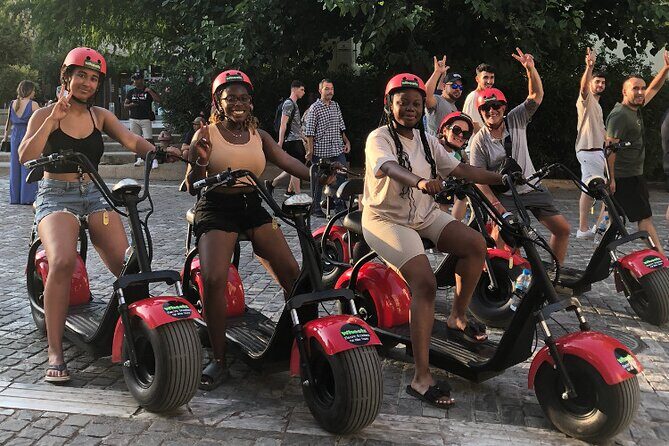
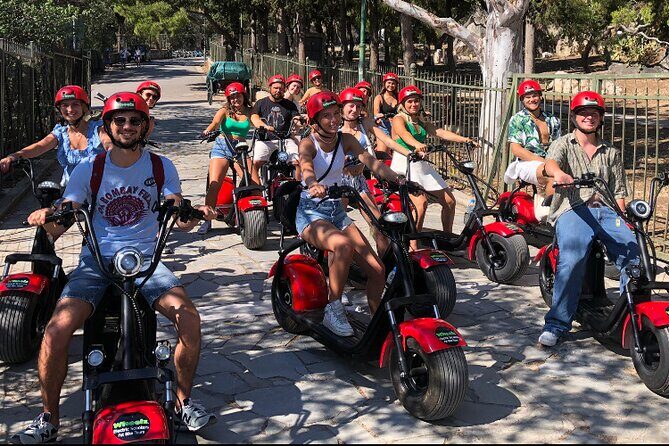
I also like the “do more with less effort” setup: fat e-bikes are easy to maneuver, helmets and bottled water are included, and the ride is slow enough to stay comfortable. Your guide—names you may hear include Venice, Giannis, Nick, and John—keeps questions moving and makes safety feel normal.
One thing to consider: you should be able to ride a bicycle. Even with the support and options for families, the bikes/scooters are still meant for people who can handle the basics.
In This Review
- Quick hits before you ride
- Fat Tire E-Bikes vs. Walking: why this Athens route feels easier
- Meet at Chatzichristou 6: gear, tickets, and how the ride is set up
- The 2-hour plan and what it actually gives you
- Herod Atticus Odeon and Mars Hill (Areopagus): instant context with big views
- Pnyx plus a couple of photo stops: skyline breaks from the main crowd
- Gazi viewpoint and the First Cemetery ceramics stop: Athens beyond postcards
- Temple of Hephaistos: the stop that feels like a payoff
- Arch of Hadrian and the Temple of Olympian Zeus: closing with scale
- Safety pace and crowd sanity: how the guides keep you feeling secure
- Price and value: what you’re really paying for
- Who this tour suits best (and who should think twice)
- Should you book this Athens Acropolis fat e-bike tour?
- FAQ
- How long is the Athens Acropolis e-scooter guided tour?
- How much does the tour cost?
- What language is the tour offered in?
- Where do I meet for the tour?
- Do I need to pay admission at the stops?
- What’s included with the ride?
- Are there different scooter options for seating?
- Is the tour suitable for kids or beginners?
- What’s the cancellation policy if weather is bad?
Quick hits before you ride

- Small-group feel (max 25): you get personal attention without feeling rushed.
- Included safety basics: helmets on arrival and a careful pace through crowded streets.
- Built for photos, not ticket lines: the photo stops are listed as free, so you can spend your time looking, not queuing.
- Views beyond the main crowd: you get into spots like Gazi viewpoints and the Pnyx area.
- Family-friendly options: if someone in your group can’t ride, ask about accommodations like sitting behind the guide.
- Practical add-ons: bottled water is provided, and mobile tickets make check-in simple.
Fat Tire E-Bikes vs. Walking: why this Athens route feels easier
Athens is a lot of steps. Even if you’re fit, your knees and calves start negotiating. This tour is built for a different rhythm: you get the monument moments, then you’re off to the next viewpoint without burning the day on uphill walking.
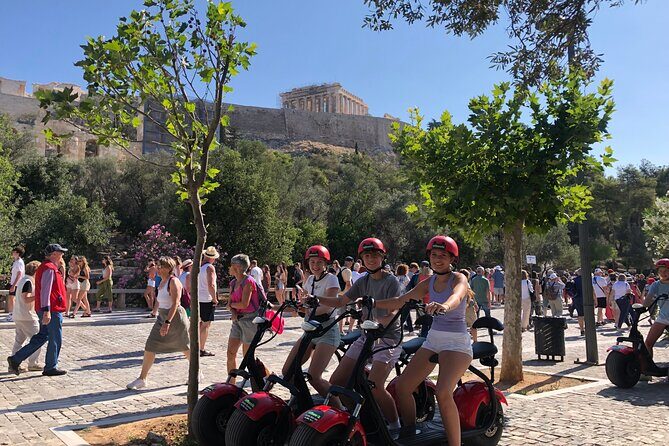
The fat tires matter more than you might think. They help the ride stay stable and controlled when you’re crossing the kind of street texture that can feel sketchy on skinny tires. And because the ride is fairly slow, you’re not just commuting—you’re sightseeing. That pace also makes it easier to actually hear explanations instead of fighting wind and traffic noise.
If you’ve already walked the Acropolis area earlier, this tour is a smart reset. You’re still seeing classic landmarks, but you’re doing it with lower effort and more guidance.
Other Acropolis and Parthenon tours we've reviewed in Athens

Meet at Chatzichristou 6: gear, tickets, and how the ride is set up
The meeting point is Chatzichristou 6, Athina 117 42, Greece. The tour ends back at the same spot, so you’re not left thinking about how to get back afterward.
You’ll be issued bikes and helmets, and you’re given bottled water so hydration stays on your side. It’s a small thing, but Athens sun and long sight days add up fast. Having water built into the experience helps you keep your energy for the stops.
You also get a mobile ticket, and the tour is offered in English. Service animals are allowed, and the activity is listed as suitable for most travelers.
One practical detail: you’ll see mention of one-seated and two-seated eco scooters. That’s useful if you’re traveling with different comfort levels in the group. If you have anyone who’s unsure about riding gear, tell the operator before you start so the setup matches your group.
The 2-hour plan and what it actually gives you
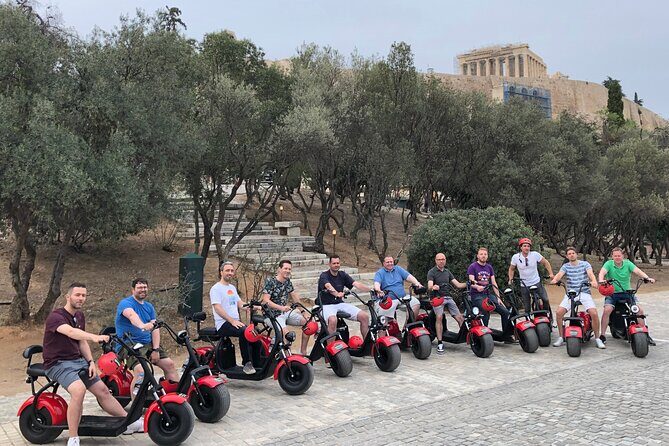
This tour runs about 2 hours. In that time, you move through multiple zones around the Acropolis area and beyond. The key is that the stops are short and purposeful—mostly photo stops, plus one longer look at Pnyx.
Here’s the real value of that timing: you get orientation fast. Instead of leaving Athens with a pile of separate photos, you start connecting the sites to geography and era. Your guide is doing the “where are we, and what matters here” work while you’re moving between points.
You’ll also notice several “pass through” segments. Think of those as breathing space. They’re the time when you catch your balance, take in street-level Athens, and get positioned for the next view stop.
And because the day is weather-dependent, plan for good conditions. If weather turns unsafe, the experience can be rescheduled or refunded.
Herod Atticus Odeon and Mars Hill (Areopagus): instant context with big views

Your first real landmark stop is Herod Atticus Odeon for a short photo stop. This is the kind of place that looks impressive even for first-timers, but what makes it click is how your guide frames it. You start to understand why the area mattered and how people would have gathered here in ancient times.
Next comes Areopagus, often called Mars Hill. This stop is brief, but it’s a classic orientation point. From here, you get a sense of the slope and the surrounding hills that shape Athens. Even if you don’t spend time inside, the viewpoint is the lesson.
Why this pair works early in the tour: it gives you “anchors.” After those two stops, the later viewpoints make more sense because you’ve already gotten your bearings.
Practical note: these early stops are short. If you like to linger for photos, arrive ready to prioritize angles and move with the group.
Pnyx plus a couple of photo stops: skyline breaks from the main crowd

Then you hit Pnyx for about 10 minutes. This is a better length than the other photo stops, and it helps. Pnyx is a hill where you can feel how Athens spreads out. It’s one of those places where a short rest from constant riding makes the views land harder.
After Pnyx, the tour adds National Observatory of Athens for another photo stop. The point isn’t ticketing—it’s the look. You’re getting a different angle on the city so the Acropolis area doesn’t become your only mental picture of Athens.
Then you move to St. Marina Church for a short photo stop. This is where the tour adds local texture. Athens isn’t only ancient stones. A stop like this reminds you that you’re in a living city layered on top of older worlds.
For the best experience here: keep your eyes up and your photos quick. The tour keeps moving, so treat these stops as “get the angle, then listen for the explanation.”
Other Athens e-scooter and Trikke tours we've reviewed in Athens



Gazi viewpoint and the First Cemetery ceramics stop: Athens beyond postcards
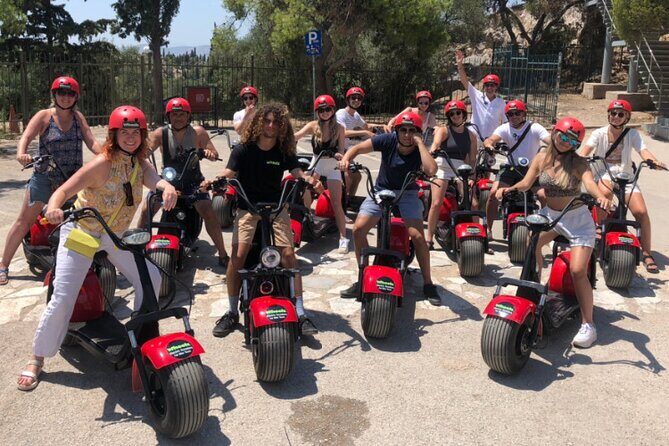
After the central viewpoint run, you roll into Gazi for a viewpoint stop. Gazi is a useful shift because it shows a more modern side of Athens. That matters because you’re not just stacking ruins photos—you’re seeing how the city moves today.
Next is First Cemetery of Athens, focused on ceramics. This stop adds a different kind of ancient Athens connection. You’re not always meant to stare at massive monuments. Material culture—objects and everyday artifacts—helps you understand how people actually lived.
Both stops are short, but they widen your perspective. If you’ve been expecting only temples, this section is the gentle correction. Athens is big, and it’s more interesting when you see the edges too.
Temple of Hephaistos: the stop that feels like a payoff
The tour’s standout “monument moment” is Temple of Hephaistos. It’s listed as the best well-preserved temple in Greece, and the time you spend here is short but meaningful.
Here’s why this stop lands: after several viewpoint and photo moments, you finally get a building that you can really register as real architecture, not just a skyline line. A well-preserved temple is easier to read visually. You can see details that help the guide’s explanation stick.
If you only have limited time in Athens, a well-chosen temple stop beats a random grab-bag of monuments. This is that kind of stop.
Arch of Hadrian and the Temple of Olympian Zeus: closing with scale
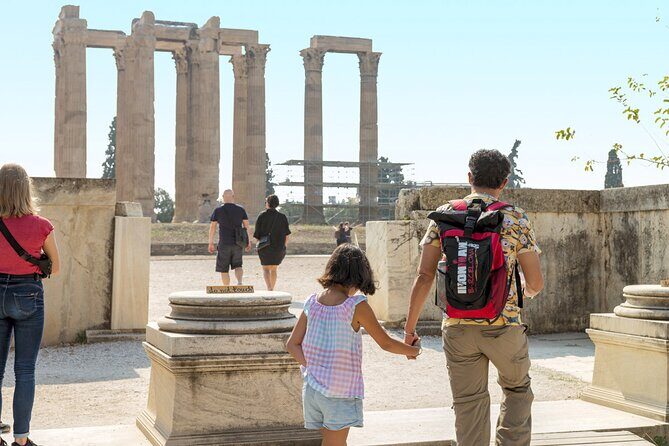
To finish the main sights, you go to Arch of Hadrian for a photo stop, then Temple of Olympian Zeus for another photo stop. Both are listed as free for the stops on this route, which is helpful if you want to keep costs and time under control.
The Arch of Hadrian gives you a “transition” feeling. It’s a way to connect different parts of Athens’ story. Then Olympian Zeus is scale. Even from a short stop, it’s the kind of place where your brain goes quiet for a second because the size does the talking.
If you like photos, this is your end-game section. Treat it like your best window for wide shots, then let the guide tell you what to look for.
Safety pace and crowd sanity: how the guides keep you feeling secure
The ride can put you in contact with pedestrians and street traffic. That’s normal in Athens. What matters is how you’re handled.
This tour is designed for control: the group moves at a slow pace, and the guide takes time to get through crowded segments safely. You may also see a lead-and-rear approach so no one gets left behind. That small-group teamwork makes a difference if you’re nervous about handling a bike in busy areas.
If you’re bringing kids or teens, it helps that the guide team is patient and practical. One review detail that’s useful to you: if a child can’t ride, there may be options to still participate, like sitting behind the guide. Still, the tour setup expects at least some ability to ride.
Price and value: what you’re really paying for
At $71.35 per person, you’re not just buying transportation. You’re buying:
- a guided route that connects the places so you understand what you’re seeing
- included gear (helmets) and support items (bottled water)
- short, efficient stops that help you cover ground without tour fatigue
Two hours is not long on paper, but it’s long enough to create momentum. You won’t spend most of your time waiting in lines or figuring out routes through narrow streets. And because the photo stops listed here are free, you avoid surprise add-ons at each stop during the tour.
Where the value shines most: if you’ve already walked a lot in Athens and your legs need a break, but you still want the monuments and viewpoints. If you hate riding anything with wheels, then the “value” is mostly sightseeing by someone else. But if you can ride a bicycle, it’s a strong deal for the amount of context you get.
Who this tour suits best (and who should think twice)
This tour fits best if you:
- want to see multiple Acropolis-area highlights in about 2 hours
- prefer a guided explanation over silent wandering
- want a lower-effort way to cover Athens when walking feels too much
- like photos, because many stops are built as photo moments
Think twice if you:
- are not comfortable riding a bicycle (even with support options)
- get very unsettled by busy streets with pedestrians and vehicles
- want lots of long stop time at a single site instead of fast-moving viewpoint coverage
Should you book this Athens Acropolis fat e-bike tour?
Book it if you want a smart way to see key sites with guided context, included water, and a ride that keeps you in the fun part of Athens instead of stuck in walking-only exhaustion. The combination of short photo stops plus a real temple payoff makes the time feel tight in the best way.
Don’t book it if riding is a deal-breaker for your group or you need long, slow time at one monument. In that case, a walking-only plan might match your pace better.
If you’re flexible, go for it on a day with good weather. And arrive ready to ride with confidence, even if it’s just a beginner level.
FAQ
How long is the Athens Acropolis e-scooter guided tour?
It runs for approximately 2 hours.
How much does the tour cost?
The price is $71.35 per person.
What language is the tour offered in?
The tour is offered in English.
Where do I meet for the tour?
The meeting point is Chatzichristou 6, Athina 117 42, Greece.
Do I need to pay admission at the stops?
The stops listed on the route include photo stops with free admission tickets.
What’s included with the ride?
You get bikes and helmets, plus free bottled water.
Are there different scooter options for seating?
Yes. One seated and two seated eco scooters are available.
Is the tour suitable for kids or beginners?
It’s listed as suitable for most travelers, but the experience requires you to know how to ride a bicycle. There may be accommodation options for someone who cannot ride, but you should plan based on comfort with riding.
What’s the cancellation policy if weather is bad?
Free cancellation is available up to 24 hours in advance for a full refund. This experience requires good weather, and if it’s canceled due to poor weather, you’ll be offered a different date or a full refund.