REVIEW · ATHENS
Acropolis and Museum Tour With Early Entry Ticket
Book on Viator →Operated by Athens Walking Tours · Bookable on Viator
Beat the crowds on the Acropolis.
This early-access Acropolis and Museum tour is built to get you moving past the worst lines, while a professional local guide adds story and context at every stop. You also get clear audio headsets, so you can actually hear the explanation instead of playing guess-the-words in the wind.
I love how the route connects the monuments into a clear flow, from the Theatre of Dionysus through key temples to the Parthenon and then the museum’s timeline. I also like the small-group feel (maximum 24) and the hands-on guidance that helps you make sense of what you’re looking at, not just where you’re standing.
One drawback to plan for: entrance fees are not included across the board, so your final spend can rise depending on the ticket option you choose and what you want to see inside. Expect real uphill walking too, especially in warm weather.
In This Review
- Key things to know before you go
- Why early access changes the Acropolis day
- Meeting at Acropolis Canteen and ending at the Museum
- Theatre of Dionysus and Herod Atticus Odeon: drama to concerts
- Athena Nike and Erechtheion: views plus myths in stone
- Parthenon focus: Doric columns, friezes, and real time limits
- Climbing the Acropolis itself: making 1 hour 15 count
- Acropolis Museum in 1 hour 15: context you can carry home
- Headsets, licensed guides, and a group of 24
- Price and ticket options: what you’re really paying for
- Weather, heat, and what moderate fitness really means
- Pairing it with the rest of your Athens plan
- Should you book this Acropolis and Museum tour?
- FAQ
- Does the tour price include entrance fees?
- How long is the Acropolis and Museum tour?
- Where does the tour start and where does it end?
- What’s the walking like?
- What if I choose the without ticket option?
- What if the weather is poor or I need to cancel?
Key things to know before you go
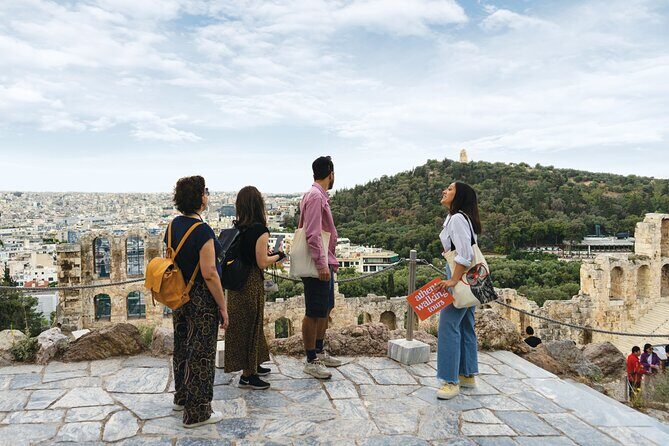
- Early entry helps you dodge the worst crowd crush, giving you a calmer look at the big views.
- Skip-the-line depends on the ticket option, so choose carefully if faster entry matters to you.
- Every stop has a point, from the Theatre of Dionysus to the Caryatid maidens at the Erechtheion.
- Clear headsets make the tour easier to follow, even when you’re standing among crowds.
- The museum walk is time-boxed, so you get context without spending all day inside.
- Maximum 24 people keeps the pace human, which matters on a hill like this.
Why early access changes the Acropolis day
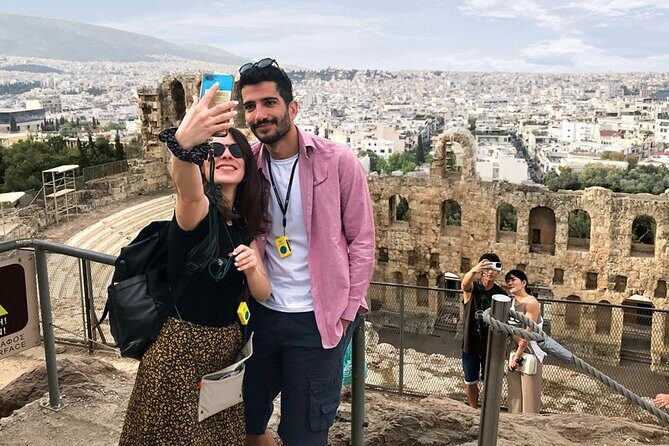
The Acropolis is famous for a reason, but it’s also famous for lines. An early-entry start shifts the whole feel of your visit. You get the monuments with less pushing, more breathing room, and better photo light if you care about that sort of thing.
It’s also a smarter way to travel if you’re trying to understand what you see. The guide’s storytelling lands better when you’re not standing in a bottleneck. One of the biggest strengths here is that you’re not just “looking at ruins.” You’re walking through a sequence that explains why each place mattered.
From what people share after going, guides like Rina and Pan were especially effective at making the sites feel connected. Marguerite’s fans also highlight how her enthusiasm can keep a group engaged for hours, even when the day is hot and the walking adds up.
Other Acropolis and Parthenon tours we've reviewed in Athens

Meeting at Acropolis Canteen and ending at the Museum
You start at Acropolis Canteen, Athens 105 58, Greece. The tour ends at the Acropolis Museum, Dionysiou Areopagitou 15, Athina 117 42, Greece, which is a nice way to finish because it gives you an indoor continuation right after the hill.
This matters because the Acropolis area is all about walking. Ending at the museum means you don’t have to reverse course or hunt for your next step. Once the guided portion ends, you can continue at your own pace inside the museum using the time you have left.
Also worth knowing: confirmation happens at booking time, and the meeting point is near public transportation. If you’re arriving from elsewhere in Athens, you won’t feel like you need a car to make this work.
Theatre of Dionysus and Herod Atticus Odeon: drama to concerts
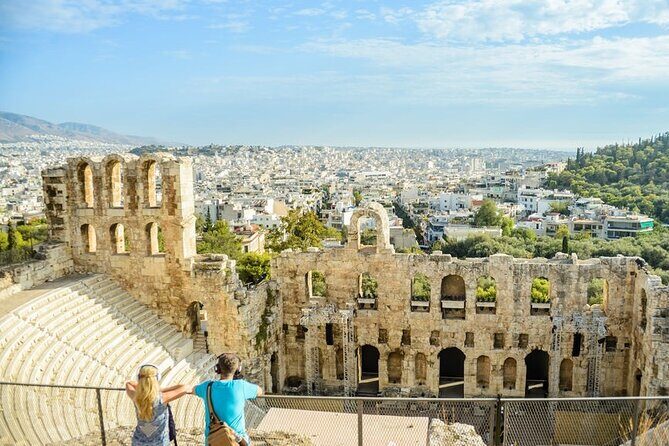
Your first stop takes you to the Theatre of Dionysus. It’s not the biggest theatre on your list, but it’s powerful because it’s tied to the roots of Athenian theatre. You’ll see tiered seating cut into the hillside, and you’ll get the sense of how audiences experienced stories long before stage lights and sound systems.
Then you move on to the Herod Atticus Odeon, an ancient Roman-era theatre built right into the Acropolis area. What makes this stop practical is that it connects past and present. This space can still be used for music concerts and performances, so the stones don’t feel frozen in time.
Even if you’re not a theatre person, these two stops help you understand the Acropolis as more than a “temple hill.” It was a stage for culture, ritual, and public life.
Athena Nike and Erechtheion: views plus myths in stone

Next comes the Ionic Temple of Athena Nike. This is the kind of site where the details are worth it: you’ll learn about the friezes and you’ll be set up for some panoramic views honoring Athena, goddess of victory. If your mind likes symbolism, this is a good place to slow down and look beyond the big postcard angles.
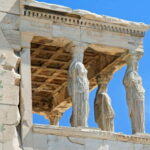
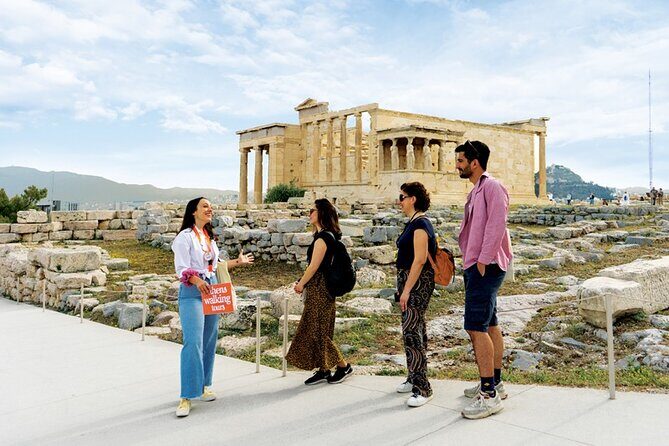
Then you’ll reach the Erechtheion, famous for the Caryatid maidens. This is one of those stops where the guide’s narration makes a difference, because you’re not only seeing architecture. You’re hearing associated myths and Athenian legends tied to the temple.
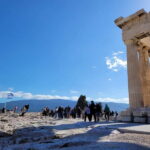
One practical reality: the Acropolis isn’t flat. Expect uneven stone paths, steps, and short stretches that feel steeper than you planned for. The upside is that each stop gives you a different vantage point, so the effort turns into payoff as you move upward.
Parthenon focus: Doric columns, friezes, and real time limits

The Parthenon is the headline, and the tour sets aside about 20 minutes for it. That’s enough time to take in the iconic Doric columns, study the frieze details from reasonable viewing angles, and absorb the views over Athens.
But 20 minutes is also a reminder: this is a paced, guided experience. If you want long inspection of carvings with your own guidebook and unlimited photo time, you’ll likely want extra time before or after the tour ends.
Still, this timing can be a smart way to start. You get the “what you’re seeing and why it matters” talk first, and then you’ll understand what to look for later if you decide to revisit parts of the hill.
Other Acropolis ticket options we've reviewed in Athens






Climbing the Acropolis itself: making 1 hour 15 count
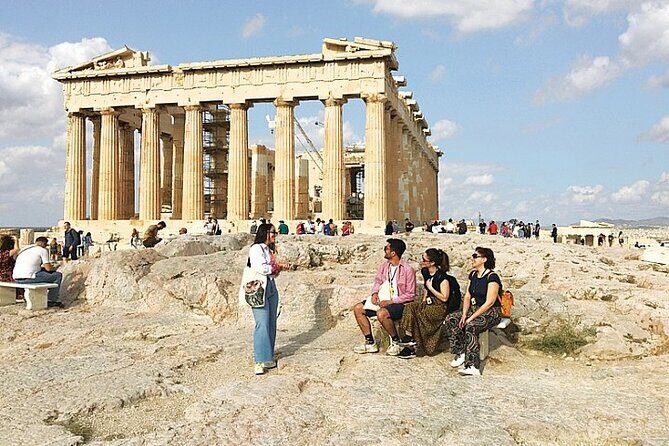
You’ll spend about 1 hour 15 minutes exploring the Acropolis area after the key temple stops. This portion is valuable because it lets you connect the dots on foot. Instead of feeling like you only saw highlights from one angle, you get time to wander within the guided framework.
It also helps with orientation. Once you’ve heard the stories at the major points, you’re better at recognizing shapes, alignments, and sightlines as you walk. That makes your self-guided time feel less random.
If heat is a factor (and it often is in Athens), this is where the timing helps. Early access tends to reduce the most punishing conditions, which makes it more realistic to keep up without rushing.
Acropolis Museum in 1 hour 15: context you can carry home
After the hill, you go to the Acropolis Museum for about 1 hour 15 minutes. This is where you understand the transition from “what’s left outside” to “what the Greeks made and preserved through time.” The museum’s big strength is that it guides you through Athenian history in a chronological way, so artifacts start to feel like a story, not a jumble of objects.
This is also the time to pay attention to how restoration and interpretation work. When you see originals, fragments, and replicas side by side, the architecture you saw outside becomes easier to decode.
One practical note: the museum has excavations associated with the area under it, and seeing those lower ruins can require additional entry beyond your main museum access. If that’s a must-do for you, plan for the possibility of extra cost so you’re not stuck making a rushed decision at the ticket desk.
Headsets, licensed guides, and a group of 24

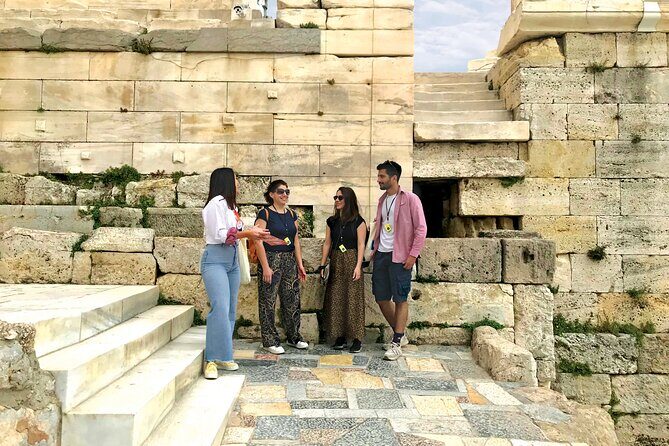
A big comfort win here is the earsets. On the Acropolis, wind and crowd noise make it hard to hear a guide without help. With headsets, you can stay focused while walking, which means you don’t constantly stop to ask what you missed.
The guide is a professional local licensed host, and that shows in the pace and clarity. People describe guides like Rina, Pan, Marguerite, and Helene as especially strong at turning stones into scenes. That’s the difference between memorizing facts and actually understanding how Athenians viewed their world.
With a maximum group size of 24, you also avoid the problem of being lost in a swarm. You can follow along, look where the guide points, and still have room to step slightly back for a closer look.
Price and ticket options: what you’re really paying for
At $59 per person for a roughly 3 hour 30 experience, the value is mostly in the human part and the time savings. You’re paying for a licensed guide, clear audio, and a structure that reduces waiting and confusion.
Entrance fees are not included in the core price, though they can be added as an option. Also, the tour provides skip-the-line service only if you buy the option that includes the relevant ticket. If you’re trying to minimize time lost to ticketing, that ticket option is the one that aligns with the tour’s early-access promise.
A small nuance: on days when Acropolis entrance is free, the entrance ticket cost is already deducted from the tour price. So you’re not stuck double-paying on those dates.
As for gratuity, typical guidance in Greece is around 10% of service cost. In other words, if the guide earns your appreciation, budget for tipping as part of the real-world cost of the experience.
Weather, heat, and what moderate fitness really means
This tour expects moderate physical fitness. That’s not just a label. You’ll be doing uphill walking and moving between multiple sites on stone paths and steps.
One theme that comes up again and again in post-tour feedback is that doing this early helps when the day is hot. Start with less fatigue, and the same route feels far more manageable. One person also specifically noted that the tour is worth it even with a fair amount of uphill.
Practical takeaway: plan your schedule around your energy. If you’re prone to getting wiped out by stairs, add extra rest time the same day. And if you usually travel with a slower walking pace, this might still work, but you’ll want to go into it with realistic expectations.
Pairing it with the rest of your Athens plan
Because the tour ends at the Acropolis Museum, it’s a natural anchor for a broader day of sightseeing. You can build your remaining hours around the museum area and then branch out to other neighborhoods without backtracking over the hill.
If you like history with context, this pairing is especially useful. The hill gives you the big forms and shapes. The museum gives you explanations and artifacts that make those forms make sense when you’re back in your hotel room planning your next stop.
Also, you get an Athens Map and an Athens Guide magazine with ideas. Use those as a jumping-off point for your own route instead of trying to improvise your entire day from scratch.
Should you book this Acropolis and Museum tour?
If you want the “best first look” at the Acropolis with less wasted time, I think this is a strong booking. The early access is the main advantage, and the headsets and licensed guide help you turn your time into understanding, not just sightseeing.
Book it if:
- You’re short on time and want a guided path through the main highlights.
- You dislike standing around while you figure out where to go next.
- You’ll benefit from clear audio and a story-led walkthrough.
Skip or reconsider if:
- You hate uphill walking and want a lighter route.
- You’re a slow, detailed photographer who needs more than about 20 minutes at the Parthenon.
- You want a museum experience that focuses heavily on every excavation level with no extra ticket decisions.
If you do book, choose the ticket option that matches your priorities about speed and lines. Then show up early, wear shoes you trust on uneven steps, and let the guide do the heavy lifting of interpretation while you do the fun part: looking up at Athens’ most famous hill.
FAQ
Does the tour price include entrance fees?
Entrance fees are not included in the basic tour price, and they can be booked as an option at an additional cost. If you selected the ticket option, you’ll also have skip-the-ticket-line service.
How long is the Acropolis and Museum tour?
The total duration is about 3 hours 30 minutes.
Where does the tour start and where does it end?
The tour starts at Acropolis Canteen, Athens 105 58, Greece. It ends at the Acropolis Museum, Dionysiou Areopagitou 15, Athina 117 42, Athina.
What’s the walking like?
It requires moderate physical fitness. The day includes uphill walking as you move between multiple sites on the Acropolis.
What if I choose the without ticket option?
If you selected the without ticket option, follow the instructions on your voucher to buy the Acropolis tickets.
What if the weather is poor or I need to cancel?
You need good weather for this experience. If it’s canceled due to poor weather, you’ll be offered a different date or a full refund. You can cancel for a full refund up to 24 hours in advance.