REVIEW · ATHENS
Ancient Agora and Acropolis Private Tour with Licensed Expert
Book on Viator →Operated by WARMPENGUIN · Bookable on Viator
Three hours, and Athens makes sense again. This private tour strings together two UNESCO Athens landmarks—Acropolis and Ancient Agora—plus a planned stop at the New Acropolis Museum, all with a licensed expert who helps you read the sites instead of just walking past them. You start at street level at the Acropoli Metro Station (7 Makrygianni Street, near the museum), where you get quick orientation before heading up toward the temples.
I love the way the guide turns iconic views into clear, story-based stops—like the Theatre of Dionysus and what it meant for Greek drama—without rushing. I also like the tight pacing and the chance to ask questions on the spot, which made the whole experience feel more like a conversation than a script for guides such as Mandio, Manto, Shorty, or Vicky. The result is a small-group feel even while you’re moving through busy areas.
One thing to plan for: admission tickets are not included, and there’s some walking between the Acropolis and Agora areas, so it’s not suitable for reduced mobility.
In This Review
- Key things I’d put on your must-do list
- Why this Acropolis and Agora plan works so well
- Where you meet your guide near the Acropolis Museum
- Acropolis time: temples, the Propylaia entrance, and the Theatre of Dionysus
- Starting with the Theatre of Dionysus
- The climb toward Propylaia and the Athena story
- Propylaia, Odeon of Herodes Atticus, and the Athena Nike Temple area
- Time at the Parthenon for construction and meaning
- Erechtheion and myth-focused explanations
- Odeon of Herodes Atticus as a working amphitheatre
- The New Acropolis Museum stop: why it changes what you see outside
- Ancient Agora: the marketplace and civic core at the base of the Acropolis
- A recreated commerce hub with artifacts
- A temple you can still feel: one of the most complete in Greek antiquity
- The overall effect: understanding Golden-Age Athens as a system
- Tickets and cost: what you’re really paying for at $185.86
- Walking and comfort: what to expect in the real world
- Best-fit moments: who will enjoy this tour most
- Acropolis + Agora private vs. doing it on your own
- Should you book this Acropolis and Ancient Agora private tour?
- FAQ
- How long is the Ancient Agora and Acropolis private tour?
- Are admission tickets included?
- Where do we meet the licensed expert guide?
- Is the New Acropolis Museum included in this tour?
- Is this tour private just for my group?
- Is there a lot of walking between the Acropolis and the Ancient Agora?
- What if my plans change and I need to cancel?
Key things I’d put on your must-do list
- Licensed expert guide guiding you through Acropolis monuments and Agora highlights with explanations you can actually use
- Efficient 3-hour format split roughly into about 80 minutes at the Acropolis area and about 80 minutes at the Ancient Agora
- The Theatre of Dionysus visit, often described as the world’s oldest theatre, and built on the Acropolis slopes for performances
- New Acropolis Museum pairing, so you can connect outdoor monuments to original masterpieces and models
- Easy meetup at Acropoli Metro Station (7 Makrygianni Street), close to the museum and with a strong starting viewpoint
- Ticket help after booking, where hassle-free ticket options can be arranged so your guide has what you need
Why this Acropolis and Agora plan works so well
The Acropolis is impressive, but it can also feel like a blur if you’re self-guiding. This tour solves that problem with a simple formula: focus on the big monuments and the moments that explain what you’re seeing, then connect them to the Agora right at the foot of the hill.
You’re not spending half a day on logistics or hunting down context. Instead, you get an organized flow that covers the Acropolis core sights and then shifts down to the Ancient Agora, where daily life and civic business unfolded.
And because it’s private, you can keep the pace human—stop for photos when it matters, ask questions when something catches your eye, and get your bearings fast.
Other Acropolis and Parthenon tours we've reviewed in Athens
Where you meet your guide near the Acropolis Museum
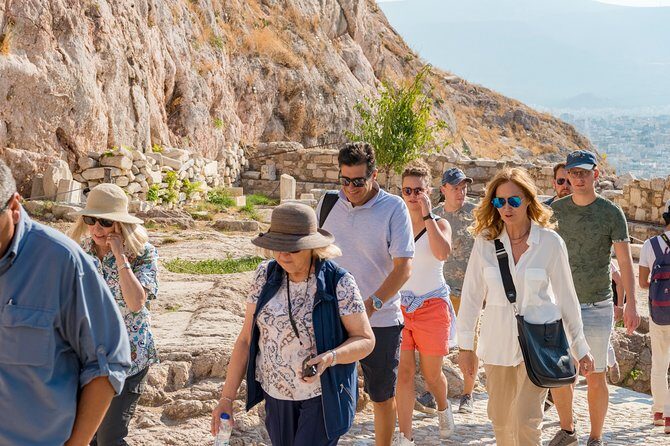
You’ll meet at the Acropoli Metro Station at street level, at 7 Makrygianni Street, close to the Acropolis Museum. This is a smart starting point because it gives you a clear orientation before you climb into the temple zone.
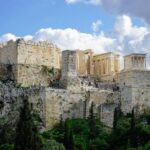
From the meetup area, your guide gives you an intro that helps you spot what comes next: the Acropolis walls you see around you tie back to earlier Mycenean civilization, long before the Classical era built the temples you came for. It’s one of those “small setup” moments that pays off later—once you know what you’re looking at, the whole hill makes more sense.
The tour also notes that the location is near public transportation, which is handy if you’re building a bigger Athens day around it.
Acropolis time: temples, the Propylaia entrance, and the Theatre of Dionysus

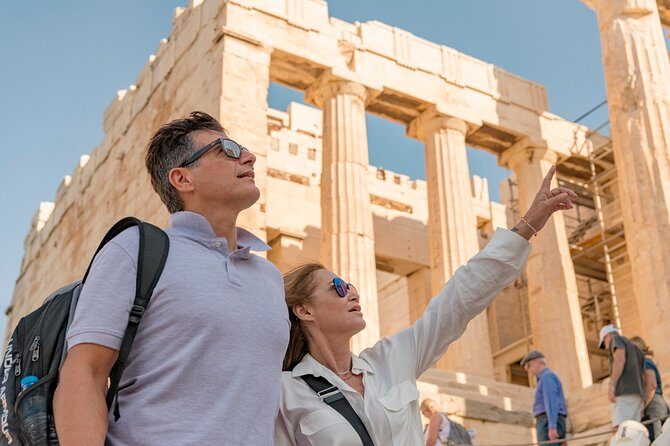
Your Acropolis portion is roughly 80 minutes covering the major temples and associated buildings—enough time to see the key monuments without turning it into a speed-run. The guide works the route so you get viewpoints in a logical order, with context as you go.
Here are the highlights that make this section feel worth your money:
Starting with the Theatre of Dionysus
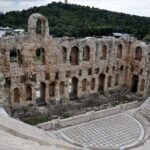
One early stop is the Ancient Theatre of Dionysus, built in the 4th & 5th century BC in a natural amphitheater on the Acropolis slopes. The scale is hard to picture—about 25,000 seats—and the cool detail is that it’s considered the world’s oldest. Your guide can connect this theatre setting to the way Greek plays premiered in a religious-cultural festival setting, not just entertainment.
It’s a great anchor stop. When you understand the theatre’s role, the temple landscape feels less like scenery and more like the stage for public life.
The climb toward Propylaia and the Athena story
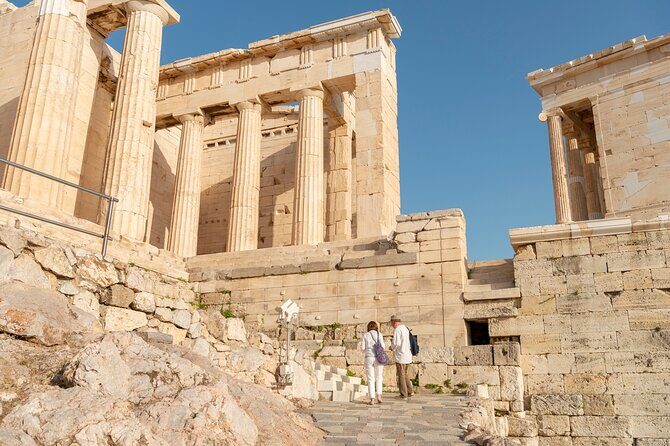
Next, you ascend toward the monumental gateway (Propylaia) and the Acropolis entrance. This is where the guide’s storytelling matters because you hear what the Greeks would have encountered visually and symbolically.
You’re told that a huge bronze statue of Athena once greeted arrivals, and that the tip of her upheld spear could be seen by incoming ships in sunlight as legend has it. Even if you’re only seeing modern reconstructions and fragments, that kind of explanation helps the site click.
Other private Acropolis tours we've reviewed in Athens



Propylaia, Odeon of Herodes Atticus, and the Athena Nike Temple area
As the temples come into view, you’ll also see associated buildings such as the Odeon of Herodes Atticus and the Temple of Athena Nike. You don’t just hear the names—you’re guided on what each building tells you about Classical Athens: ceremonies, worship, and civic pride.
The Temple of Athena Nike is described as one of the earliest Classical temples on the Acropolis, built around 420 BC, dedicated to Athena, and largely restored. Your guide points out its prominent position overlooking Athens, which helps you understand why location mattered as much as design.
Time at the Parthenon for construction and meaning
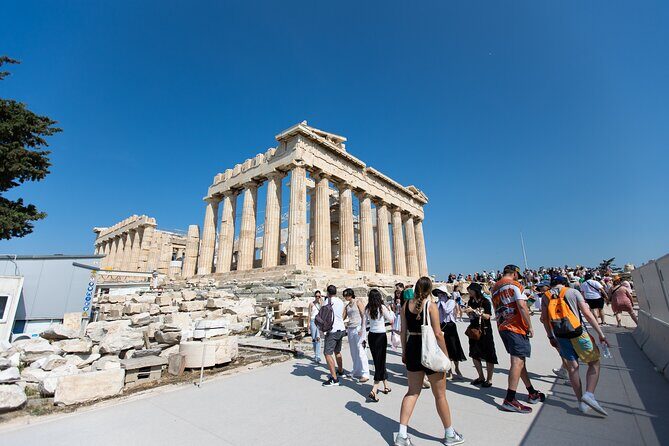
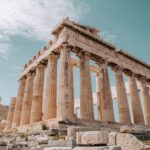
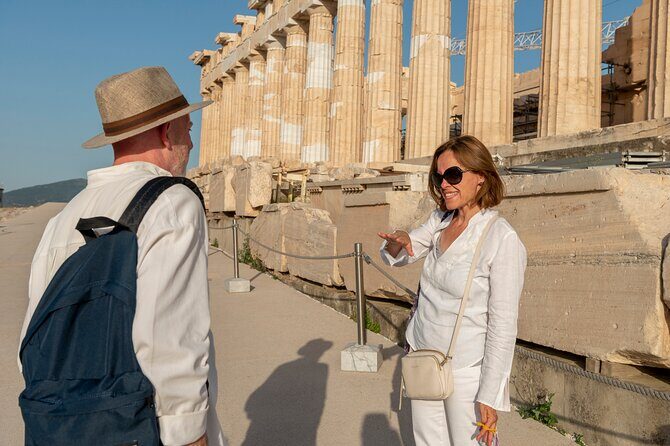
The schedule includes time at the Parthenon, framed as the pinnacle of Classical Greece’s Golden Age. You’ll get an overview of construction, mythology, and historical importance, with time to look closely instead of just snapping pictures from one angle.
This is the stop I think you’ll remember later when you picture what “Athens in its peak” looks like. The Parthenon isn’t only a monument; it’s a whole way of thinking about art, power, and belief.
Erechtheion and myth-focused explanations
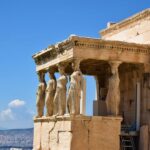
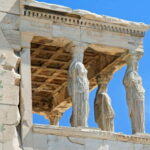
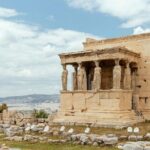
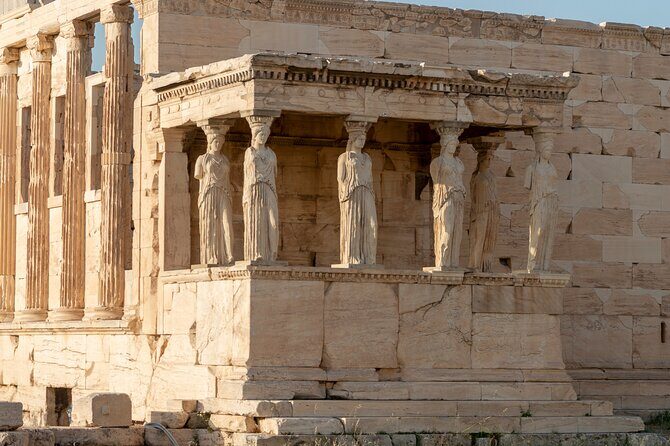
Another key temple stop is the Erechtheion, dedicated to both Zeus and the Goddess Athens. The guide uses mythology and main aspects to explain what you’re seeing—especially the attention to important statues you’ll later connect to the museum exhibits.
If you’ve ever walked past architectural details and wondered why anyone cared, this kind of myth-and-detail approach helps you slow down and actually notice.
Odeon of Herodes Atticus as a working amphitheatre
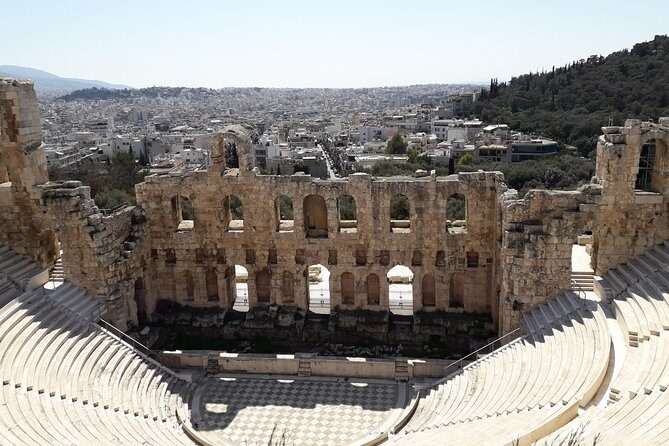
The plan also includes the Odeon of Herodes Atticus, a marble amphitheatre built in AD 161 by Herodes Atticus in memory of his wife. The standout point here: it continues as a working theatre to the present day. It’s a nice reminder that some of Athens’ cultural DNA never fully disappeared—it changed form, but it stayed.
The New Acropolis Museum stop: why it changes what you see outside
The tour pairs the Acropolis sights with a visit to the New Acropolis Museum (timing is described as roughly around the Acropolis portion, with the museum stop stated at approximately 80 minutes). This matters because the museum helps you decode what’s missing outdoors and why.
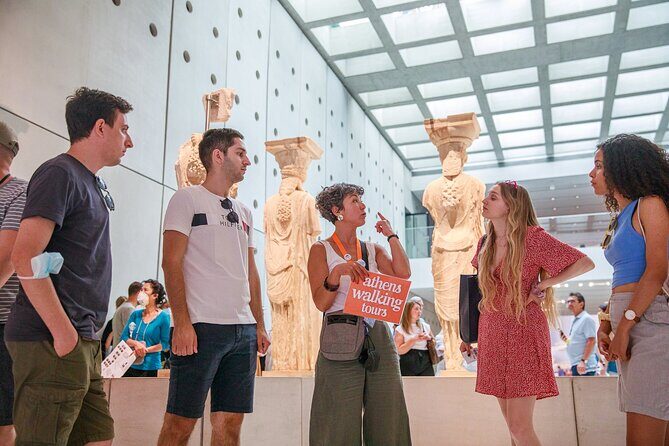
Instead of seeing only the grand silhouette of the Parthenon from the hillside, you get original pieces plus models, videos, and interactive installations. Your guide focuses on the most significant artworks, and explains the stories of myth and legend tied to them.
If you’re the type who wants to understand what you’re looking at (and not just check off landmarks), this museum stop is a big part of the value. It turns your outdoor photos into something more meaningful—because you later know what the fragments meant, what the designs were trying to communicate, and how the myths were woven into civic identity.
Ancient Agora: the marketplace and civic core at the base of the Acropolis
After the Acropolis, you shift to the Ancient Agora of Athens, the marketplace and center of life in the ancient city. This is the ground-level context that makes the upper hill feel real.
Your Agora time is also about 80 minutes. Here’s what you’ll do and see:
A recreated commerce hub with artifacts
The plan includes a recreation of an ancient center of commerce—so you can picture traders and workshops where the everyday city moved and negotiated. It’s not just a concept display; it points you to an onsite museum housing artifacts uncovered from the site.
That matters because the Agora can feel less dramatic than the Acropolis from a distance. But once you understand how the city functioned down here, you stop treating it like a leftover area and start seeing it as Athens’ engine.
A temple you can still feel: one of the most complete in Greek antiquity
One specific highlight is the most complete remaining temple of Greek antiquity in the Agora area. Your guide uses this stop to help you understand what “completeness” means in archaeological terms: it gives you enough intact structure to study how the Greeks built and how the space shaped movement and worship.
Even if you’re not a hardcore architecture person, it’s easier to appreciate when you can actually compare scale and design elements without guesswork.
The overall effect: understanding Golden-Age Athens as a system
Together, the Acropolis and Agora show Athens as a single idea: the hill for sacred/civic ceremony, the Agora for daily negotiation, work, and civic life. That pairing is why the tour works better than doing only the Acropolis and calling it a day.
Tickets and cost: what you’re really paying for at $185.86
The price is $185.86 per person for a private, licensed-expert tour of about 3 hours. Admission tickets are not included, but the tour does offer hassle-free ticket organization on request after booking.
Here’s the practical way to think about value:
- You’re paying for guided interpretation and efficient route planning through two major sites, not just walking between them.
- You’re paying for time with a licensed expert who can connect myths, architecture, and everyday civic life.
- You’re paying for a format designed to reduce wasted time in queues and confusion—especially since tickets may sell out for specific date/time slots.
The tour notes that you’ll be contacted after booking to ask if you want the team to organize skip-the-line tickets so your guide has them ready. If you don’t reply, the tour assumes you purchased tickets for the correct time slots and isn’t responsible for delays.
So my advice: once you book, check your messages right away and confirm the ticket plan. This keeps your tour from turning into a waiting game.
Walking and comfort: what to expect in the real world
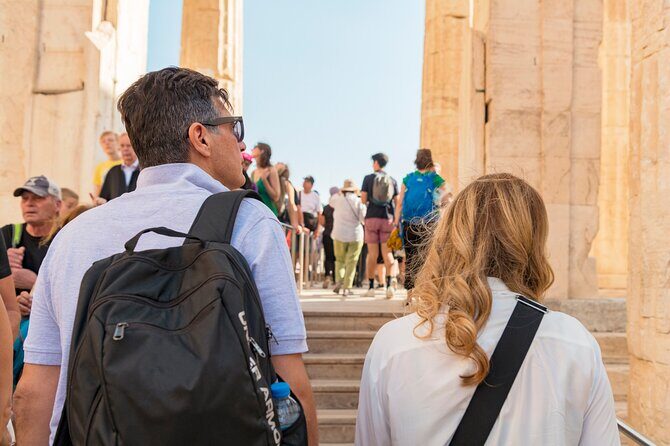
This is a private tour, and it ends back at the meeting point. But it also notes that there is some walking distance between the Acropolis and Agora areas, so it’s not suitable for people with reduced mobility.
If you’re generally mobile and comfortable with uphill terrain and uneven ancient surfaces, you should be fine. Wear supportive shoes, bring water, and plan for sun exposure since the Acropolis is exposed.
Also, for communication: the tour includes a whisper communication system for groups of 6 or more. In practice, it’s a helpful detail if you find you lose the guide’s voice around crowds.
Best-fit moments: who will enjoy this tour most
This tour fits especially well if you:
- Want the big Athens hits in one go (Acropolis + Agora) without spending a whole day on planning
- Like asking questions and getting explanations tied to what you’re standing in front of
- Prefer a human guide over an audio app when you’re surrounded by complicated layouts and crowds
It also works for different age groups. The guide style described in the provided experiences kept younger visitors engaged too, which usually means lots of story-style details and real-time answers.
If you’re only looking for the Acropolis and you want a shorter, potentially less crowded plan, there’s also an Acropolis-only option listed at about 1.5 hours—and it recommends choosing a time after lunch for “golden light” views. If your goal is maximum Acropolis focus, that’s worth considering.
Acropolis + Agora private vs. doing it on your own
I love Athens because it’s built for wandering, but the Acropolis especially can be confusing if you go solo. From below, the monuments look like a cluster; once you’re there, it’s easy to miss what each building represents.
A private guide matters most when:
- You want the story behind why things are where they are
- You want help navigating crowds while still seeing the best angles
- You want to connect the museum objects to the outdoor setting
That’s where this tour earns its keep. It’s not trying to replace your curiosity; it helps you aim it.
Also, there’s a practical reason many people choose private tours in Athens: tickets. With timed entry and sell-outs, the right ticket plan can be the difference between a smooth visit and a stressful scramble.
Should you book this Acropolis and Ancient Agora private tour?
If you’re trying to decide, I’d book it if you want an organized, high-value way to see Athens’ big two UNESCO sites without turning it into a full-day project. The licensed expert, the story-based stops (including the Theatre of Dionysus), and the pairing with the New Acropolis Museum make this more than a checklist tour.
I’d think twice if you:
- Don’t want to manage admission tickets (they’re not included, and timing matters)
- Need step-free or low-walking options between sites, since the route notes walking distance between the Acropolis and Agora areas
For most first-time Athens visitors, this is a smart use of time: you leave with better understanding, better photos, and less confusion than you’d get wandering alone.
FAQ
How long is the Ancient Agora and Acropolis private tour?
The tour lasts about 3 hours, with time roughly split between the Acropolis area (around 80 minutes) and the Ancient Agora (around 80 minutes).
Are admission tickets included?
No. Archaeological site entrance tickets are not included in the price. The team can help organize hassle-free tickets on request after booking, but you will need to arrange payment for tickets separately.
Where do we meet the licensed expert guide?
You meet at the Acropoli Metro Station at street level, at 7 Makrygianni Street, close to the Acropolis Museum.
Is the New Acropolis Museum included in this tour?
Yes, the plan includes a stop at the New Acropolis Museum, with the museum visit stated at approximately 80 minutes.
Is this tour private just for my group?
Yes. It’s listed as a private tour/activity, and only your group participates.
Is there a lot of walking between the Acropolis and the Ancient Agora?
There is some walking distance between the Acropolis and Agora, and it notes that this is not suitable for persons of reduced mobility.
What if my plans change and I need to cancel?
Free cancellation is available up to 24 hours in advance for a full refund. If you cancel less than 24 hours before the start time, the amount paid is not refunded.