REVIEW · ATHENS
Acropolis and Agora Tour: The Rise & Fall of Democracy
Book on Viator →Operated by Alternative Athens · Bookable on Viator
Democracy has a skyline in Athens. This tour ties the big monuments of the Acropolis to the everyday politics of the Ancient Agora, with a guide that keeps the ideas clear and the pace workable.
I love the small-group feel (max 15) and how much you get from a certified guide who answers questions in plain, human terms.
One thing to watch: entry fees aren’t included (plan on about €50 more), and the stop list means you won’t linger forever on every stone.
In This Review
- Key moments before you go
- Why the Acropolis-to-Agora pairing makes sense
- Meeting at Dionysiou Areopagitou and how the timing plays out
- Stop 1: The Acropolis sites and what they say about power
- Theatre of Dionysus: where arguments became entertainment
- Temple of Athena Nike: victory that never leaves Athens
- Erectheion: a temple built around a cult statue
- Parthenon: icon views plus a place to question civic ideals
- Ancient Agora: the everyday engine of Athens
- Hephaestus Temple stop: crafts, trade, and civic life
- What you really get for the money (tour price vs entry fees)
- Guides, group vibe, and what the small group style means
- Practical things to do before you go
- Who this tour suits best
- Should you book the Acropolis and Agora Tour?
- FAQ
- How long is the Acropolis and Agora Tour?
- What’s included in the tour price?
- Are entry tickets included for the attractions?
- How much are the entry fees?
- How many people are in the group?
- Where do I meet, and what time does the tour start?
- Is it offered in English, and do I get a mobile ticket?
- Can I bring a stroller or large bag to the Acropolis?
- Do I need ID for discounts, and what’s the cancellation or weather policy?
Key moments before you go
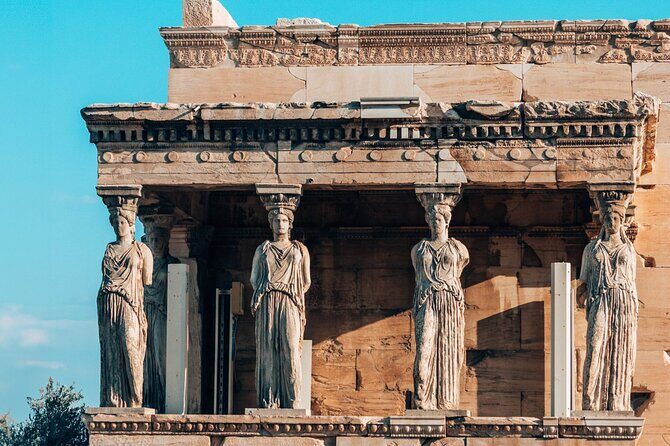
- Small group, thoughtful pacing (up to 15 people): enough time for questions without feeling rushed.
- Acropolis coverage with context: Parthenon and neighbors explained in relation to civic life, not just postcard views.
- Theatre of Dionysus as political stage: performance culture connected to how Athenians argued with ideas.
- Ancient Agora as the real action: laws, commerce, social life, and justice in one place.
- A practical souvenir map: you leave with something fun that helps you keep seeing Athens after the tour.
Why the Acropolis-to-Agora pairing makes sense
The Acropolis grabs your attention fast. It’s dramatic, high, and packed with icons. But if you want the story of democracy in Athens, you need the other side: the area where decisions were discussed, argued, traded, and enforced.
That’s why this route works. You start with the religious and symbolic power concentrated on the hill, then you move down into the Ancient Agora, where civic life actually happened. The tour theme is the rise and fall of democracy, and even with limited time, the contrast helps you understand what democracy required: both ideals and institutions.
I also like that it feels like a guided thinking session. You’re not just collecting facts; you’re learning how people in Athens may have understood power, citizenship, and public debate through the spaces they built and used.
Other Acropolis and Parthenon tours we've reviewed in Athens

Meeting at Dionysiou Areopagitou and how the timing plays out
You start at Dionysiou Areopagitou 45, Athina 117 42, Greece. The tour begins at 9:00 am, and it ends at the Ancient Agora of Athens (Athens 10555). It’s scheduled for about 3 hours, which is a solid length for a condensed Athens history day.
Because you’re walking between key sites, I’d plan your morning around comfort and water, not around squeezing in extra stops afterward. Morning timing is smart here because the Acropolis area tends to get busy later, and you want time to enjoy views without sprinting from photo to photo.
You’ll also be walking with a small group. That matters because the guide can adjust the explanation style for different interests, instead of delivering one single speed-fits-all lecture.
Stop 1: The Acropolis sites and what they say about power

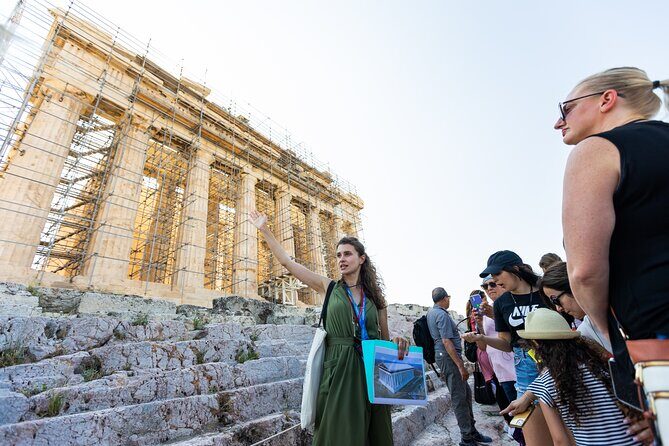
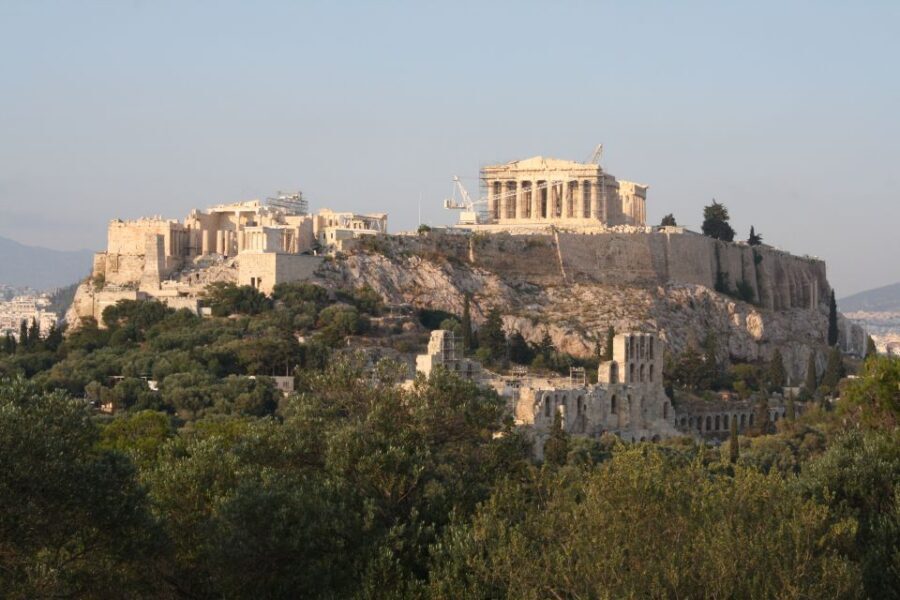
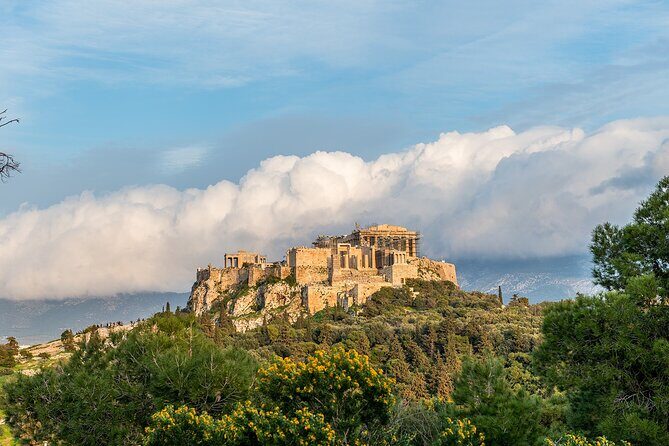
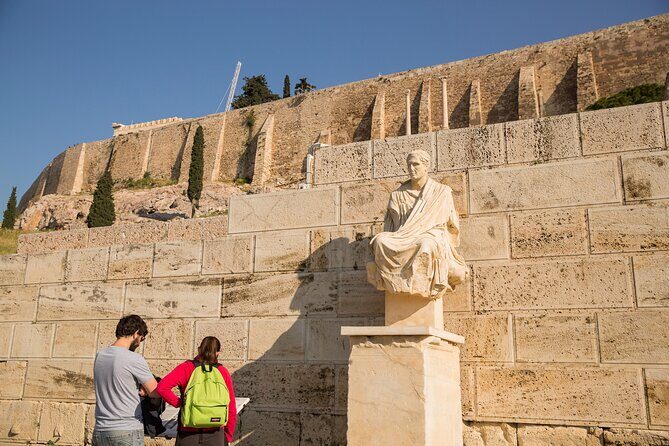
You begin at the Acropolis, the main sanctuary of ancient Athens, dedicated primarily to Athena. The monuments you’ll see include the Parthenon, the Temple of Athena Nike, the Erechtheion, the Propylae, and the Theatre of Dionysus on the slopes below. The guide uses these structures as anchors for the bigger theme: who held influence, what Athens valued, and how those values showed up in stone.
The practical side: this stop is about 1 hour, and it’s where you’ll do the most climbing and most looking up. The payoff is obvious. When you finally get your eyes lined up with the Parthenon and the temple shapes around it, it becomes easier to imagine the civic world that produced them.
One important logistical note: strollers, backpacks, and big bags aren’t allowed at the Acropolis. If you’re traveling light, you’ll move faster and stress less. If you’re carrying more than a daypack, it’s worth planning ahead before you arrive at the meeting point.
Theatre of Dionysus: where arguments became entertainment
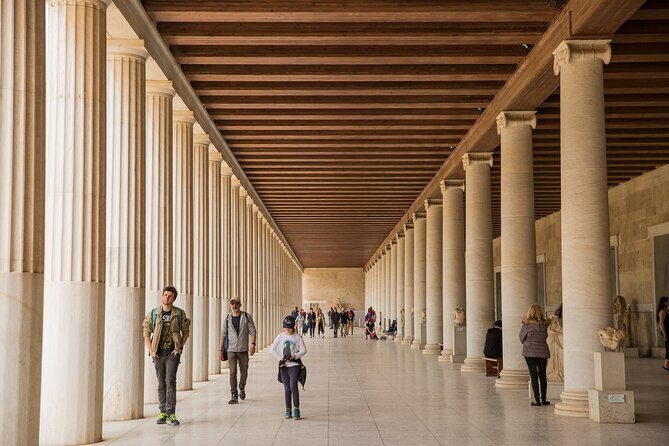
Next you head to the Theatre of Dionysus Eleuthereus. Dionysus is tied to wine and the grape harvest, but the theater itself matters for a democracy-themed reason: it was one of the oldest theaters in Athens, and it’s connected to the first performances of major playwrights like Aeschylus, Sophocles, Euripides, and Aristophanes.
This is one of those stops where the buildings teach you how people thought. Greek tragedies and comedies weren’t just entertainment. They were public events where citizens could watch stories about ethics, leadership, justice, and human behavior unfold in front of them.
The stop here is shorter, around 15 minutes. So it’s not the time for a long sit-down lecture, but it’s enough for you to connect the dots between civic life and public performance.
Temple of Athena Nike: victory that never leaves Athens
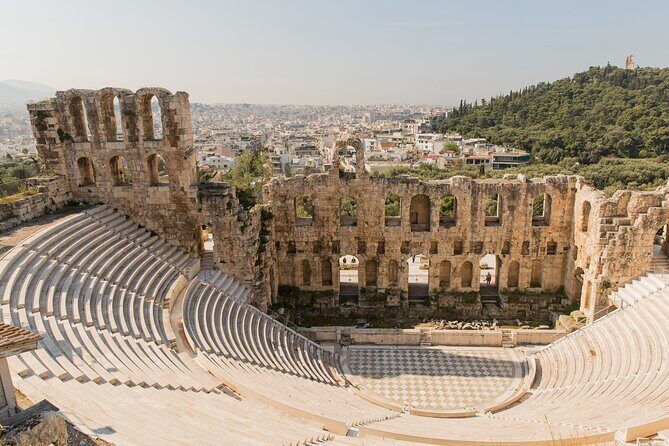
Then you visit the Temple of Athena Nike. This temple connects two goddesses: Athena and Nike, the personification of victory. You’ll hear the story that the cult statue at the temple had no wings, so victory would not leave Athens.
That detail is more than myth flavor. It’s a window into how Athenians might have described civic success: not as an abstract concept, but as something you keep, protect, and display. When you look at it through that lens, the temple feels like a public statement about identity and pride.
Again, plan for about 15 minutes here. It’s a quick stop, so if you like to linger over architectural details, you may want to take a second pass with your own time after the tour.
Other Ancient and Roman Agora tours we've reviewed in Athens




Erectheion: a temple built around a cult statue
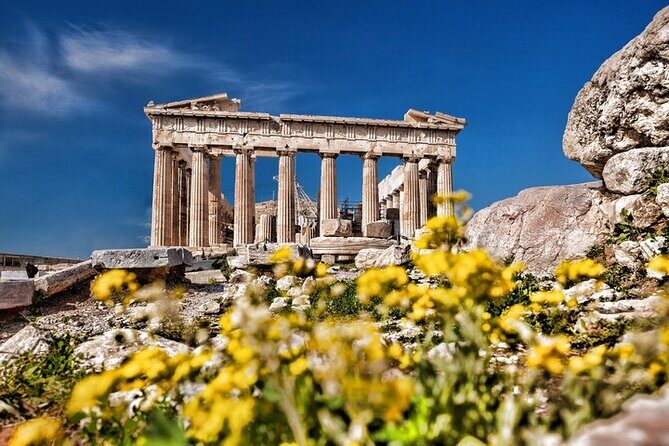
The Erechtheion is another Acropolis stop, and it’s special for one main reason: it was designed to house an ancient wooden cult statue of Athena. It also reflects Athens at a height of power and influence, using architecture to support both religious practice and civic image.
This is the kind of site where small details matter. Even if you don’t fully memorize every feature, the idea of a temple shaped around a sacred object helps you understand how public life and religion were braided together.
The stop is around 15 minutes. That’s plenty to learn why the building is famous, but you won’t likely finish reading every angle. Think of it as a guided primer, not a museum exhibit checklist.
Parthenon: icon views plus a place to question civic ideals

Finally on the Acropolis loop, you reach the Parthenon, the hilltop structure that dominates the scene. It was built in the mid-5th century BCE and dedicated to Athena Parthenos, Athena the Virgin. It’s commonly described as the culmination of the Doric order, the simplest of the Classical Greek architectural styles.
Here’s how this stop becomes more than a photo moment. When you connect the Parthenon to the tour theme of democracy, you start thinking about what those dramatic architectural choices meant for citizens and leaders. Great projects don’t appear out of nowhere. They require organization, public support, resources, and a political system that can mobilize labor and money.
Your time here is about 30 minutes, which is the best window on the hill for photos and for listening closely. You can use that half hour to slow down and notice how the building sits with the landscape.
Ancient Agora: the everyday engine of Athens
After the Acropolis, the tour shifts to the Ancient Agora, the heart of ancient Athens. This is where you get the real democracy context: the Agora was the focus of political, commercial, administrative, and social activity. It also served religious and cultural functions and was the seat of justice.
This is the stop that makes the democracy theme click. The Acropolis can feel like a symbol. The Agora feels like the working part of the city: where decisions turned into outcomes.
The Agora stop is about 30 minutes. You’ll want to stay alert here because the guide’s explanation can connect multiple aspects of civic life at once. Justice, politics, commerce, religion, and culture all overlap in the same space, and once you see that, Athens feels less like an ancient set and more like a living system.
Hephaestus Temple stop: crafts, trade, and civic life
The last major stop you’ll cover is the Temple of Hephaestus, described in the tour details as a Temple of Aries while focusing on Hephaestus. It’s one of the best-preserved ancient temples and a meaningful place for anyone who likes the link between work and society.
The details here are clear: Hephaestus was protector of metallurgists, and Athena Ergani protected potters and cottage industries. In other words, the Agora wasn’t only for speeches and lawsuits. It supported the people making and trading the goods that kept the city running.
This stop is about 15 minutes, so keep your expectations realistic. You’re not being taken on an all-day architecture tour. But you’ll get the key idea: democracy in Athens depended on a real economy and real craft communities, not just leaders.
What you really get for the money (tour price vs entry fees)
The tour price is $67.43 per person, for about 3 hours with a certified guide, a small group, and a fun map of ancient Athens. That’s a fair base price for guided access to multiple major sites, especially with a group capped at 15.
The trade-off is that entry fees aren’t included. The tour notes €50 per person for attraction entry fees, and it says the operator can pre-purchase tickets for you if you want. So your all-in cost will be roughly the tour price plus that entry amount.
To me, the best value in the package is not the ticket itself. It’s the guide’s ability to connect places to ideas. The map helps too, because it gives you a way to keep tracking what you saw after you leave the Acropolis.
Guides, group vibe, and what the small group style means
This is a premium small-group experience, with a maximum of 15 people. That group size is big enough for energy, but small enough for the guide to adjust.
From the guide lineup names connected to the experience, you might meet historians such as Athena, Demi, Christina, Kimon, or Vassia/Vasya depending on the departure. Across those guides, the consistent theme is clear explanations and patience with questions.
You may also encounter remote headsets. That kind of audio support helps when you’re in open-air areas where sound carries oddly. Still, if you’re sensitive to ambient noise, it’s smart to position yourself where you can hear well, and don’t be shy about asking the guide to repeat key points.
One more small comfort note: there can be moments when you stand and listen. That can be tough if you’re prone to back or foot pain. If that’s you, bring supportive shoes and be ready to take tiny stance breaks without being disruptive.
Practical things to do before you go
A few details will make your day smoother.
- Bring your ID/passport if you’re under 25. The tour notes that ID card or passport is required for possible discounts.
- Keep bags minimal for the Acropolis. Strollers, backpacks, and big bags aren’t allowed.
- Wear grippy shoes and expect stairs and uneven stone. Even on a planned route, your feet will do most of the work.
If you’re planning the rest of your day, remember the tour ends at the Ancient Agora area. That’s convenient if you want to explore nearby afterward, but you’ll still want to pace yourself.
Who this tour suits best
This one fits best if you like history that has a point. If you’re the type who reads the big plaques but also wants to know why a place matters, you’ll appreciate the democracy frame.
It’s also a strong choice if you travel with people who learn differently. The small group setup makes it easier for the guide to adapt, including for families and mixed interests.
If you want a slow, exhaustive walk of every corner of the Acropolis, you might wish you had more time. But if you want a guided bridge between the hilltop symbols and the city’s civic engine, this route is a smart use of a morning.
Should you book the Acropolis and Agora Tour?
I think you should book it if your goal is understanding democracy in Athens, not just ticking off landmarks. The pairing of Acropolis monuments with the Ancient Agora’s political and justice role makes the theme feel real.
You might skip it (or upgrade your expectations) if you’re chasing maximum time at the Parthenon and Acropolis views alone. This is a structured route, and you’ll trade depth at any one spot for breadth across the whole civic story.
My final advice: pack light for the Acropolis, bring your ID if you’re under 25, and plan on paying the entry fees on top. Do that, and you’ll come away with more than photos. You’ll leave with a clearer sense of how Athenians turned ideas into institutions.
FAQ
How long is the Acropolis and Agora Tour?
The tour is listed as approximately 3 hours.
What’s included in the tour price?
The price includes an expert certified guide, a small-group tour, and a fun ancient Athens map. A mobile ticket is included, and the tour is offered in English.
Are entry tickets included for the attractions?
No. Entry fees to all attractions are not included, and they can be pre-purchased for you.
How much are the entry fees?
The listed entry fees are €50 per person.
How many people are in the group?
The tour has a maximum of 15 travelers.
Where do I meet, and what time does the tour start?
You start at Dionysiou Areopagitou 45, Athina 117 42, Greece, and the start time is 9:00 am. The tour ends at the Ancient Agora of Athens (Athens 10555).
Is it offered in English, and do I get a mobile ticket?
Yes. The tour is offered in English and you receive a mobile ticket.
Can I bring a stroller or large bag to the Acropolis?
No. Strollers, backpacks, and big bags are not allowed at the Acropolis and should not be taken on the tour.
Do I need ID for discounts, and what’s the cancellation or weather policy?
If you are under 25, you need an ID card or passport for possible discounts. The experience allows free cancellation up to 24 hours in advance for a full refund, and it requires good weather; if it’s canceled due to poor weather, you’ll be offered another date or a full refund.