REVIEW · ATHENS
Athens: Acropolis and Mythology Highlights Small Group Tour
Book on GetYourGuide →Operated by Alternative Athens · Bookable on GetYourGuide
Myths turn ruins into a walk you can follow. On this Athens small-group tour, you’ll get Greek mythology tied to the real buildings of the Acropolis and Ancient Agora, with a licensed guide guiding the story step by step.
I especially like how the tour helps you read the sites instead of just looking at stone, and how the pacing keeps moving while still giving you time at the big stops like the Parthenon. One thing to consider: you’ll cover several areas in a few hours, so wear solid shoes and expect a lot of walking and stairs.
The second big win for me is the small-group format. Many reviews point to a relaxed size, with some groups small enough to feel almost like a private walk, plus helpful audio (headsets) so you don’t have to constantly chase the leader. A possible drawback is that hearing can get harder in very busy moments, so plan to stand where you can comfortably follow the guide’s voice.
In This Review
- Key Points Before You Go
- Why Greek Myth Makes the Acropolis Make Sense
- Meeting Under Hadrian’s Gate: The Easiest Start Point
- Temple of Olympian Zeus: The Giant Outside View
- The Acropolis Walk Up: What to Notice While You Climb
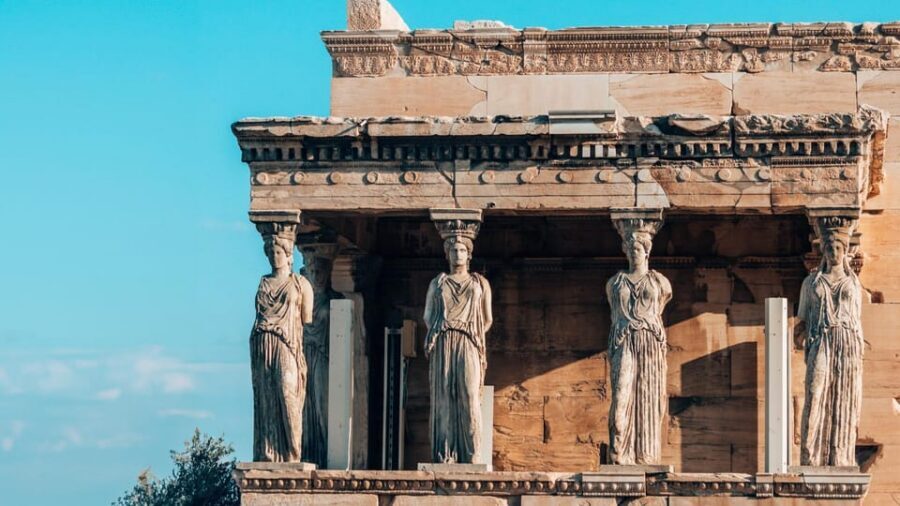
- Temple of Athena Nike and Erechtheion: Detail Stops That Pay Off
- Parthenon Time: The Most Famous Stop, Explained Like a Story
- Ancient Agora Walk: Where Civic Life Comes Into Focus
- Temple of Hephaestus: A Strong Finish With Real Atmosphere
- The Guide Factor: Storytelling That Stays Clear
- Tickets, Entry Options, and What Your Money Actually Buys
- How Long It Takes and When to Go for Best Comfort
- Who This Tour Fits Best (And Who Might Want Something Else)
- Should You Book This Athens Acropolis and Mythology Tour?
- FAQ
- How long is the Athens Acropolis and Mythology Highlights Small Group Tour?
- Where do we meet the guide?
- Is skipping the ticket line included?
- Are Acropolis tickets included?
- What’s included besides the guided tour?
- Can I bring a stroller or a backpack?
- Who gets free entry for the Acropolis & Ancient Agora?
Key Points Before You Go
- Meet under Hadrian’s Gate at Leof. Vasilisis Amalias 50, with the guide holding an Alternative Athens sign
- Skip the ticket line and (with the right option) get Acropolis and Ancient Agora entry handled for you
- Myth + architecture together: gods and legends explained right alongside the monuments
- Full Acropolis circuit that includes Parthenon, Temple of Athena Nike, and the Erechtheion area
- Ancient Agora walk plus the Temple of Hephaestus for a strong second chapter
- Guides like Angélica, Irene, Stellios, and Athina are repeatedly praised for story clarity and good pacing
Why Greek Myth Makes the Acropolis Make Sense
The Acropolis can feel like a postcard. Myth helps it feel like a place. This tour connects what you see to the stories Athenians told about gods, heroes, and why the city mattered. That change in angle is huge: the buildings stop being random and start acting like clues.
You’ll also get a practical sense of how Ancient Greece worked socially. Athens wasn’t only about temples and statues. It was a civic center, and the stories were part of how people explained their world—politics, values, even human behavior.
If you like Greek mythology, you’ll feel it click fast. If you don’t, you’ll still benefit because the guide uses myths to explain real design choices and cultural meaning. That’s the tour’s core value: you leave with context, not just photos.
Other Acropolis and Parthenon tours we've reviewed in Athens
Meeting Under Hadrian’s Gate: The Easiest Start Point
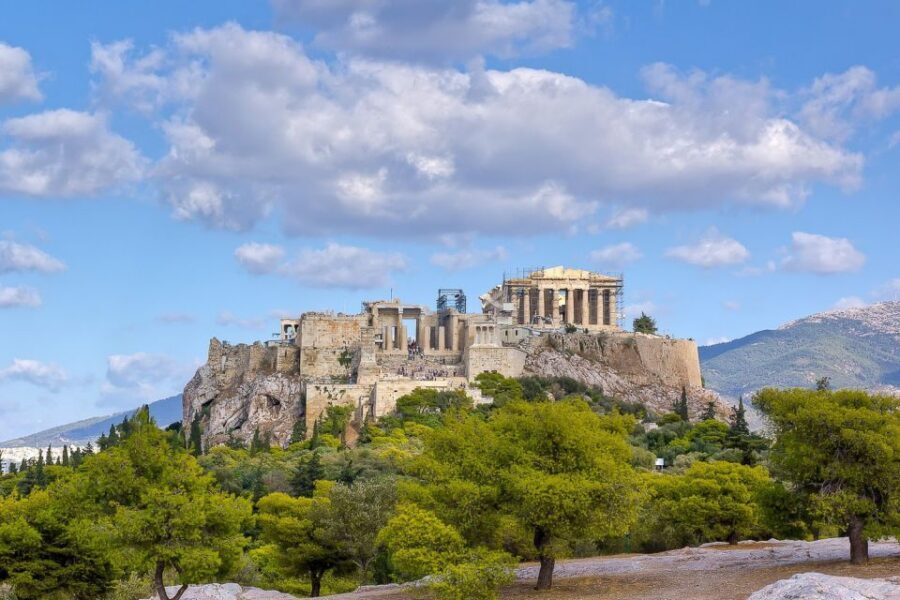
You meet under the Arch of Hadrian (Hadrian’s Gate), on Leof. Vasilisis Amalias 50. The closest metro station is Acropolis, and it’s about a 5-minute walk from there.
Look for your guide holding a sign that says ALTERNATIVE ATHENS. This matters more than it sounds, because the Acropolis area has a lot of street noise and tour groups. A clear start point keeps the first 10 minutes from turning into stress.
Also plan your footwear. The rules are simple: comfortable shoes and comfy clothes. You’ll climb, walk, and shift between viewpoints. If you’re expecting a slow sit-down museum pace, this is not that kind of tour.
Temple of Olympian Zeus: The Giant Outside View

Before you climb the Acropolis, you visit the Temple of Olympian Zeus from the outside. You’ll get a guided stop here (about 15 minutes), long enough to frame what you’re about to see.
This is a smart warm-up. The scale of Zeus’s temple sets expectations for how seriously Athenians treated their gods and their power. Even if the site is partly in ruins, your guide helps you understand what mattered: location, symbolism, and how Rome later fit into the story of Athens.
Why I like this stop: it gives you a reference point. When you reach the Acropolis, you’re not just staring at your first major temple—you’re comparing two ways of showing authority through architecture.
The Acropolis Walk Up: What to Notice While You Climb

You’ll do a short walking segment on the Acropolis area (about 15 minutes) and then a longer guided visit (about 1.5 hours). The tour doesn’t just announce sights; it teaches you what you’re seeing.
Expect the guide to point out how myths connect to real spaces. Greek mythology isn’t treated like a separate lesson. Instead, stories are used to explain things you can actually spot: temple functions, civic symbolism, and the way Athenians linked their identity to divine favor.
This is also where small-group value shows up. With fewer people, the guide can slow down when someone asks a good question. Reviews repeatedly mention that guides take time for answers and keep the pace comfortable—something you’ll really notice when you’re in direct sun or crowded areas.
Temple of Athena Nike and Erechtheion: Detail Stops That Pay Off
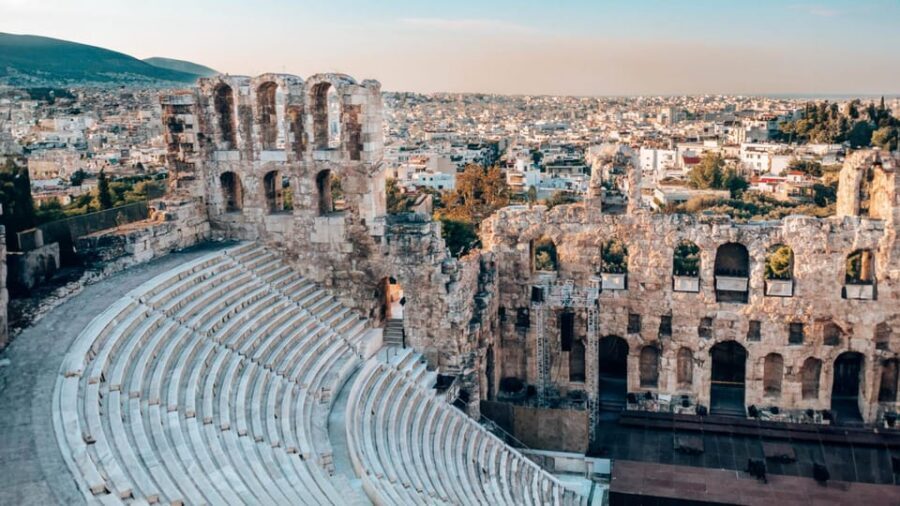
Next you’ll hit the Temple of Athena Nike and then the Erechtheion area. Each is guided for around 15 minutes, which means you get a focused look without the tour turning into a sprint.
These are not the largest structures on the Acropolis. That’s why they’re easy to miss on a self-guided visit. Here, they’re treated as important links in the myth-and-city chain. The guide uses the stories to help you understand why these places mattered and what they were signaling to Athenians.
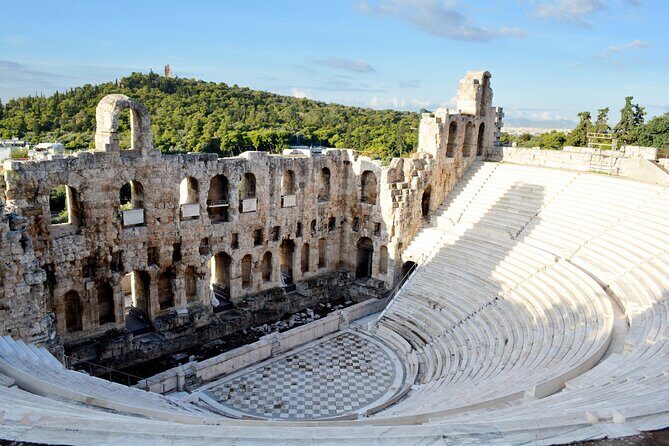
A standout part: the tour also references ruins around the Acropolis circuit, including areas tied to temples like the Temple of Athena Polias and the Temple of Erechtheion. You may also see discussion of the Sanctuary of Asclepius and the Theater of Dionysus Eleuthereus as part of the wider myth framework.
Practical note: this stretch includes uneven ground and stairs. If you need breaks, you’ll likely find your guide attentive about stopping for water and shade, especially in warmer months.
Other Athens city highlights tours we've reviewed in Athens






Parthenon Time: The Most Famous Stop, Explained Like a Story

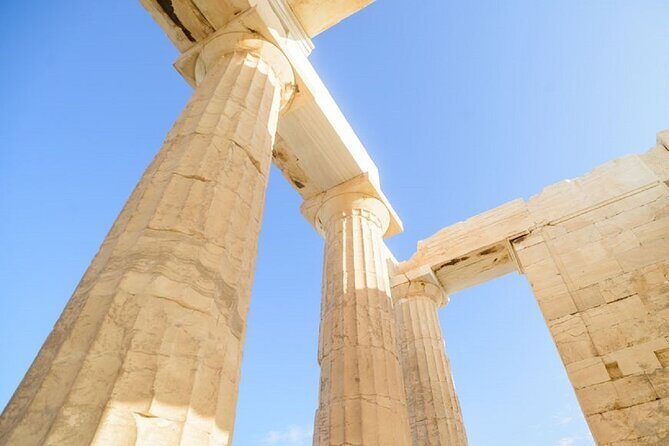
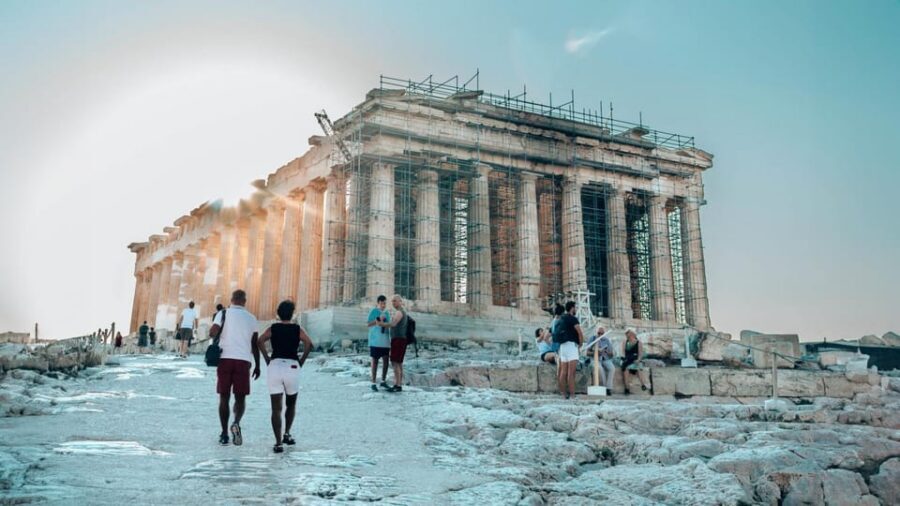
The Parthenon gets about 30 minutes in the guided portion. That’s the right amount for many people. Long enough to understand the meaning behind the sight, short enough that you don’t feel trapped in one spot while the rest of the tour passes you by.
You’ll hear about the Parthenon through the lens of Greek mythology and Athenian power. The guide also ties the city’s rise and decline into the narrative, so the Parthenon stops being a single monument and becomes a symbol of Athens at its peak.
If you’re a visual learner, you’ll likely appreciate guides who use visual aids. Several guides in this program are praised for showing what buildings looked like in their original form, which helps you imagine the structure as something built for worship and civic pride, not just archaeology.
Quick tip for photos: stand where the guide positions you first, then return for a second angle. You’ll pick up the details you missed the first time through because you’ll know what to look for.
Ancient Agora Walk: Where Civic Life Comes Into Focus
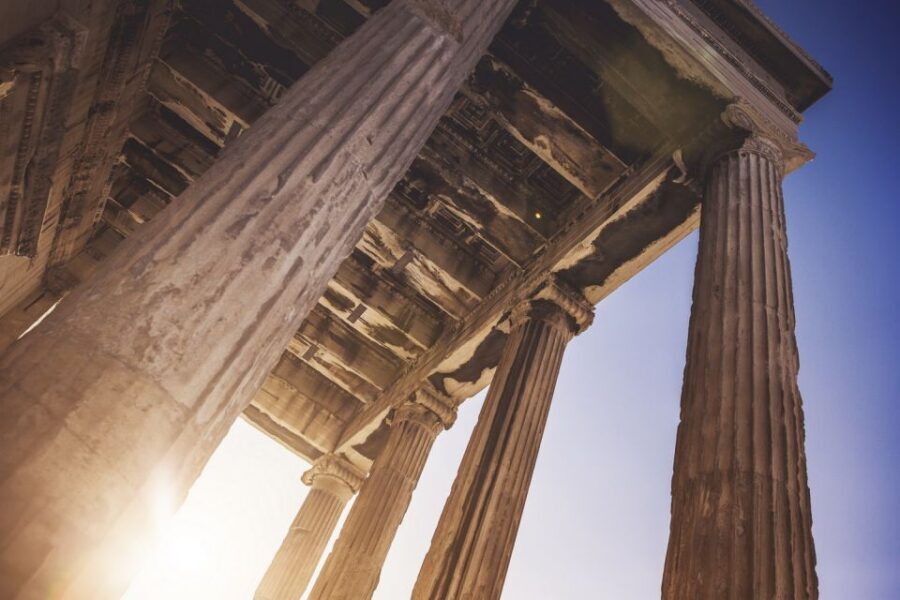
After the Acropolis, you shift into the Ancient Agora of Athens. This is one of the best transitions in the whole experience. Temples are big and dramatic, but the Agora is where the everyday city logic shows up.
You’ll get about a 30-minute walk through the Agora area, with guidance explaining society in Ancient Greece—how people organized themselves and why Athens became a center of influence. This is where mythology turns more human. Gods and legends stop being only cosmic, and start being a way people explained identity, behavior, and public ideals.
One of the most helpful things this tour does is teach you what you’re looking at while you’re still walking. If you’ve ever left a ruin feeling like you saw a lot but understood little, the Agora section is the fix.
Temple of Hephaestus: A Strong Finish With Real Atmosphere
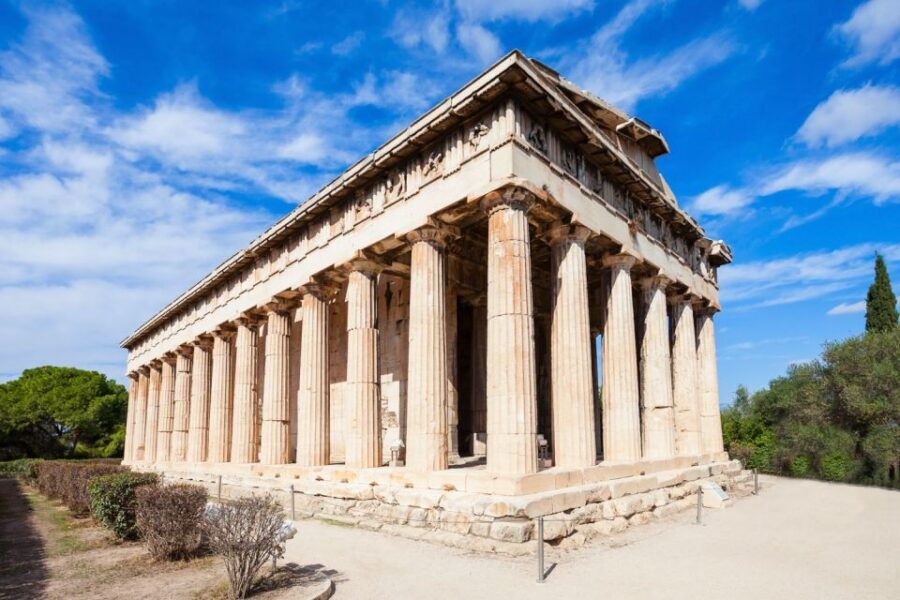
The tour ends with time at the Temple of Hephaestus (about 30 minutes guided). If the Acropolis is the headline, Hephaestus is the satisfying period at the end.
Why it works: it gives you a different kind of monument—still religious, still myth-linked, but more grounded. You can slow down, absorb details, and think about continuity. This is a great stop for photos, and also for just standing and letting the place settle in.
If you’ve been running on adrenaline, this is where you exhale. You’ll leave with a clearer mental map of ancient Athens as a system: sacred spaces high on the hill, civic and community life lower down, and monuments that made both feel meaningful.
The Guide Factor: Storytelling That Stays Clear

The quality of this tour is mostly tied to the guide. In the reviews you provided, guides such as Irene, Stellios, Athina, Danae, Alex, Antonia, and Maria are praised for turning mythology into understandable, memorable explanations.
What you want from a guide here is not only story knowledge. You want clarity. Many reviews highlight answers that connect architecture to everyday life and myth to historic fact, with a pace that feels considerate. Several also mention shade and water breaks in hot weather, and one review even called out that the tour used headsets so people could hear without crowding the guide.
So here’s my practical takeaway: if hearing is your concern, ask early on where you should stand to catch the guide’s voice. If the tour provides listening devices, use them. And if it doesn’t, move closer to the guide during the stops where the background noise rises.
Tickets, Entry Options, and What Your Money Actually Buys
The price is listed at $53 per person, and what you’re really paying for is time saved and meaning added. The tour includes walking, a certified guide, an Athens city map, and Acropolis tickets or Acropolis & Ancient Agora entry tickets depending on the option you pick.
Entrance fees are not listed as included in the base description, but you can have tickets pre-purchased for you. That matters because the Acropolis can have real line pressure, and the tour specifically notes skip-the-ticket-line benefits. In plain terms: your time goes to the sites, not the queue.
There’s also free admission for some groups. EU citizens under 25 get free access to Acropolis & Ancient Agora, and non-EU citizens under 18 also qualify, with valid ID or passport. If you fit either category, you may still want the guided portion for the interpretation and structure.
Finally, note the trade-off: entry fees are non-refundable and non-exchangeable. If you’re unsure about your exact timing, choose flexible planning. The tour itself offers free cancellation up to 24 hours in advance.
How Long It Takes and When to Go for Best Comfort
The tour runs 2 to 4 hours, depending on availability and the rhythm of the group. Most people should expect a couple of hours plus transit and the time needed to move between clustered stops on the Acropolis and then down to the Agora.
Timing matters. One review highlights a sunny winter morning and the advantage of going early to skip lines. Even if your weather is different, the logic holds: earlier visits tend to feel calmer.
If you’re visiting in high heat, build in water and sun planning. Several reviews mention guides finding shady spots and taking breaks so the walk stays enjoyable, not punishing. Just don’t assume the whole route will be comfortable. You still need shoes, water, and patience.
Who This Tour Fits Best (And Who Might Want Something Else)
This is a great fit if you want your Athens visit to come with explanations. You’ll enjoy it if you like Greek mythology, or even if you only know the headlines from school or pop culture. The tour also works well for families because guides are praised for engaging children and keeping the pace balanced.
It’s also a smart choice if you’re short on time. In a few hours, you cover major landmarks: Parthenon, Temple of Athena Nike, Erechtheion, Ancient Agora, and Temple of Hephaestus—plus myth context that connects the dots.
Who might look elsewhere: if you want free-roam time with no group structure, or if you want a long deep museum style experience. This tour is a guided walk, not a slow gallery day. Also, the site rules matter: strollers and backpacks are not allowed, and pets are not allowed (assistance dogs are fine).
Should You Book This Athens Acropolis and Mythology Tour?
Yes, if you want more than photos. Book it if you’re the type of person who likes to understand what a monument meant to real people, not just when it was built. The myth-meets-architecture approach is the core reason this tour feels worth it, and the small-group setup usually keeps the experience human.
I’d especially recommend it if you fall into one of these categories:
- You’re new to Greek mythology and want a clear start
- You want a guided route that hits the big Acropolis sites and the Ancient Agora
- You prefer walking with explanations rather than doing everything solo
I’d think twice if you need a mostly wheelchair-free experience or you’re traveling with a stroller or large backpack, since those aren’t allowed. And if you hate walking between multiple stops, pick a shorter option instead.
Overall: if your goal is to leave Athens with a story in your head, not just a camera roll, this is the kind of tour that delivers.
FAQ
How long is the Athens Acropolis and Mythology Highlights Small Group Tour?
The tour duration is listed as 2 to 4 hours. The exact length can vary based on starting times and how the group moves through the stops.
Where do we meet the guide?
You meet under the Arch of Hadrian (Hadrian’s Gate), on Leof. Vasilisis Amalias 50. The guide will be waiting there holding a sign that says ALTERNATIVE ATHENS.
Is skipping the ticket line included?
Yes. The tour includes skip-the-ticket-line access as part of the experience.
Are Acropolis tickets included?
The tour includes Acropolis tickets or Acropolis & Ancient Agora entry tickets depending on the option selected. Entrance fees to archaeological sites are not included in the general description, but the operator can pre-purchase tickets for you if you let them know.
What’s included besides the guided tour?
Included items are a walking tour, a certified guide, and an Ancient Athens city map.
Can I bring a stroller or a backpack?
No. Strollers are not allowed at the Acropolis and should not be taken on the tour. Backpacks and big bags are also not allowed at the Acropolis and should not be brought.
Who gets free entry for the Acropolis & Ancient Agora?
Access is free for EU citizens under 25 and non-EU citizens under 18, with a valid ID or passport.