REVIEW · ATHENS
Acropolis and Acropolis Museum (Small Group Afternoon Walking Tour)
Book on Viator →Operated by Mister Plato · Bookable on Viator
Good planning turns the Acropolis into a story. This small-group afternoon tour pairs the Acropolis Museum with the hilltop monuments, so you grasp what you’re looking at before you climb. I also love the skip-the-line approach (it cuts the worst waiting), plus the guide’s steady pacing for a “not on your feet forever” walk. One catch: entrance fees are extra and paid in cash from the guide, and you’ll still be on uneven stone steps and slopes.
You meet at Makrigianni 4 in Athens at 4:00 pm, and you’re usually done by about 3 hours 15 minutes later. The group stays small (max 10), which makes a big difference when you’re trying to hear details at the museum and then take in views of the Parthenon and Erectheion. Based on guide names that show up often, you may be led by someone like Nikos/Nico/Nickos, and the vibe is consistently practical: clear explanations, careful footwork, and time for photos.
In This Review
- Key things to know before you go
- Athens at 4 pm: the timing that helps everything else
- Meeting at Makrigianni 4 and navigating the flow
- Stop 1: Acropolis Museum first, so the sculptures make sense
- You see the Acropolis story from the ground up
- You catch the meaning behind the sculptures (including color)
- You meet major figures from the top of the Acropolis
- You connect the Erectheion to the “golden age”
- The Parthenon’s Gallery ties it together
- Possible drawback to consider at the museum
- Stop 2: the Acropolis south slope walk to Parthenon and Erectheion views
- Dionysos Theater and the idea of Greek drama
- The Sanctuary of Asclepios: medicine on the hill
- Temple of Athena Nike: a delicate stop with big meaning
- Philopappus and the layers of remembrance
- Views from the Odeon of Herodes (still used today)
- Mars Hill: St. Paul and the unknown God
- Propylaea gate and the final climb to the top
- Footing and weather note (important on marble)
- Price and value: what you’re really paying for
- How much walking is actually involved (and who should book)
- What makes this tour feel “worth it” beyond the checklists
- Should you book this Acropolis Museum + Acropolis small-group tour?
- FAQ
- What time does the tour start?
- How long is the Acropolis and Acropolis Museum tour?
- How much does it cost?
- Are entrance fees included?
- What’s included in the tour price?
- How many people are in the group?
- Where do we meet?
- Is the tour offered in English?
- FAQ
- Can I cancel for free?
Key things to know before you go
- Museum first, then hilltop: Models, sculptures, and color traces make the Parthenon stop click faster.
- A real skip-the-line setup: The tour includes skip-the-line service to reduce queue time.
- Focused route on the south slope: You’ll hit spots like Dionysos Theater, Athena Nike, and Mars Hill on the way up.
- Time-saving tickets on your phone: Mobile tickets help you move faster and use less paper.
- Small group (10 max): Easier listening, and it’s simpler to adjust pace if the weather turns.
Athens at 4 pm: the timing that helps everything else

If you’ve ever tried to see the Acropolis in peak daylight, you know what happens: heat, crowds, and that frantic feeling that you’re missing the point. This tour is built for the calmer afternoon window. Starting at 4:00 pm helps you avoid the worst sun and gives you better light for photos across the city.
The other smart piece is pacing. The walking portion is designed to stay manageable—think “you’ll see a lot without feeling stuck walking for ages.” In practical terms, that means more time actually looking at details like the temple proportions and sculpture placement, and less time just covering ground.
You also get an advantage that feels small until you’re there: doing the museum first means your brain loads the map before you climb. When you reach the Parthenon on the hill, you’re not just staring at blocks. You’re connecting what you saw indoors (and what the guide explains) to what you see outside.
And because it’s a small group, you don’t get swallowed by a mass of people stopping in the same spot. That makes the afternoon feel smoother—less jostling, more listening.
Other Acropolis and Parthenon tours we've reviewed in Athens
Meeting at Makrigianni 4 and navigating the flow
Your starting point is Makrigianni 4, Athina 117 42. The tour ends at AcropoliAthens 117 42, Greece, so you should be thinking of this as a guided finish near the Acropolis area rather than a “back where we started” experience.
The logistics are meant to be easy:
- You’re near public transportation.
- You get mobile tickets that you can download ahead of time.
- The guide handles the skip-the-line part.
One small detail that matters: entrance tickets are purchased in cash from the guide. So even if everything else is smooth tech-wise, plan for cash on hand (and count it before you get to the entrance area so you’re not scrambling with pockets full of coins).
The tour is also described as suited to moderate physical fitness. This isn’t a couch-tour. The Acropolis includes steps, slopes, and uneven surfaces. The good news is that the route is curated and timed so you’re not doing a marathon.
Stop 1: Acropolis Museum first, so the sculptures make sense
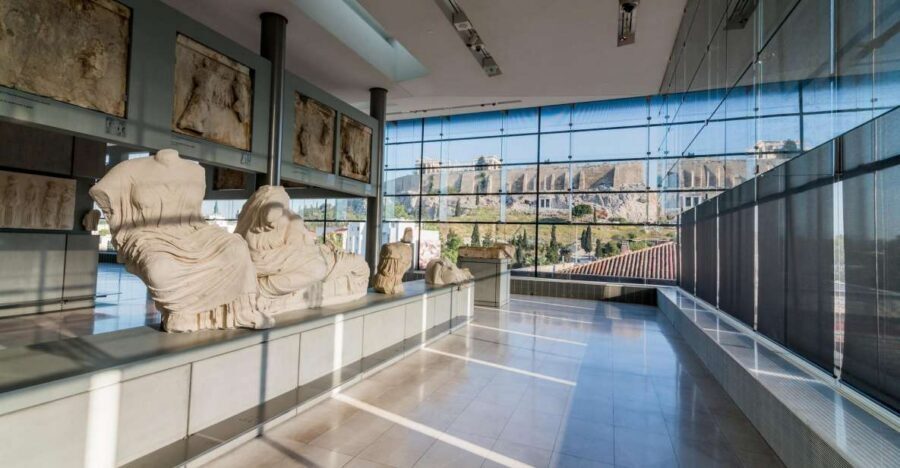
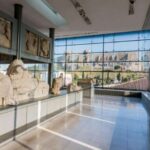
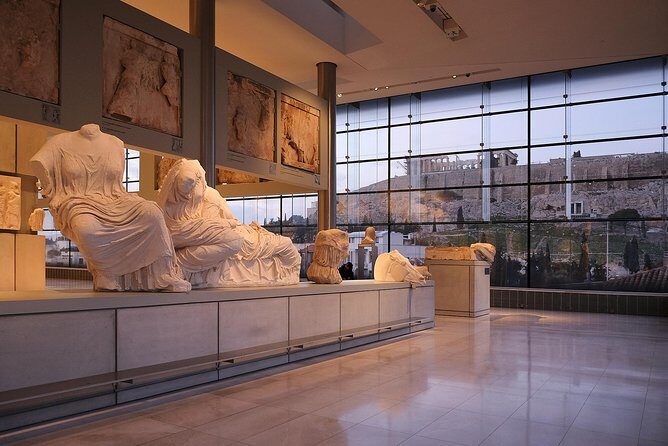
The most effective part of this itinerary is the order. The tour starts at the Acropolis Museum for about 1 hour 30 minutes, and that time is used well. You don’t just wander gallery to gallery. You get a guided walkthrough that builds context, then points you to what to notice.
Here’s what the museum stop is designed to do for you:
You see the Acropolis story from the ground up
Before entering the main museum spaces, you look at remains of an ancient neighborhood of Athens beneath the site. It’s a reminder that the Acropolis wasn’t just a standalone monument—it was part of a living city.
Then you start inside with models of the Acropolis and ancient Athens. That’s helpful because it gives you scale fast. Without that, it’s easy to feel like every temple and wall is just a pile of stone.
You catch the meaning behind the sculptures (including color)
One highlight is standing in awe before the sculptures of the first Parthenon. The guide points out traces of colors that can still be seen. This matters more than people expect. When you realize the Parthenon wasn’t pure white stone, you start understanding it as a designed, visible statement—not a museum artifact.
Other Acropolis Museum tours we've reviewed in Athens




You meet major figures from the top of the Acropolis
The museum stop includes archaic statues once placed on the Acropolis, including the famous Calfbearer and the child of Kritias. Seeing these in a museum setting helps you appreciate pose and details that are hard to study once you’re dealing with crowds and wind up on the hill.
You connect the Erectheion to the “golden age”
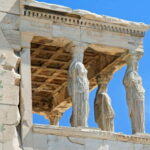
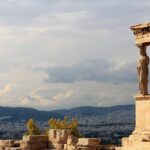
You’ll also see the Caryatids from the Erectheion. These are the maidens that carry the building’s weight (in the eyes of the sculptural concept). In this tour, they’re not treated like a standalone photo moment. The guide frames them as part of the 5th century B.C. golden-age sculpture leap.
The Parthenon’s Gallery ties it together
On the third floor, the guide explains the main concept and layout of the Parthenon’s Gallery, along with myths related to what you’re seeing. This is where the visit clicks: you leave with a mental “why” behind the “what.”
Practical upside: starting indoors also helps when the afternoon heat ramps up. Even if it’s warm outside, the museum gives you a controlled environment for learning.
Possible drawback to consider at the museum
If you’re the type who wants total freedom to linger, a guided museum plan might feel a bit structured. The good part is that it’s not rushed, but it is focused—so the pacing is best for people who want the meaning, not just the photos.
Stop 2: the Acropolis south slope walk to Parthenon and Erectheion views
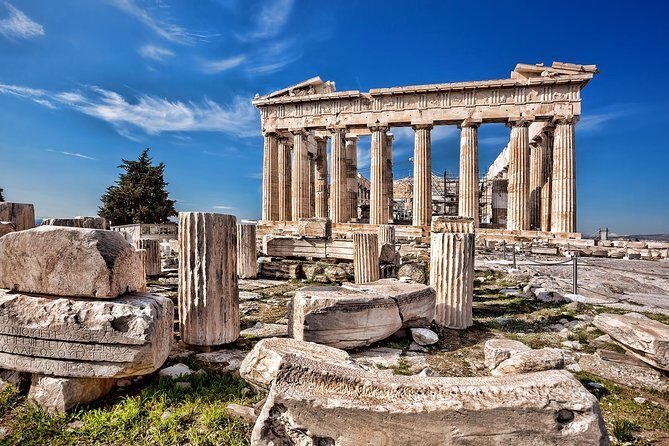
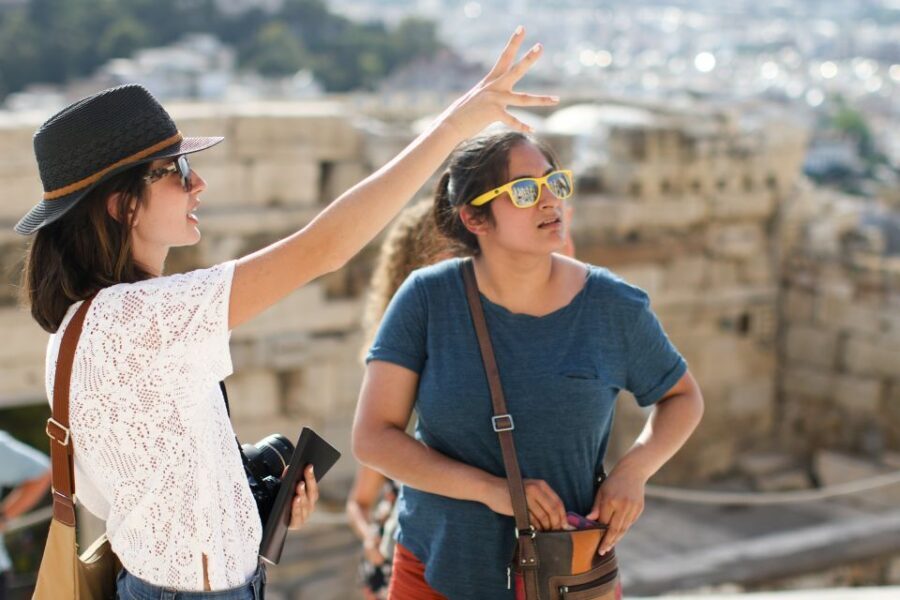
After the museum, you walk to the Acropolis and spend about 1 hour 45 minutes exploring with your guide. This is where you get the real payoff: monuments up close and big views over Athens.
The route is built around the south slope, so you’re not simply walking straight up to the first postcard view. Instead, you move through a sequence of meaningful places.
Dionysos Theater and the idea of Greek drama
One early stop is the Dionysos Theater, described as one of the oldest theaters in Greece. This matters because it anchors the Acropolis as not only political and religious space, but also a cultural one.
The Sanctuary of Asclepios: medicine on the hill
A few meters farther is the Sanctuary of Asclepios, tied to the god of medicine. Even without going deep into mythology, it helps you notice that the hill served different purposes across time.
Temple of Athena Nike: a delicate stop with big meaning
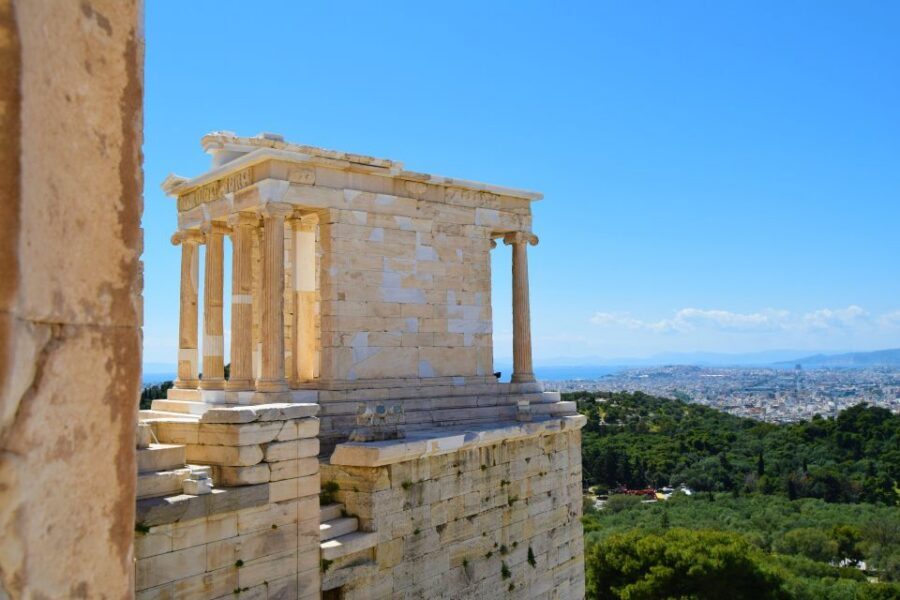
Before you reach the top, you’ll admire the Temple of Athena Nike. It’s one of those spots where the details can feel delicate, but the story behind it connects to major themes of power and protection.
Philopappus and the layers of remembrance
You’ll also learn about the once imposing funeral monument of Philopappus. This adds a layer many people miss: the Acropolis wasn’t frozen at one era. Later monuments and references were added over time.
Views from the Odeon of Herodes (still used today)
Along the route, you’ll see the Odeon of Herodes, where concerts are still held. It’s a great reminder that ancient sites can remain part of modern life, not just background scenery.
Mars Hill: St. Paul and the unknown God
You don’t miss Mars Hill, the site where St. Paul spoke about the unknown God. This is a history-meets-religion moment that gives the Acropolis a wider cultural reach beyond Greek antiquity.
Propylaea gate and the final climb to the top
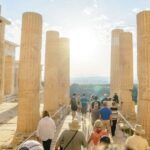
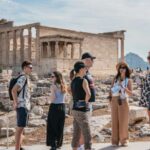
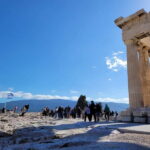
Next comes the monumental gate, the Propylaea. It’s a dramatic transition as you move from the slope to the main high ground. Then it’s time to take in the icons: the greatness of the Parthenon and the fineness of the Erectheion.
And yes, you get time for photos and walking around. A common theme from the guide’s style is letting you absorb the views rather than treating the hill like a checklist.
Footing and weather note (important on marble)
The Acropolis surfaces can be slippery in certain conditions. The tour’s careful pacing matters here, and the best guides keep you safe without slowing the whole group. If you visit in rain or after rain, prioritize traction shoes.
Price and value: what you’re really paying for
The headline price is $61.47 per person. But the true “all-in” cost is this plus entrance fees.
Entrance fees:
- €30 per person for the Acropolis
- €20 per person for the Acropolis Museum
Total: €50 per person, paid in cash from the guide.
That extra €50 is worth thinking about. You’re paying for guided access to two major sites, plus licensed guide time and skip-the-line service. In a place like the Acropolis—where waiting can eat your afternoon—skip-the-line is not just a convenience. It protects your energy for actually seeing.
Also, the value improves because the tour is capped at 10 travelers. That small group means the guide can explain at a volume you can actually hear, and you’re not stuck behind strangers blocking your view at every stop.
And the museum-first format is a value multiplier. The guide’s explanations about sculpture, myths, and arrangement make the hilltop visit more than a sightseeing sprint. For many people, that’s the difference between seeing monuments and understanding them.
How much walking is actually involved (and who should book)
The tour runs about 3 hours 15 minutes total. That includes museum time and time on the Acropolis. The walking portion is typically described as staying under 2 hours, which helps you plan for an afternoon that doesn’t feel like an all-day ordeal.
Still, you should expect:
- some climbing and uneven stone surfaces
- time on slopes and steps
- a need for stable shoes
This tour is best for you if:
- you want structure (especially at the museum)
- you care about meaning behind what you’re seeing
- you prefer a small-group pace
- you’d rather pay for skip-the-line than spend your afternoon in queue lines
It may be less ideal if:
- you want zero walking or zero steps
- you’re easily overwhelmed by crowds and tight spaces (you’ll reduce crowds somewhat with timing and group size, but you won’t make the Acropolis empty)
Weather-wise, the guide approach tends to be flexible. On rainy or tricky days, a good guide adjusts pacing and route choices so you’re still able to enjoy the key highlights.
What makes this tour feel “worth it” beyond the checklists
Plenty of tours will get you to the Acropolis. This one earns its place through how it connects the two sites.
At the museum, you learn what to notice:
- the sculpture figures and their significance
- the presence of color traces
- key works like the Calfbearer and child of Kritias
- the Caryatids as a doorway into the golden-age style
Then at the Acropolis, the guide uses that context to point out what you’re seeing outside:
- the route through major stops on the south slope
- the shift into the monumental feel of the Propylaea
- the Parthenon and Erectheion as outcomes of the ideas you just learned
Add the small-group vibe, the skip-the-line service, and the realistic afternoon timing, and you get a tour that’s designed for actual humans—not just a marketing timetable.
Should you book this Acropolis Museum + Acropolis small-group tour?
Book it if you want:
- a guided museum start that makes the hilltop visit make sense
- a small group experience with time for photos
- an afternoon schedule that’s usually easier on heat and crowds
- skip-the-line service so you can spend your energy on the monuments
Skip it if:
- you’re comfortable doing this independently and already know the stories and sculpture context
- you hate any extra planning around cash for entrance fees
- you need a fully flat, minimal-step route
If you’re on the fence, I’d lean yes—mostly because the museum-first order is such a smart way to turn the Acropolis from a set of famous ruins into a coherent, meaningful visit.
FAQ
What time does the tour start?
It starts at 4:00 pm.
How long is the Acropolis and Acropolis Museum tour?
The duration is about 3 hours 15 minutes.
How much does it cost?
The tour price is $61.47 per person.
Are entrance fees included?
No. Entrance tickets are not included. You’ll pay €30 per person for the Acropolis and €20 per person for the Acropolis Museum, purchased in cash from the guide. Children under 18 are entitled to a free entrance ticket if they present an ID.
What’s included in the tour price?
You get a licensed tour guide and skip the line service. You’ll also receive mobile tickets for your phone.
How many people are in the group?
The group is limited to a maximum of 10 travelers.
Where do we meet?
The meeting point is Makrigianni 4, Athina 117 42, Greece.
Is the tour offered in English?
Yes, it’s offered in English.
FAQ
Can I cancel for free?
Yes. You can cancel up to 24 hours in advance for a full refund. If you cancel less than 24 hours before the start time, the amount you paid won’t be refunded.