REVIEW · ATHENS
Private Acropolis for Families Tour
Book on Viator →Operated by Greeking.me · Bookable on Viator
Myth time on the Acropolis beats a textbook. This private, family-focused tour turns the big monuments into stories your kids can follow, with a guide who’s used to keeping young attention on track. You’ll walk through the sacred rock’s main stops in about 2 hours, and it’s set up so everyone learns without feeling like they’re stuck in a lecture.
I love the kid-first storytelling—this is where the tour gets real. In the best moments, guides like Georgina even translate myths into dinosaur language for toddlers, and another guide, Eva, is patient with groups that have lots of energy (including very young kids). It also helps that the stories connect directly to what you’re seeing: gateways, temples, and myths all get explained in the same walk.
One possible drawback to plan around: Acropolis entrance fees are not included. The tour provider can pre-purchase skip-the-line tickets for you, but you’ll still want to factor that cost and decision into your planning.
In This Review
- Key highlights at a glance
- Why a private, family-first Acropolis tour works
- The 2-hour Acropolis route: what you actually get to see
- Stop at the Acropolis: start with the rock’s gate and myths
- Erechtheion and the Caryatids: a sight kids can point at
- The sacred olive tree and origin myths
- Propylaea and Temple of Nike: learning by landmarks, not lectures
- Parthenon storytelling that actually clicks with kids
- Erechtheion and the Caryatids: the stop kids remember
- The olive tree and origin myths: small stops, big meaning
- Price and value: how $434.46 can work for your family
- Guide styles: the patience that makes or breaks a kid tour
- What you’ll get after the tour: the email gift
- Practical tips before you go up
- Should you book this private Acropolis for families tour?
Key highlights at a glance
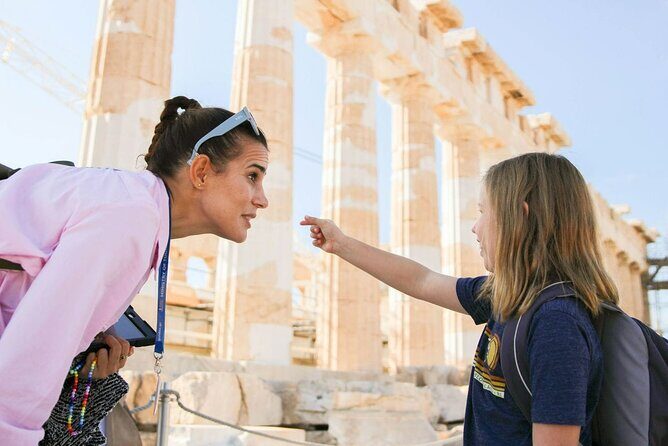
- Private group, up to 10: only your family (and whoever’s in your group) with a licensed guide
- Myths tied to specific sights: from the Propylaea to the Caryatids, not random facts
- Kid-focused pacing: guides are set up for distracted kids and very young ages
- Optional Digipast app: add-on to see the Acropolis as it used to look
- A family goodbye gift by email: educational materials arrive after the tour
Why a private, family-first Acropolis tour works
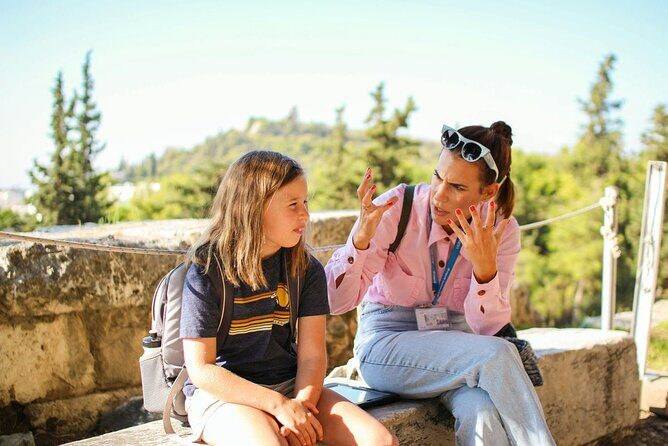
The Acropolis is amazing, and it can also be rough with kids. It’s hot, it’s rocky, and the sites are spaced out in a way that can make a typical group tour feel like a sprint. This private format fixes a lot of that.
Because it’s only your group (up to 10, and the same price per participant regardless of age), you can move at the pace you need. That matters when you have a stroller, a child who’s suddenly hungry, or a kid who wants to stop and look at the same carved face one more time.
I also like that the tour is built around myth narration with kid-friendly storytelling, not just a list of monuments. On a hill like this, attention is everything. When the guide ties each place to a story your kids recognize—gods, battles, and origin myths—you get better listening without forcing silence.
Other Acropolis and Parthenon tours we've reviewed in Athens

The 2-hour Acropolis route: what you actually get to see
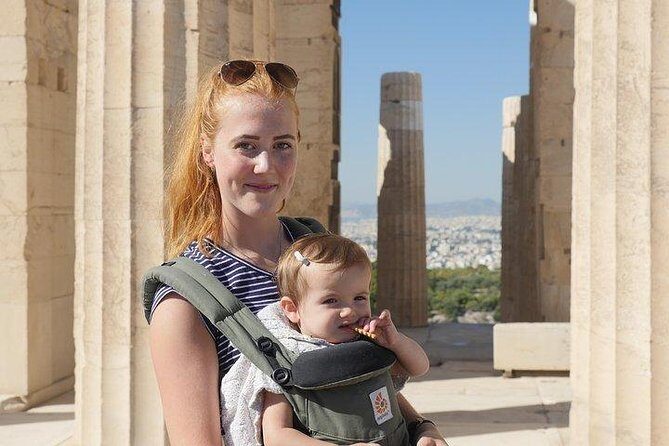
This is a tight, well-chosen walk. It’s designed to hit the big emotional moments of the Acropolis while still keeping children engaged through active storytelling.
Stop at the Acropolis: start with the rock’s gate and myths
The tour begins on the Acropolis hill and focuses on the main sights you can’t really miss. You’ll learn about the Propylaea, described as the marble gate, and you’ll stand where the stories of Athens connect to the physical layout of the sacred space. From there, the guide talks about the Temple of Nike, the goddess of victory, which is often a “blink-and-you-miss-it” spot on standard tours unless someone slows down to explain why it matters.
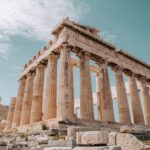
Then you’ll shift to the Parthenon zone. The guide will bring the Parthenon’s stories into the walk, including why Athena mattered to the city. Even if your kids don’t care about the name Parthenon yet, they usually latch onto the characters: Athena, Poseidon, and the conflict behind the myth.
Erechtheion and the Caryatids: a sight kids can point at
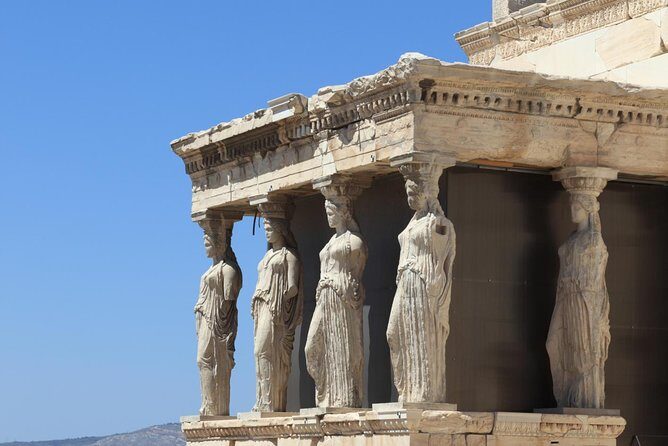
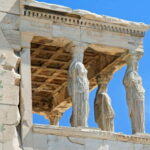
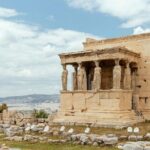
Next comes the Erechtheion area and its standout feature: the Caryatids, the sculpted maidens that support the porch. This is the kind of place where kids tend to get curious fast, because it’s not abstract. They can look at the figures, describe what they notice, and move around to get better views. The guide uses that attention to explain the temple’s connection to the mythic battle between Athena and Poseidon over the city’s naming.
The sacred olive tree and origin myths
Near the top of the hill, you’ll also hear about the sacred olive tree, described as a symbol of power that was allegedly planted by Athena herself. Even if you treat myths as stories rather than literal history, they still help kids understand why people built so much around this hill.
The tour ends with talk of the first mythical king of Athens, tying the myth cycle to the city’s identity. That closing piece matters because it helps your kids leave with a “story frame,” not just scattered facts.
Other private Acropolis tours we've reviewed in Athens



Propylaea and Temple of Nike: learning by landmarks, not lectures
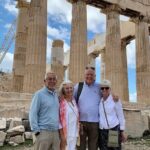
I like that the tour uses the architecture like a storyline. It starts with the gate—the Propylaea—so kids get an easy mental picture: the sacred rock isn’t random ruins; it’s a planned world with entrances, transitions, and symbols.
From there, the Temple of Nike becomes more than a pretty stop. It’s a chance to explain the idea of victory and why Athenians would tie an entire temple to that concept. For families, this is an easy win because it’s visual and dramatic. You don’t have to keep a child interested through long sentences when you’re standing in front of something that looks like it was built for a reason.
If your kids have short attention spans, this is also where you’ll benefit most from the private setup. When the guide notices fidgeting, the story can turn into questions or quick comparisons that pull kids back in.
Parthenon storytelling that actually clicks with kids
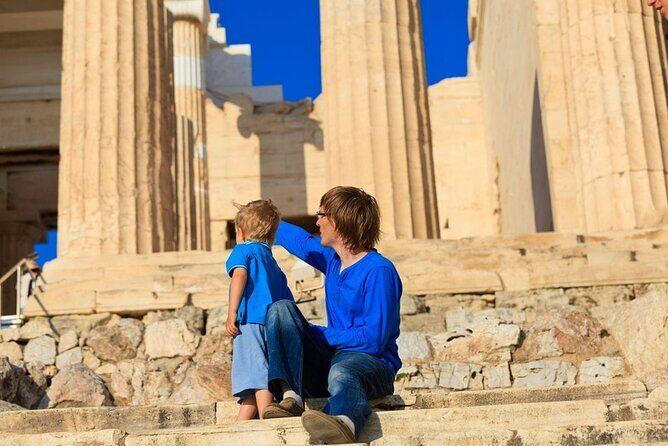
The Parthenon can feel distant if you’ve never seen it explained in human terms. This tour helps you connect it to the people and powers the Greeks believed were shaping their lives.
Instead of dumping dates and measurements, the guide focuses on narrative: Athena as the emblematic goddess tied to the temple, and why the city cared so much about this sacred identity. This is exactly the kind of explanation that works for mixed ages.
One of the best signs this tour is good for families is that it can reach teens, too. A teenage son who wasn’t usually interested in sightseeing found this as a highlight. That suggests the guide isn’t just “baby talk.” The stories are simplified, yes, but the ideas and stakes still land.
Erechtheion and the Caryatids: the stop kids remember
If there’s a moment that tends to stick in family memories, it’s usually the Caryatids. They’re sculpted figures—maidens in stone—and that makes them easier to grab onto than abstract concepts.
What makes this stop work is the way the guide connects form to story. The Caryatids aren’t treated like decor. They’re tied back to the porch of the Erechtheion and to the myth behind the space: the clash between Athena and Poseidon.
For kids, it’s a “look and talk” moment. For adults, it’s a relief because you’re not stuck with explanations that float away. You can literally point and follow along.
Also, if your group has mobility concerns, you’ll want to note a useful detail from a family experience: the guide adapted the tour to members with mobility issues. That doesn’t mean the whole site becomes effortless, but it suggests the guide thinks about real pacing and comfort rather than pushing forward like a strict checklist.
The olive tree and origin myths: small stops, big meaning
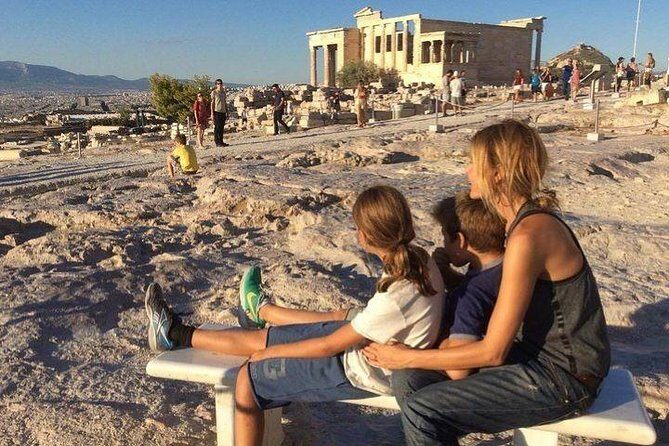
The sacred olive tree is one of those story hooks that helps kids understand why the Acropolis isn’t only about architecture. It’s about identity, power, and belief.
Even if you’re skeptical about myths, they still function as cultural explanations. Kids get a clearer picture of how Athenians might have viewed their world: the city isn’t just buildings; it’s backed by a powerful origin story.
This part of the tour is also useful because it’s less about looking at one carved object and more about connecting ideas. When done well, it turns into a conversation rather than a “keep walking” moment.
Price and value: how $434.46 can work for your family
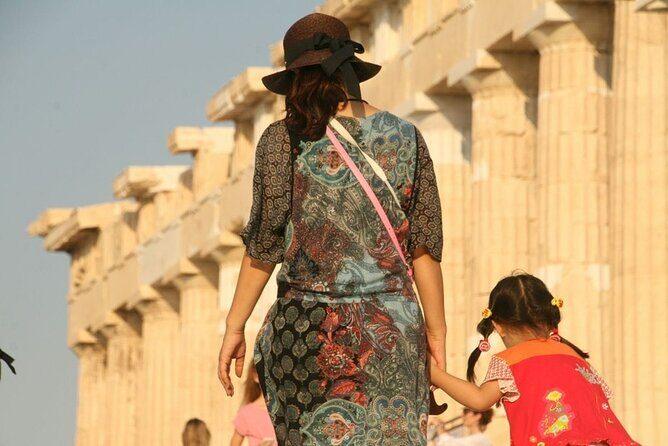
The tour costs $434.46 per group for up to 10 people. It’s priced per participant regardless of age, which can surprise families who expect toddler pricing to be cheaper. Here’s the good news: if you fill up the group capacity (or nearly do), the math gets very reasonable.
- For a full group of 10, you’re effectively paying about $43.45 per person for the guided experience portion.
- If it’s only 2–4 people, it’s less budget-friendly, but the private format can still be worth it if it prevents your day from turning into stress management.
One more practical value point: you get services of a licensed, family-friendly guide, myth narration designed for kids, and taxes and VAT are included. Also, there’s a goodbye gift via email after the tour, which extends the experience beyond the 2-hour walk.
What’s not included is the big line-item most people forget first: Acropolis entrance fees. The tour can pre-purchase skip-the-line tickets for you, which helps reduce waiting. Still, you’ll want to plan for that added cost when you compare this to standard group tours.
And there’s an optional add-on worth knowing about: you can add the Digipast app (for an extra charge) to see the Acropolis in its former glory. It’s not required, but if your kids love “what it used to look like,” this could be a fun extra.
Guide styles: the patience that makes or breaks a kid tour
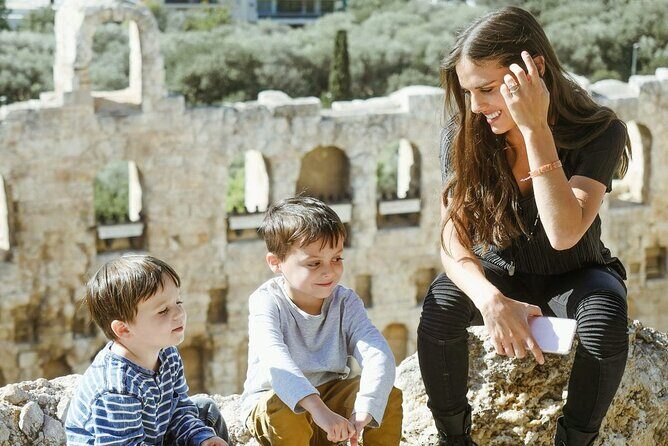
This is where the reviews give you real guidance. The strongest praise centers on guide patience and the ability to adapt on the spot.
Georgina is mentioned for being especially patient with a 2-year-old, even translating stories into dinosaur terms to match a child’s interests. That kind of quick adaptation doesn’t just keep kids quiet—it helps them understand what you’re seeing.
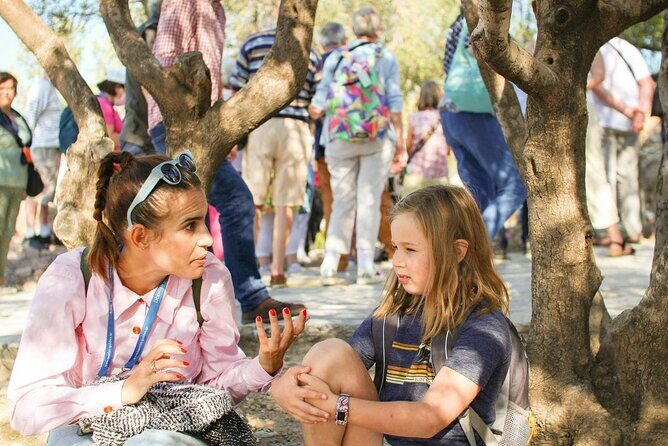
Eva is another guide named for being friendly, patient, and guiding in a way that families appreciate. In one family experience with children ages 3, 4, and 5, the guide used pictures so kids could visualize the gods and temples. That’s a smart approach. When you can’t see the original art, pictures act like a bridge.
If you’re worried that a private guide will still be a rigid “follow me” person, this tour’s guide feedback suggests the opposite: you’re hiring someone who can keep the story going even if the kids wander, ask questions, or need a reset.
What you’ll get after the tour: the email gift
One small detail that ends up mattering for families: you’ll get an educational gift by email after the tour. The tour description doesn’t say it’s a souvenir bag or a hard copy that you carry for the rest of the day, which I actually like. It’s less clutter in your hotel room and less stress on the walk.
It also reinforces learning while it’s still fresh. Kids often remember the story better when it follows them home in a simple format, especially if you’re traveling and life gets busy fast.
Practical tips before you go up
You can make your day smoother with a few simple choices, especially with toddlers and young kids.
First, plan for the fact that this is a hill experience. You’ll be moving for about 2 hours. Comfortable shoes matter for adults, and for kids who get tired fast, it helps to have snacks and water ready.
Second, if you want the skip-the-line benefit, think early about Acropolis tickets. Entrance fees aren’t included, so you’ll want to decide whether you’ll use the pre-purchase option rather than handling it on the day.
Third, consider the Digipast app if your family likes seeing reconstructions. The tour gives the option to add it at an extra cost, and that kind of “then and now” view often works well for kids who are curious but impatient with pure explanation.
Finally, keep your expectations realistic. Even with a fantastic kid-friendly guide, the Acropolis is still an outdoor historic site. The win here is not that kids will magically become statues; the win is that the guide helps them stay part of the story.
Should you book this private Acropolis for families tour?
Book it if you want the Acropolis without the usual family pain points: short attention spans, mixed ages, and the challenge of keeping kids engaged outdoors. This tour is a strong match for families who value myth-based storytelling tied to specific landmarks, and who like the idea of a licensed guide who can adapt quickly.
Skip (or compare) if your group is small and you’re trying to hit a strict budget, since the tour price is per participant regardless of age and entrance fees are extra. Also, if your family wants total freedom to roam without a structured narrative, this format is more guided and focused than a free-for-all.
If you’re traveling with kids and you want a day on the Acropolis that feels like a shared story—not a history test—this is the kind of private tour that can make the whole visit click.