REVIEW · ATHENS
Athens & Acropolis Highlights: Greek Mythology Small-Group Tour
Book on Viator →Operated by Alternative Athens · Bookable on Viator
Athens feels different when you hear the myths out loud. This tour strings together the big ruins and explains why they mattered in ancient daily life, not just how old the stones are. I especially like the small-group format and the way the guide connects myth to what you’re seeing at each stop. Meeting point is straightforward near the Arch of Hadrian, and the route keeps you moving in a logical arc through the city’s core monuments.
Two standouts for me: first, the pacing. You get time on the Acropolis highlights without it turning into a frantic rush, and the route includes key buildings like the Parthenon, Temple of Athena Nike, and the Erechtheion. Second, the storytelling quality. Many guides use clear visual aids (printed images help you picture what the site looked like in its original form), and some guides bring a teacher’s tone, like Irene/Irini, Michael, Dani, or Chrysanthi, so the facts stick.
One thing to consider: you’ll pay extra for site admission. The guide covers the route and the explanations, but the Acropolis and Ancient Agora tickets are separate costs (and the Acropolis has restrictions on bags/strollers). It’s still good value, but plan those euros into your budget.
Small group, max 15 people: more listening time, less wandering in a crowd.
Myth tied to real locations: you connect Athena, Zeus, Dionysus, and the Agora’s civic role to specific ruins.
Acropolis structure without the guesswork: Parthenon, Athena Nike, Erechtheion, and more, explained in context.
A classic ending at the Temple of Hephaestus: one of the best-preserved temples in the area, tied to craftspeople.
Tickets are separate: the tour includes the guide, but you must budget for Acropolis and Agora entry fees.
In This Review
- A Myth-and-Ruins Route That Makes Athens Make Sense
- Where You Meet, How Tickets Work, and Why Those Details Matter
- Stop 1: Temple of Olympian Zeus and the Zeus Stories You Can See
- Acropolis Time: Parthenon to Erechtheion Without Getting Lost
- Theatre of Dionysus and Athena Nike’s Victory Theme
- The Erechtheion and the Wooden Cult Statue Story
- Ancient Agora: Where Politics and Justice Happened
- Temple of Hephaestus: A Strong Finish for Craftspeople
- Price and Value: What $54.42 Covers (and What It Doesn’t)
- Pacing, Walking, and Comfort Tips That Actually Help
- Who This Athens Tour Fits Best (and Who Should Rethink)
- Should You Book This Athens & Acropolis Mythology Tour?
- FAQ
- Are entrance fees included?
- How much are the Acropolis and Ancient Agora admission fees?
- What’s the meeting point and where does the tour end?
- Is this tour small-group?
- Can I bring a stroller or big bag to the Acropolis?
- Do I need ID for discounts?
A Myth-and-Ruins Route That Makes Athens Make Sense
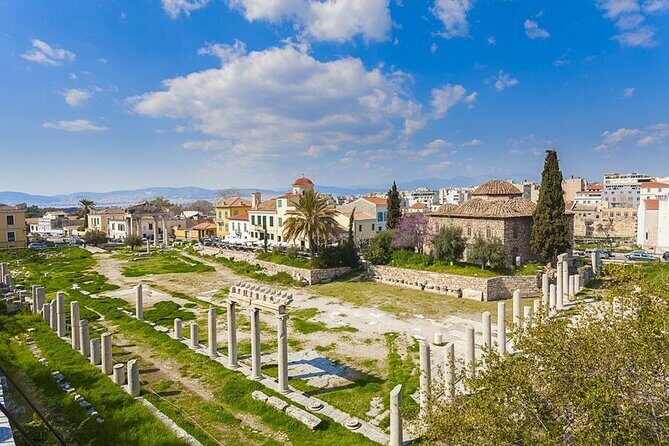
This is the kind of tour I’d recommend if you want your first Athens day to feel organized and meaningful. You start with Zeus’s grand setting, move onto the Acropolis and its most famous monuments, then finish in the Ancient Agora where public life once played out every day. Instead of treating the ruins like a checklist, the guide gives you stories that explain why these places were built and what people believed there.
The tour is about 4 hours, and it’s a small-group experience (up to 15 travelers). You’ll meet at the Arch of Hadrian area and end at the Ancient Agora of Athens, so you’re not looping back the way you came. That matters because it helps you keep your energy for the main climbs and crowded stone surfaces.
You’ll also get a fun Ancient Athens map as part of the experience. I like when tours give you something you can keep using after you walk away from the guide, especially in Athens where ruins sit close together but can feel confusing if you don’t know what to look for.
Where You Meet, How Tickets Work, and Why Those Details Matter
The start point is at the Arch of Hadrian (Leof. Vasilisis Amalias 50, Athina 105 58). The tour ends at the Ancient Agora of Athens (Athens 105 55). It’s near public transportation, which is helpful if you’re hopping between neighborhoods or staying in the city center.
You’ll receive a mobile ticket, and the tour is offered in English. Confirmation is provided at booking time in most cases, and you can pre-purchase entry tickets for you if you want the hassle reduced. One practical note: the Acropolis and Agora admissions are not included in the tour price, so you’re still managing at least two ticket costs.
Bag rules matter at the Acropolis. Strollers, backpacks, and big bags are not allowed at the site, and you don’t want to discover that right when you arrive. Bring what you need for a few hours, then pack the rest away back at your hotel or locker service if your accommodation offers it.
Other Acropolis and Parthenon tours we've reviewed in Athens
Stop 1: Temple of Olympian Zeus and the Zeus Stories You Can See
You begin at the Temple of Olympian Zeus (Olympeion), located between the Acropolis and the Ilissos river area. Even though you only spend about 15 minutes here, it’s a smart opener because it sets the tone: this was one of the great temples of Zeus, and the site was famous for its marble work in the ancient world.
The guide talks about what the temple represented and shares the stories attached to Zeus. That outside-only stop is useful for two reasons. First, it trains your eye to notice how these sanctuaries relate to the city. Second, it builds anticipation for what you’ll hit next—because the Acropolis isn’t just one hill with ruins. It’s a system of religious power and myth.
If you’re the type who likes to understand the “why” before the “what,” this first stop helps. By the time you look up the hill, the temples feel like parts of the same conversation.
Acropolis Time: Parthenon to Erechtheion Without Getting Lost
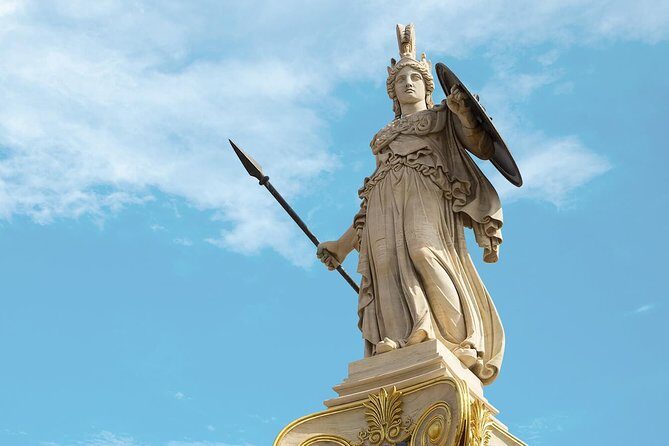
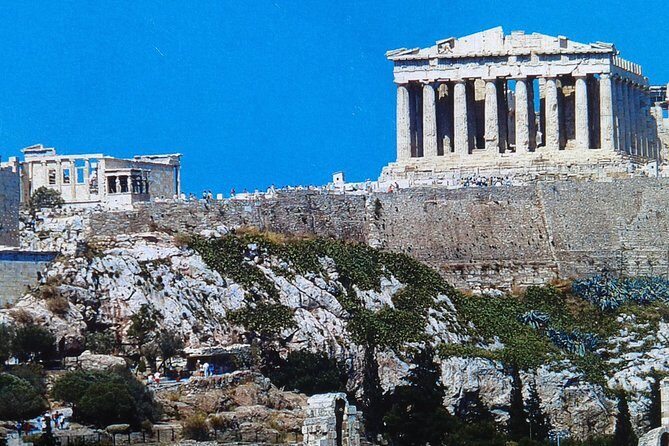
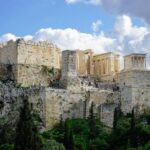
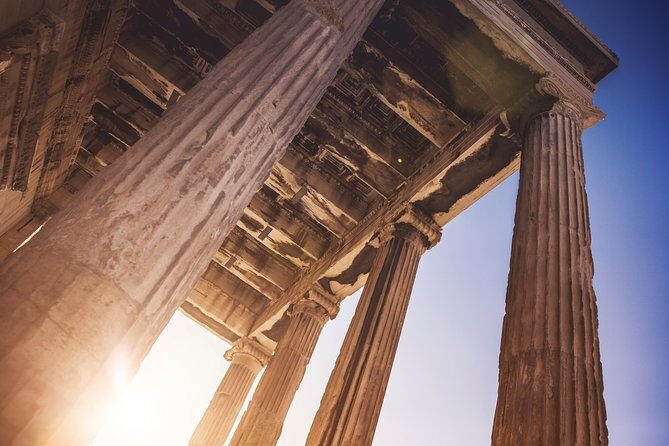
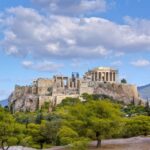
The Acropolis portion is the centerpiece, about 1 hour 30 minutes. This is where you’ll see the monuments that people travel across the world to photograph: the Parthenon, the Temple of Athena Nike, the Erechtheion, and other major structures on the hill like the Propylaea and the Theater of Dionysus.
Here’s what makes a guided walk work on the Acropolis: the site is visually impressive, but it’s also easy to misread on your own. From the ground, you can end up seeing shapes but not understanding function. A good guide turns those stone parts into meaning—why Athena mattered, how victory was represented, and what specific architecture was designed to do.
You’ll spend time on the big ticket highlights:
- Parthenon: built in the mid-5th century BCE and dedicated to Athena Parthenos (Athena the Virgin). The guide points out why it’s seen as a high point in the Doric order.
- Temple of Athena Nike: dedicated to Athena and Nike, with the story that the cult statue of Nike had no wings so she would never leave Athens.
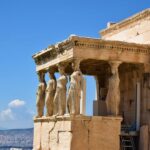
- Erechtheion: built to house an ancient wooden cult statue of Athena and to reflect the city’s peak influence.
One practical caution: expect uneven ground and stairs. A steep climb is part of the deal, so good walking shoes help a lot. Also, bring water and a hat if you’re going in warmer months. Several guides in this tour style are attentive about stopping for shade and breaks, but you’ll get better comfort if you come prepared.
If you like mythology that feels connected to real buildings, this is where it clicks. When the guide ties Athena, victory, and civic identity to the monuments you’re actually standing beside, the Acropolis stops being a photo spot and becomes a story you can walk through.
Theatre of Dionysus and Athena Nike’s Victory Theme
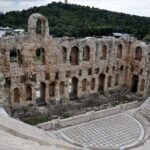
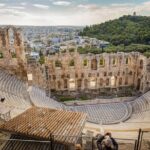
After the Acropolis highlights, you move to the Theatre of Dionysus Eleuthereus for about 15 minutes. This theatre is described as the oldest founded in Athens, and it’s the setting for major works from ancient Greek dramatists—Aeschylus, Sophocles, Euripides, and Aristophanes.
Even if you’re not a theatre person, this stop gives you another angle on the Acropolis area. It reminds you that Athens wasn’t just temples and politics. It was performance, public debate, and culture tied to religious life. Hearing the myth behind Dionysus also helps, since he’s connected to wine and grape harvest—so you’re not just looking at seats in stone; you’re hearing about the life around them.
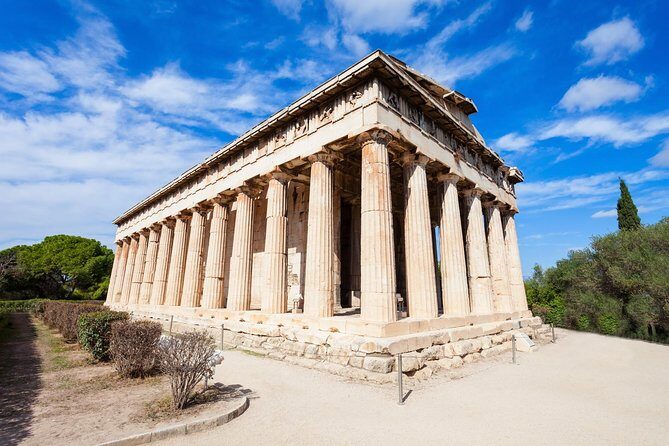
Then you’ll return to the Athena theme with a dedicated look at the Temple of Athena Nike. The guide’s focus here is on what Nike represented and the symbolism of staying in Athens. That’s the kind of detail you won’t get if you only read a plaque quickly.
This is also a good moment to slow down and look carefully at placement. Small shifts in where a temple sits can change what it tells people—where it pulls the eye, where it marks space, and what it communicates about power and protection.
The Erechtheion and the Wooden Cult Statue Story
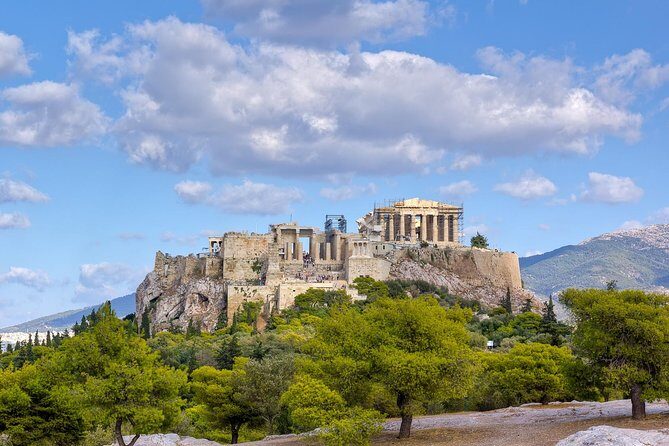
The Erechtheion gets its own short stop (about 10 minutes). Even though time is limited here, it’s worth it because the explanation is central to understanding why the building exists. The Erechtheion was constructed to house an ancient wooden cult statue of Athena.
That detail matters because it highlights something people often miss: these sites weren’t only about grand stone artistry. They were homes for important objects and ritual practice. When the guide frames the temple around the cult statue and the city’s identity at its height, the structure feels less abstract.
You’ll often see photos from this area where the details steal the show. But on a guided tour, you’re encouraged to connect the details to belief and civic pride. It helps you walk away with a mental model, not just images.
Other Athens city highlights tours we've reviewed in Athens




Ancient Agora: Where Politics and Justice Happened
After the Acropolis, you head down to the Ancient Agora of Athens for about 1 hour. The Agora is described as the heart of ancient Athens—political, commercial, administrative, social, religious, and cultural activity all ran through this space. It was also the seat of justice, which is a big deal if you think of it as a “market square” rather than a functioning civic system.
In plain terms: you’re going from myth-heavy sanctuaries on a hill to the ground-level engine room of the city. That contrast makes the whole tour feel more complete.
If you like context, this is where it shows. The guide connects the Agora to everyday life and how Athenians organized power and community. You also get a sense of why so many travelers end up returning to the Agora area later—it’s easier to roam on your own after you’ve heard how it worked.
Temple of Hephaestus: A Strong Finish for Craftspeople
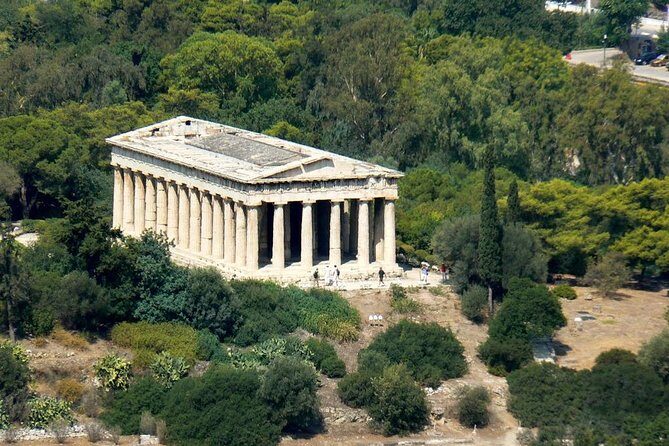
Your tour caps at the Temple of Hephaestus (about 20 minutes). It’s described as one of the best preserved ancient temples in the world. More than that, the tour ties it to the people who depended on tools and skill—Hephaestus as protector of metallurgists, and Athena Ergani as protector of potters and cottage industries.
That ending works because it gives you a final myth link that feels practical. You’ve seen the gods connected to war and victory at the Acropolis, the theatre linked to Dionysus and celebration, and now you get a place tied to the crafts that made the economy run.
It’s a satisfying “last image” moment. You leave with one of the clearest, easiest-to-recognize temples in the route, plus a story that explains why workers cared about it.
Price and Value: What $54.42 Covers (and What It Doesn’t)
The tour price is listed as $54.42 per person, for roughly 4 hours. The guide and small-group experience are included, and you also get an Ancient Athens map. What’s not included is the big part people often forget: archaeological site entry fees.
For this 4-hour style, the Acropolis ticket is needed (listed at €30.00 per person) and the Ancient Agora admission is also needed (listed at €20.00 per person). That means your total outlay is basically “tour price plus those two site tickets.” If you pre-purchase entry tickets through the operator, it can reduce stress during a high-demand part of your day.
Here’s how I’d judge value: you’re paying for an expert certified guide plus the advantage of having the narration organized around the monuments. If you’re the type who can read plaques and handle confusion on your own, you might skip a tour. But if you want mythology connected to architecture and you don’t want to waste time guessing, the guide’s time is what you’re really buying.
Also, this tour is commonly booked in advance (on average, about 46 days). That’s a hint that popular slots can fill. If you’re traveling in peak season, booking early is a smart move.
Pacing, Walking, and Comfort Tips That Actually Help
This tour is a mix of climbs, stairs, and uneven surfaces. Plan for a moderate amount of walking, with the Acropolis being the hardest part. Even with a small group, you’ll want to keep pace and stay close to the guide, especially on narrow stone paths.
Practical packing tips:
- Wear good walking shoes with grip.
- Bring water and a hat, especially if you’re going in hot weather.
- Know that bags and strollers are not allowed at the Acropolis. Keep your load light.
Sound can also be tricky in busy areas. The best experience usually comes from positioning yourself where you can hear the guide clearly, because you’ll want the myth explanations while you’re standing at each monument.
On a good day, the tour feels relaxed. Guides are often described as attentive, stopping for shade when needed and keeping the group together without turning it into a sprint.
Who This Athens Tour Fits Best (and Who Should Rethink)
This tour is a great fit if you want your Athens day to include both myth and practical city logic. It’s also ideal if you like asking questions and hearing answers tied to what you see in front of you. The format works well for first-timers and for people who studied Greek mythology before but want the locations to click.
It’s also a good match if you’re traveling with limited time. In about half a day, you cover Olympian Zeus area, the Acropolis core, the Theatre of Dionysus, the Agora, and end at the Temple of Hephaestus.
You might rethink it if you hate stairs or you’re trying to travel with stroller-friendly flexibility, since Acropolis bag/stroller rules are strict. You may also prefer a different approach if you want total independence and you’re okay reading on your own rather than relying on a guide’s explanations.
Should You Book This Athens & Acropolis Mythology Tour?
If your goal is to understand what you’re looking at—Parthenon, Agora, and all the god-and-city connections—this tour is an easy yes. You get a focused route, small-group energy, and explanations that make the myths feel like part of Athens, not a separate lesson.
Book it when:
- You want mythology tied to specific ruins.
- You appreciate guided pacing on steep stone sites.
- You’d rather pay for direction than spend your day figuring things out.
Skip or consider alternatives when:
- You’re not willing to add €30 Acropolis + €20 Agora to your budget.
- You need a low-walking, low-stairs experience.
- You plan to bring a large bag or rely on a stroller at the Acropolis.
FAQ
Are entrance fees included?
No. Entrance fees to archaeological sites are not included. The Acropolis entry fee (for the 2h and 4h options) and the Ancient Agora entry fee (necessary for the 4h option) are additional costs.
How much are the Acropolis and Ancient Agora admission fees?
The Acropolis admission is listed at €30.00 per person, and the Ancient Agora admission is listed at €20.00 per person for the 4h tour option.
What’s the meeting point and where does the tour end?
You meet at the Arch of Hadrian area on Leof. Vasilisis Amalias 50 (Athina 105 58) and end at the Ancient Agora of Athens (Athens 105 55).
Is this tour small-group?
Yes. It’s a small group with a maximum of 15 travelers.
Can I bring a stroller or big bag to the Acropolis?
No. Strollers, backpacks, and big bags are not allowed at the Acropolis and should not be taken on the tour.
Do I need ID for discounts?
If you’re under 25, you’ll need an ID card or passport for possible discounts.