REVIEW · ATHENS
Beat the Heat Acropolis Tour – Small group
Book on Viator →Operated by Alternative Athens · Bookable on Viator
If you want the Acropolis with breathing room, this helps. This Beat the Heat style walk times things better, and your licensed guide strings the biggest sites together so they actually make sense. I especially like the small-group size (up to 15) and the wireless headset that keeps the guide’s commentary easy to follow, even when the crowd noise spikes.
The one thing to plan for is the Acropolis entry ticket. The €30 per person entrance fee is not included, and you’ll also have to follow the site rules: no strollers, backpacks, or big bags.
In This Review
- Key things to know before you go
- Why an afternoon Acropolis walk beats midday crush
- Meeting at Hadrian’s Arch: logistics that actually matter
- How the guide tour style makes the history click
- The 2-hour route: Dionysus, Athena Nike, Erechtheion, and the Parthenon
- Stop 1: Theatre of Dionysus Eleuthereus (about 15 minutes)
- Stop 2: Temple of Athena Nike (about 15 minutes)
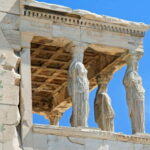
- Stop 3: Erechtheion (about 15 minutes)
- Stop 4: Propylaea (about 15 minutes)
- Stop 5: Parthenon (about 1 hour)
- What you’ll actually feel during the walk
- Price and value: what the tour cost includes (and what it doesn’t)
- Who should book this Acropolis small-group tour
- A note on guides: you may meet different energy styles
- Should you book Beat the Heat Acropolis Tour? My take
- FAQ
- Do I need to buy the Acropolis entrance ticket separately?
- How long is the tour?
- How big is the group?
- What language is the tour in?
- Is the tour ticket mobile?
- Where do we meet?
- Where does the tour end?
- Are strollers or large bags allowed?
- Is the tour accessible by public transportation?
- Do I need a passport or ID?
- What happens if the tour is canceled due to weather?
Key things to know before you go

- Afternoon timing: designed to help you avoid the hottest, most crowded hours
- Licensed guide + headset: you get spoken context without having to press in close
- Small group (max 15): easier pacing, fewer distractions, more chances to ask questions
- Main sites in 2 hours: Theatre of Dionysus, Athena Nike, Erechtheion, Propylaea, and the Parthenon
- Bring your footwear: marble can feel slippery around the summit and terraces
- Tickets are separate: you’ll need to purchase Acropolis entry yourself (or pre-purchase with them)
Why an afternoon Acropolis walk beats midday crush
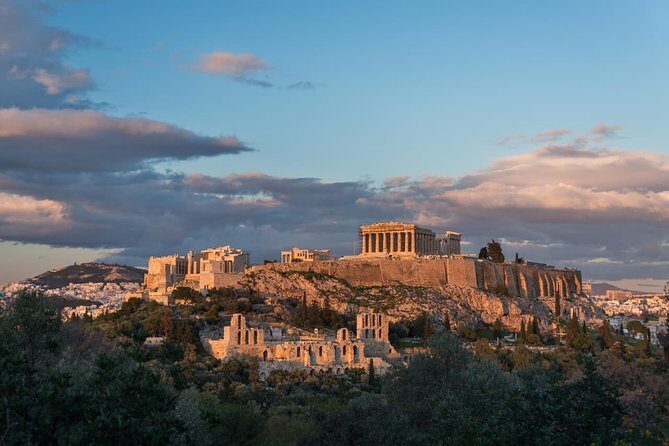
The Acropolis can feel like a theme park line mixed with a geology class. This tour’s whole idea is to shift your visit away from the worst heat and the tightest crush, which makes the walk more comfortable and the ruins more enjoyable.
You also don’t just “see stuff.” Your guide helps you connect why these places matter, moving you from one key stop to the next in a way that’s easier to remember later. That’s the difference between snapping photos and actually understanding what you’re looking at.
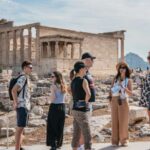
And because it’s a smaller group, you spend less time trapped in a moving crowd. You’re still walking at a visitor site pace, but you’re not constantly fighting for position or getting steamrolled by the flow.
Other Acropolis and Parthenon tours we've reviewed in Athens
Meeting at Hadrian’s Arch: logistics that actually matter

Your tour starts at the Arch of Hadrian (Leof. Vasilisis Amalias 50, Athina 105 58). It ends at the Acropolis of Athens, and along the way you’ll cover the main upper-circuit highlights without it turning into a full-day ordeal.
A few practical notes help avoid headaches:
- You’ll get a mobile ticket.
- A fun map of ancient Athens is included, which is handy once you’ve finished and want to connect locations later.
- The group is kept small (up to 15 travelers), which is a big deal at a site like this.
You’ll be walking, and the terrain isn’t flat. Expect steep bits and stone surfaces that can feel slippery in spots, especially near marble terrace areas. Wear shoes with grip, not slick sandals.
Also, there are site restrictions at the Acropolis: strollers, backpacks, and big bags are not allowed on the tour. Plan to travel light, or you’ll spend your energy managing gear instead of enjoying the views.
How the guide tour style makes the history click
This tour is led by an English-speaking licensed guide. You’ll also get a wireless headset, so you can listen while you’re walking and looking around—without the usual squinting and guessing game.
That headset detail is underrated. At the Parthenon and other busy points, people talk over each other. With the headset, your guide’s explanations stay clear, and you can keep your attention where it belongs: on what you’re standing next to.
The stops aren’t random either. The route is built around turning Greek mythology and politics into something you can picture in your head: performances at the Theatre of Dionysus, victory symbolism at the Temple of Athena Nike, civic identity at the Erechtheion, then the Parthenon as the big visual statement.
The 2-hour route: Dionysus, Athena Nike, Erechtheion, and the Parthenon
This is a tight loop, with short stops and one longer deep-dive at the end. Total time is about 2 hours (some runs run a bit long in real life), so you’ll want to be ready to move promptly between locations.
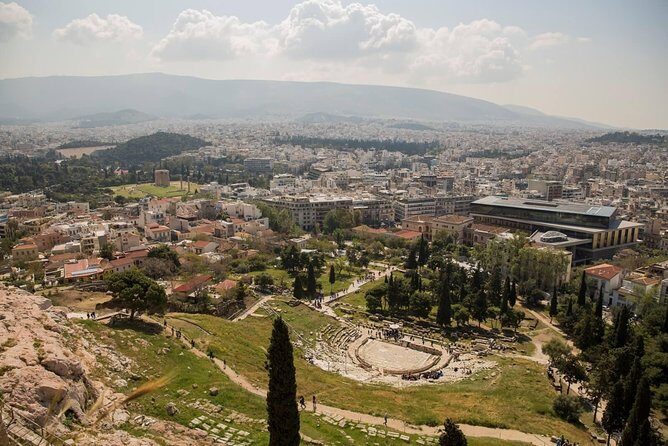
Stop 1: Theatre of Dionysus Eleuthereus (about 15 minutes)
You begin at the Theatre of Dionysus Eleuthereus. Dionysus was linked to wine and grape harvest, and this theatre is described as the oldest to be founded in Athens.
What I like here is that it reframes the Acropolis as more than temples. This stop reminds you that Athens wasn’t only about gods and architecture—it was also about civic life and public performance. Your guide explains that major playwrights like Aeschylus, Sophocles, Euripides, and Aristophanes had their unsurpassed works performed there for the first time.
Other skip-the-line Acropolis tours we've reviewed in Athens




Stop 2: Temple of Athena Nike (about 15 minutes)
Next is the Temple of Athena Nike, dedicated to Athena and Nike (the goddess of victory in Greek mythology). Your guide connects the symbolism: Athena is honored in a victory form, and the story about the statue having no wings is part of the meaning—so victory never leaves Athens.
This stop is short, but it’s a useful “aha” moment. You’ll see how architecture can act like messaging, not just decoration. The guide’s job is to make the tiny details feel intentional.
Stop 3: Erechtheion (about 15 minutes)
Then you move to the Erechtheion, a temple built on the Acropolis meant to house an ancient wooden cult statue of Athena. The idea here is that this wasn’t just a building; it was a place that helped express the city’s identity when Athens was at the height of its power.
If you like when a tour ties religion, politics, and everyday meaning together, this is one of the stops that delivers. Your guide should help you see why Athens cared so much about specific forms of worship.
Stop 4: Propylaea (about 15 minutes)
At Propylaea, you’re looking at the monumental gateway approach to the Acropolis. Even with a quick stop, it’s valuable because it helps you understand movement through the space—how you enter, where attention goes, and why the climb feels like a gradual transition to the “main event.”
The guide’s commentary makes this part easier. Otherwise, it can look like a nice entrance and nothing more.
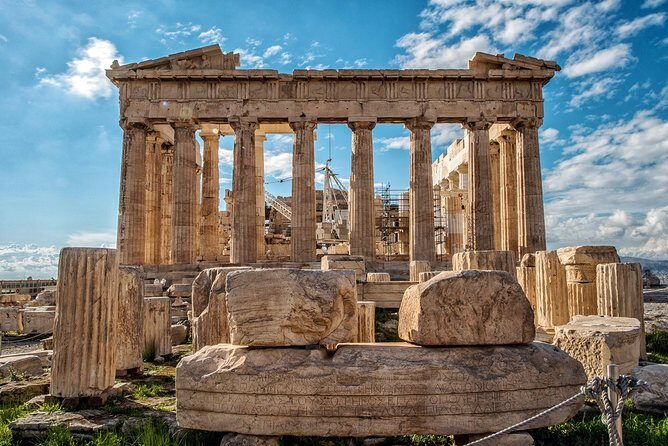
Stop 5: Parthenon (about 1 hour)
Finally, you get the long stop: the Parthenon. It dominates the hill and was built in the mid-5th century BCE, dedicated to Athena Parthenos (Athena the Virgin). Your guide also explains its place in Greek architecture as a high point in the Doric order.
This is where the time is worth it. You’ll have enough guided explanation to make the building’s parts and purpose feel less like random columns and carvings.
Two real-world tips help here:
- The summit area can be crowded, so expect limited chances to drift far from the group while the guide speaks.
- Stone and marble surfaces can be slippery in spots. Good walking shoes matter.
Some guides also time the final moments for especially scenic light, and you may get a pause near the Parthenon for great views as you finish the main loop.
What you’ll actually feel during the walk
This tour is designed for “relaxed pace” compared with the usual Acropolis grind. Still, it’s not a sit-and-stare museum tour. You’re moving between major points, listening, then turning around for the next stop.
Because it’s a small group, you’ll likely have a calmer rhythm. People aren’t constantly cutting in front of you to get that one angle. If you’re the type who hates rushing for a photo, this format tends to work better.
On the other hand, since it’s structured around set stops, you shouldn’t expect long unplanned free time at the top. The goal is understanding, not wandering indefinitely.
Price and value: what the tour cost includes (and what it doesn’t)
The tour price is $54.44 per person for the 2-hour guided experience. What makes it feel like good value is that the essentials are included: a licensed guide, the small-group setup, the wireless headset, and the included map.
The big separate cost is the Acropolis entry ticket, listed at €30 per person (with an option for them to help you pre-purchase). That means your all-in spending is more than the base tour price, so it helps to budget for both.
Here’s the practical way to think about it:
- If you already know you want a guided route with headset-style listening, the tour portion pays for the “making sense of it” work.
- If you’re the DIY type who loves to read signs and figure things out alone, you may decide the guide isn’t essential.
- If you’re traveling in summer heat, the “beat the heat” timing is where you get real value, because comfort affects how much you enjoy the visit.
Who should book this Acropolis small-group tour
This tour fits best when you want guided context without spending the day trapped in lines.
You’ll probably love it if:
- You want the main Acropolis sites in one smooth walk.
- You hate noise-straining for explanations and like the headset.
- You appreciate myth and history explained in a practical way while you’re standing where it happened.
It’s also a good choice for families, though the structure means kids will have to listen during stops. Some people find it more adult-focused because there are multiple observation points with explanations.
If you’re sensitive to heat, you’ll especially like the afternoon approach. And if you’re a photographer, you may like finishing near better lighting depending on the day’s timing.
A note on guides: you may meet different energy styles
The tour runs with different guides, and that can shape your experience. Names you might hear include Maria, Michalis, Athina, Calliope (Kelly), Christia, Vicky, Eleni, Stelios, and Nikki. Many comments point to guides who keep things lively and answer questions, which matters when you’re standing amid crowds.
One tip regardless of who your guide is: show up ready to walk. Then the guide’s storytelling lands better, because you’re not tired while trying to listen.
Should you book Beat the Heat Acropolis Tour? My take
Book it if you want a smoother, more informative Acropolis visit with a small group and wireless headset, timed to help with heat and crowd pressure. The route hits the big five areas quickly and gives enough explanation to make the Parthenon and the surrounding structures feel like part of one story.
Skip it or consider a different format if you strongly prefer long free time at the summit or you know you won’t be able to handle the steep, crowded conditions. Also, factor in the €30 entrance fee separately, since that affects your real total cost.
FAQ
Do I need to buy the Acropolis entrance ticket separately?
Yes. The Acropolis entry fee is not included, and it’s listed at €30 per person. You can also ask them to help pre-purchase the entry tickets.
How long is the tour?
The tour runs about 2 hours, approximately.
How big is the group?
It’s a small-group tour with a maximum of 15 travelers.
What language is the tour in?
The tour is offered in English.
Is the tour ticket mobile?
Yes. You get a mobile ticket.
Where do we meet?
You meet at the Arch of Hadrian, Leof. Vasilisis Amalias 50, Athina 105 58, Greece.
Where does the tour end?
The tour ends at the Acropolis of Athens.
Are strollers or large bags allowed?
No. Strollers, backpacks, and big bags are not allowed at the Acropolis and should not be taken on the tour.
Is the tour accessible by public transportation?
Yes. The meeting point is near public transportation.
Do I need a passport or ID?
If you are under 25, you’ll need an ID card or passport for possible discounts.
What happens if the tour is canceled due to weather?
The experience requires good weather. If it’s canceled due to poor weather, you’ll be offered a different date or a full refund.