REVIEW · ATHENS
First Access Acropolis Tour, Beat the Crowds, Enjoy the Parthenon
Book on Viator →Operated by Athens Walking Tours · Bookable on Viator
Morning beats Athens crowds. This early Acropolis tour gets you into the action while the air is cooler and the big lines haven’t fully formed, so the Parthenon doesn’t feel like a photo-factory.
I love the practical setup: you get earsets to hear your licensed local guide clearly, plus skip-the-ticket-line service so you waste less time standing still. I also like that the tour includes an Athens guide magazine and a map, so after you’re done staring at marble, you can actually plan the rest of your day.
One thing to keep in mind: entry times are strict, and if you’re late you can’t count on waiting (and refunds aren’t given). Also, the Acropolis entrance ticket usually costs an extra €30 per person unless you selected the option that includes it, so check what’s covered before you go.
In This Review
- Key things I’d bank on
- Why First Access makes the Acropolis feel human again
- The guide setup: earsets, small groups, and fast context
- Propylaea: the entrance gate that sets the tone
- Temple of Athena Nike: myths you can actually connect to the view
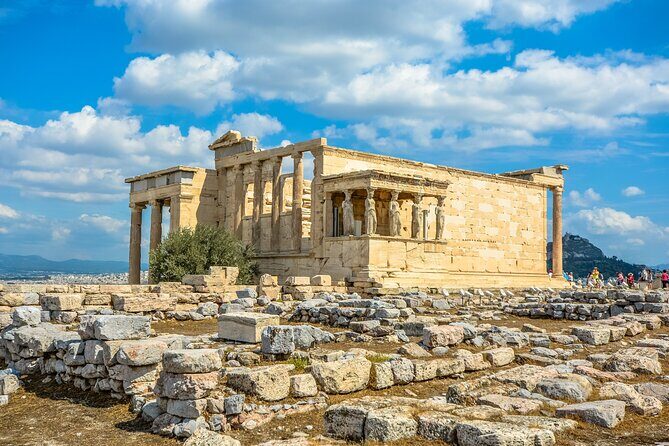
- Erectheion: where the stories get complicated and more fun
- Parthenon time: your best chance for photos before the pile-up
- Herod Atticus Odeon: a Roman theater with a personal backstory
- Theatre of Dionysus: the birthplace of theater, right on your route
- Admission fee reality: what you’re really paying for
- Timing tips that prevent headaches (and protect your photos)
- Where this fits best: who should book this tour
- What you’ll walk away with besides great views
- Should you book First Access Acropolis Tour?
- FAQ
- How long is the First Access Acropolis Tour?
- Is the Acropolis entrance ticket included in the price?
- Do I need hotel pickup?
- Will I have help hearing the guide?
- What happens if I’m late to the entry time?
- Does the tour run in bad weather?
Key things I’d bank on
- Early access means cooler temps and fewer people around the Parthenon viewpoints
- Earsets + licensed guide help the story land even when the site gets busy
- Small group (max 24) keeps the pace manageable and the questions possible
- Timed-entry upgrade option can make arrival smoother with less back-and-forth
- A complete top-to-the-bottom highlights route in about two hours
Why First Access makes the Acropolis feel human again
The Acropolis is famous, which is just another way of saying it attracts crowds. The big win here is timing. Starting early puts you on the hill before the daytime rush swells, and you’ll notice the difference right away: more breathing room at the overlooks and less time stuck in slow-moving security lines.
That early rhythm also changes how the monuments feel. When you’re not shoulder-to-shoulder, you can actually look. The Propylaea marble gateway frames the approach differently, and the Parthenon’s details read better when the space around you isn’t constantly interrupted.
Weather is also part of the deal. The tour runs rain or shine, and that means you should dress for real conditions on the hill. In cool morning air, even a slightly gray sky can work in your favor because the light is softer for photos.
Other Acropolis and Parthenon tours we've reviewed in Athens

The guide setup: earsets, small groups, and fast context
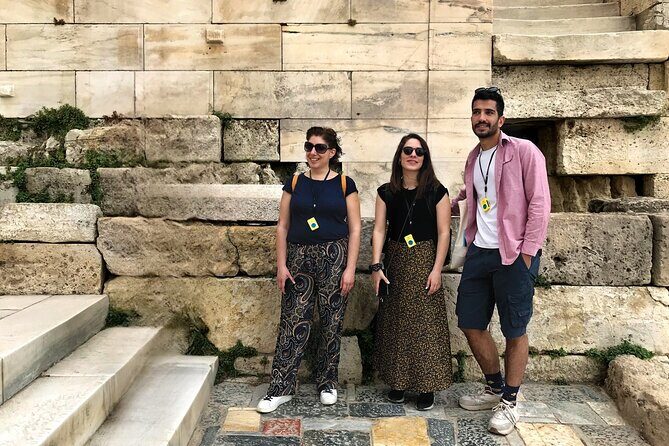
This is a guided experience with a clear goal: help you understand what you’re seeing without turning it into a lecture marathon. You get earsets, so even when other visitors start forming their own conversations, you can still follow along. In practice, that makes the difference between seeing buildings and understanding why people have been studying these stones for centuries.
Group size is capped at 24 travelers, which matters more than it sounds. Big groups can bulldoze a route. Here, it’s easier to pause for the guide’s points and shuffle to the best angles without losing your place.
On top of that, your guide is a licensed local professional. Names mentioned in feedback include Maria, Kali, Pan, Niobe, Natasha, and Olesya. Different guides have different styles, but the common thread is that they help you see the site in a structured way—what to look at first, what to notice next, and what to remember when the crowd thickens.
Propylaea: the entrance gate that sets the tone
Your first major stop is the Acropolis itself, then the tour quickly focuses on the Propylaea, the impressive entrance gateway. Even before you reach the Parthenon, this is where the site starts to feel like a planned, ceremonial journey rather than a random pile of ruins.
The guide’s job here is visualization. You’ll hear how the Propylaea might have appeared in ancient times, which helps your brain build a mental picture instead of only reading today’s weathered surfaces. It’s a short stop (about 10 minutes), but it’s a useful warm-up: it frames what you’re about to do next.
Practical note: stone steps and uneven surfaces are common on the Acropolis. Wear shoes with grip, and don’t treat the hill like a city sidewalk.
Temple of Athena Nike: myths you can actually connect to the view
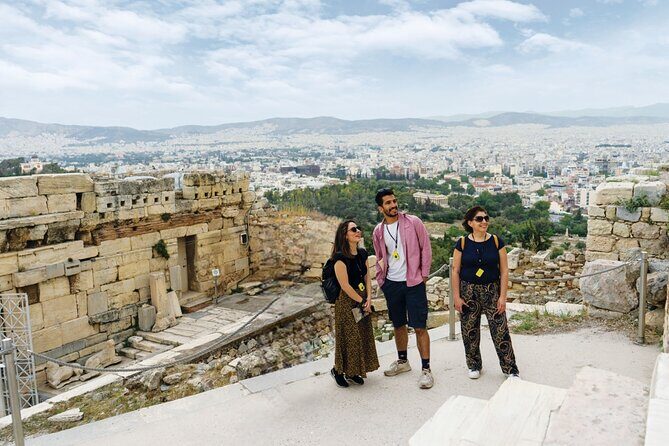
Next up is the Temple of Athena Nike, positioned to the right of the Propylaea. The timing is brief (around 5 minutes), but the payoff is the way stories add meaning to a specific landmark.
This stop is about myths surrounding its creation and significance, so it’s not just a quick look at a structure. You’ll learn how the temple fits into the broader symbolic world of Athens, and you’ll get a better sense of why people cared about this place beyond art appreciation.
If you’re the type who thinks you’ll read later, don’t skip the guide’s framing. On the Acropolis, the buildings are scattered along a slope. The guide helps you connect them so you don’t feel lost after the first big photograph.
Erectheion: where the stories get complicated and more fun
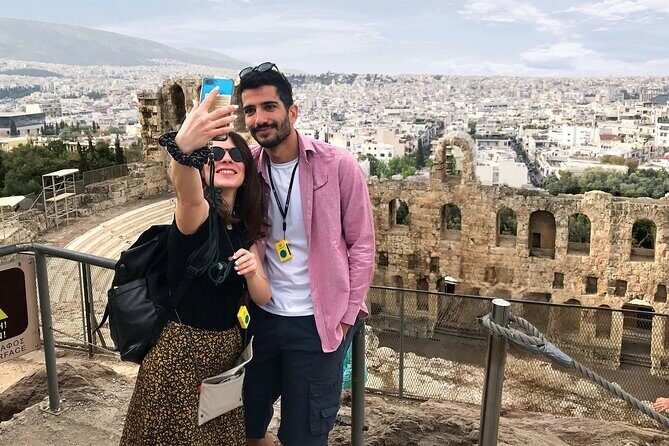
The tour then heads to the Erectheion, connected with the mythical King of Athens, Erechtheus, and dedicated to Athena. This stop is about 10 minutes, and it leans into the myths and secrets associated with the structure.
Here’s why this matters: Greek mythology can feel like a school worksheet unless someone ties it to a real place. With the Erectheion, you’re standing at a site that’s already part of the myth-world, which makes the stories stick.
You’ll also be reminded to pay attention to what you’re stepping on. Several visitors noted the guide’s care in warning about slippery marble. That’s not just safety chatter. It’s part of why an early tour feels smoother—you can listen, not constantly brace for a misstep.
Other Parthenon tours we've reviewed in Athens





Parthenon time: your best chance for photos before the pile-up
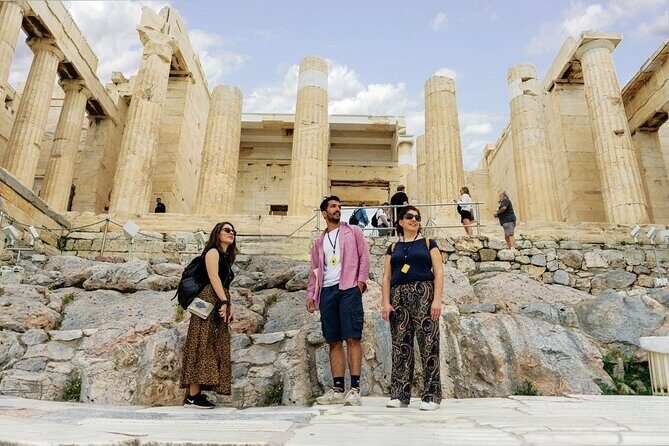
The big centerpiece is the Parthenon, and the tour gives it about 10 minutes. That’s not enough time to do a museum-style study, but it’s enough time to see the building as an architectural achievement and to get a guided explanation of its cultural importance.
This is also where early access pays off most. More people arrive as the morning continues, and photo angles get blocked. By going first, you get a better shot at views with fewer people cutting into your frame—and you can look closely at architectural details without constantly moving.
If you’re coming for the Parthenon, plan your expectations like this:
- You’ll get the story and the key sightlines.
- You’ll still want more time afterward if you’re the slow-and-curious type.
- The guide’s route affects what you can see and photograph before the site fills up.
One review noted that some guides take you toward the Parthenon first thing, then expand into the rest of the complex once you’ve had your front-row moments. That’s a smart strategy when you’re short on time.
Herod Atticus Odeon: a Roman theater with a personal backstory
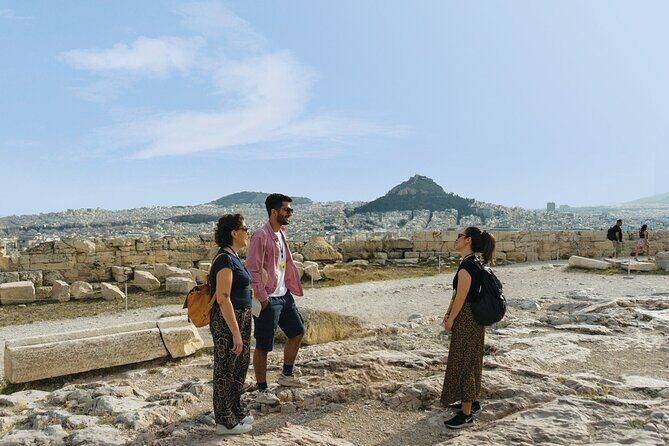
After the Parthenon, you shift to the Herod Atticus Odeon, a Roman theater built by Herodes Atticus as a tribute to his beloved wife, Aspasia. This stop is about 5 minutes.
The guide’s angle here is the “was it only love?” question. That little twist is useful because it keeps you from treating the odeon as just another background ruin. You start thinking about who built it, why they built it, and what kind of power and wealth would have been required.
Even though you’re not sitting for a performance, the atmosphere helps. Open-air theaters feel different on the Acropolis than inside museums. You get a sense of how performances would have traveled through space.
Theatre of Dionysus: the birthplace of theater, right on your route
The final major highlight is the Theatre of Dionysus, about 5 minutes. The guide explains that it’s tied to Dionysus, the god of wine and fertility, and that it’s considered the birthplace of theater.
This stop lands well if you connect it to what you’ve been hearing earlier. You’ve already learned how myths and ceremonies shaped public life. Now the story turns to drama—plays by Aeschylus, Sophocles, and Euripides are named as part of the theater tradition associated with this place.
It’s a short finish, but a satisfying one: you end with an idea, not just a building. And once you walk back down from the south slope, you can carry that thought into the rest of your day.
Admission fee reality: what you’re really paying for
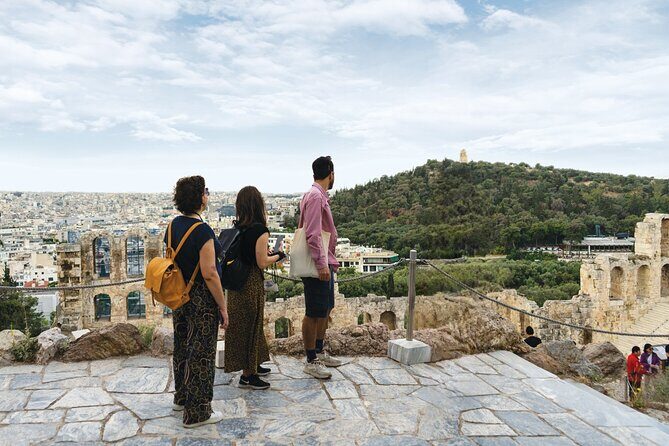
The tour price shown is $41.12 per person. That buys you the guide, earsets, skip-the-ticket-line service, and the structured early route with less waiting.
The Acropolis entrance fee is not included unless you selected the option that includes it. The ticket is listed at €30.00 per person, which can feel like a second bill if you’re not expecting it.
So is it worth it?
- If you’re trying to maximize time at the Parthenon and minimize time in queues, early access is the main value you’re purchasing.
- If you show up later in the day, lines grow fast and your “site time” shrinks.
- If you’re the type who wants both the story and the best angles for photos, the guide + early start combo tends to beat DIY.
Think of it like this: the tour fee is mostly paying for time savings and context. The entrance fee is buying access to the site itself.
Timing tips that prevent headaches (and protect your photos)
This tour is built around strict entry times. Security is airport-style, and peak season waits can hit 30+ minutes. The early start helps, but it doesn’t remove security. It just puts you ahead of the main rush.
Two big timing habits I recommend:
- Arrive early enough to find the meeting point without panicking.
- Keep your schedule tight after the tour, because you’re ending on the south slope and you’ll likely be moving with the flow.
Also, tours run rain or shine. If the forecast looks messy, bring a light layer for wind and wet conditions. Cool mornings can feel nicer than hot afternoons, but the Acropolis is exposed.
Finally, if you select the option without the ticket, you’ll need to follow the voucher instructions to purchase tickets yourself. Double-check what you selected before you leave home so you don’t get stuck dealing with ticket steps at the gate.
Where this fits best: who should book this tour
This works especially well for:
- First-time Acropolis visitors who want a guided route in about two hours
- People who care about photos but don’t want to fight the worst crowd peaks
- Anyone who prefers a clear plan over wandering and hoping they find the right viewpoints
It may not be ideal if:
- Your mobility is limited. The tour recommends moderate physical fitness, and the hill involves uneven ground.
- You want unlimited time lingering at the Parthenon. The tour covers the highlights quickly, and once you finish, you’ll likely need to return independently if you want extra time.
- You’re the kind of traveler who likes buffer time. Entry times are strict, and latecomers can’t count on waiting.
For families, it can still be a good fit if the kids can handle walking and short stops. One review specifically called out that the two hours felt right even with children, which supports that this isn’t a marathon.
What you’ll walk away with besides great views
If you care about remembering what you saw, the tour structure helps. You won’t just be looking at named buildings; you’ll understand the flow:
- entrance gateway first,
- then the Nike and myth-linked stops,
- then the Parthenon as the core,
- and finally the theater landmarks that connect the site to drama and public life.
You also leave with an Athens guide magazine and a map. That’s small, but it’s practical when your brain is full of ancient names and you still need dinner and a plan for the rest of your day.
A smart pairing is the Acropolis Museum afterward, which can deepen appreciation for what you saw up on the hill. Even if you don’t go the same day, it’s a natural follow-up concept.
Should you book First Access Acropolis Tour?
If your top goal is to experience the Acropolis in cooler conditions with fewer people and a guide who helps you connect each landmark, then yes, this is a strong pick. The best reason to book is simple: you buy the early window, and that window can make the difference between a smooth, story-led visit and a stressful crush.
Book it if:
- You want the Parthenon without the worst queues
- You like hearing the meaning behind the stones
- You appreciate practical tools like earsets, plus a map and magazine to keep going
Skip or choose another format if:
- You need lots of extra time at the Parthenon itself
- Your schedule can’t handle strict entry timing
- You’re not comfortable with uneven ground and potentially slippery stone
If you do book, plan your day around the early start, double-check whether your Acropolis ticket is included, and wear shoes you trust. That’s how you turn a famous site into a calmer, more memorable morning.
FAQ
How long is the First Access Acropolis Tour?
It runs about 2 hours.
Is the Acropolis entrance ticket included in the price?
Entrance fees are not included unless you selected the ticket option. The Acropolis entry fee is listed at €30.00 per person for the entrance ticket.
Do I need hotel pickup?
No. Hotel pick-up and drop-off are not included.
Will I have help hearing the guide?
Yes. The tour includes earsets so you can hear your licensed guide more clearly.
What happens if I’m late to the entry time?
Acropolis entry times are strict. The tour can’t wait for latecomers, and refunds aren’t given.
Does the tour run in bad weather?
Yes. Tours run rain or shine.