REVIEW · ATHENS
The Acropolis Walking Tour with a French Guide
Book on Viator →Operated by Athens Walks Tour Company · Bookable on Viator
The Acropolis makes more sense with a guide. I love the skip-the-line entrance tickets that keep the day moving, and I love how French archaeologist-style explanations bring Athens to life, including the Theatre of Dionysus and the famous Parthenon story around missing marbles, with guides like Anna getting real details across. One thing to plan for: you’re outdoors in strong sun, and the pacing isn’t always ideal for kids who need shade and frequent breaks.
This is an approx. 2-hour walking tour capped at 20 travelers, aimed at people with moderate physical fitness. The meeting point is Porinou 5 (Athina 117 42), and the tour ends at Areopagus. You’ll also benefit from microphones for hearing clearly—handy when you’re working your way around busy viewpoints.
In This Review
- Key things to know before you go
- Why a French guide makes the Acropolis click
- Skip-the-line tickets and the real value of the $80.64 price
- Where you start (Porinou 5) and how the route ends near Areopagus
- Stop 1 at the Acropolis: learning the citadel story from the ground up
- Stop 2 on the Parthenon: Athena, the 447 BC start, and the missing marbles angle
- Stop 3 at the Propylaea: why the gateway is part of the lesson
- Temple of Athena Nike: the early Ionic “starter” on the hill
- What you’ll probably notice during the walk: microphones, photo time, and pacing
- Best season and time: manage sun, heat, and photo glare
- Who should book this French-guided Acropolis walk?
- Should you book this Acropolis walking tour with a French guide?
- FAQ
- How long is the Acropolis Walking Tour with a French Guide?
- Does the tour price include skip-the-line entrance tickets?
- What language is the tour taught in?
- Where do I meet the tour, and where does it end?
- How large is the group?
- Is there any free admission, and what happens in bad weather?
- Should you book this Acropolis walking tour with a French guide?
Key things to know before you go

- Skip-the-line entry saves time so you spend it seeing monuments, not queuing.
- French-speaking licensed guide turns stonework into stories, architecture, and dates.
- Parthenon focus includes context about Athena, construction timing, and the marbles.
- Gateway-to-temple flow helps you understand how you move through the Acropolis complex.
- Small group size (max 20) makes it easier to hear and follow along.
- Outdoor pace + sun means you should bring water and plan for bright conditions.
Why a French guide makes the Acropolis click
If you’ve only seen the Acropolis in photos, you’ll miss the “how it all fits” part. On this tour, you get a guided way through the site that explains relationships between buildings, not just what each one looks like. That matters because the Acropolis is a whole layered system—citadel, temple district, and symbol of power—built over time.
The best part is that the guide doesn’t treat it like a museum display. You get practical context: why the Theatre of Dionysus belongs in the conversation, how Athena ties together key structures, and why the Parthenon is more than a postcard. When guides like Anna are on, the tone is clear and structured, not just a memorized lecture.
The one possible downside is communication style. One review noted issues with French clarity, and another mentioned too much scripted delivery. If you’re sensitive to language precision or you want lots of back-and-forth, choose an earlier or evening slot so the group can move at a calmer pace.
Other Acropolis and Parthenon tours we've reviewed in Athens
Skip-the-line tickets and the real value of the $80.64 price

At $80.64 per person for an approx. 2-hour guided walk, the value depends on what you expect: do you want “look but no meaning,” or do you want interpretation with direct access to the site?
Here, the price includes entrance tickets and skip-the-line entry, which is a big deal at the Acropolis. Without this, you can lose a chunk of your day just getting in and settling down. With the guide package, you start learning sooner and keep the momentum.
You also get a licensed French-speaking guide, which is not a small add-on. The Acropolis rewards explanation: construction dates, architectural styles (especially Ionic work), and why certain remnants are so historically charged.
If you’re traveling with someone who reads guidebooks slowly or needs structure, this is a strong option. If you already know the architecture well and prefer audio self-guides, you might feel it’s more guided than you need.
Where you start (Porinou 5) and how the route ends near Areopagus
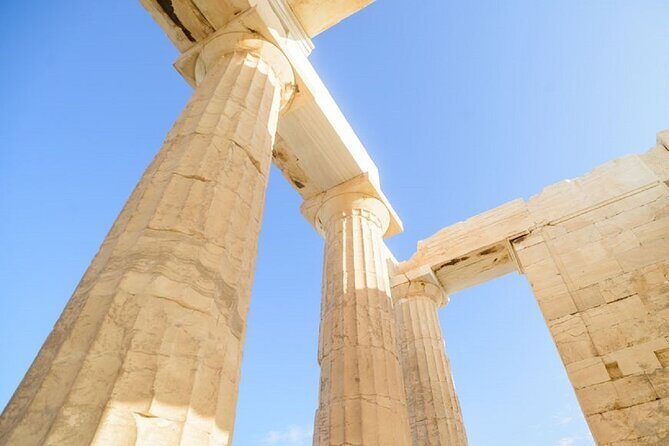
The tour meets at Porinou 5, Athina 117 42, Greece. That’s an easy setup because it’s close to the southern side of the Acropolis approach, so you’re not wasting time across town or zig-zagging through the city looking for the entry point.
The route ends at Areopagus, Athens 105 55. That ending location is useful because it gives you a natural stopping point for nearby viewpoints and walking back toward central areas.
One practical tip: arrive a few minutes early. Tours are small (max 20), and the group needs time to get everyone together and start moving.
Stop 1 at the Acropolis: learning the citadel story from the ground up
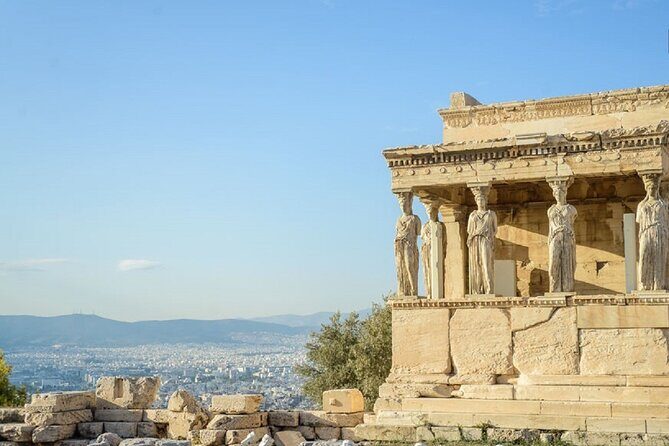
Your first stop is the Acropolis itself: the ancient citadel perched on a rocky outcrop above Athens. The word acropolis comes from Greek roots meaning high city, and that idea helps you understand why this site was chosen. When you’re standing there, you see the “high-ground power” in a way that books can’t fully explain.
At this stage, the guide usually sets the frame for everything that comes next. Expect context about Athens as a cultural center and how the Acropolis functioned beyond religion—politics, identity, and public life all get folded into the story. One highlight mentioned in the tour description is the origins of theater linked to the Theatre of Dionysus, so you’ll likely get a cultural timeline that connects temple architecture with entertainment and civic rituals.
Also, use this first hour to get your bearings. Once you understand where the main structures sit relative to each other, the rest of the tour feels less like checking boxes and more like reading a map.
Stop 2 on the Parthenon: Athena, the 447 BC start, and the missing marbles angle
The Parthenon stop is where the Acropolis becomes unmistakably real. This temple is dedicated to Athena, Athens’ patron, and construction began in 447 BC at the height of Athenian power. Standing there, you’ll feel why this building was designed to project authority—size, symmetry, and placement weren’t accidental.
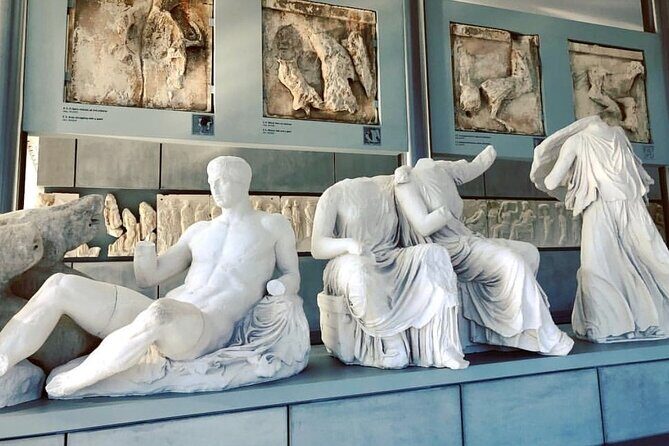
The tour also leans into a key story many people want but few tours explain well: what you see is not the whole thing. The description highlights the theme of missing marbles, and your guide should help you understand why that absence matters historically and visually. Even if you’ve heard about the marbles elsewhere, having it tied directly to what’s still present at the Parthenon can make the topic click.
One detail from the experience that’s worth noting: you may get time for photos, including the chance to step in front of the Parthenon with your group. That’s not just polite—it’s practical. The lighting changes quickly, and having the guide coordinate it prevents the usual chaos of everyone trying to photograph at once.
The only thing that can affect this stop is sun and crowd timing. If you’re heat-sensitive, consider scheduling a later slot so you’re not fighting glare and exhaustion while listening.
Other Acropolis walking tours we've reviewed in Athens





Stop 3 at the Propylaea: why the gateway is part of the lesson

The Propylaea is the monumental gateway that serves as the entrance to the Acropolis. A gateway sounds simple, but in ancient architecture it sets the emotional tone. It’s the threshold between everyday city life and a sacred-civic zone.
This is a short stop (around 15 minutes), so you’ll get the essentials: how the approach works, what the gateway signals, and how it prepares your eye for what comes next. If you care about architecture, this is a good moment because it helps you read the site as a sequence rather than a pile of famous buildings.
Potential drawback: because it’s brief, if you want longer questions or deeper conversation, you may need to go in with clear interests. One review mentioned limited space for questions, so don’t count on a long Q&A here.
Temple of Athena Nike: the early Ionic “starter” on the hill
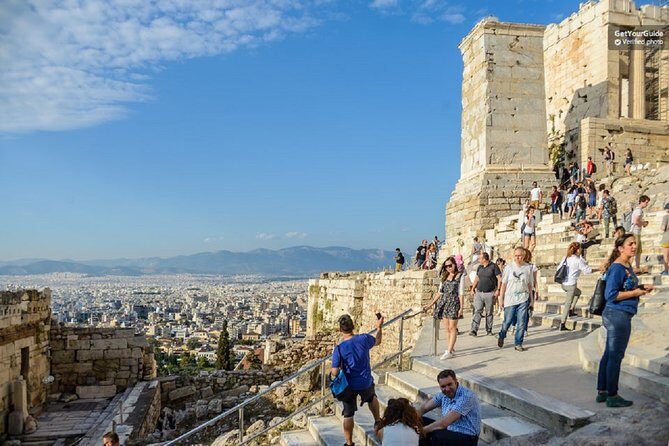
Near the end of the walk, you’ll visit the Temple of Athena Nike. Built around 420 BC, it’s described as the earliest fully Ionic temple on the Acropolis. That single detail is a strong reason to care. Ionic style isn’t just a decoration choice; it’s a sign of artistic evolution.
This stop is about more than spotting columns. You’re learning how architectural style shifts across time and how Athena remains the connecting thread. Since the tour already anchors themes around Athena and civic identity, this temple becomes a focused capstone: a smaller building with a clear architectural identity.
If you’re the type who likes “why this form matters,” you’ll probably enjoy this segment. If you’re mostly focused on the biggest highlights, it may feel quieter than the Parthenon—but it’s still part of the logic of the whole complex.
What you’ll probably notice during the walk: microphones, photo time, and pacing
Two practical things make this tour easier to enjoy: microphones and group pacing. Several experiences note that microphones are provided, which matters at the Acropolis where sound can bounce around and crowds distort who hears what.
Group size also helps. With a max of 20, you’re not stuck listening to one person while the rest disappear behind you. The guide can slow down for the group’s speed, which is crucial when you’re interpreting carvings, architectural lines, and placement.
The pacing is where reviews split. Some people loved the number of stops and the chance to follow at your rhythm. Others felt the explanations were too heavy or not personalized enough, especially for kids, and one mentioned the guide seemed to rely on memorized wording. If you’re traveling with children, think about whether your kids can handle concentrated listening in bright open-air conditions.
Best season and time: manage sun, heat, and photo glare
The tour depends on good weather, and you’ll be walking in open areas. That means sun management is part of the plan, not an afterthought. Even if the tour timing is only 2 hours, the Acropolis can feel longer when you’re standing under intense light while listening.
If you’re deciding between time slots, aim for a cooler period when the light is less harsh. One review explicitly recommended choosing an evening slot because it’s less hot and there’s less crowding. That’s not just comfort—it helps you hear the guide and take photos without everyone panicking at once.
Bring practical essentials: comfortable walking shoes and water. If you know you need shade or frequent breaks, plan for that and don’t feel guilty. A guided tour is still a walk.
Who should book this French-guided Acropolis walk?
This is a great fit if you want meaning, not just visuals. You’ll like it if you enjoy:
- understanding architecture and how multiple buildings relate
- hearing how Athens connects religion, politics, and culture
- learning the Parthenon story with context about missing marbles
- getting guided time for photos without the usual scramble
It may be less ideal if you:
- need a highly interactive experience with lots of question time
- have children who struggle with concentrated explanations in full sun
- prefer a very casual pace with minimal talking
Language matters too. The tour is French, and while many guests praised guides like Anna, there were reports of French quality being a concern for at least one group. If you’re not confident with French, you might want to decide based on your comfort level.
Should you book this Acropolis walking tour with a French guide?
Book it if you want the fastest path to understanding what you’re seeing. The combination of skip-the-line tickets, licensed French guiding, and a route that covers the Parthenon plus key architectural stops makes it strong value for the time.
Skip it (or consider a different format) if you know you dislike long, structured explanations or you need frequent breaks for kids in hot sun. For most adults who love history and want to leave with a clearer picture of how the complex works, this tour is a smart choice. You’ll come away with more than photos—you’ll come away with connections.
FAQ
How long is the Acropolis Walking Tour with a French Guide?
It’s listed as about 2 hours.
Does the tour price include skip-the-line entrance tickets?
Yes. The package includes skip-the-line entrance tickets along with the licensed French-speaking guide.
What language is the tour taught in?
The guide is French-speaking.
Where do I meet the tour, and where does it end?
You start at Porinou 5, Athina 117 42, Greece, and the tour ends at Areopagus, Athens 105 55.
How large is the group?
The tour has a maximum of 20 travelers.
Is there any free admission, and what happens in bad weather?
The experience requires good weather. If it’s canceled due to poor weather, you’ll be offered a different date or a full refund. Also, entrance tickets for European Union citizens under 25 are free with a passport shown.
Should you book this Acropolis walking tour with a French guide?
If you like learning what you’re looking at, this is a solid buy. You get time-saving skip-the-line entry, a licensed French-speaking guide, and a focused route through the Acropolis highlights in about 2 hours. Just go in ready for sun and outdoor walking, and be honest about whether your group wants more explanation or more questions.