REVIEW · ATHENS
Athens: Acropolis Museum and Acropolis Tour in the Afternoon
Book on GetYourGuide →Operated by ATHENS WALKING TOURS · Bookable on GetYourGuide
Acropolis makes sense after the museum. I like the way this tour starts in cool comfort at the Acropolis Museum, then brings you to the monuments with context instead of guesswork. I also like the timing: it’s set up to help you dodge the worst crowd crush and peak heat. One thing to watch: if you choose the option without tickets, you must buy timed entry yourself before the tour date.
You meet at Dionyssiou Areopagitou Street, then spend about 75 minutes in the museum with a live guide and headset audio. You won’t reach the Acropolis right away; it’s about 90 minutes after the tour starts, so plan for a short café break and some waiting-style logistics like security.
In This Review
- Key highlights you’ll feel right away
- Afternoon timing that actually helps: museum first, Parthenon after
- Meeting at Dionyssiou Areopagitou 3: find the orange sign and get set
- Inside the Acropolis Museum: where the Parthenon Marbles make sense
- A short break before the climb: café time and getting “Acropolis-ready”
- On the Acropolis: myth walk with real monument stops
- Theatre of Dionysus: where performances became civic identity
- Odeon of Herodes Atticus: a stop that shows how serious Athens was
- Propylaea: the formal entrance that sets the tone
- Erechtheion: the myth-and-architecture blend you don’t want to miss
- Temple of Athena Nike: a focused temple stop near the action
- Parthenon time: your best view is the one you actually have time for
- Value check on the $115 price: what’s included vs. what you handle
- Timing and ticket reality: how not to lose the day
- What to bring (and what to leave behind) for a smoother walk
- Who this tour fits best (and who might want a different plan)
- Should you book this afternoon Acropolis Museum and Acropolis tour?
Key highlights you’ll feel right away

- Museum first for instant context: Parthenon sculpture and key artifacts click into place before you walk the hill
- Late-day pacing: built for fewer crowds and more comfortable temperatures
- Headsets for clarity: you hear every story without craning your neck
- A guide-led myth-and-monuments route: you connect theater, temples, and “why it was built”
- Parthenon finale: you end with direct sightlines and time to look, not just pose and run
Afternoon timing that actually helps: museum first, Parthenon after
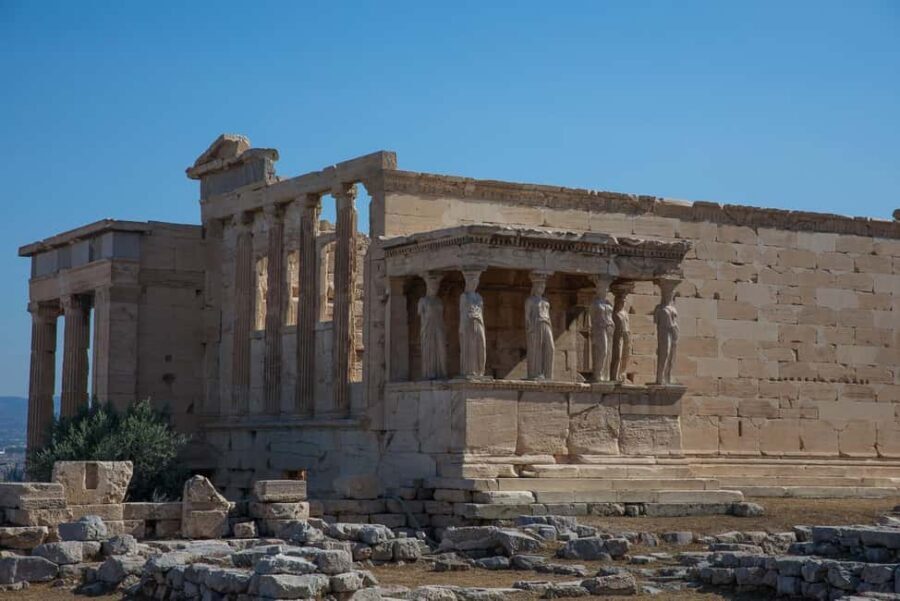
This is the kind of Athens tour that makes a difference because of order and time. If you start on the Acropolis with no background, you end up reading plaques while your brain tries to catch up. Starting at the Acropolis Museum flips that. You see the sculptures, architectural fragments, and the bigger story first—then the hill becomes a living textbook.
The afternoon start matters, too. Heat can turn sightseeing into a sweat contest, and crowd flow on the Acropolis can feel like moving through a packed elevator. This tour is designed for a calmer pace, with time to breathe and shaded moments where possible.
Bottom line: you’re not just getting “the sights.” You’re getting the why, in a schedule that treats your energy like it’s real.
Other Acropolis and Parthenon tours we've reviewed in Athens
Meeting at Dionyssiou Areopagitou 3: find the orange sign and get set

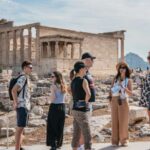
You’ll meet at Dionysiou Areopagitou 3. Look for an orange sign that says Athens Walking Tours at the start of the pedestrian walkway leading toward the Acropolis from Hadrian’s Arch.
Show up a few minutes early. The Acropolis runs on strict timed entry, and latecomers can get turned away because security and checks don’t care about your schedule.
Once you’re grouped up, the guide leads you from there into the Acropolis Museum. Headsets are part of the package, so even if you’re stuck near the back, you should still hear well.
Inside the Acropolis Museum: where the Parthenon Marbles make sense
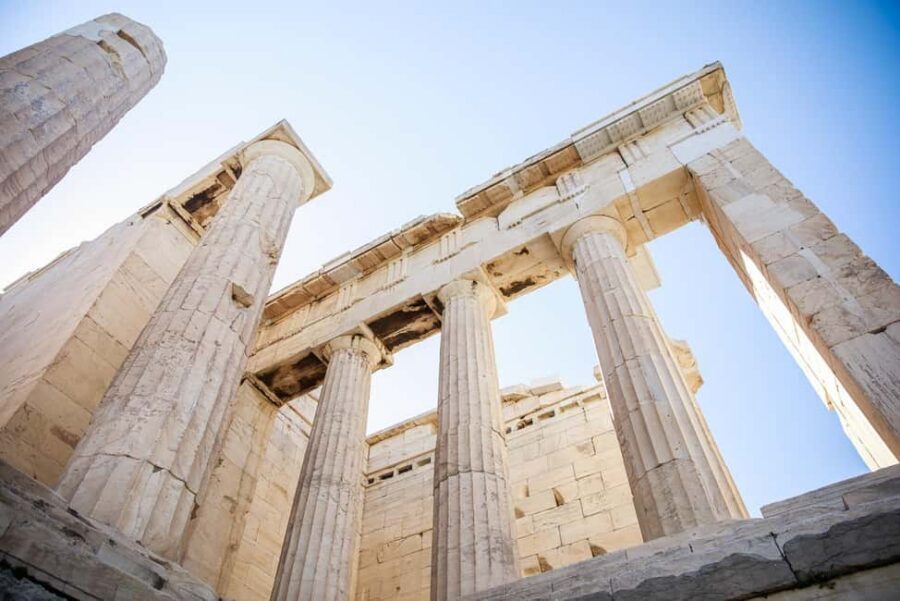
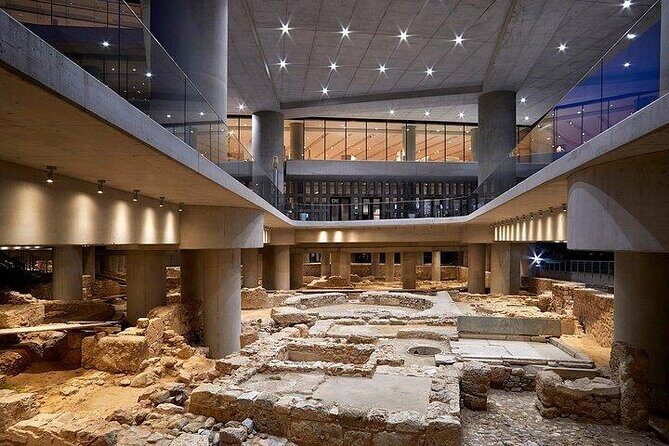
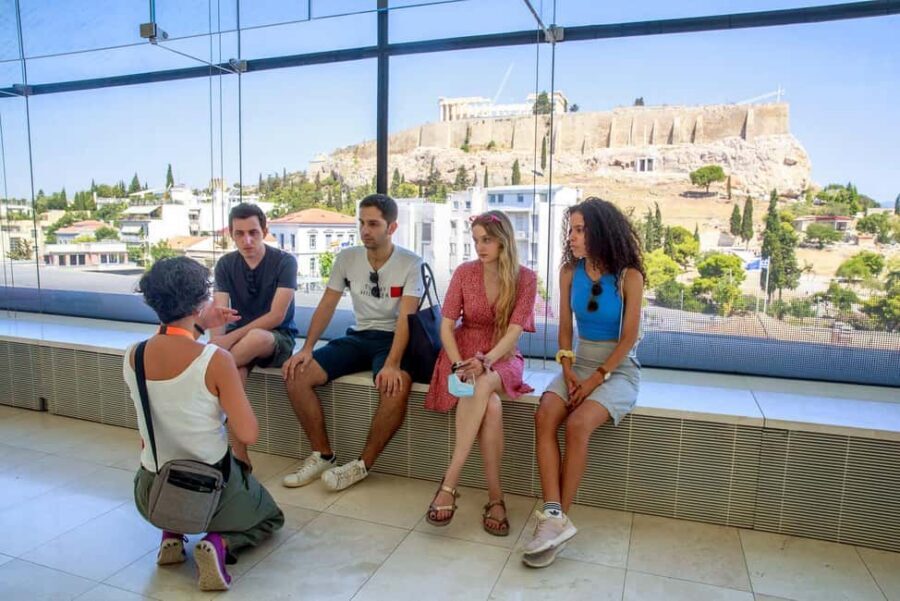
The Acropolis Museum is modern, but it’s positioned like a tool for understanding. You’re in a cool building while you learn how the artifacts relate to what you’ll see outside.
With your guide, you move through collections that cover major eras—Archaic, Classical, Hellenistic, and Roman—and you get the stories tied to the gods and civic life of Athens. The tour doesn’t treat mythology like trivia; it uses it to explain how the city imagined power, protection, and reputation.
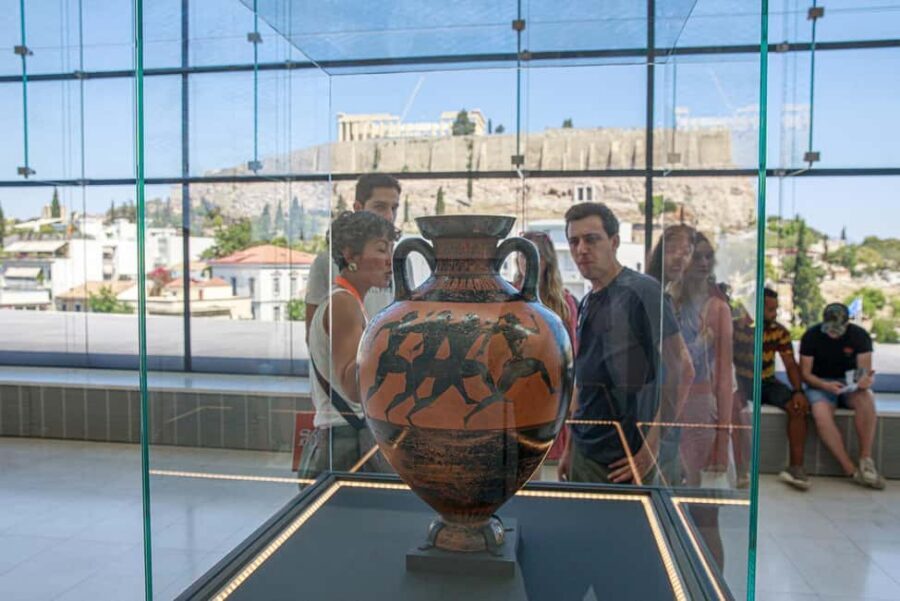
What I love about this stop is the way it makes the Parthenon feel specific. You see notable elements tied to the Parthenon Marbles, plus statues, pottery, and other archaeological treasures. Instead of looking at blank stone later, you can recognize themes and patterns you saw inside.
If you’re the type who reads slowly, you’ll still be fine. The museum pacing includes time to process what you’re seeing, and the guide adjusts so you’re not drowned in nonstop lectures.
A short break before the climb: café time and getting “Acropolis-ready”
After the museum, you get a short break at a local café (about 10 minutes). This is not a sightseeing detour—it’s there for the practical stuff: water, a quick snack if you brought one to nearby areas (food itself isn’t included on the tour), and a reset before the hill.
You’ll then head toward the Acropolis, entering through the south slope. That matters because it affects your flow and the way landmarks appear as you move upward.
Also, expect security checks at the site. Athens Acropolis security is described as airport-style, and waits of 30+ minutes are possible in peak season. This is one reason the timing of a guided, pre-booked setup is worth it.
On the Acropolis: myth walk with real monument stops
The Acropolis portion is a guided route across key areas of the hill. You won’t spend the whole time staring straight at the Parthenon—your guide strings together multiple sites so you understand how the hill functioned as a religious and cultural center.
Along the route, you’ll hear stories connected to civic theater, divine competition, and even the old idea of healing. One especially memorable angle is the mention of origins of theater and how the power struggle between gods connects back to why Athenians built and celebrated these spaces. You also get talk about ancient hospitals and the remedies people sought.
Here’s what you’ll hit as you go:
Other Acropolis Museum tours we've reviewed in Athens




Theatre of Dionysus: where performances became civic identity
You’ll visit the Theatre of Dionysus early in the Acropolis walk. This is one of those places where you can feel the purpose behind the architecture. Your guide links the theater to how Athens used public events to shape identity, politics, and religion.
You’ll only have limited time here, so if you want photos, do them right away once the guide sets the context. Otherwise you’ll end up negotiating crowds while your brain is still catching up.
Odeon of Herodes Atticus: a stop that shows how serious Athens was
Next up is the Odeon of Herodes Atticus. It’s a quick visit, but it’s valuable because it adds another layer: not just religion and temples, but the performance culture and spectacle behind it.
This stop helps you connect the earlier theater stories to the physical scale of performances in ancient Athens.
Propylaea: the formal entrance that sets the tone
You’ll pass by the Propylaea. Even if you only get a few minutes, it helps to see the Acropolis as a planned experience, not a random collection of ruins.
Think of Propylaea as the site’s “front door,” and notice how it frames your movement toward the main sacred spaces.
Erechtheion: the myth-and-architecture blend you don’t want to miss
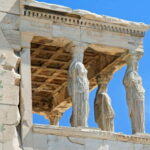
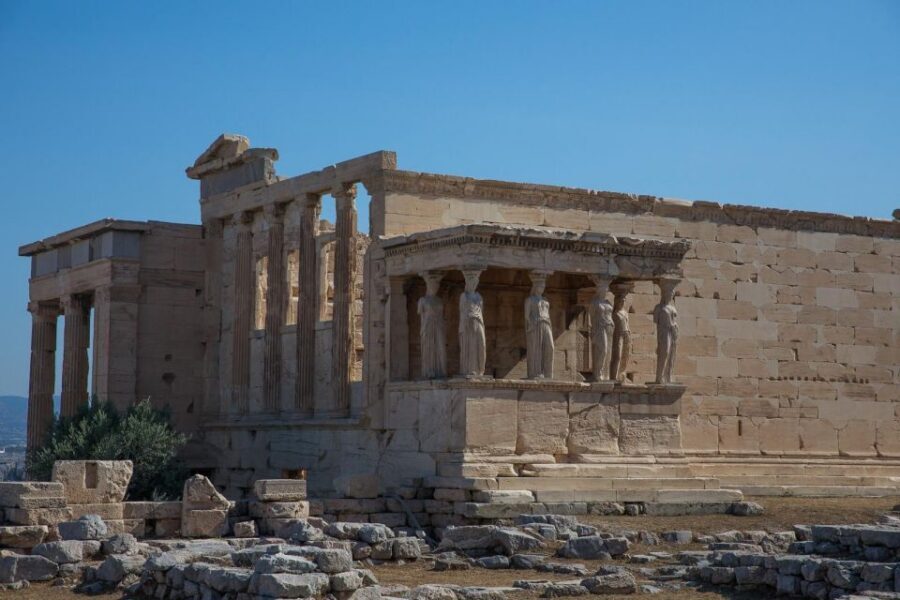
Then comes the Erechtheion, where architecture and story overlap. This is a great stop for looking carefully rather than rushing. Your guide’s explanations help you understand why certain elements mattered, not just what they look like.
If your brain likes patterns, this is where it clicks. You start seeing the Acropolis as a connected whole.
Temple of Athena Nike: a focused temple stop near the action
You’ll also visit the Temple of Athena Nike. This portion is brief, but it’s a good “bridge” between the major spaces and the big final sight of the Parthenon.
Even if you don’t have time to wander, your guide helps you spot what makes this temple meaningful in the broader story of Athena and protection of the city.
Parthenon time: your best view is the one you actually have time for
The tour ends with time at the Parthenon—including a guided visit and a walk that’s long enough to look, not just stand in a queue.
This is your moment. If you’ve done the museum first, you’ll likely find you understand what you’re seeing: what elements were meant to communicate, and why the building mattered as more than an impressive pile of stone.
Photo tip: don’t wait until the end to get your wide shot. Crowds can tighten your space as the light shifts and groups gather. Ask your guide for a photo moment if you’re solo—having someone willing to help with a proper picture can save you from awkward selfie arm angles.
And yes, it’s still hot and windy sometimes. Bring water, and keep your pace steady. You’re aiming for “look and absorb,” not “survive and sprint.”
Value check on the $115 price: what’s included vs. what you handle
At $115 per person, the value is mostly about what you’re buying: time saved, clarity added, and energy protected.
Here’s what’s included:
- Tour guide in English
- Skip-the-ticket-line service
- Headsets so you can hear clearly
- Athens guidebook recommendations and an Athens map
- Pre-booked entry tickets only if you select the ticket option
Not included:
- Food and drink (you do get a short café break, but you pay for what you eat and drink)
If you choose the ticket option, you’re reducing the headache factor. If you don’t, you’re basically responsible for buying timed entry for the right date and time categories through the official ticket sites.
Is it worth it without tickets? It can be, if you’re comfortable handling timed admissions and you’re confident you’ll pick the correct slot. But if you want the experience to feel smooth, selecting the ticket-included option is the calmer move.
Timing and ticket reality: how not to lose the day
This tour is built around strict entry windows. That means:
- You should buy tickets before booking the tour (the tour fee itself is non-refundable).
- You must pick the correct ticket category and the correct EU/non-EU citizenship option. Mistakes can cause extra charges or loss of entry.
- Bring your passport for verification.
Even with skip-the-line help, security checks still happen. Plan for a possible wait at the Acropolis, especially in high season.
Also, tours run rain or shine. If the weather turns, you’ll still do the route—so keep your hat and water strategy realistic.
What to bring (and what to leave behind) for a smoother walk
This experience is on foot and across uneven ancient surfaces, so pack like you’re going to walk more than you think.
Bring:
- Comfortable shoes
- Hat and sunscreen
- Camera (there’s plenty to photograph)
- Water
- Weather-appropriate clothing
Not allowed:
- Baby strollers
- Backpacks
- Food and drinks
If you’re traveling light, you’ll have an easier time at security and won’t spend the day juggling stuff.
Who this tour fits best (and who might want a different plan)
This is a strong match if you:
- Want the Acropolis Museum first so the Parthenon makes sense
- Prefer an afternoon schedule to reduce heat and crowd stress
- Like guides who connect mythology, theater, and civic life to what you’re standing in front of
It’s not a fit if you have mobility limitations. The tour isn’t suitable for wheelchair users or people with mobility impairments, and strollers aren’t allowed either.
If you’re traveling solo, it can be a relief to have someone help with photos and to hear the story in real time instead of reading alone.
Should you book this afternoon Acropolis Museum and Acropolis tour?
Yes—if you want a smoother, less exhausting day with better context.
Book it when:
- You want guided museum-to-hill flow, not two disconnected attractions
- You care about hearing the stories behind the stones
- You’d rather pay for skip-the-line support and headsets than fight logistics yourself
Consider another option if:
- You know you’ll struggle with walking on uneven ground
- You’re expecting a long hangout without guidance (this is guided time, not free wandering)
If you do book, I’d suggest choosing the ticket option if you want the least stress. And if you get a guide like Apollo, Ellenica, Jordan, Margarita, or Paola, lean in and ask questions—this route works best when you let the guide connect the myths to the architecture while your feet still have energy to keep up.