REVIEW · ATHENS
Athens: Acropolis, Parthenon & Acropolis Museum Guided Tour
Book on GetYourGuide →Operated by Athens Walks Tour Company · Bookable on GetYourGuide
The Acropolis turns myths into real places. This guided route walks you through the Parthenon and the surrounding monuments, then (optionally) into the Acropolis Museum, where the stones finally make sense.
I especially love the way a licensed guide makes you see what matters—like stopping for the Temple of Athena Nike details and explaining why the Erechtheion Caryatids feel so powerful. The other thing I like is the museum time: you get context for the sculptures instead of just staring at them. The catch is simple: you still need to budget for separate entrance tickets and you’ll be walking uphill in open-air light and heat.
Key things I’d watch for
- Licensed guide + hearing devices so you don’t miss the story while you’re hiking and photographing
- Acropolis-first focus, hitting the Parthenon, Propylaea, Caryatids, and the Theater of Dionysus area
- Acropolis Museum option so you can connect monuments to surviving sculpture fragments
- Photo-friendly stops where the guide helps you line up views over Athens
- Monday museum timing change, with a different site plan if the museum is closed
In This Review
- Start at Porinou Street, then let the Acropolis explain itself
- Ticket reality: skip the lines, but plan for entrances
- The walk up: Temple of Athena Nike and the Propylaea gateway
- Parthenon time: what to look for when your brain wants a postcard
- Erechtheion’s Caryatids: why these figures still grab you
- Theater of Dionysus: the origin story behind drama
- Acropolis Museum option: where sculptures stop being random
- What the guides do well (and why it matters for value)
- Price and value: when $70 actually feels like a deal
- Practical tips so your day doesn’t get derailed
- Who this tour suits best (and who should think twice)
- Should you book this Acropolis + Museum tour?
- FAQ
- What is included in the $70 tour price?
- Are Acropolis and Acropolis Museum tickets included?
- How long is the guided tour?
- Where do we meet the guide?
- Do I need to book entrance tickets in advance?
- Does the tour include skip-the-line entry?
- What languages are available?
- Is this tour suitable for wheelchair users?
- What should I bring?
Start at Porinou Street, then let the Acropolis explain itself
This tour is built for people who want more than a photo stop. You meet the guide at the Athens Walks office on Porinou 5 (look for the ground-floor office), and you’re told exactly where to check in. One person from your group handles indoor check-in, and the tour company provides hearing devices plus group assignments—small details that help the group stay together when everyone’s craning their neck for monuments.
The pacing matters. The route is a walking climb, but the guide is there to slow you down in the right places: at major viewpoints, key building fronts, and sculpture areas where your eyes would otherwise skip over important features.
Ticket reality: skip the lines, but plan for entrances

The price you pay for the guide is $70 per person for a 2–4 hour tour (varies by start time and how the walk flows). What’s not included is crucial for budgeting: you’ll pay separate Acropolis entrance tickets (30€ per person) and (if you choose it) Acropolis Museum tickets (10–20€ per person).
Two practical notes make this feel worth it instead of annoying:
- You get skip-the-ticket-line benefits, which is a big deal at the Acropolis where queues can eat your “best light” time.
- Your guide helps you understand what you’re looking at—so the monuments aren’t just a checklist.
Also, do what the tour instructions ask and book your entrance tickets online in advance at the official Acropolis e-ticket site. Even if you’re skipping the line with your tour, pre-booking is still the safest path for smooth entry.
Other Acropolis and Parthenon tours we've reviewed in Athens

The walk up: Temple of Athena Nike and the Propylaea gateway
The tour’s tone is set early: you start at Athens’ most monumental stage, and the guide explains what you’re seeing in plain terms. One of the best first anchors is the Temple of Athena Nike—small in footprint compared with the Parthenon, but famous for its role in the story of the site. Your guide will point out how this temple sits like a dramatic “before” picture, a visual gateway that shifts your mindset from city streets to sacred ground.
Then comes the Propylaea area (the gateway). This is the part that can look like a bunch of stone steps to people who don’t know what gateways did in ancient planning. With a guide, it becomes a transition: you’re moving from everyday space into a symbolic center meant to impress, instruct, and unify.
And yes, bring the basics. Comfortable shoes and sunscreen matter here. The tour notes also suggest sunglasses and a sun hat for a reason—shade isn’t guaranteed, and the Acropolis is exposed.
Parthenon time: what to look for when your brain wants a postcard
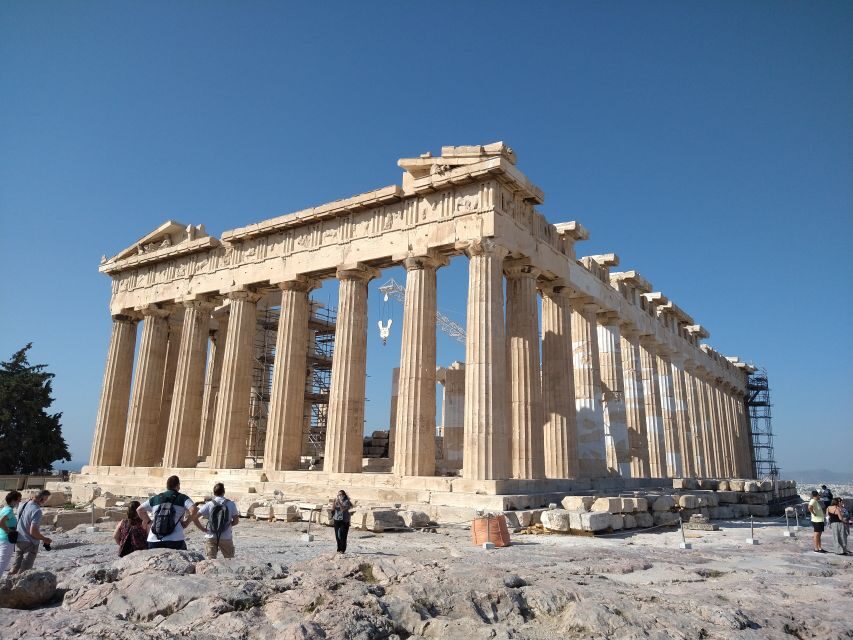
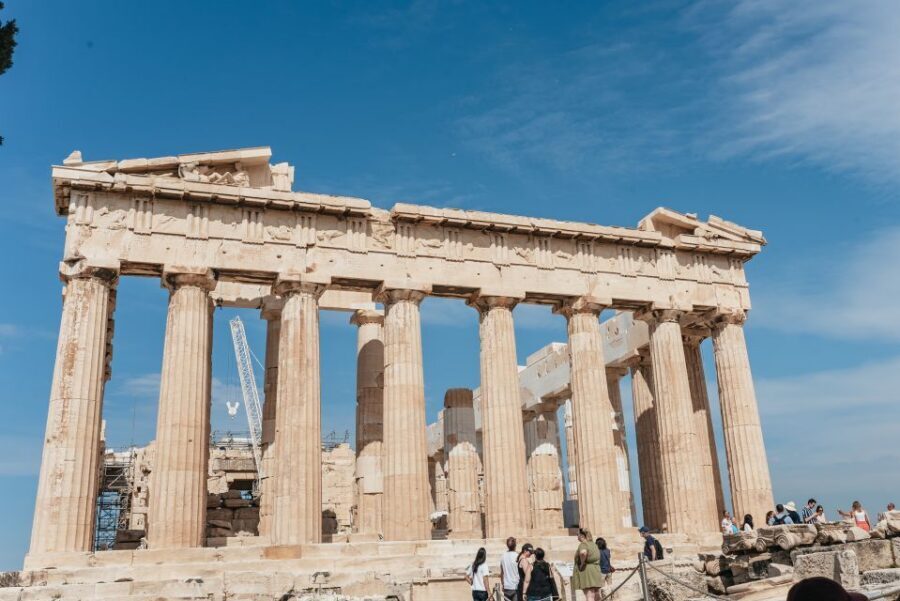
The big star is the Parthenon, and your guide helps you slow down enough to notice more than the overall “wow” shape. The guide’s job is to turn architectural terms and myths into something you can see—like describing what roles the monuments played in classical civic life, not just telling legends as trivia.
When you’re there, you’ll likely feel two competing urges:
1) to take photos quickly, and
2) to stop and actually study the structure.
A good guide helps you do both. The route includes planned pauses so you can regroup, learn what you’re seeing, and then go back to the viewpoint for better photos with context.
If you’re visiting with kids, that structure helps a lot. Several guides are praised for stopping frequently, giving clear explanations, and keeping everyone engaged instead of rushing to the next platform.
Erechtheion’s Caryatids: why these figures still grab you
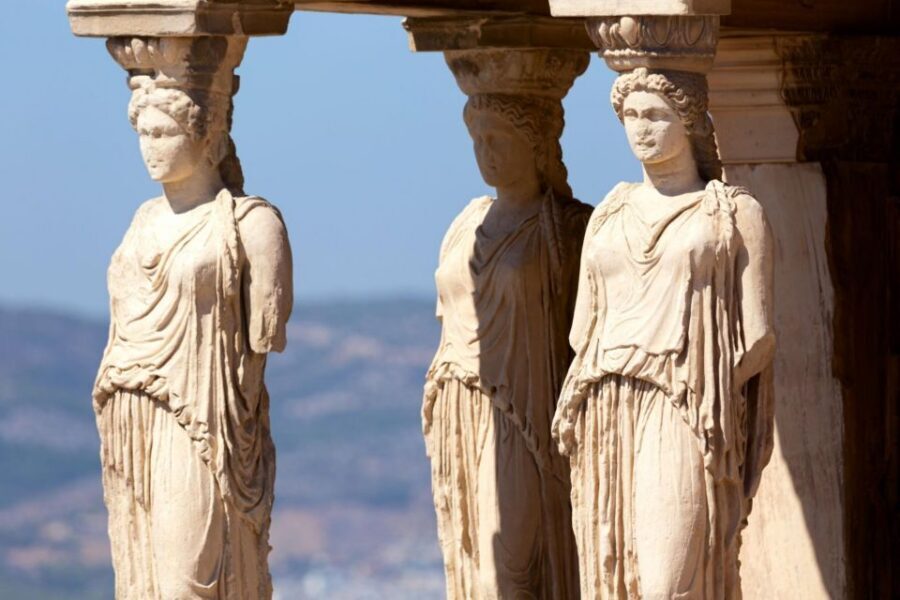
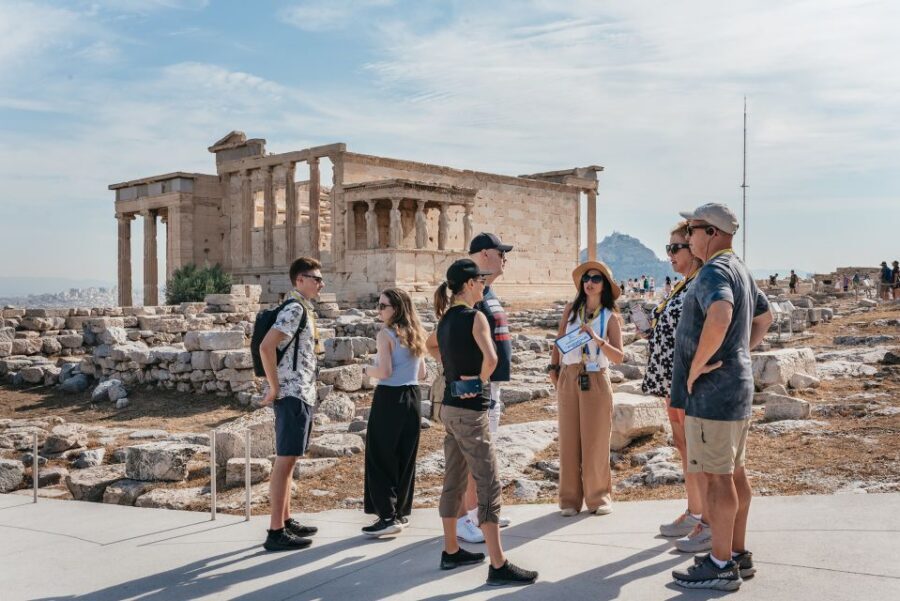
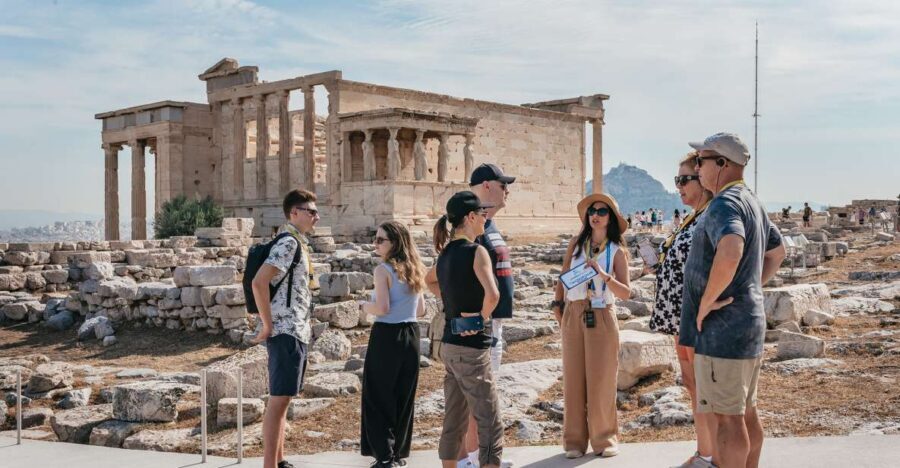
One of the tour highlights is the Erechtheion, especially the Porch of the Caryatids. These are not just pretty statues. In the hands of a skilled guide, they become a study in function, symbolism, and how ancient design used the human form to carry meaning.
Here’s the practical advantage of having someone explain this: your eyes learn a “scan pattern.” You start looking at posture, placement, and how the figures relate to the building. Instead of asking, What am I supposed to be impressed by? you end up thinking, Oh—I get how this works.
The guide also helps with timing and walking breaks. The Acropolis looks steep from below, and the tour includes stops along the climb to reduce the “we’re just suffering to get there” feeling. Those pauses make a difference in heat and energy, especially in summer.
Theater of Dionysus: the origin story behind drama
As you move along the route, you pass the area of the Theater of Dionysus, tied to the birth of theater culture in ancient Greece. This stop is where the tour’s myth-and-history balancing act becomes useful. The guide connects what you’re seeing to the bigger idea: classical Athens didn’t just build temples—it also built public life, including performance and storytelling.
You don’t need to be a theater buff to enjoy this part. You just need a guide who translates “history” into a believable human scene. The result is that the stones start feeling like a place where people gathered, argued, celebrated, and watched stories unfold.
Other Acropolis Museum tours we've reviewed in Athens





Acropolis Museum option: where sculptures stop being random
If you book the option to visit the Acropolis Museum, you’ll get a major payoff. On the Acropolis hill, you see monuments in place, but the sculptures can feel like distant details. In the museum, the story becomes clearer because you see collections and contexts that help you connect the dots.
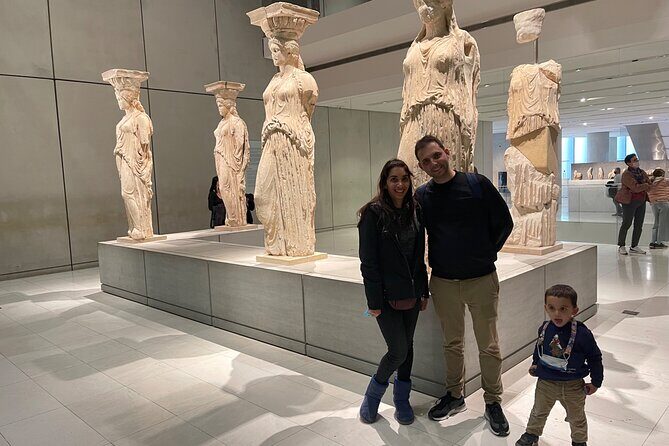
Expect state-of-the-art galleries and a curated-looking flow that shows why these objects mattered. Your guide will explain how the museum pieces connect back to what you saw on the hill—so you’re not just looking at artifacts, you’re learning the narrative behind them.
One smart planning detail: the tour notes that on Mondays, the Acropolis Museum closes at 16:00. If you’re touring on a Monday, the plan shifts so you’ll visit Acropolis monuments and the Ancient Agora instead. That matters if you’re trying to fit everything into a tight itinerary—Monday visits can change the feel of your day, even if the main Acropolis walk remains.
What the guides do well (and why it matters for value)
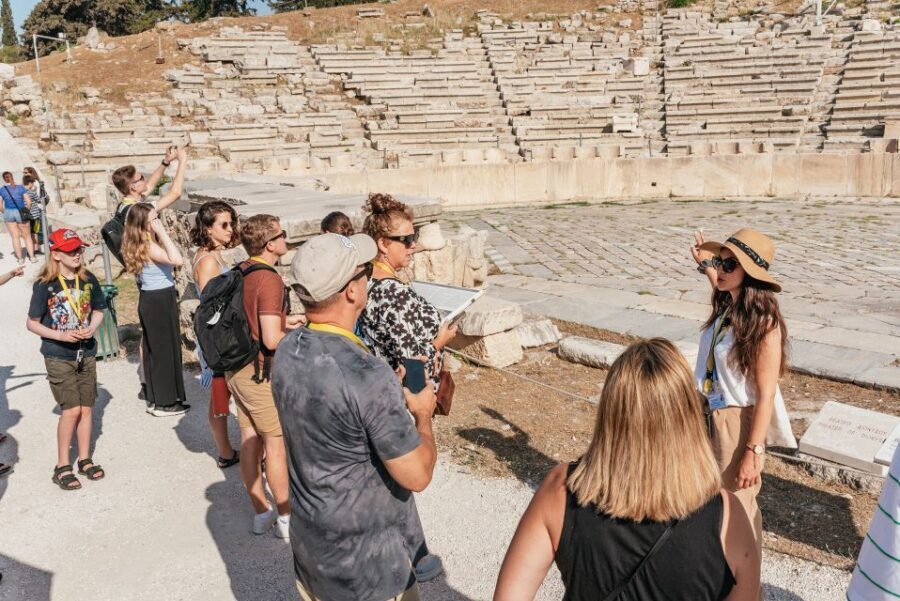
This is one of those tours where the “product” is actually the guide. The tour is led by licensed, experienced professionals, and the feedback patterns are consistent: guides like Elizabeth, Alina, Anna, Hermes, Maria, and Rosa are praised for storytelling depth and for answering questions without making you feel rushed.
Look for these guide skills because they change your experience fast:
- stopping often to explain what your eyes might miss
- using myth and history in the same sentence, without turning it into a lecture
- adjusting pace for families and tired legs
- keeping humor and clarity in the mix, not just facts
You also get assigned groups and hearing devices, which helps a lot when the Acropolis crowd gets loud.
Price and value: when $70 actually feels like a deal
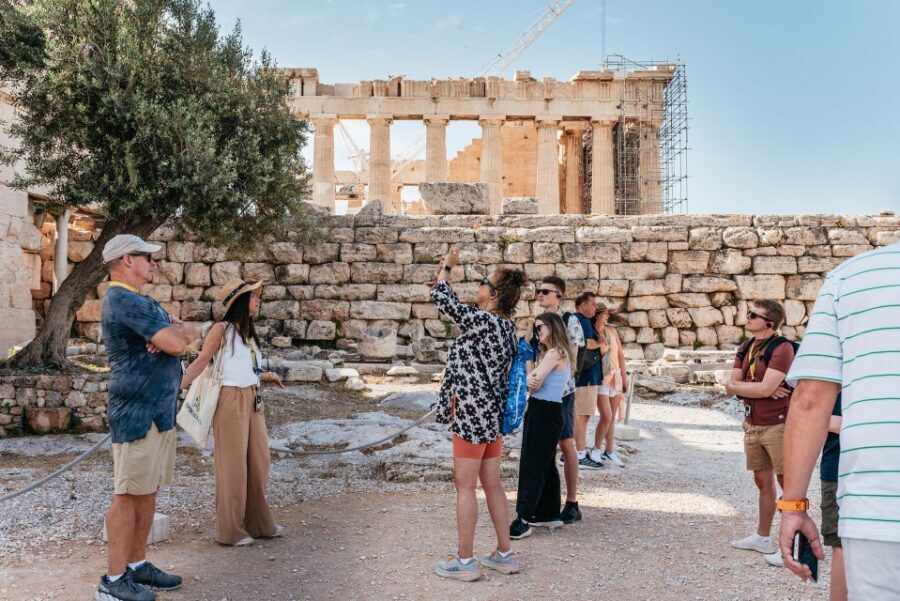
Let’s do the real math. You pay $70 for the guide portion, then likely add 30€ for the Acropolis entrance plus 10–20€ for the museum if you choose it. That means you’re paying more overall than the headline price.
So what makes it feel like value?
- Time protection. Skip-line access helps you keep momentum.
- Translation. You’re paying for understanding, not just access.
- Better photos. Guides commonly stop for the exact view angles, and they also know where the best lines of sight are from the path you’re taking.
If you’re the kind of traveler who reads a little, asks a few questions, and likes your sightseeing to come with meaning, this is the right investment. If you just want quick photos and don’t care about context, you might feel the cost.
Practical tips so your day doesn’t get derailed

A few things will make this tour smoother right away:
- Wear comfortable shoes. The Acropolis is uneven and steep.
- Bring water, plus a sun hat and sunscreen. Shade is limited.
- Bring your passport or ID card. It matters for reduced/free access rules.
- Make sure everyone knows the meeting point: Athens Walks at Porinou 5, ground floor, and arrive 15 minutes early.
It’s also worth knowing what’s not allowed: large luggage, pets, and smoking aren’t part of the plan. If you’re traveling light, you’ll feel less stressed.
For kids and students, the tour info is clear: people under 18 get free access, and anyone with an EU passport under 25 also gets free access. That can change the total cost of your day, so it’s worth checking your group’s eligibility before you budget.
Who this tour suits best (and who should think twice)
This guided walk is a great match if you want:
- an organized introduction to the Acropolis monuments and what they meant
- photo viewpoints with explanations, not just a route
- a museum add-on that connects artifacts to the buildings
The tour is listed as not suitable for wheelchair users. If you have mobility limitations, ask before booking and plan for lots of stairs and uneven ground.
Because it’s walking-focused and runs 2–4 hours, it’s also easiest for travelers who can comfortably walk at least that long in heat. If you’re extremely heat-sensitive, you might prefer a cooler start time if available.
Should you book this Acropolis + Museum tour?
If you’re choosing between doing it alone or with a guide, I’d lean toward booking. The Acropolis is dramatic on its own, but it’s the guide that helps it click: Parthenon architecture becomes a story, Caryatids become symbolism with weight, and the Theater of Dionysus becomes part of why Athens mattered beyond temples.
Book this tour if you want maximum meaning per hour and you like asking questions. Skip it only if you’re determined to keep things ultra-flexible with no structure, or if your budget can’t handle the extra entrance ticket costs.
FAQ
What is included in the $70 tour price?
The included item is a licensed tour guide. Entrance tickets for the Acropolis and the Acropolis Museum are not included in the base price.
Are Acropolis and Acropolis Museum tickets included?
No. Acropolis entrance tickets cost 30€ per person, and Acropolis Museum tickets cost about 10–20€ per person (depending on the ticket type).
How long is the guided tour?
The duration is 2 to 4 hours, depending on the starting time and how the day’s plan runs.
Where do we meet the guide?
Meet at the Athens Walks office at Porinou 5, 11742. The instructions say to look for the ground floor office of Athens Walks at 5 Porinou Street.
Do I need to book entrance tickets in advance?
Yes. The tour instructions ask you to book Acropolis entrance tickets online in advance at the official Acropolis e-ticket site.
Does the tour include skip-the-line entry?
Yes. The tour is described as offering skip the ticket line.
What languages are available?
The live tour guide is offered in English, Italian, German, French, and Spanish.
Is this tour suitable for wheelchair users?
The tour is listed as not suitable for wheelchair users.
What should I bring?
Bring passport or ID, comfortable shoes, sunglasses, a sun hat, and sunscreen (and the tour also suggests water).