REVIEW · ATHENS
Athens Half-Day Tour: Acropolis, Parthenon & All Major Landmarks
Book on Viator →Operated by Greek Heritage: Private Tours & Transfers · Bookable on Viator
Athens gets overwhelming fast, then this half-day makes it click. You get door-to-door pickup in an air-conditioned vehicle plus a driver who explains what you’re looking at before you go in. It’s a practical way to see a lot without doing the frantic map dance all afternoon.
My favorite part is the mix of “big-name” monuments and everyday Athens context: you start at the Acropolis/Parthenon and then roll through neighborhoods and landmarks like Plaka, Syntagma Square, and the neoclassical “Athenian Trilogy.” The pace feels efficient, and because it’s just your group, you’re not stuck waiting on a big crowd.
One thing to plan for: entrance fees are not included, and the Acropolis areas can have long lines, so you’ll want tickets ready and some patience with waiting.
In This Review
- Key highlights (what makes this tour work)
- Five hours in Athens: why this route makes sense
- Acropolis Hill and Parthenon: get the right expectations
- What to do when the Parthenon queue eats time
- Plaka, plus Alexander: quick context that makes the city feel real
- Roman Athens and big ruins: Hadrian’s Arch and Olympian Zeus
- Syntagma Square: Parliament, the Unknown Soldier, and real ceremony energy
- Panathenaic Stadium and the Marathon Run idea
- Lycabettus: a quick viewpoint option when you want sky over stone
- The Athenian Trilogy: Academy, University, and National Library
- Optional add-on: Acropolis Museum and Ancient Agora
- Acropolis Museum (60 minutes)
- Ancient Agora (60 minutes)
- Price and logistics: what $145.12 really buys
- Who this tour suits best
- Should you book this Athens half-day tour?
- FAQ
- Is hotel pickup and drop-off included?
- Are entrance fees included in the tour price?
- Does the tour include the Acropolis Museum?
- Does the tour include the Ancient Agora?
- Are there any stops with free admission?
- How long is the tour?
- Is this a private tour?
- What language is the driver?
- What’s included for comfort during the ride?
- Can I pre-order tickets in advance?
Key highlights (what makes this tour work)
- Private group time: just your party, with flexible stop durations based on what you want to do.
- First-rate transport comfort: bottled water, WiFi on board, and hotel pickup/drop-off in an air-conditioned vehicle.
- Acropolis focus with realistic time: quick, targeted time at the hill and the Parthenon—enough to see the essentials.
- Major landmarks beyond the postcard shots: Hadrian’s Arch, Panathenaic Stadium, Olympian Zeus, Parliament, and the university/library buildings.
- Optional museum upgrades: add the Acropolis Museum (60 minutes) and/or the Ancient Agora (60 minutes) if you want more depth.
Five hours in Athens: why this route makes sense
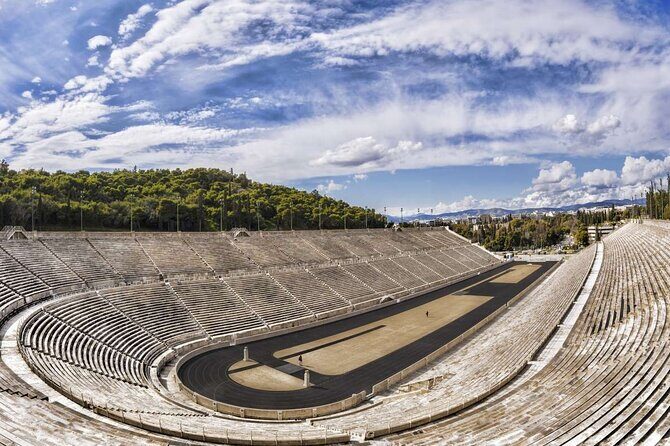
If you only have one half-day in Athens, the challenge is simple: the city’s most famous ruins are concentrated, but the rest of the city helps you understand them. This tour solves that by building a loop that hits the Acropolis first, then fans out across central Athens where a lot of the classic landmarks sit within reach.
You start with the obvious, ticketed anchors: Acropolis Hill and the Parthenon. Then you get the supporting cast—Roman-era Athens (Hadrian’s Arch and the Temple of Olympian Zeus), civic Athens (Syntagma Square and the Hellenic Parliament), and educational Athens (the Academy, University, and National Library buildings). Even the quick photo stops feel intentional, because the driver’s narration gives you a thread to follow as you move.
It’s also a comfort win. Athens heat can turn “I’ll just walk” plans into “I’m melting in real time.” You’re in a vehicle with bottled water and a cool cabin between sites, which matters when you’re moving from hilltops down into the city and back out again.
Other Acropolis and Parthenon tours we've reviewed in Athens
Acropolis Hill and Parthenon: get the right expectations
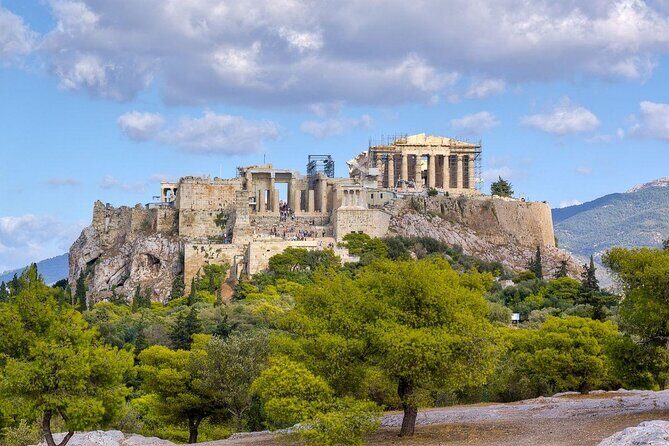
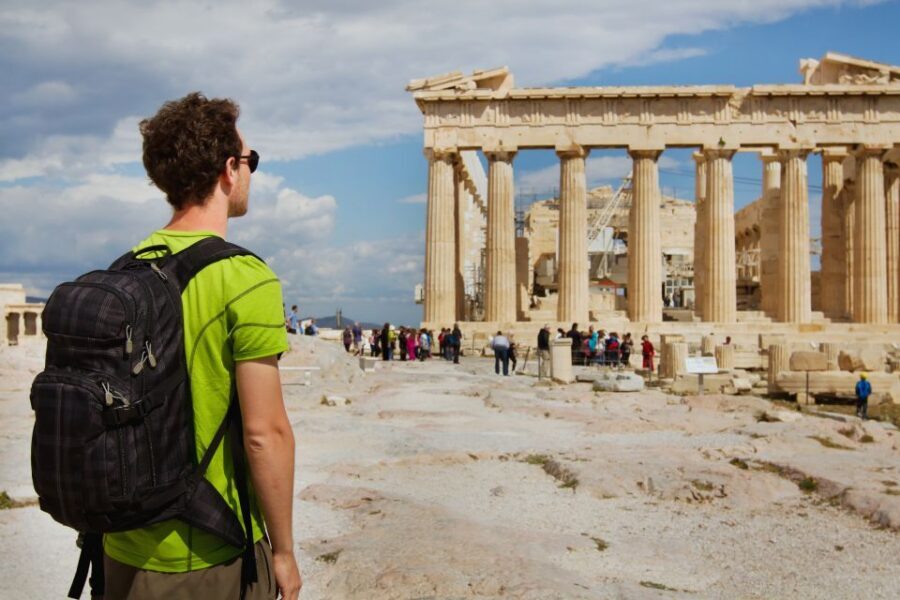
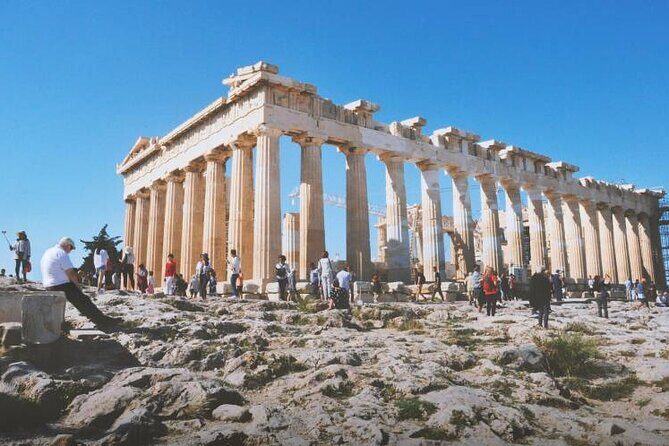
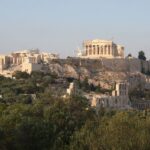
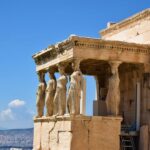
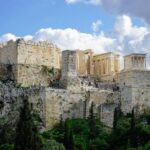
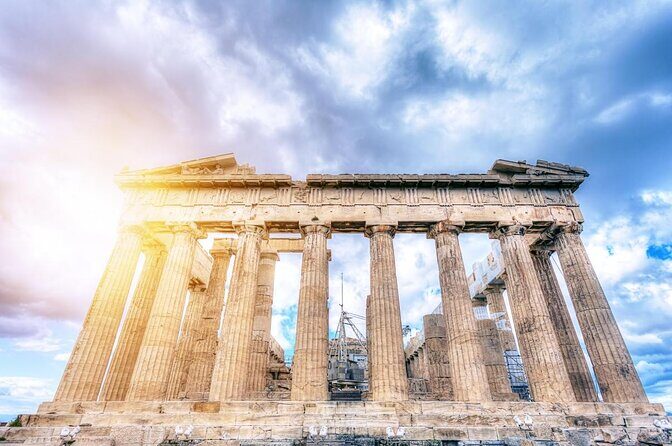
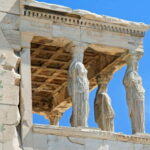
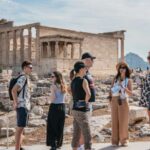
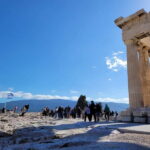
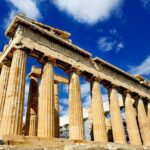
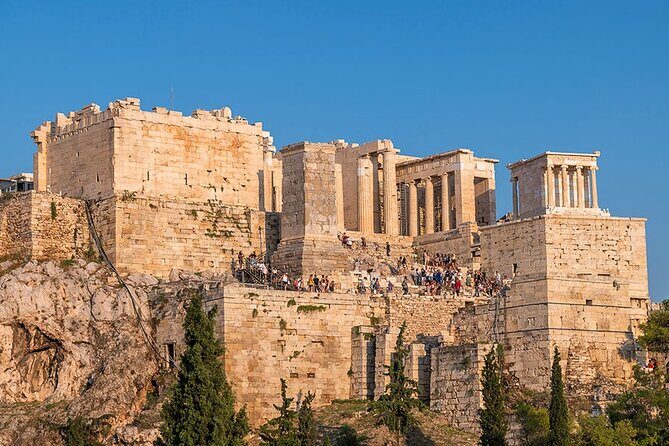
The Acropolis is not just one monument—it’s a whole citadel. On your visit, you’ll spend time at the Acropolis area and then focus on the Parthenon. The key structures you’ll hear about include the Propylaea, the Erechtheion, and the Temple of Athena Nike, with the Parthenon as the centerpiece.
A smart way to use your time here is to treat the first minutes as orientation. Look for:
- The big geometric story of the complex (how the buildings relate to each other on the hill).
- The columns and friezes for what they represent, not just how they look.
- Your sightlines back over the city—this is part of why people get that wow moment.
The tour keeps the on-foot time purposeful—about 30 minutes at Acropolis and 30 minutes at the Parthenon. That’s not “take your time for hours” sightseeing, but it’s enough to see the essentials if you keep moving and stay focused on the structures you came for.
Also note the practical reality: Acropolis entry requires an admission ticket, and that’s extra. The tour itself doesn’t include the Acropolis Hill entrance fee, so you’ll want to budget time for lines and budget money for the ticket.
What to do when the Parthenon queue eats time
The Parthenon is famous for a reason, but the experience can be affected by how busy it is. Expect queues at the Acropolis, especially during peak hours. The tour’s strength is that you’re not stuck in a huge group. You get your time window, and when it’s your turn, you’re typically dropped in the right area so you can focus on getting inside and then seeing what matters.
Here’s how to stay sane if you hit a slower-than-ideal moment:
- Use the first pass to confirm the big shapes: the Parthenon’s outer Doric columns and the overall layout.
- If your group is flexible, shift your “deep reading” to the next layer (optional museum time).
- Keep water on hand. Even quick visits can feel longer in the sun.
If you want the most payoff, consider pairing this with the optional Acropolis Museum add-on later in the itinerary. It’s where you can slow down without fighting the outdoor crowds.
Plaka, plus Alexander: quick context that makes the city feel real
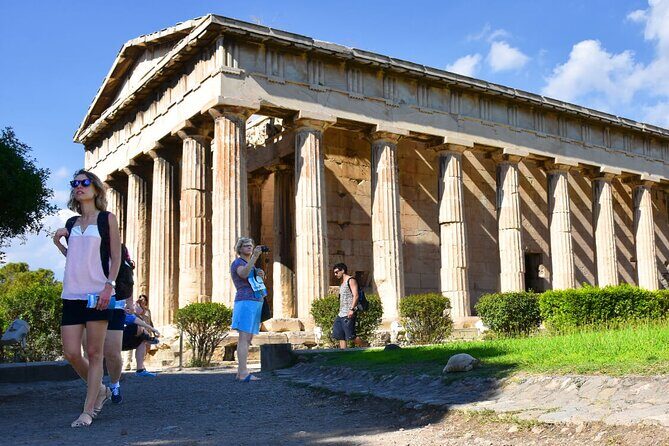
After the Acropolis, the tour moves into street-level Athens with a stop in Plaka, the historic neighborhood under the hill. Plaka is the kind of place where you can understand Athens as a living city, not just a museum. The streets are narrow and winding, and the mix of tavernas, cafes, shops, and even small archaeological reminders makes it easy to see why people call it the neighborhood of the gods.
Then there’s a stop tied to Alexander the Great—born in 356 BCE, he took the throne at 20 and ran campaigns that shaped the Hellenistic world. You’re not getting a long lecture here. Instead, you get enough historical framing to connect what you’ve seen on the Acropolis with what came after: Greek culture spreading and blending across a huge region.
This is the part of the tour that feels “soft” compared to the hard stone monuments. But it’s also what helps you leave Athens feeling like you understand the sequence—ancient Athens, then later empires and cultural mixing—without needing a textbook.
Roman Athens and big ruins: Hadrian’s Arch and Olympian Zeus
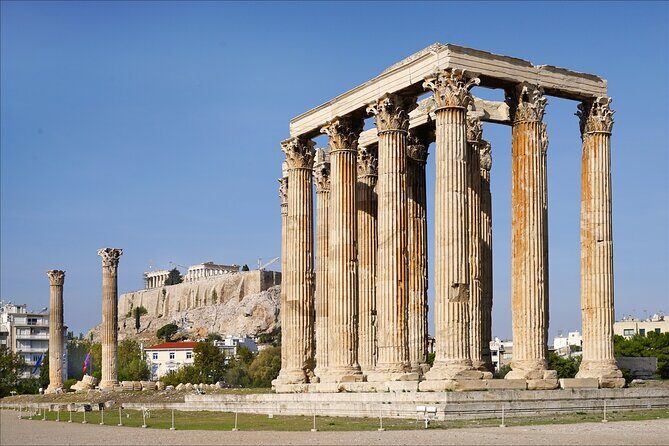
Two stops give you a contrast to the Greek world: Hadrian’s Arch and the Temple of Olympian Zeus.
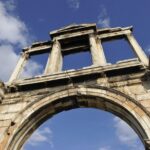
Hadrian’s Arch is a clear, readable monument for first-time visitors. It’s about a gateway—built in 131 AD—and it marks a boundary between older and newer parts of the city. The arch is about 18 meters tall and includes inscriptions on each side honoring Theseus on one side and Hadrian on the other. Since admission is marked as free for this stop, it’s a low-cost way to get a strong visual moment.
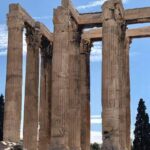
Then comes the Temple of Olympian Zeus, where the experience is all scale. The temple took centuries to complete, stretching from the 6th century BCE commissioning to completion in the 2nd century CE. What remains today is mostly columns and ruins, but they’re still huge. Corinthian columns reach around 17 meters, and the site gives you a sense of how ambitious ancient building projects could be when religion, power, and money all align.
If you like your sightseeing with contrast—Greek temples on one side of your brain and Roman-era grandeur on the other—this section is a win. It’s also mostly free-ticket territory, so it keeps your paid ticket budget from ballooning.
Other Athens city highlights tours we've reviewed in Athens



Syntagma Square: Parliament, the Unknown Soldier, and real ceremony energy

Central Athens is at its best around Syntagma Square. This tour includes the Hellenic Parliament, a neoclassical building that has served as the seat of Parliament since 1934 (the structure began as a royal palace in 1843). Outside, you’ll have the chance to see the Tomb of the Unknown Soldier, guarded by the Evzones in traditional attire.
The tomb is built as a marble memorial with relief scenes and an eternal flame. There’s also a changing of the guard ceremony, and it’s the kind of ritual that turns a random travel stop into a moment you remember.
Practically speaking, this is a great “reset” after the Acropolis. You’re still sightseeing, but you’re not climbing anything. And because the buildings and square are close together, you can take photos, watch the guards, and regroup before your next drive.
Panathenaic Stadium and the Marathon Run idea

The tour includes the Panathenaic Stadium (Kallimarmaro), which is one of Athens’ most recognizable arenas. It’s horseshoe-shaped and built entirely from white marble. It hosted the ancient Panathenaic Games, and later it was revived in the modern era as a venue for the 1896 Olympics.
The important detail for your planning: admission here is noted as not included, so you’ll decide whether you want to pay to go in or just appreciate it from nearby. Either way, it’s an excellent reminder that Athens isn’t only ancient ruins—it’s also a city that helped re-start the modern Olympic story.
There’s also a stop featuring Dromeas, also called The Runner, created in 1994 by Costas Varotsos. The sculpture uses layered glass and iron to depict motion, and it connects to the story of the Marathon Run—Pheidippides running from Marathon to Athens in 490 BCE to announce victory. Even if you’re not a “public art person,” this stop gives you a bridge between the ancient battlefield story and the modern marathon race that many people know from TV and sneakers.
Lycabettus: a quick viewpoint option when you want sky over stone
Mount Lycabettus is a high lookout point above Athens, roughly 300 meters up. There’s a chapel at the summit (St. George), and you’ll have panoramic views over the city and out toward the Aegean and mountains on clear days.
Your time here is short—about 10 minutes—so treat it as a viewpoint moment, not a hike plan. Wear comfortable shoes, and expect stairs or a winding path depending on where you enter. If you come during cooler hours, you’ll likely feel more comfortable with the climb. If you come when it’s hot, keep it brief and focus on photos and the view.
This stop is a nice final payoff because it changes the “texture” of your day: after so much stone and architecture, the sky feels like a breather.
The Athenian Trilogy: Academy, University, and National Library
If you walk away from Athens thinking only about ruins, you miss a huge piece of the city’s personality. This tour includes the Academy of Athens (founded in 1926), the National and Kapodistrian University of Athens (established in 1837), and the National Library of Greece (founded in 1832). These three institutions are part of what’s often called the Athenian Trilogy.
What makes this section useful for you is that it adds another layer of meaning. The Acropolis tells one story: ancient civic and spiritual identity. The trilogy buildings tell a newer story: Greece investing in research, education, and preservation of knowledge. The National Library, for instance, is designed to hold manuscripts, rare books, and documents, plus it supports modern digital archives.
These are stops that work well even if you’re not planning to go inside. They give you architecture to notice quickly, and they make your day feel more like a city tour than just a ruin tour.
Optional add-on: Acropolis Museum and Ancient Agora
If you only do outdoor monuments, you’ll still have an amazing day. But if you care about details—friezes, sculptural pieces, and the “why does this look like this” questions—the optional stops can be worth it.
Acropolis Museum (60 minutes)
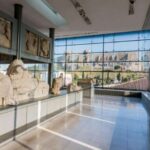
The Acropolis Museum is a modern building opened in 2009, sitting at the foot of the Acropolis hill with views toward the Parthenon. It houses over 4,000 artifacts across five floors. The museum includes:
- A Parthenon Gallery with glass walls that give you a strong sightline back to the Parthenon
- The Caryatids (original statues from the Erechtheion)
- A display approach that integrates the past and the building itself, including glass sections showing ancient ruins below
This add-on is the best place to slow down after the quick Acropolis and Parthenon time. You can connect the outdoor structures to the objects and details that survived.
Ancient Agora (60 minutes)
The Ancient Agora of Athens is included as an optional 60-minute visit. It was the city’s social and political center for centuries, with public buildings, temples, and open spaces. The Agora is associated with places like the Stoa of Attalos and the Bouleuterion (the city council meeting area).
If you’re interested in how ancient Athens functioned day-to-day—debate, governance, commerce—this stop adds a lot.
Price and logistics: what $145.12 really buys
The tour price is $145.12 per person for a half-day of major-site sightseeing in about 5 hours. For that cost, you’re paying for the things that are hard to DIY when you have limited time:
- Hotel pickup and drop-off
- A private, air-conditioned vehicle
- Bottled water and WiFi on board
- A fluent English-speaking driver with deep history context
- Efficient movement between stops
Important: entrance tickets are extra. Acropolis Hill has an entrance fee listed as €30 per person, and the Parthenon-related on-site needs follow from that ticketing. The Acropolis Museum and Ancient Agora each have listed fees as well, and Panathenaic Stadium is also marked as not included.
So the real budgeting trick is this: add up your museum choices and your key paid admissions first. Then decide what kind of day you want. If you keep it to outdoor monuments only, you’ll spend less on tickets but you’ll have fewer chances to see artifacts up close. If you add the museum, you’ll pay more, but you’ll trade hot outdoor queue time for indoor detail time.
One more logistics point: the driver is not licensed to accompany you inside the sights. That’s normal for this style of tour, but it does mean your experience is about getting dropped at the right places with strong context, then exploring independently.
Who this tour suits best
This is a strong fit if:
- You’re doing Athens as a short stop and want a clear hit list.
- You hate the stress of navigating traffic and finding parking while also trying to sightsee.
- You want a guided-feeling day without paying for a staff member to walk you through every entrance.
It’s also great for families and first-time visitors who want a quick rhythm: drive, brief context, then walk and look around at your own pace.
If you’re the type who wants a full-on licensed guide accompanying you inside every site and explaining every detail in real time, you might prefer a different style of tour that’s built for that.
Should you book this Athens half-day tour?
Yes—if you want maximum Athens for limited time with comfortable transport and smart sequencing. I’d book it especially if your plan includes the Acropolis focus and you’re open to adding the Acropolis Museum for the deeper payoff.
Skip or rethink it if your priority is spending long hours inside each monument with an on-site guide at every step. This is built to get you around, give you context, and then let you experience the sites in your own time.
Either way, do two things before you go: get your entrance tickets organized for the Acropolis areas, and wear shoes you can move in quickly. You’ll feel the value the moment you see how smoothly the day flows.
FAQ
Is hotel pickup and drop-off included?
Yes. Pickup and drop-off are included by any location, and the driver arrives about 5 minutes before your start time.
Are entrance fees included in the tour price?
No. Entrance fees are not included. The Acropolis Hill entrance fee is listed as €30 per person.
Does the tour include the Acropolis Museum?
It’s optional. You can select the option that includes the Acropolis Museum for about 60 minutes, and the museum admission fee is not included.
Does the tour include the Ancient Agora?
It’s optional. You can select the option that includes the Ancient Agora for about 60 minutes, and the Agora admission fee is not included.
Are there any stops with free admission?
Yes. Admission is marked as free for stops such as Hadrian’s Arch, the Hellenic Parliament, the Temple of Olympian Zeus, the Academy of Athens, the National and Kapodistrian University of Athens, the National Library of Greece, and the Monument to the Unknown Soldier.
How long is the tour?
It’s about 5 hours.
Is this a private tour?
Yes. It’s private, and only your group participates.
What language is the driver?
The tour lists a fluent English-speaking driver.
What’s included for comfort during the ride?
The tour includes an air-conditioned vehicle, WiFi on board, and bottled water.
Can I pre-order tickets in advance?
Yes. You’re advised to pre-order tickets a few days before you arrive at hhticket.gr.