REVIEW · ATHENS
Athens City, Acropolis and Museum Tour with Entry Tickets
Book on GetYourGuide →Operated by G.O.TOURS · Bookable on GetYourGuide
Athens can feel like it has two lives at once. This tour knits together Syntagma Square, the Acropolis Museum, and the key ruins on the hill, so you get a fast, grounded sense of how Athens evolved. I like the clean structure of the day, with coach-and-walk segments that keep you moving without rushing. I also love that the experience includes entry tickets, which means you spend your time looking at marble and galleries, not hunting down paperwork.
You should note one practical catch: the visit order can change because of Acropolis Museum time restrictions. That’s normal in Athens, but it can shift when you hit the museum compared with what you might expect. Also, if you’re sensitive to audio clarity, do a quick check of any sound equipment your guide provides so you can hear instructions well.
In This Review
- Key Things I’d Focus On
- How the Athens Coach Tour Sets Up the Rest of the Day
- Panathenaic Stadium: Where the First Modern Olympics Happened
- Syntagma Square and the March of Modern Athens
- Passing the Temple of Olympian Zeus and Hadrian’s Arch
- Entering the Acropolis: Propylaea to the Parthenon
- What to expect when you’re up there
- The Acropolis Museum: What Changes After You Walk the Hill
- Timing, Duration, and How to Plan Your Day
- What You Pay for: Value With Entry Tickets and a Live Guide
- Languages and Group Experience: How You’ll Hear the Guide
- Who This Tour Suits Best
- Should You Book This Athens City, Acropolis, and Museum Tour?
- FAQ
- How long is the Athens City, Acropolis and Museum tour?
- What’s included in the price?
- What languages are available for the live guide?
- Where does the tour start and end?
- Can the schedule change during the tour?
- Is there free cancellation?
Key Things I’d Focus On

- Hotel pickup plus an air-conditioned coach: less hassle before you reach the historic core.
- Panathenaic Stadium connection to the first modern Olympics: a memorable “then and now” stop.
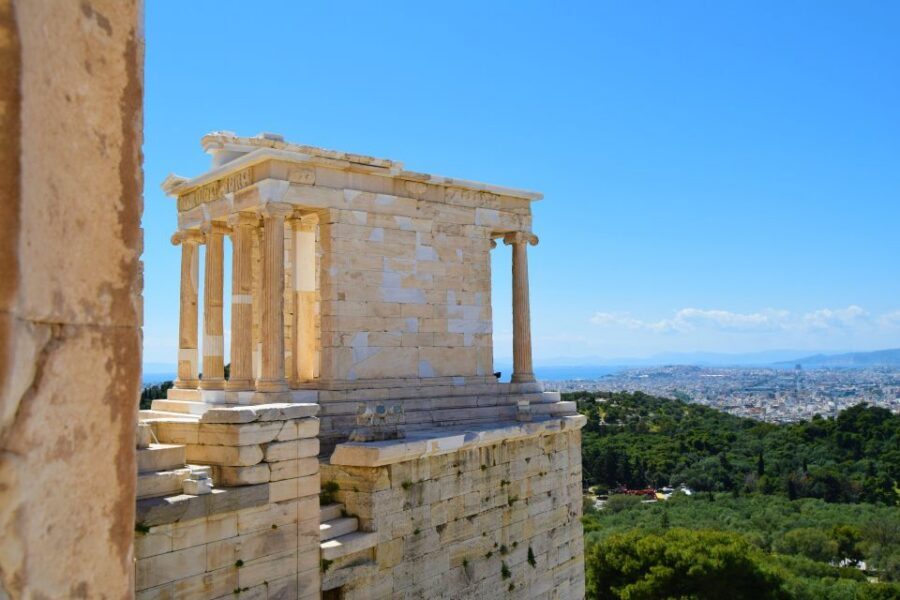
- The Acropolis route is built around the big names: Propylaea, Temple of Athena Nike, and the Parthenon.
- A live guide in English, French, or Italian: you’ll understand what you’re seeing as you walk.
- Museum timing can shift due to entry windows: build flexibility into your day.
How the Athens Coach Tour Sets Up the Rest of the Day

Most Athens days go better when you start with orientation. This experience begins with a panoramic city run by luxury air-conditioned coach, with pick-up from most Athens hotels. That matters because Athens spreads out, traffic is real, and your feet will be far happier if you’ve already had a wide look before the walking starts.
From the city center approach, you’ll pass key landmarks that frame modern Athens against the ancient world. The route is designed to give you mental bookmarks you can keep using later on the hill.
One underrated value here is how the coach segment helps you understand the geography of the city. When you finally arrive at the Acropolis area, the sightlines make more sense, and the monuments don’t feel like random stops. They start to feel like a planned layout.
Other Acropolis and Parthenon tours we've reviewed in Athens
Panathenaic Stadium: Where the First Modern Olympics Happened
Your day’s first big time-travel moment is the Panathenaic Stadium, tied to the first Olympic Games of modern times. Standing in the area linked to that revival gives you a strange but satisfying feeling: you’re watching Athens borrow from its own past to create something new.
This stop works well because it’s not only about ancient Greece. It’s about how ideas get reused. You’re seeing the long cultural arc, from classical monuments to a global sporting event that still shapes the way people imagine Athens.
It also helps pace your tour. If your Acropolis visit is your main target, this stadium stop acts like a warm-up: history you can picture, then ruins you have to look at up close.
Syntagma Square and the March of Modern Athens
After the stadium, the tour moves into the political and civic heart of Athens: Syntagma Square. Even if you don’t plan to become a national-flag expert, Syntagma Square is a strong visual anchor. It’s where modern Athens announces itself.
On the way, you’ll pass by the Temple of Olympian Zeus and Hadrian’s Arch, and then you’ll look toward the Greek Parliament building and the Memorial to the Unknown Soldier. For many visitors, these stops are brief through the window view, but they’re useful. They give you a clearer sense of what the city surrounds its ancient icons with today.
The highlight here is the way the buildings around Syntagma Square reflect Athens as a living capital. You’ll see the old Academy, Athens University, and the National Library—institutions that make Athens feel like a place of study and ideas, not just a museum in the sky.
Why I think this portion is good value: it helps you connect the Acropolis to the city that grew up around it. Without this framing, the ruins can feel like a separate planet. With it, they feel like the root system.
Passing the Temple of Olympian Zeus and Hadrian’s Arch
You won’t get a long, lingering visit at every major landmark en route, but the pass-by matters. The Temple of Olympian Zeus and Hadrian’s Arch are visual signals. They tell you Athens has layers of building eras, not one “single period.”
Even if you only catch them from the coach, the context is still useful. By the time you reach the Acropolis entrance area, you’ll be better at noticing how the city’s rulers and patrons left their marks in different ways.
If you care about photography, this is where you’ll want your phone ready. These are classic silhouette moments that are easier to capture during the drive than once you’re fully committed to the walking portions later.
Entering the Acropolis: Propylaea to the Parthenon
Once you reach the Acropolis, the tour shifts into walking mode and keeps focusing on the major classical monuments. This is the part most people come for, and it’s where a guided approach really pays off.
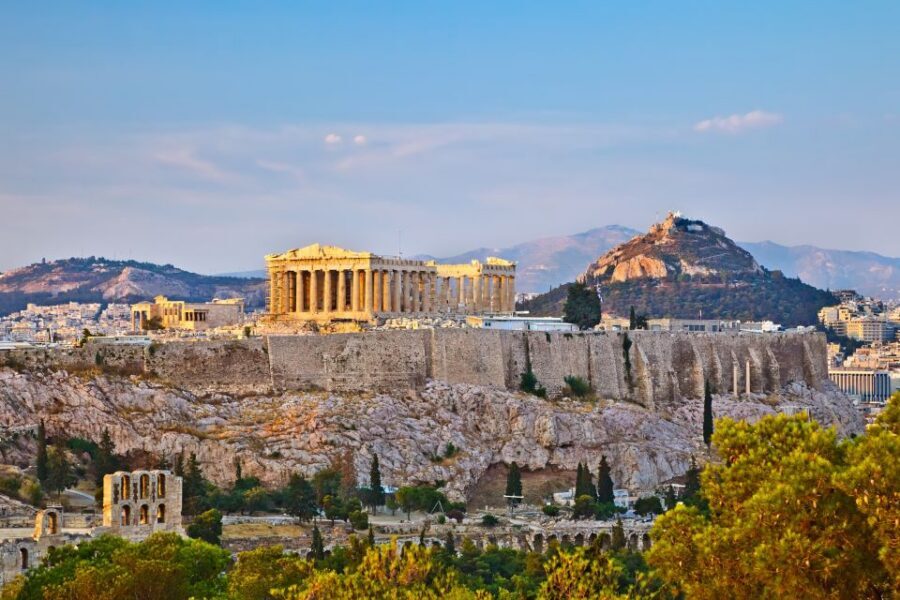
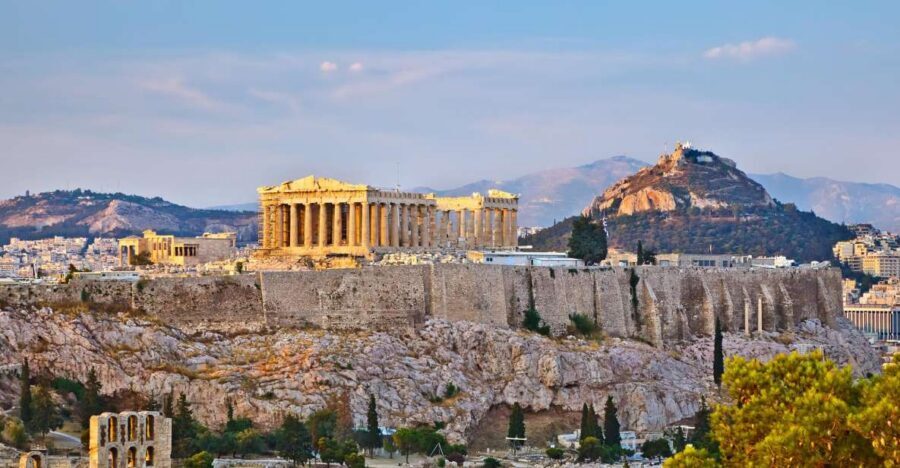
You’ll start by visiting the monumental gate of the Propylaea, then move on to the Temple of Athena Nike. Finally, you’ll reach the Parthenon, the iconic symbol that has become shorthand for classical Greece.
Here’s what a guided route changes for you: it turns stone into meaning. Instead of just looking at impressive shapes, you’ll be able to connect what you see to how the Acropolis functioned and why specific monuments mattered.
Other Acropolis ticket options we've reviewed in Athens






What to expect when you’re up there
Plan on being outdoors for part of the time. You’re walking through ruin spaces that have uneven ground, and you’ll spend moments both standing and moving. The good news is that the tour isn’t trying to turn the whole day into a sprint; it balances the key stops with enough time for understanding.
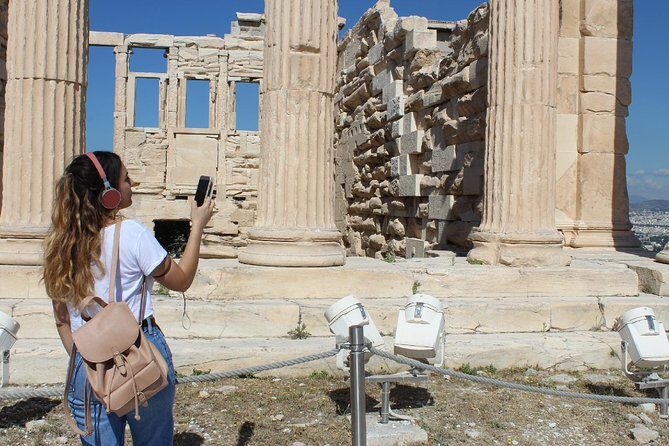
Also, check your audio. One practical detail stands out from experience shared by others: if your guide uses a neck-worn audio receiver, make sure it’s working. If it’s not clear, you’ll miss explanations unless you’re standing right next to the guide. Do a quick test at the start and keep the volume comfortable.
The Acropolis Museum: What Changes After You Walk the Hill

The day ends with a visit to the Acropolis Museum, described as state-of-the-art, and it’s a smart companion to the ruins. Ruins can be hard to read on your own because you’re looking at fragments and foundations. A good museum visit helps you reconstruct what those pieces might have meant in their original setting.
This museum stop is valuable because it adds “why” to your “what.” After walking past the Propylaea, Athena Nike, and the Parthenon, you’ll be primed to notice stories: artwork, architectural details, and the long relationship Athens has with the images it preserves.
One more thing: the tour notes that due to visitor time restrictions the order of the program may change. That means you might reach the museum earlier or later than you expect. If you’re the type who needs a rigid schedule, build in flexibility and focus on the fact that the museum visit is still part of the experience.
Timing, Duration, and How to Plan Your Day
The tour runs about 4 to 5 hours. Starting times depend on availability, so you’ll want to check what’s offered on the dates you’re in Athens. This duration is a sweet spot for a first or second day in town: long enough to feel substantial, short enough that you won’t lose your whole afternoon.
Transportation is handled by an air-conditioned coach, and pick-up is available from most hotels in Athens. Meeting points can vary depending on the option you book, and the tour ends back at the meeting point rather than dropping you somewhere else.
This matters for planning. If your hotel is central, you’ll likely have an easy reset after the tour. If you’re staying on the coast, there’s a specific note: you’ll be transferred back to your hotel on the Cape Sounion tour bus. That doesn’t change the tour quality, but it does affect how you should plan your return timing and what you expect for the pickup-drop routine.
What You Pay for: Value With Entry Tickets and a Live Guide

At $124 per person, this tour sits in the mid-range for an Athens “big hitters” package. What makes the price feel reasonable is what’s included: a live guide, entrance fees, transportation by luxury air-conditioned coach, and a pick-up service from most hotels.
If you tried to piece this together yourself—coach (or taxi), museum tickets, Acropolis entry, plus your own guided explanations—you’d likely spend time and money in separate chunks. This format buys you one coordinated day where the key stops are connected.
The strongest value is the combination of:
- a guided walkthrough of the Acropolis monuments, and
- a museum follow-up to help you interpret what you saw.
That’s the difference between seeing famous places and actually understanding them enough to remember them later.
Languages and Group Experience: How You’ll Hear the Guide
The tour is offered with live guide commentary in French, Italian, or English. That’s a big deal if your day depends on explanation rather than just wandering.
One practical tip from experience: audio is often handled through a small receiver you wear on the neck. When the system works, it’s great. When it doesn’t, it’s frustrating. Before you move deep into the Acropolis area, confirm your receiver is functioning and clear. If you’re not hearing well, adjust immediately. Don’t wait until the moment the guide’s pointing at something important.
Who This Tour Suits Best
I think this is a great fit if you want a well-paced Athens overview without building the plan yourself.
It’s especially suitable for:
- first-timers who want the Acropolis plus the museum in one day,
- people who prefer guided context while moving between landmarks,
- anyone who values hotel pickup to reduce early-day stress.
If you already know the Acropolis inside out and you plan to spend hours in the museum independently, you might feel this is more structured than you need. But for most people, the guided route and included entrance tickets make the experience efficient.
Should You Book This Athens City, Acropolis, and Museum Tour?
If your goal is to see the Acropolis monuments and the Acropolis Museum with explanations, while also ticking off major Athens landmarks like Syntagma Square and the Panathenaic Stadium, this tour is an easy yes.
Book it when you want:
- a guided walk through the key Acropolis sites,
- a museum stop that ties back to what you just saw,
- comfortable transport with pick-up from most hotels,
- a day that fits into a tight schedule.
Skip it if you hate any structure at all, or if you’re the type who wants total control over the order of sites with no time-window constraints. The program order can change due to museum entry restrictions, so you’ll need to be flexible.
Either way, do one thing right: once you’re on the move, test your audio and listen closely. When that receiver works, the Acropolis stops start making sense fast.
FAQ
How long is the Athens City, Acropolis and Museum tour?
The duration is listed as 4 to 5 hours, and starting times depend on availability.
What’s included in the price?
The tour includes a live guide, entrance fees, transportation by luxury air-conditioned coach, and pick-up service from most hotels in Athens.
What languages are available for the live guide?
The live guide is available in French, Italian, and English.
Where does the tour start and end?
The meeting point can vary depending on the option booked, and the tour ends back at the meeting point.
Can the schedule change during the tour?
Yes. The order of the program may be changed due to visitor time restrictions at the Acropolis Museum.
Is there free cancellation?
Yes. Free cancellation is offered up to 24 hours in advance for a full refund, and you can also reserve now and pay later.