
REVIEW · ATHENS
Athens: Combo Ticket for Acropolis & 6 ancient sites
Book on Viator →Operated by KeyTickets · Bookable on Viator
Seven Athens sites in one ticket? Yes, and it helps.
This combo gives you a prebooked Acropolis timeslot and then lets you use the pass across several top ruins without stress. I like the flexibility built into the ticket, because you’re not forced into one rigid bus-style route. The main catch: it’s self-guided, so you’ll want your phone charged and you may run into audio glitches at some stops.
Plan to spend real time at the big one. At the Acropolis you get about 3 hours to work your way around the Parthenon area and soak up those Athens views. For the rest, you’ll hop between ancient landmarks at your own speed, using the pass over multiple days if you want. The drawback to keep in mind is that earphones are not included and the audio can be hit-or-miss, so I’d bring basic earphones and expect to troubleshoot a little.
In This Review
- Key points to know before you go
- Why this Athens combo ticket is such good value
- Acropolis entry with your chosen timeslot: Parthenon views without the scramble
- Ancient Agora: Temple of Hephaistos and the Church of the Holy Apostles
- Roman Agora and a fast reality check at Zeus Olimpio
- Aristotle’s Lyceum and Hadrian’s Library: classrooms and a One Hundred Column moment
- Kerameikos: potters, vase painters, and the birthplace of Attic style
- How to pace it over 1 to 5 days without losing your momentum
- Audio tour reality: when it works and when you’ll need a backup plan
- Ticket acceptance hiccups: how to protect your day
- Who this Athens pass fits best
- Should you book this Athens combo ticket?
- FAQ
- What does the Acropolis timeslot apply to?
- Do I get a guided tour?
- Are earphones included with the audio?
- Which sites are included besides the Acropolis?
- Is the Acropolis Museum included?
- Is this ticket only for adults?
- What if my plans change?
Key points to know before you go

- Prebooked Acropolis entry on the time you choose, for smoother arrival
- Use it over 5 days after you activate at the Acropolis, so your plan can breathe
- Seven major archaeology stops across central Athens and the city edges
- Self-guided audio option for the Acropolis and parts of the Agora area, if selected
- Earphones not included, and you may need to rely on your own device for audio
- Acropolis Museum is not included, so you may still want a separate plan for that
Why this Athens combo ticket is such good value

This pass is designed for one thing: cutting your time and cost while you see more of the city’s most important ruins. The big win is that you lock in entry at the Acropolis with a chosen timeslot, then you don’t have to buy separate tickets for each additional site.
In practical terms, that means less waiting and less friction. The Acropolis area is famous for crowds, and prebooking is the difference between starting your day calm versus starting it annoyed. Then, once you’ve activated the pass at the Acropolis, you can spread out the remaining six sites across opening hours within 5 days. That flexibility matters in Athens, where heat, transit delays, and simple fatigue can wreck a tightly timed itinerary.
Just know what this ticket is and isn’t. It gives entry to archaeological sites, not a full day of guided interpretation. If you love a structured guide walking you through every turning point of Greek and Roman Athens, you’ll feel the difference here. But if you’re happy reading signs, using audio when it behaves, and moving at your pace, this combo can be a smart buy.
Other Acropolis and Parthenon tours we've reviewed in Athens


Acropolis entry with your chosen timeslot: Parthenon views without the scramble

Your visit starts on the Acropolis, the 150-meter-high rock that holds one of the world’s most recognizable ancient symbols. This isn’t a quick peek. You get about 3 hours, which is enough time to cover the Parthenon area without feeling like you’re speed-walking through history.
What you’ll actually do up there is simple: wander. Look at how the structures sit on the hill, then take breaks to enjoy the views over Athens. Even when the site is busy, the layout helps you move in loops. You don’t just stand in one line of sight and hope.
A few practical notes to make the Acropolis less of a chore:
- Wear shoes you trust on uneven stone. You’ll be walking more than you think.
- If the climb feels like a lot, plan one short pause halfway up. The view gets you back in the mood.
- Bring your own earphones, since the ticket info says earphones aren’t included.
If your option includes audio, use it here first. Getting your bearings at the Acropolis is easier when you have a narration track while you’re moving between viewpoints. And if audio acts up at first, don’t panic. Acropolis is the one stop where you really want the context.
Ancient Agora: Temple of Hephaistos and the Church of the Holy Apostles
Next is the Ancient Agora of Athens, the area that once powered daily life—markets, politics, debates, and gatherings. You’ll spend around 2 hours here, which is a comfortable amount of time for reading key details without rushing.
Two highlights anchor this stop:
- The Temple of Hephaistos, described as the world’s best-preserved ancient Greek Doric temple. It’s the kind of site where even short pauses help you notice how Doric design holds up over centuries.
- The Church of the Holy Apostles. This matters because it connects ancient Athens to later history. The church is tied to the tradition that St. Paul preached there when he was active in Athens.
That mix is why the Agora feels different from the Acropolis. The Acropolis is about power, monuments, and mythic symbolism. The Agora is about people—ordinary life layered with belief and politics.
One caution: since it’s self-guided, you’ll want to stop when you see something specific. If you just keep walking nonstop, you’ll miss the best moments like the clarity of Temple of Hephaistos and the sense of continuity around the church area.
Roman Agora and a fast reality check at Zeus Olimpio
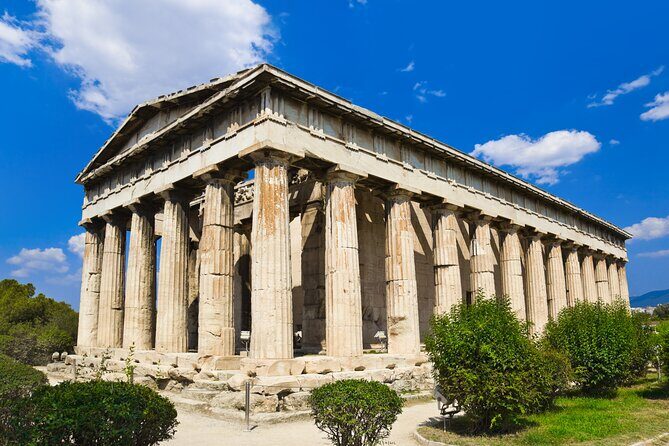
After the Agora, head to the Roman Agora for about 1 hour. This is where Athens shifts from Greek civic space to Roman public life. The Roman Agora sits just north of the Acropolis area, so the whole stretch is walkable and easy to combine if you’re doing these stops in the same general neighborhood.
Then comes Tempio di Zeus Olimpio. Your time here is listed as about 2 minutes—which is honestly more realistic than it sounds. This isn’t a full “tour” stop in the same way as the Acropolis or the Agora complexes. It’s more like a quick, meaningful check-in with scale.
Here’s why Zeus Olimpio still deserves a moment. Until 2 AD, it was said to be the largest temple in Greece, even larger than the Parthenon, and it was once planned with 104 pillars. Today you won’t experience that full forest-of-stone effect. You’ll mostly see the idea of the ambition. But that “missing mass” makes the size concept stick.
Location helps too. The temple area is near the city center, roughly a quarter mile southeast of the Acropolis, and within a quarter mile south of Syntagma Square and the Parliament Building. So this can fit well as a bridge between major sightseeing zones.
Aristotle’s Lyceum and Hadrian’s Library: classrooms and a One Hundred Column moment
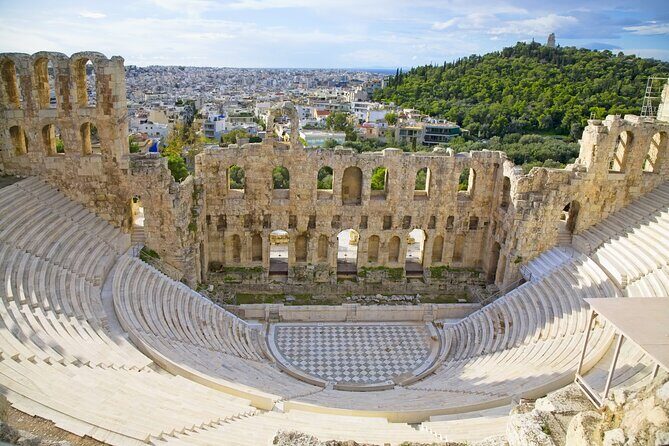
The ticket includes the Archaeological Site of the Lyceum of Aristotle for about 1 hour. This is where you get a different kind of Athens experience: not temples first, but the idea of learning and discussion. If you like thinking about how ideas were formed in real spaces, this is a strong stop.
Next is Hadrian’s Library, also known as the One Hundred Column Library, for about 1 hour. It sits to the north of the Athenian Acropolis. The description you’ll see tells you what makes it memorable: a spacious historic site surrounded by a gallery decorated with one hundred columns.
This is the kind of place where your imagination can do some work. Even if parts look different than what you expect from photos, you can still picture the structure’s purpose—an environment built for reading, knowledge, and public culture. And because you’re spending real time here (not a “two minute only” stop), you’ll be able to appreciate how the space shapes movement.
Other Acropolis ticket options we've reviewed in Athens






Kerameikos: potters, vase painters, and the birthplace of Attic style
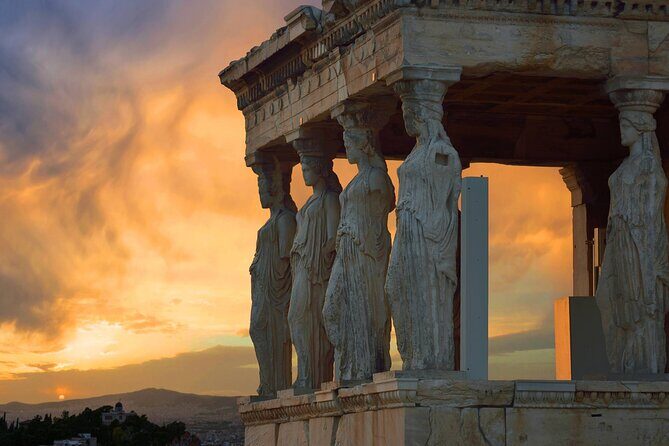
The final included stop is Keramikos (Kerameikos) Archaeological Site, located on the northwest edge of Athens. You get about 1 hour here, and this one is special because it focuses on craft and production rather than monuments of ruling power.
Kerameikos was described as a settlement of potters and vase painters, and it was the main production center of Attic vases. That matters because Athens wasn’t only about building marble temples. It was also about making objects that carried culture—everyday items with style and meaning.
If you’re the type who loves details, this is your payoff stop. You’ll likely spend extra time here if you’re looking at how the area’s purpose connects to the objects you’ve seen in museums.
And since Kerameikos is toward the city edge, it can also help you balance your day. The Acropolis and Agora areas are heavy on “big view” sites. Kerameikos gives you texture and trade-life vibes.
How to pace it over 1 to 5 days without losing your momentum
The pass is built for multiple-day use. Your Acropolis entry has a specific timeslot, then the rest of the sites can be visited within opening hours across 5 days from activation at the Acropolis.
For planning, I’d group stops by neighborhood:
- Acropolis + Agora area: Keep these in the same general “central Athens” session if you can.
- Zeus Olimpio + Syntagma/Parliament area: Pair with a lighter afternoon or evening walk.
- Hadrian’s Library + Lyceum: These make sense together since they’re tied to the broader Acropolis north/east intellectual vibe.
- Kerameikos: Give it its own block so you’re not rushing from stop to stop.
Also, remember you’re not required to do everything on the day of your Acropolis timeslot. This is useful if your Acropolis visit ends up running long—crowds, shade, and the sheer act of exploring takes time.
Audio tour reality: when it works and when you’ll need a backup plan
The ticket can include self-guided audio tours for the Acropolis, Ancient Agora (if option selected), and a Monastiraki–Kerameikos audio route (if option selected). The key thing: audio isn’t automatic unless you chose that option.
Even with audio included, plan as if you might need a manual fallback. One practical tip from real-world usage: download your QR code to your phone. You might find yourself needing connectivity, and audio reliability may vary. Some people found the Acropolis audio to work, but not every part of the audio system behaved consistently.
Bring earphones, because the pass info says they aren’t included. If you don’t, you’ll be stuck with loud speaker audio, which is the quick path to losing focus and annoyingly standing in place while your phone tries to load.
If you’re picky about audio, I’d also test your setup before you head out: fully charge your phone, download what you can ahead of time, and save the QR details somewhere easy to find. The goal is simple: fewer moments where you’re standing there reading menus instead of reading ruins.
Ticket acceptance hiccups: how to protect your day
Most of the experience hinges on the ticket working correctly at each site. There are reports of trouble with acceptance for some tickets at attractions in Athens, including situations where not all printed or stored tickets were accepted.
I can’t fix that for you, but you can reduce your stress:
- Keep your ticket access details ready on your phone and also accessible in print form if possible.
- Double-check that the pass type and entry conditions match what’s required at each site.
- If something fails at the site, you’ll want to contact the provider immediately so they can look into it.
Also watch for an easy misunderstanding: the Acropolis timeslot applies only to the Acropolis visit. The other sites still require you to enter within opening hours, and within the 5-day window from activation.
And one more “don’t get surprised” note: this pass does not include the Acropolis Museum. If you want museum time, you’ll need a separate entry plan.
Who this Athens pass fits best
This combo works best if you like a self-guided day and you don’t want to pay for seven separate admissions. You’ll also appreciate it if you care about controlling your schedule: one fixed timeslot at the Acropolis, then flexible follow-up for the rest.
It fits well for:
- People who enjoy wandering and reading on-site
- First-time Athens visitors who want the top ancient stops without over-planning every hour
- Anyone trying to get value by visiting multiple sites across several days
It may be less ideal if:
- You want a live guide explaining everything as you walk
- You hate dealing with audio on your phone
- You’re counting on a museum stop inside the same ticket (the Acropolis Museum is not included)
One important eligibility note: this ticket is for travelers over 25 years old. Reduced-price tickets aren’t available online for the lower age category.
Should you book this Athens combo ticket?
Yes, if your plan includes the Acropolis plus multiple ancient sites and you’re comfortable doing most of the interpretation yourself. The value comes from the combo logic: you prebook the hardest entry point, then you unlock several other monuments over a 5-day window without buying a stack of separate tickets.
I’d book it if you’re the kind of person who likes to set a main anchor (Acropolis timeslot) and then let your day breathe. The Agora, Hadrian’s Library, Lyceum, and Kerameikos give you variety, so your Athens experience doesn’t feel like one long “same-stone” march.
I’d hesitate if you absolutely need everything to be fully guided and friction-free, or if you’re worried about using phone-based ticket access and audio reliability. In a perfect world it all works smoothly. In the real world, small issues can happen anywhere, so make sure you’re prepared with earphones and a charged phone.
FAQ
What does the Acropolis timeslot apply to?
The timeslot you choose is specifically for your Acropolis visit. The other included sites can be visited within opening hours within 5 days from when you activate your pass at the Acropolis.
Do I get a guided tour?
No. This experience does not include a guide or escort. You’ll use a self-guided experience, with an audio component only if you selected that option.
Are earphones included with the audio?
No. Earphones are not included, so you should bring your own if you plan to use the audio.
Which sites are included besides the Acropolis?
In addition to the Acropolis, the pass includes entry to: Ancient Agora of Athens, Roman Agora (Agora Romaine), Temple of Zeus Olimpio, Archaeological Site of the Lyceum of Aristotle, Hadrian’s Library, and Keramikos (Kerameikos).
Is the Acropolis Museum included?
No. This combo ticket does not include the Acropolis Museum.
Is this ticket only for adults?
Yes. The ticket is for travelers over 25 years old, and reduced-price tickets are not available online.
What if my plans change?
This experience is non-refundable and cannot be changed for any reason. If you cancel or request an amendment, the amount you paid is not refunded.
If you tell me your travel dates and whether you want one big day or a slower 2–4 day plan, I can suggest a pacing strategy using these exact stops.