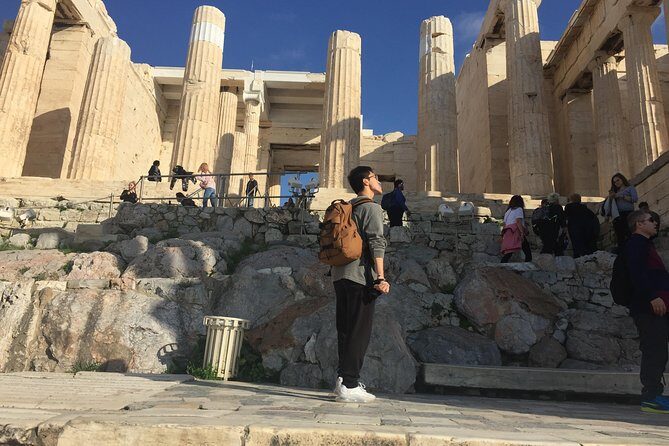
REVIEW · ATHENS
Athens: Acropolis Entry Ticket & VR Audio Guided Tour
Book on GetYourGuide →Operated by SIGHTS OF ATHENS-GRAY LINE · Bookable on GetYourGuide
The Acropolis is best when you control the pace. This ticket pairs pre-booked entry with a self-guided VR audio tour so you can move through the main sights on your schedule. You also get commentary in 9 languages, plus a guided audio path that starts at the Theater of Dionysus and works you toward the Parthenon.
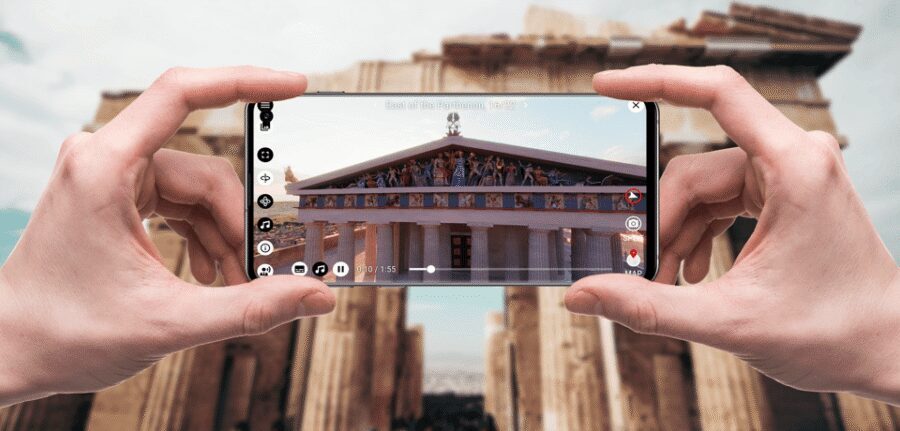
I especially like that you’re not stuck in a big group with a live guide voice and a strict stop-and-go rhythm. The second win is the VR feature, which helps you picture how the Acropolis Hill and surroundings looked in ancient times, not just how ruins sit in sunlight today.
One thing to watch: the experience depends on your smartphone (battery, screen visibility in glare, and whether the app can keep playing where you left off). If your phone is low on power or you hate holding it constantly, plan carefully.
In This Review
- Key things to know before you go
- Ticket value: what $53 really buys you
- Your route: how the story moves from Dionysus to Athena
- Theater of Dionysus: the “stage door” start
- Parthenon: the main event
- Propylaea: the monumental gateway feeling
- Temple of Athena Nike: the small, important stop
- Erechtheion: where the details matter
- Odeon of Herodes Atticus: performance and views
- VR audio on your phone: how to make it work in real life
- Entering the Acropolis on time: the crowd math
- What to watch for at each stop (so 2 hours feels like enough)
- Theater of Dionysus: get your bearings first
- Parthenon: slow down for one viewpoint
- Propylaea + Nike + Erechtheion: pick detail over quantity
- Odeon of Herodes Atticus: finish with views
- Languages: you can switch your listening game
- Practical cautions from real-world use
- Who this suits best (and who should consider something else)
- Should you book the Acropolis Entry Ticket & VR Audio Tour?
- FAQ
- FAQ
- How long is the Acropolis Entry Ticket & VR Audio Guided Tour?
- What does the ticket include?
- Is there a live guide included?
- In how many languages is the audio guide available?
- Do I need headphones?
- What should I bring besides headphones?
- When will I receive my ticket and instructions?
- Where do I enter the Acropolis?
- What is the timed entry rule?
- Are pets or baby strollers allowed?
Key things to know before you go

- Timed entry: choose a specific date and time slot, then enter within the window to avoid crowd crush
- VR + audio in 9 languages: history narration plus a phone-based virtual reality element
- Start at the Theater of Dionysus: the route is built like a story, not a random walk
- Skip-line access: separate entrance for ticket-holders
- Phone-dependent experience: bring headphones and a charged phone, and expect you’ll need them
- 2 hours is a sprint: you’ll cover the big hitters—Parthenon area and major nearby stops
Ticket value: what $53 really buys you

At $53 per person for a 2-hour visit, you’re paying for convenience more than for a human guide. The big value is pre-reserved Acropolis and Parthenon admission tied to a specific entry slot. That matters here because timed entry reduces the “stand in line while you lose prime daylight” problem.
You’re also getting two content layers at once:
1) a multilingual self-guided audio tour (9 languages)
2) a virtual reality app that adds context for what you’re seeing
If you like independence—your own pace, your own stops for photos—you’ll likely feel this ticket is worth it. If you want someone to answer questions on the spot, you should know this is not a live-guided tour. You’ll be your own curator for the ruins.
Also note the ticket is a regular adult ticket, and it must be purchased at full price regardless of age. So if you were hoping for discounted pricing for certain groups, this one won’t handle that automatically—you’d need to check with the Acropolis Ticket Office directly.
Other Acropolis and Parthenon tours we've reviewed in Athens



Your route: how the story moves from Dionysus to Athena
This self-guided experience is designed as a logical walk from the dramatic to the sacred. Expect a sequence that starts with the Theater of Dionysus and climbs through the Parthenon complex area, ending at major nearby structures with big city-and-sea viewpoints.
Here’s the order you should plan on following:
Theater of Dionysus: the “stage door” start
You begin at the Theater of Dionysus, which sets a helpful tone. Even if you’re not a theatre expert, it’s a great way to start because the Acropolis wasn’t only temples—it was civic and cultural life, too. Standing in this area first helps you understand that the hill was like Athens’ outdoor hub, not just a museum of stones.
Practical tip: this is a good moment to sync your headphones and make sure your audio is playing smoothly before you get higher up and busier.
Parthenon: the main event
Next comes the Parthenon, the UNESCO World Heritage Site devoted to Athena. You’ll want to slow down here, because the audio is most useful when you’re actually looking at specific parts of the complex. The narration doesn’t just label things—it guides your attention, so you’re not staring at the Parthenon as one big block.
Drawback to consider: you’ll likely be tempted to keep checking your phone to make sure the next audio segment triggers. Some people find the content doesn’t always switch cleanly, especially if your phone loses connection or you’re fighting glare.
Propylaea: the monumental gateway feeling
After the Parthenon area, you move toward the Propylaea, the grand entrance structure. In plain terms, this part helps you read the Acropolis layout. It’s one of those spots where the architecture starts to feel like planning—processional routes, ceremonial movement, and a clear sense of how visitors were expected to flow.
If you’re walking quickly, you’ll miss the effect. If you give it a few extra minutes, it becomes a natural “pause point” before the temples.
Other Acropolis ticket options we've reviewed in Athens






Temple of Athena Nike: the small, important stop
Then comes the Temple of Athena Nike. It’s often overlooked because it’s smaller than the Parthenon, but it’s exactly the kind of stop that works well with audio. You get a sense of why this space mattered, not just that it’s there.
This is also a good place to orient yourself visually. From here, you can often line up what you’re seeing with what’s behind or below—helpful for understanding the hill’s topography.
Erechtheion: where the details matter
Next: the Erechtheion. This is where you’ll benefit from not just snapping photos, but looking closely and letting the narration put structure around the chaos of ruins. The audio path is useful because the Erechtheion’s significance isn’t always obvious from a quick glance.
If you’re the type who likes to learn one or two specific things per stop, this is a strong match. If you only want highlights, you might feel the app asks you to pay attention longer than you planned.
Odeon of Herodes Atticus: performance and views
Finally, there’s the Odeon of Herodes Atticus, a theatre-like structure tied to performance culture. The nice bonus here is the visibility: you’re high enough to see Athens spread out, with mountains and the Aegean Sea in the distance on clear days.
This can be your “linger” spot—take in views, then finish your last audio segments at an unhurried pace.
VR audio on your phone: how to make it work in real life

The VR component is part of the same app experience, and it’s meant to show you what the hill looked like in ancient times. Even if you’re not expecting Hollywood-style VR, you’re likely to appreciate the way it changes your brain from ruins mode to “what it was” mode.
I do think you should treat the app like a tool you manage, not like background entertainment. The on-site experience has a couple of real-world risks:
- Battery drain is real. Plan for your phone to be a power-hungry sidekick. Bring a power bank if you have one. At minimum, start with a fully charged device.
- Sun and glare affect screens. If you can’t see your phone clearly, you’ll either miss cues or end up holding it at weird angles.
- Audio can reset when connections are bad. If the app relies on any network signal, spotty reception can cause the playback to jump back instead of continuing from your last position. When that happens, you’ll lose time and patience.
My best advice: download whatever you’re supposed to download before you reach the site entrance areas where service can be unpredictable. Then keep your focus on looking outward at the monuments, only using the phone when you need to.
Also bring headphones. The tour data explicitly says headphones are needed, so don’t count on earbuds being provided.
Entering the Acropolis on time: the crowd math
Timed entry is where this ticket is strongest. You select your entry time slot, and you can enter only during that slot or within a 15-minute window before or after. That means you’re not just “heading to the Acropolis”—you’re staging your day.
Plan to arrive a bit early so you can handle the moment that always takes longer than you think: finding the right entrance, getting your ticket ready, and settling your headphones.
You’ll use your PDF ticket on your phone or printed. You’ll receive it via email or WhatsApp messenger, along with instructions for downloading the VR audio guide. It’s also sent the day prior, and you’ll want to check spam too.
Entrance options: you can enter from the main or south entrance of the Acropolis (and the meeting point notes you can also enter from the north). Using the entrance that best matches your navigation from Athens will help you avoid last-minute stress.
What to watch for at each stop (so 2 hours feels like enough)
Two hours sounds long until you’re climbing stairs, moving through tight points, and stopping for photos. The good news is that this route hits the big names without sending you on an endless maze.
Here’s how to make every minute count:
Theater of Dionysus: get your bearings first
Use this start point to set up your audio and get calm. The Theater area helps you understand the hill as a whole—civic life plus religion, not just temples.
Parthenon: slow down for one viewpoint
Pick one direction and stand long enough for the audio to land. If you rotate nonstop, the narration can feel like facts chasing facts. If you hold one good stance for a few minutes, the architecture starts to read more clearly.
Propylaea + Nike + Erechtheion: pick detail over quantity
These areas reward attention. Don’t try to take in everything at once. Let the audio point you toward a specific feature, then look for it before moving on.
Odeon of Herodes Atticus: finish with views
Save your relaxed photos for the end. This is where the experience “clicks” because you get the full Athens context: mountains, city spread, and the Aegean in the distance when visibility cooperates.
Languages: you can switch your listening game
The audio guide is available in English, Spanish, German, Italian, Polish, Russian, Chinese, French, Portuguese, Arabic, and Japanese. That’s a useful range. It also means you can often match the pace of your comfort level, especially if you’re traveling with others.
One practical note: audio in your chosen language still depends on you getting the app functioning smoothly. If your phone is struggling with playback or audio position, switch your focus to stable operation first, then enjoy the content.
Practical cautions from real-world use
This ticket has a decent overall rating (3.1 out of 5 across 75 reviews), and the lower scores tend to point to the same pain points: phone handling and app playback reliability.
Here’s what to do if you want the experience to feel smooth:
- Bring headphones you’re comfortable with. Not because it’s fancy—because the tour is audio-based.
- Start with a charged phone. Audio and VR features can chew through battery faster than you expect.
- Don’t plan on glancing at the phone constantly. If you find your screen hard to read in sun, you’ll get frustrated. Instead, listen while you look.
- If playback restarts, reset calmly and continue. It’s better to fix it than to rush and miss the next segment.
If you’re the type who wants zero technical fiddling, you might prefer a live guide instead. But if you’re okay managing a phone tool for 2 hours, this option can be very satisfying.
Who this suits best (and who should consider something else)
This experience is a strong match for:
- people who want timed entry and skip-the-line benefits
- visitors who like exploring on their own pace
- couples or small groups comfortable using a phone-based audio guide
- travellers who enjoy architecture and want simple structure to guide your eyes
It’s less ideal if:
- you hate phone-dependent tours
- you need a live instructor to interpret what you’re seeing
- you’re likely to run your battery down without a power plan
- you’re traveling with someone who gets stressed by tech glitches
For families, note that baby strollers aren’t allowed on this activity. Pets are also not allowed.
Should you book the Acropolis Entry Ticket & VR Audio Tour?
If your priority is control and convenience, booking makes sense. Pre-reserved timed entry plus a separate entrance can save real time, and the 2-hour route hits the core sites without dragging you through extra detours. The VR audio angle is also a smart add-on because it turns ruins into a more understandable scene.
I’d book this if you’re comfortable using your phone for guided audio and you’re willing to protect battery life. I would not book it if you want a fully human experience or if you strongly dislike managing apps while walking.
FAQ
FAQ
How long is the Acropolis Entry Ticket & VR Audio Guided Tour?
It lasts about 2 hours.
What does the ticket include?
You get Acropolis and Parthenon entry, a VR application, and a multilingual self-guided audio tour.
Is there a live guide included?
No, this is self guided. A live guide or live instructor is not included.
In how many languages is the audio guide available?
The audio guide is available in 11 languages: English, Spanish, German, Italian, Polish, Russian, Chinese, French, Portuguese, Arabic, and Japanese.
Do I need headphones?
Yes. Headphones are specifically listed as something to bring.
What should I bring besides headphones?
A charged smartphone is recommended, since the experience uses the VR audio app.
When will I receive my ticket and instructions?
Your PDF ticket and instructions are sent via email or WhatsApp messenger, also on the day prior. It may also be found in spam.
Where do I enter the Acropolis?
You can enter via the main or south entrance, and the meeting point indicates you can enter from the south or north entrance.
What is the timed entry rule?
You must enter only at your selected time slot, or within a 15-minute window before or after.
Are pets or baby strollers allowed?
No. Pets are not allowed, and baby strollers are also not allowed.