REVIEW · ATHENS
Acropolis & Acropolis Museum Group tour in German or Dutch
Book on Viator →Operated by Little Owl Tours · Bookable on Viator
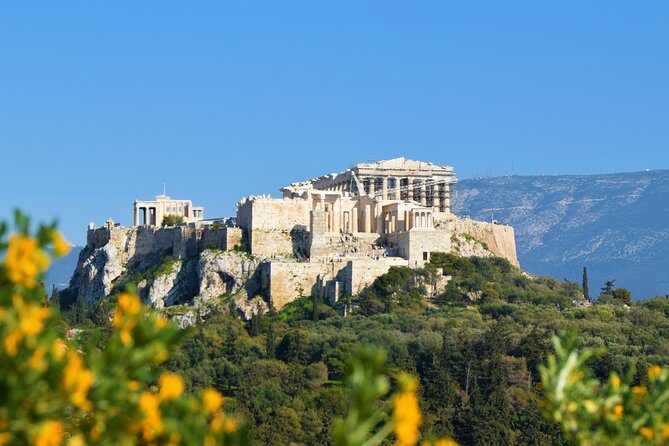
Acropolis Athens gets crowded fast. This is a guided half-day on foot, in Dutch or German, focused on the key monuments and how they connect—right up to the Acropolis Museum. You meet near the metro, get set with a good walking plan, and spend time exactly where it matters, including a view from the top of the hill.
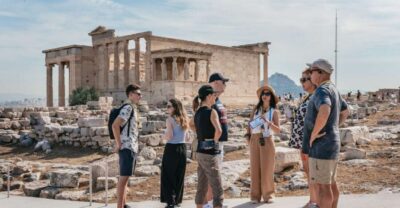
I love the small-group size (max 20). It feels more personal, and you can ask questions without the tour becoming a lecture-per-person. I also like the way guides such as Maria (a PhD in archaeology) and Jessica bring the site to life, often with visual support on an iPad and a microphone/headset so you hear the explanations even when you want to step aside briefly.
One thing to consider: entrance fees are not included (listed at 50 EUR per adult). And you do have a fair amount of uphill walking and standing on uneven ground, so comfy shoes and a moderate fitness level help a lot.
In This Review
- Key takeaways before you go
- Why this Acropolis tour in Dutch or German works better than self-guided
- Price and the real value: what you’re paying for
- Meeting point, walking route, and where your day actually ends
- Stop-by-stop on the Acropolis: what you’ll see and what to watch for
- Acropolis orientation and the 360-degree view
- Theatre of Dionysus Eleuthereus (15 minutes)
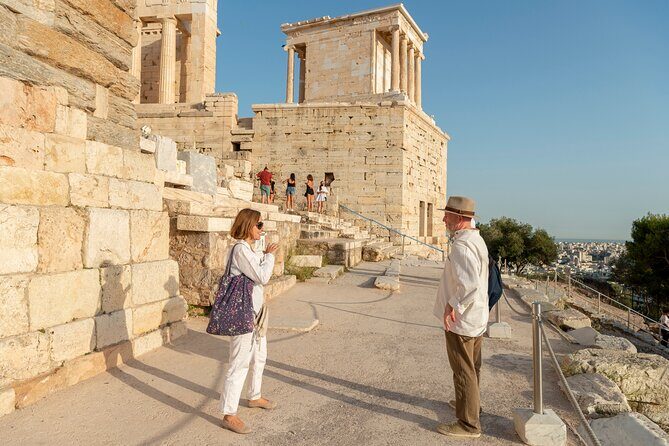
- Temple of Athena Nike (5 minutes)
- Propylaea (10 minutes)
- The Parthenon (20 minutes)
- Erectheion and the Caryatids (10 minutes)
- The Acropolis Museum stop: where the story stops being abstract
- Small-group format: why it feels easier to learn at the Acropolis
- Who this tour suits best (and who might want a different approach)
- A quick checklist so your half-day feels smooth
- Should you book this Acropolis & Acropolis Museum tour in Dutch/German?
- FAQ
- Is the Acropolis & Acropolis Museum tour offered in Dutch and German?
- How long is the tour?
- What’s included in the tour price?
- Are entrance fees included for the Acropolis and the museum?
- Where do we meet the guide?
- Where does the tour end?
- Do I need bottled water?
- What if weather is bad?
Key takeaways before you go
- Small group, max 20: easier questions, less rushing, and a more human pace
- Dutch or German expert guide: licensed guide format with archaeology/history context
- Stop-by-stop structure: Theatre of Dionysus, Athena Nike, Propylaea, Parthenon, Erectheion, then the Museum
- Skip-the-line entry arranged: you buy into the schedule rather than waiting in a slow queue
- Headset/mic style guidance: you can stay with the group while still moving for photos
- 360-degree view from the top: not just ruins—also the Athens setting
Why this Acropolis tour in Dutch or German works better than self-guided
The Acropolis is one of those places where your eyes see everything, but your brain struggles to sort it out. What you’re looking at is more connected than it first appears: entrances, temples, later reinterpretations, and the changing stories of the city over time. A guided format fixes that in a hurry.
What makes this tour feel practical is the pacing. It’s not trying to cover every inch of the hill in one frantic sprint. You get a clear sequence of stops, and each one has a job: orient you, explain architecture, and point out the details that explain why the monuments look the way they do.
The language part also matters more than most people expect. If you choose Dutch or German, you can actually follow the explanations at full speed instead of reading signs while trying to hear audio. That makes questions easier too—especially when the guide uses visual support (many guides on this tour style the explanation with photos on an iPad).
Other Acropolis and Parthenon tours we've reviewed in Athens
Price and the real value: what you’re paying for
The headline price is $69.77 per person, for about 3 hours of guided time. Then there’s the big separate line item: entrance fees are 50 EUR per adult, and the operator arranges your entry with a skip-the-line ticket.
So what are you really buying with the money?
- You’re paying for a licensed guide (archaeologist or historian) who can explain what you see while you’re standing in place.
- You’re paying for time efficiency: less waiting, and a route that doesn’t waste your best morning hours.
- You’re paying for context: the kind you can’t easily grab from random audio tours because it’s tied to specific buildings.
If you hate spending half your day reading plaques, this kind of guide time tends to feel worth it fast. If you’re the type who loves wandering and reading everything at your own pace, you might feel a bit scheduled. Still, on the Acropolis, a plan is usually a relief rather than a restriction.
Meeting point, walking route, and where your day actually ends
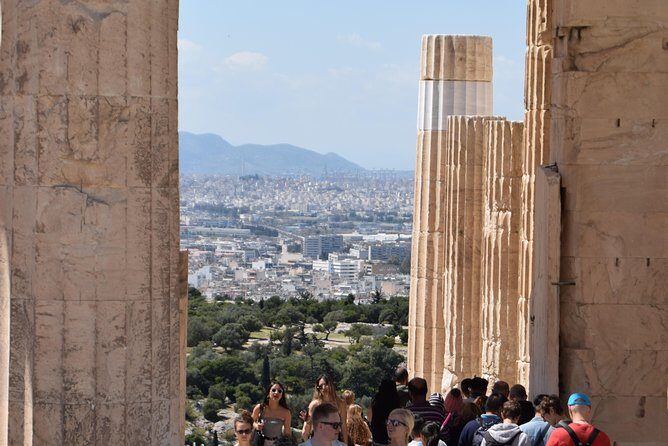
You start near the Acropoli metro station. The guide meets you at the exit and walks you to the site entrance, which helps you avoid that moment of confusion where you’re not sure which way the entrance queues funnel.
One key logistical detail: the tour ends on top of the Acropolis Hill, at the Acropolis of Athens area. That’s great for the overall experience—because you’re already where you want to be. But it also means you should plan your exit and transport with that in mind. If you’re hoping to end near a specific café or street-level pickup, it’s smart to check your map in advance.
Also, this is a walking tour with moderate fitness needed. You’re not doing a full hike, but you are moving around ancient stone, stairs, and some uneven ground. Comfortable shoes are not optional here.
Stop-by-stop on the Acropolis: what you’ll see and what to watch for
Acropolis orientation and the 360-degree view
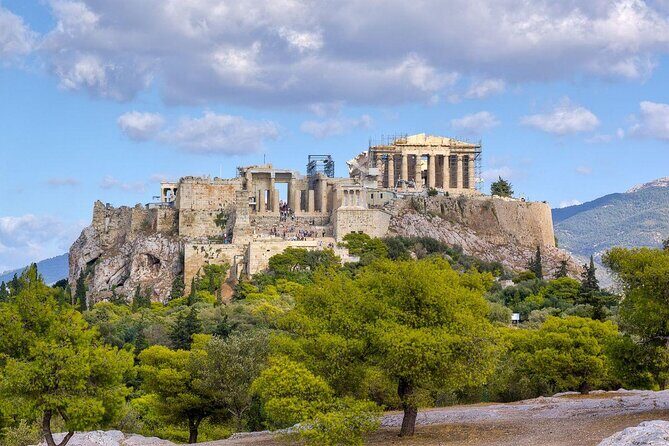
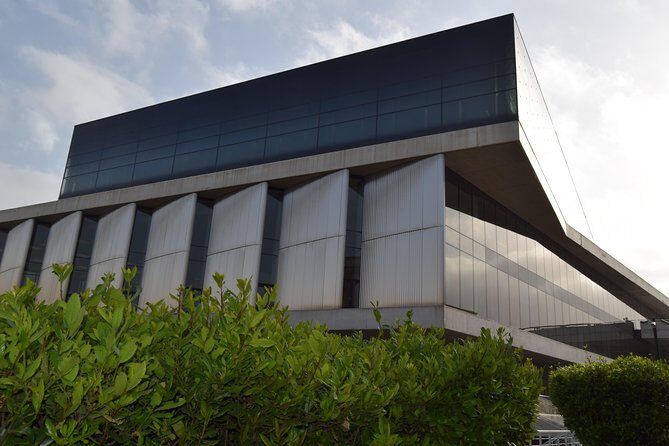
Your first real moment is on the hill. You’ll be guided through the main monument areas while you build context for what you’ll see next. Then comes the payoff: at the top, you get a stunning 360-degree view over Athens.
Why this matters: it helps you understand the Acropolis as a city landmark, not a standalone museum display. The view gives you spatial context—where Athens stretches out and how the hill dominates the surrounding area. After that, the monuments stop feeling random.
Time note: stop time here is about 1 hour, and you’re also factoring in moving between points.
Other Acropolis Museum tours we've reviewed in Athens



Theatre of Dionysus Eleuthereus (15 minutes)
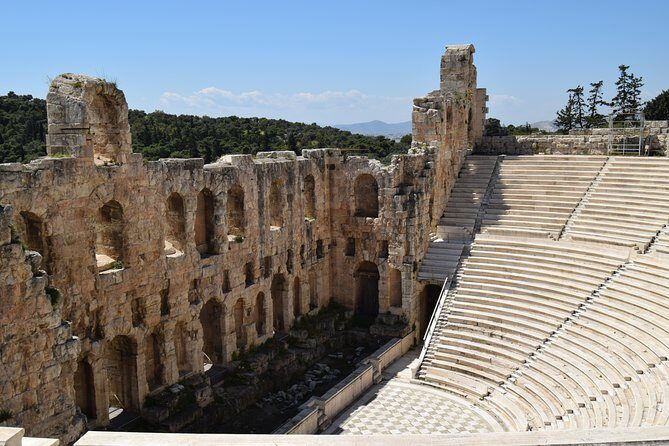
Next is the Theatre of Dionysus Eleuthereus, described as the birthplace of ancient Greek theater. Even in short time, this stop can be powerful because it connects entertainment, civic life, and architecture.
What to look for: stand where the guide points out sightlines and think about how people once gathered for performances. A good guide explains not only what the theatre was, but how it fit into a culture that took storytelling seriously.
Drawback to expect: fifteen minutes sounds short because the theatre can invite lingering. The upside is that the tour keeps momentum so you don’t miss the big monuments.
Temple of Athena Nike (5 minutes)
This is quick: about 5 minutes at the Temple of Athena Nike. It’s a small temple compared to the Parthenon, but that’s often why it helps. It gives you variety and stops the tour from becoming only one-size-fits-all.
What to watch for: focus on why it’s tied to victory themes and the goddess Athena. The guide’s narration is the point here, not trying to “master” every sculptural detail in five minutes.
Propylaea (10 minutes)
The Propylaea is the monumental entrance gate to the top of the hill. Think of it like the threshold: you’re not just walking into a site, you’re stepping into a designed approach.
What this stop does for your understanding: it prepares you for the idea of procession and movement. When you later stand at the Parthenon and Erectheion, the gate makes more sense as part of a larger plan rather than an isolated structure.
The Parthenon (20 minutes)
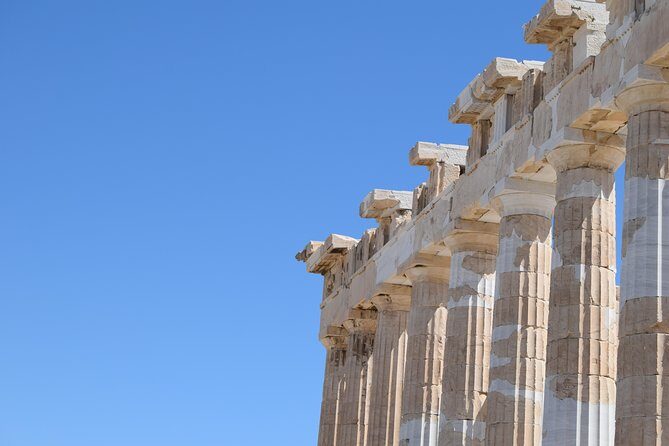
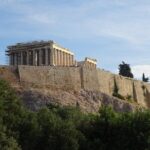
This is the big one: 20 minutes at the Parthenon, the biggest temple on the Acropolis hill dedicated to Athena.
Here’s where a strong guide earns their fee. They don’t just say it’s important; they point out why it looks the way it does and how the building fits its purpose. If you like architecture, this stop can feel like a puzzle where the pieces click into place.
Practical tip: with only twenty minutes, don’t try to do everything. Take a few photos, then shift attention to whatever the guide flags most. You’ll remember what you noticed more than you’ll remember what you photographed.
Erectheion and the Caryatids (10 minutes)
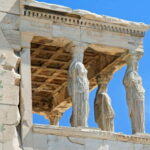
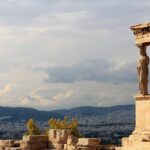
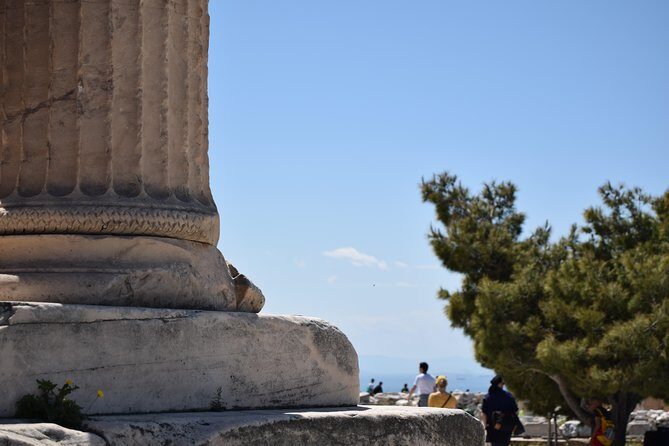
The Erectheion stop is about 10 minutes, with emphasis on the Caryatids—female columns. This is one of those spots where details matter, and it’s also one of the reasons people end up staring longer than expected.
The Caryatids can be hard to fully “get” without explanation because they’re sculptural and symbolic, not just structural. A guide helps you interpret what you’re seeing while you’re close enough to appreciate scale.
The Acropolis Museum stop: where the story stops being abstract
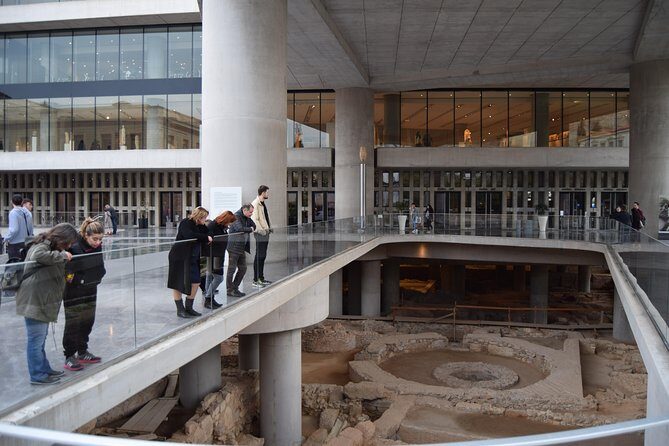
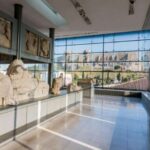
After the hill, you head to the Acropolis Museum for about 1 hour. This museum is new compared to many city museums, and it’s designed to help you understand the treasures connected to Acropolis Hill.
Why this museum matters after walking outside: on the Acropolis, you’re viewing buildings in their original “big picture” setting. Inside the museum, you can connect that setting to the actual artifacts, fragments, and craftsmanship that made the monuments what they were.
What to expect in practice: you won’t have time to read everything wall-to-wall, and that’s fine. The value here is that the guide’s narration helps you connect exterior architecture to what you’re seeing inside.
A common highlight from guides like Jessica and Maria is enthusiasm paired with structure. That’s exactly what you want at a museum, where it’s easy to wander without direction.
Small-group format: why it feels easier to learn at the Acropolis
Max 20 participants is a big deal on the Acropolis. It affects everything: how fast you move, how often you can pause, and whether your questions stay relevant instead of getting swallowed by a larger crowd.
I also like the audio setup reported on this tour style. Using a microphone/headset (or similar small listening device) means you can keep pace without having to strain your voice. It’s especially useful if you want to step a few steps off the main flow for a better angle.
Another smart feature: guides often use visual support. In the feedback I saw, guides sometimes use iPad photos to clarify what you’re looking at. That’s not a gimmick. It saves time. You look at the building, then you instantly understand what you missed.
Who this tour suits best (and who might want a different approach)
This is a strong fit if:
- you want Dutch or German explanations instead of relying on your own reading
- you like seeing major monuments in a logical route, without spending the whole day planning
- you prefer a guide who can answer architecture and history questions in real time
- you want to hit both Acropolis + Acropolis Museum without doing two separate days
It might be less ideal if:
- you want a long, slow museum-style wander with lots of independent time
- you get stressed by walking on uneven historic terrain
- you don’t want to pay separate entrance fees on top of the tour price
A quick checklist so your half-day feels smooth
Bring:
- comfortable walking shoes
- a bottle of water (bottled water is not included, and it’s strongly recommended)
- sun protection if you’re going in warmer conditions
- your patience for stairs and crowds around peak moments
If your goal is photos: plan to take a few shots quickly at each main stop, then “zoom in” mentally on what the guide is pointing out. That’s where the value lives.
Should you book this Acropolis & Acropolis Museum tour in Dutch/German?
Yes—if you want an efficient, guided way to understand the Acropolis. The combination of a licensed guide, a small group (max 20), and the follow-up at the Acropolis Museum is a solid formula for first-time Athens visits. You’ll spend your time where it counts and still get a real chance to ask questions.
It’s also a smart buy if you’re going with kids or multi-generation groups who don’t want to spend hours reading signs. The guide-driven pace keeps things moving without turning it into a nonstop rush.
Just go in knowing the entrance fees are separate and you’ll finish on top of the hill. If you plan around that, this tour can turn the Acropolis from a collection of famous structures into a story you can actually follow.
FAQ
Is the Acropolis & Acropolis Museum tour offered in Dutch and German?
Yes. The tour is available in Dutch or German, depending on what you book.
How long is the tour?
The tour duration is about 3 hours.
What’s included in the tour price?
You get an expert licensed guide and a small group tour (max. 20 participants). Entrance tickets are not included.
Are entrance fees included for the Acropolis and the museum?
No. Entrance fees are listed as 50 EUR per adult. The tour arranges your entry using a skip-the-line ticket, but you pay the fee for admission.
Where do we meet the guide?
The guide meets you at the exit of the Acropoli metro station, then leads you to the site entrance.
Where does the tour end?
The tour ends on top of the Acropolis Hill, at the Acropolis of Athens area.
Do I need bottled water?
Bottled water is not included, but bringing a bottle of water is highly recommended.
What if weather is bad?
The experience requires good weather. If it’s canceled due to poor weather, you’ll be offered a different date or a full refund.