REVIEW · ATHENS
Acropolis Group Tour in German or Dutch
Book on Viator →Operated by Little Owl Tours · Bookable on Viator
The Acropolis makes more sense with a story-led guide. This small-group tour (max 20) pairs myth and history with smooth pacing, so you don’t just pass monuments—you understand why they mattered. I also love the quick hit of the 360-degree view from the hilltop, and the standout stop on the Theater of Dionysus. The main thing to plan for: entrance fees are not included and you’ll want good weather for the full experience.
You’ll meet your licensed guide at the Acropoli metro station exit and walk the key sights at a comfortable tempo, ending back on the Acropolis hill. If you prefer tours that feel human—patient with questions, especially for families—this one has a strong track record.
In This Review
- Key highlights you’ll care about
- Why this Acropolis tour works: stories, not just stone
- Getting started at Acropoli metro: where you actually meet
- Stop-by-stop: the Acropolis route in a logical order
- Acropolis summit: orientation and a 360-degree pause
- Theatre of Dionysus Eleuthereus: where ancient theater starts
- Temple of Athena Nike: victory, in miniature
- Propylaea: the monumental gate into the top zone
- Parthenon and Erectheion: design tricks plus real myths
- Parthenon: why it is not perfectly straight
- Erectheion: the Caryatids and the missing column story
- Herod Atticus Odeon: Roman stagecraft inside Greek Athens
- Price and value: what $46.26 covers (and what it doesn’t)
- Who this tour suits best (and who might want something else)
- Small practical tips to make the most of it
- Should you book this Acropolis Group Tour with Little Owl Tours?
- FAQ
- What language is the Acropolis group tour offered in?
- How long is the tour?
- What is the group size limit?
- Where do I meet the guide?
- Are entrance tickets included in the price?
- Does the tour include bottled water?
- Does the tour offer hotel pickup or drop-off?
- Is free cancellation available?
- Are service animals allowed?
- What happens if the weather is bad?
Key highlights you’ll care about

- Small group size (maximum 20) for an easier pace and more questions
- Licensed guide in Dutch or German with a storytelling approach
- A hilltop 360-degree view over Athens as a natural “pause and breathe” moment
- The Theater of Dionysus stop that explains where ancient Greek theater came from
- Design details that are easy to miss at the Parthenon and Propylaea
- Family-friendly energy noted for guides who stay calm and patient with kids
Why this Acropolis tour works: stories, not just stone
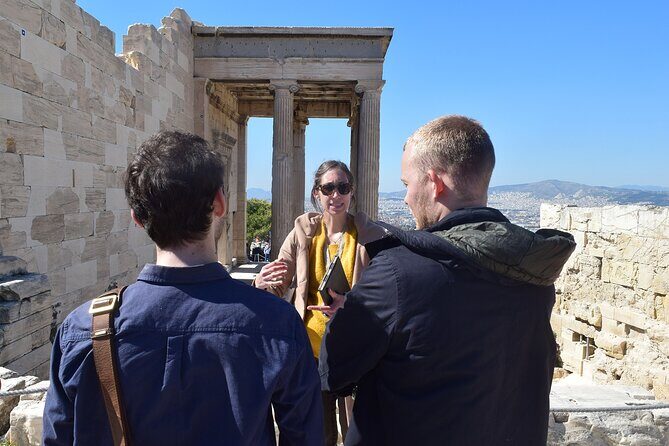
The Acropolis can feel overwhelming if you just stare at ruins. This tour is built to help you see the bigger picture fast. Instead of treating each monument like a separate “photo stop,” the guide ties the places together through myth, religion, and how Athenians thought about power, victory, and performance.
I especially like the focus on story-first context. When you learn that the Theatre of Dionysus connects to the cult of Dionysos, your brain starts linking what you see (marble seats, theater space) with why it existed in the first place. Same idea with Athena Nike and the Parthenon: you’re not memorizing facts—you’re building a mental map.
There’s also a practical advantage: it’s short. At about 1 hour 30 minutes, you get the main hits without turning the day into a long grind. That’s useful when you’re combining this with other Athens plans later. Just keep in mind the tour is weather-dependent—if conditions aren’t good, you may need to switch dates or get a refund.
Other Acropolis and Parthenon tours we've reviewed in Athens
Getting started at Acropoli metro: where you actually meet
Meeting points matter on the Acropolis. Here, you’ll meet your guide at the exit of the Acropoli metro station (Exit Makriyianni / Dionysiou Areopagitou). From there, you’ll head to the site entrance and begin your loop through the major monuments.
Why this is helpful: you avoid the awkward first 15 minutes of wandering around trying to figure out where your group is gathering. It also sets you up to start on the hill at a steady pace rather than arriving late and rushing.
One more thing to know upfront: the tour ends on top of the Acropolis hill, not at the bottom. That’s great if you want a final viewpoint and don’t mind planning your next move from there. It’s also why this works best if you build your schedule around a “start near the Metro, finish on the hill” flow.
Stop-by-stop: the Acropolis route in a logical order
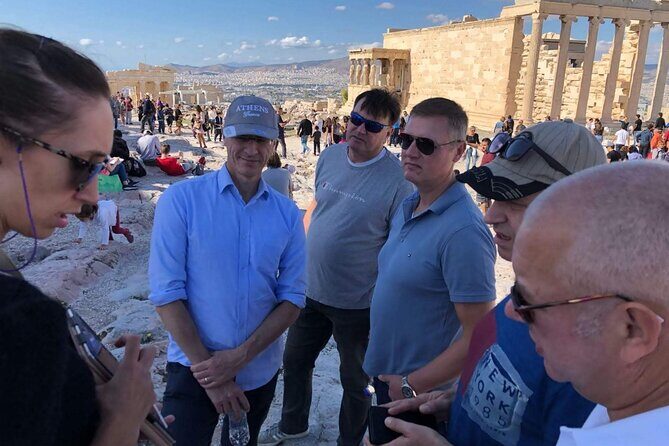
This is a guided walk with seven programmed stops. The timing is designed to give you enough time to look, listen, and absorb—without overstay.
Acropolis summit: orientation and a 360-degree pause
Your first stop is on the Acropolis itself, with about 20 minutes to take in the monuments and the hilltop perspective. You’ll pass major points as you go up, and then you get rewarded with a stunning 360-degree view over Athens.
This view isn’t just pretty. It’s the moment you can “reframe” the whole area. From up there, you start to understand how the city spreads out below and how the Acropolis sits like a focal point. If you care about good photos, this is also where you’ll want your camera ready—daylight matters, and this is one of the clearest payoff moments in the route.
Admission note: your tour includes the guide, but the entry ticket isn’t included, so you’ll want to be ready for that extra cost.
Theatre of Dionysus Eleuthereus: where ancient theater starts
Next, you’ll visit the Theatre of Dionysus Eleuthereus for about 15 minutes. This stop is a favorite for good reason: the guide explains how ancient Greek theater developed out of the cult of Dionysos, the god of wine.
Look closely and you’ll see the ancient marble seats with incised names. That detail turns the theater from a generic “ruin” into a place tied to real people and real ritual life. It’s one of those stops where listening to the story makes the space feel alive—even if you’re standing in daylight with modern crowds nearby.
One practical drawback: theater seating can be uneven, and you’ll likely spend time looking both up and around. Wear shoes that feel stable, not just pretty.
Other Acropolis tours in German or Dutch we've reviewed






Temple of Athena Nike: victory, in miniature
About 5 minutes here at the Temple of Athena Nike. This is the smallest temple on the Acropolis hill, dedicated to Nike, the goddess of victory.
What I like about this stop is how it connects ancient symbolism to something modern. The guide points out how the victory goddess inspired a famous sports brand—so you leave with a fun cross-era connection, not just a “small temple, tiny time” moment.
It’s quick, but it’s memorable if you pay attention to the story theme: victory wasn’t only about battle. It was also about identity, culture, and how a city celebrated itself.
Propylaea: the monumental gate into the top zone
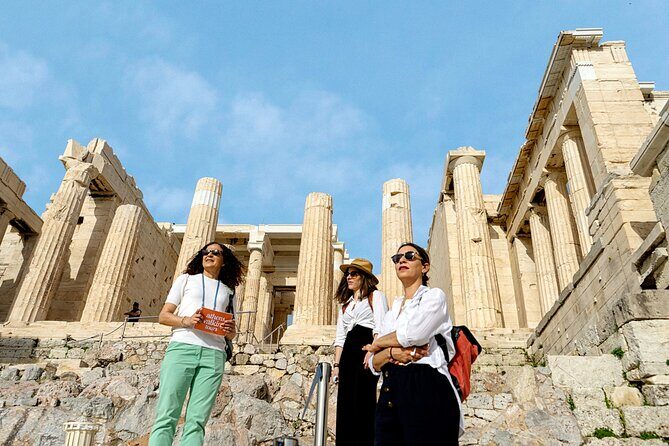
Another 5 minutes at the Propylaea, the grand entrance gate that leads you toward the highest area of the Acropolis. The guide helps you pass through and get close enough to notice the huge marble block details.
This stop matters because entrance architecture tells you something about intent. Propylaea isn’t a random doorway. It’s designed as a statement—your first taste of the “you’re entering a special place” feeling.
If you’re prone to photo-taking fatigue, this is a good pause. You can use the gate to frame your photos toward the upper monuments without sprinting all over the hill.
Parthenon and Erectheion: design tricks plus real myths
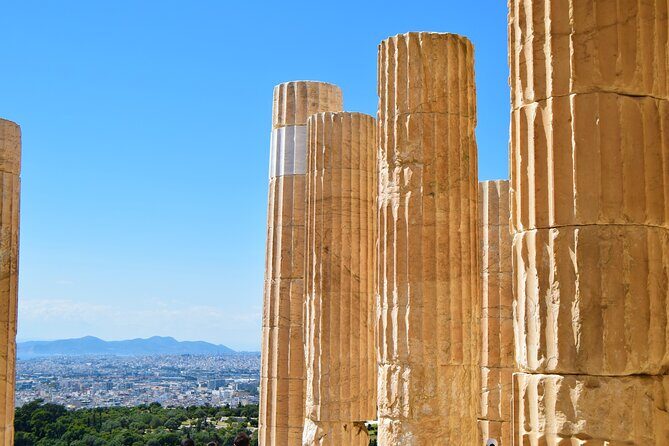
After Propylaea, the tour settles into the two heavy hitters most people come for: Parthenon and Erectheion. This is where the storytelling really earns its keep.
Parthenon: why it is not perfectly straight
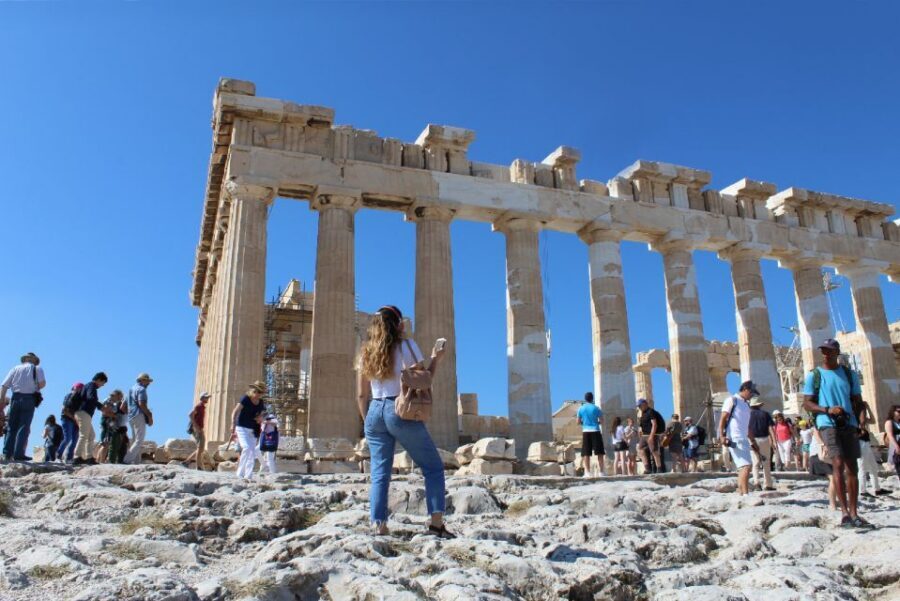
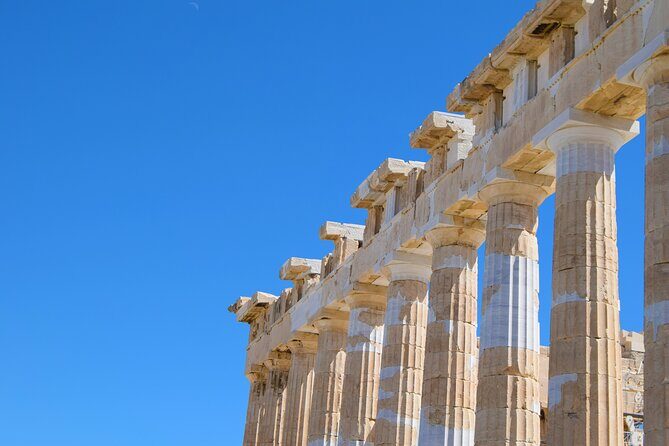
You’ll spend around 20 minutes at the Parthenon, the largest temple on the Acropolis hill, dedicated to Athena. The guide highlights something that’s genuinely eye-opening: this enormous building doesn’t have straight lines.
If that sounds like a minor detail, it’s not. It’s the kind of architecture trick that explains why the Parthenon has influenced design ideas for centuries. You stop seeing it as just “big and famous,” and start recognizing it as a masterpiece of optical correction and intentional form.
Also, this is a good spot for slow looking. Take a moment to stand where you can see multiple elements at once, then let the guide’s explanation shape what you notice next.
Erectheion: the Caryatids and the missing column story
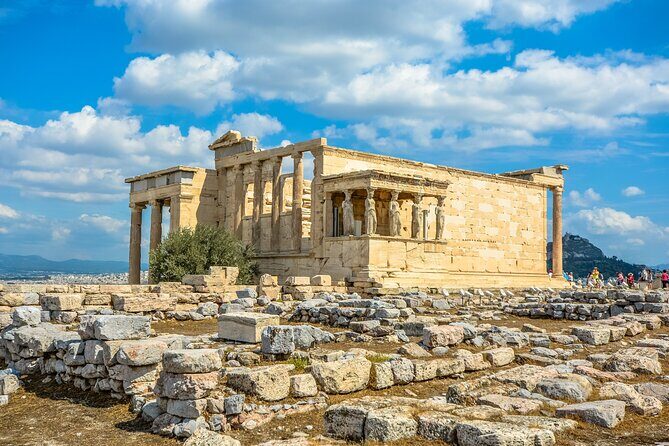
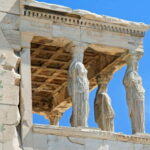
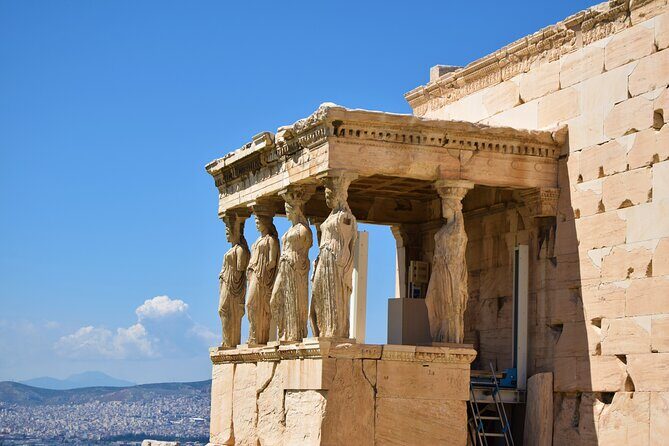
Next is the Erectheion (about 10 minutes), known for the Caryatids, the female columns. The guide connects myth and material history here—so you’re not only admiring the carvings.
You’ll learn about what happened to one of the six Caryatid columns and where it is today, which adds a modern layer to an ancient site. You’ll also hear the myth about the battle between Athena and Poseidon—because the Erectheion area sits in the middle of those competing divine stories.
This is also one of the best stops for people who enjoy details. If you’re the kind of traveler who likes to know what you’re looking at and why it’s there, Erectheion rewards your attention.
Herod Atticus Odeon: Roman stagecraft inside Greek Athens
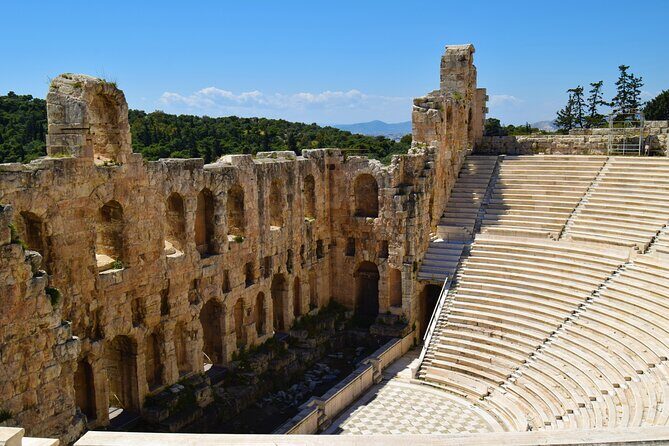
The final stop is the Herod Atticus Odeon for about 10 minutes. This restored Roman concert hall was built in AD 161 by wealthy Herodes Atticus in memory of his wife Regilla.
Even if you don’t know much about Roman theater, you’ll feel the purpose of this place: it’s built for performance and for hearing. And it’s not just museum-style ruins. During the summer, you can still see great artists perform there, including names like Sting and Patti Smith.
This is a surprisingly satisfying end to an Acropolis loop. You start with Greek religious and cultural origins, and you finish with a Roman adaptation—same hillside, new era, different use. It makes the whole hill feel like a living stage across time.
Price and value: what $46.26 covers (and what it doesn’t)
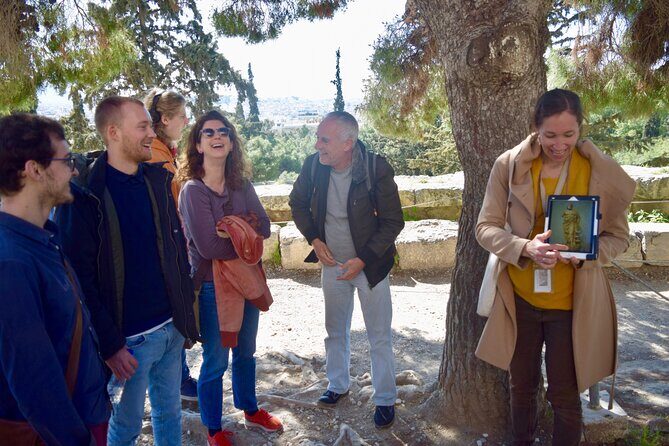
At $46.26 per person, this tour is priced for the guided experience and the efficiency of a tightly planned route. You’re paying for a licensed guide and a group size that stays human-sized (max 20), which can matter as much as the content.
The part that can change your total cost: entrance fees are not included. You’ll arrange tickets for about 30 EUR per adult. This means you should budget for that extra line item before you go, so you’re not surprised on the day.
What you get for your money is more than “walking around.” You get:
- Story-driven interpretation that helps you understand what you’re seeing
- Enough time at each stop to actually notice key features
- A sensible route that connects monuments rather than treating them as separate islands
If you’re trying to minimize total spending, you could do the Acropolis on your own. But if you want context fast—and you’d rather spend time understanding than figuring out—this price can feel very fair.
One more planning tip: bottled water isn’t included. A bottle of water is recommended, especially since you’ll be outdoors and walking on uneven terrain.
Who this tour suits best (and who might want something else)
This tour is a strong match for:
- Families who want a patient, story-focused guide and a pace that doesn’t feel punishing
- People doing a first time Acropolis visit who want the highlights without getting lost
- Anyone who likes myths, architecture details, and cultural connections (Dionysos to theater, Athena to victory themes, Caryatids to myth and survival)
A real plus from guest feedback: the tour has been praised as especially child-friendly, including mention of Jessica being kind, telling interesting stories, and staying patient with children. If you’re traveling with kids, that matters.
On the other hand, this might feel short if you want to linger for long periods at each site or you’re very detail-obsessed about inscriptions and museum-level information. Since it’s about 1 hour 30 minutes, it’s designed for breadth and comprehension—not a slow, deep archaeology day.
Small practical tips to make the most of it
Bring comfortable shoes. The route includes multiple exterior stops on stone surfaces and stairs.
Dress for the weather and expect a good chunk outdoors. The experience is described as requiring good weather, so have a plan for switching dates if needed.
If you’re sensitive to sun or heat, you’ll appreciate the pacing and the fact that the hilltop viewpoint naturally creates a natural moment to pause.
And if you’re learning-oriented, do this tour earlier rather than later in your Athens trip. Once you’ve heard the stories, you’ll start recognizing themes and details when you see the same monuments again on your own.
Should you book this Acropolis Group Tour with Little Owl Tours?
I think you should book it if you want a fast, meaningful Acropolis visit in German or Dutch, with a licensed guide who explains the why behind the what. The small group size (max 20) plus the story-led approach makes it a smart value—especially since the route hits the Parthenon, Theater of Dionysus, Erectheion, and the Odeon without wasting time.
Skip it if you’re hoping for a long, unhurried exploration of every architectural element, or if you dislike tours that end on the hill and require you to plan your next step from that location. Also, if you’re visiting in unstable weather, be ready for date changes.
If your goal is to leave the Acropolis with a clear mental picture, not just snapshots, this tour is a solid choice.
FAQ
What language is the Acropolis group tour offered in?
The tour is offered in Dutch or German.
How long is the tour?
The duration is about 1 hour 30 minutes.
What is the group size limit?
The group has a maximum of 20 travelers.
Where do I meet the guide?
You meet the guide at the exit of the Acropoli metro station, Exit Makriyianni / Dionysiou Areopagitou.
Are entrance tickets included in the price?
No. Entrance fees are not included and are about 30 EUR per adult. The provider will arrange your entrance fees.
Does the tour include bottled water?
No, bottled water is not included. A bottle of water is recommended.
Does the tour offer hotel pickup or drop-off?
No, hotel pickup and drop-off are not included.
Is free cancellation available?
Yes. You can cancel for a full refund up to 24 hours before the experience starts.
Are service animals allowed?
Yes, service animals are allowed.
What happens if the weather is bad?
The experience requires good weather. If it’s canceled due to poor weather, you’ll be offered a different date or a full refund.