REVIEW · ATHENS
Acropolis Monuments guided tour with German Speaking Guide
Book on Viator →Operated by Athens Walks Tour Company · Bookable on Viator
Acropolis monuments feel like homework—until a guide turns it on. This small-group afternoon walk uses a German-speaking licensed archaeologist guide to connect what you’re seeing with what it meant, from the Parthenon to the nearby theaters and temples. You’ll get a structured route up the hill instead of bouncing around with a map in your hand.
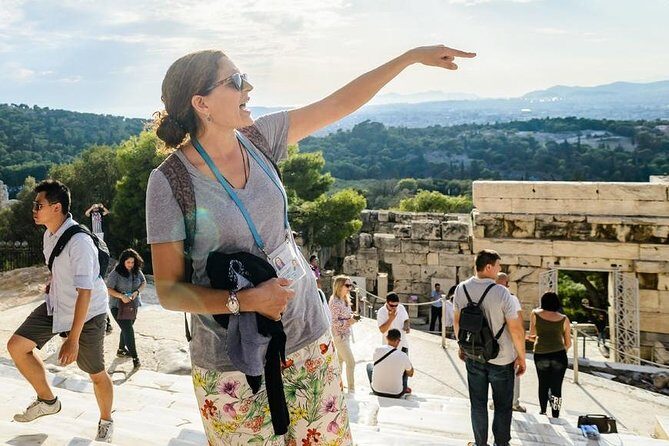
I especially like how the tour breaks the site into clear pieces without turning it into a lecture. In one German-language example, guide Selina is singled out for explaining the five eras of the Acropolis in a refreshing, easy-to-follow way, and for answering questions openly and respectfully.
The main drawback to plan for: Parthenon entrance fees are not included unless you book the option that adds tickets, so you’ll likely pay separately on the day. Also, even with a walking tour format, you’ll need moderate stamina for the uphill, stone-and-steps terrain.
In This Review
- Key things worth knowing before you go
- German-Speaking Archaeologist: How the Tour Keeps the Acropolis Understandable
- Price and time: is $46.26 good value for 2 hours?
- Meeting at Athens Walks: getting oriented fast
- Stop-by-stop: what you’ll get out of the Parthenon area
- A practical way to enjoy the time
- Temple of Athena Nike and the Propylaea gateway: learning the approach
- Theater of Dionysus: where entertainment meets civic life
- Odeon of Herodes Atticus and the Healing Temple theme: why the Acropolis wasn’t only sacred
- Erechtheion and the Porch of the Caryatids remains: the details that tug at you
- Views from the Acropolis: the payoff after you understand the buildings
- Group size and question time: why small feels better on the Acropolis
- What might annoy you (and how to plan around it)
- Who should book this Acropolis Monuments tour?
- Should you book? My straight answer
- FAQ
- How long is the Acropolis Monuments guided tour?
- What language is the guide?
- Is the Parthenon entrance fee included in the price?
- Where do we meet for the tour?
- Does the tour use a mobile ticket?
- Do I need a passport or ID?
- Do you offer pick-up or drop-off?
- How big is the group?
- What should I wear?
- Is there free cancellation?
Key things worth knowing before you go

- German-speaking licensed archaeologist: you get context, not just sight points.
- Parthenon focus: set time to look closely instead of rushing past.
- Theater + temples theme: politics, religion, and daily life all show up in the route.
- Small group size: easier questions and less lost time than with big crowds.
- Crowd management by education: you learn what to notice, so the busy feel matters less.
- Erechtheion details: you get to the Porch of the Caryatids remains area and understand why it’s important.
German-Speaking Archaeologist: How the Tour Keeps the Acropolis Understandable
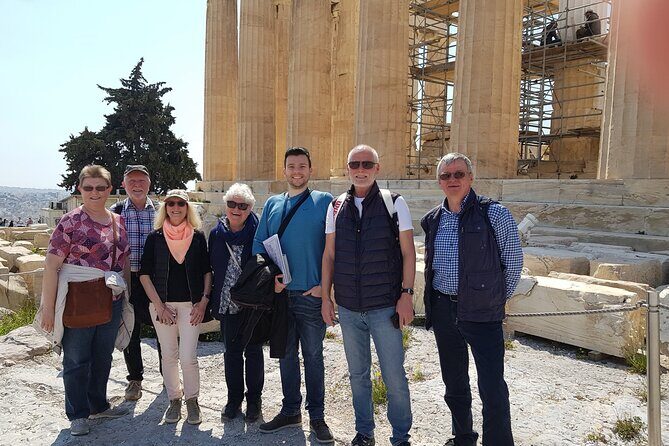
The Acropolis is famous for a reason, but that can be the problem. When you show up on your own, it’s easy to see impressive stone and still miss the story. The value of this tour is that it treats the hill like a living timeline, not a pile of ruins.
You’re led by a licensed guide who’s also described as an archaeologist, and that combination matters. A normal guide can point to buildings. An archaeologist can explain why those buildings were designed the way they were, what they were used for, and how the Acropolis changed over time. You’re not just collecting facts—you’re learning what to look for while you’re standing in front of the site.
A German-speaking tour is also a real bonus for visitors who prefer their history without translation lag. One review praised Selina for making the five epochs of the Acropolis click, and for keeping the tone approachable rather than overly academic. If you’ve ever felt museum info getting lost in translation or jargon, this is the kind of structure that helps.
Other Acropolis and Parthenon tours we've reviewed in Athens

Price and time: is $46.26 good value for 2 hours?
At $46.26 per person, you’re paying for a guided walking experience that lasts about 2 hours and runs with mobile ticket support. The time window is long enough to see multiple highlights, but short enough to keep the pace manageable on a hill.
What’s included matters. Entrance to the Parthenon is only included if you book the option with entrance tickets. Otherwise, you pay the Parthenon entrance fee on the day. That’s not a deal-breaker, but it does mean you should budget extra for the entry cost so you don’t get surprised at the ticket area.
Where the value really shows up is in how much meaning you can squeeze out of limited sightseeing time. If you’re only in Athens for a day or two, a guide helps you avoid the classic problem: standing in front of a monument and realizing you don’t know what part you’re supposed to be looking at. On this tour, the route is built around the big “why” sites—Parthenon, Theater of Dionysus, Odeon of Herodes Atticus, Temple of Athena Nike, the Propylaea gateway area, and the Erechtheion/Caryatids remains.
Meeting at Athens Walks: getting oriented fast
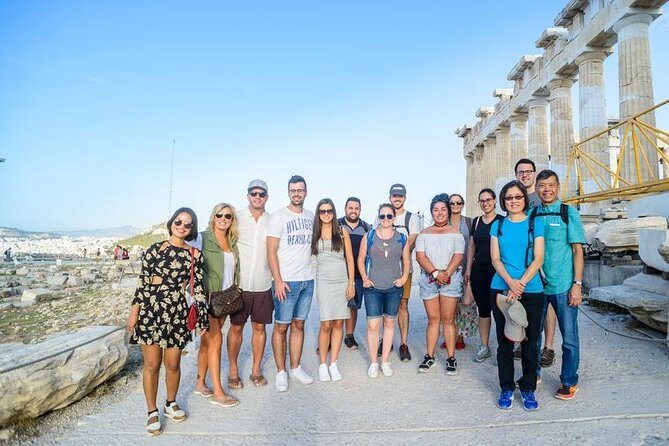
The tour meeting point is at the Athens Walks offices near the Acropolis. You’ll meet at Athanasiou Diakou street 16, listed as about 5 minutes’ walk from the Acropolis metro station. The tour starts at Porinou 5, Athina 117 42, and returns back to the meeting point, so you’re not stuck figuring out your own end-of-day plan.
This kind of “start and end nearby” setup is practical. The Acropolis area is busy and full of foot traffic, so getting clear where to regroup matters. A small-group format (up to 25 per group, with the activity described as capped at 50) also tends to keep lines moving and reduces the chance that you’ll lose half the group on narrow walkways.
Dress-wise, plan for a bit of formality. The information includes formal dress and also says smart casual, so think polished but comfortable footwear. You’ll want shoes that handle uneven stone and steps.
Stop-by-stop: what you’ll get out of the Parthenon area
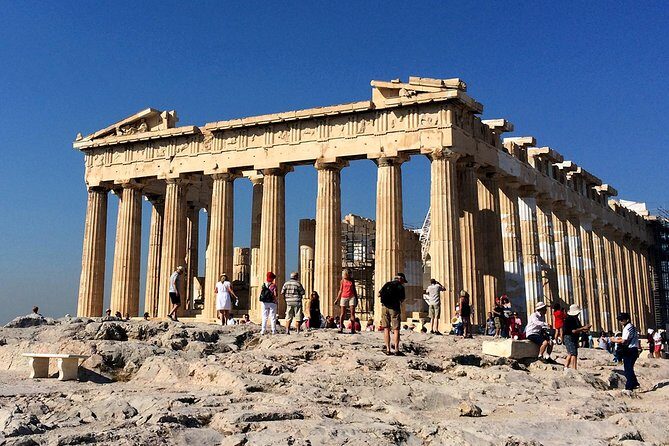
The itinerary gives you substantial time at the heart of the Acropolis: the Parthenon (Temple of the Goddess Athena). Expect roughly 45 minutes at a time focused in that area, with the tour’s larger flow also anchored around the Acropolis core.
Why that matters: the Parthenon is not just one view. You need time to notice how the building reads from angles, and to understand what the sculptures represent. With a guide, you’re less likely to treat the Parthenon as a single photo moment and more likely to see it as an artwork in stone—built to communicate power, belief, and civic identity.
The tour also emphasizes the sculpture story across centuries. The overview describes an astonishing collection of sculptures and explains that you’ll see how it tells more than 2,500 years of history. Even if you’ve seen Parthenon photos before, that framing helps you interpret details while you’re there, instead of saving everything for later reading.
A practical way to enjoy the time
Don’t try to do everything with your camera. Use your first minutes to pick a few details your guide highlights, then take photos after you understand what you’re photographing. With two separate Parthenon-focused blocks, you can shift from “where am I?” to “what am I seeing?” instead of rushing in one pass.
Other Acropolis tours in German or Dutch we've reviewed






Temple of Athena Nike and the Propylaea gateway: learning the approach
You’ll also visit the Temple of Athena Nike—often associated with the idea of Wingless Victory—and the gateway area to the Propylaea. These stops help you understand that the Acropolis wasn’t built just for one monument. It was built as a sequence, where the approach mattered.
This is where a guide earns their fee. From ground level, it’s easy to think of temples and gates as separate objects. With the tour’s structure, they become part of a controlled experience—how people entered, how the space guided attention, and how symbolism played out as you moved through the complex.
Temple of Athena Nike is a smaller target than the Parthenon, so it’s easy to overlook on your own. On a guided route, it’s given the time and explanation that turns it from a quick glance into a meaningful stop.
Theater of Dionysus: where entertainment meets civic life
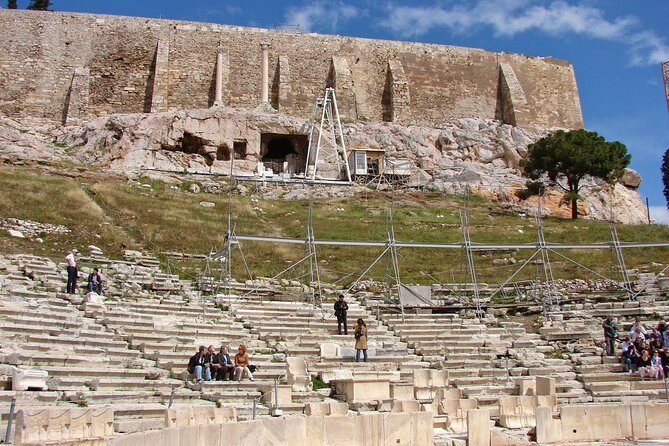
One of the most interesting parts of this tour is the stop at the Theatre of Dionysus (described as the 1st theater of human civilization). Even in ruins, the shape and function of a theater shows how a society gathered and how ideas spread.
The value here is connection. You’re not only learning architecture; you’re seeing how the Acropolis held spaces for performance and public life, side-by-side with religious structures. This helps the hill feel less like a “dead place” and more like a real civic center that shaped daily identity.
From a practical perspective, the theater area also gives you a natural “reset” from the Parthenon focus. You can look at the seating shape and imagine the scale in a way that feels more intuitive than reading about it later.
Odeon of Herodes Atticus and the Healing Temple theme: why the Acropolis wasn’t only sacred
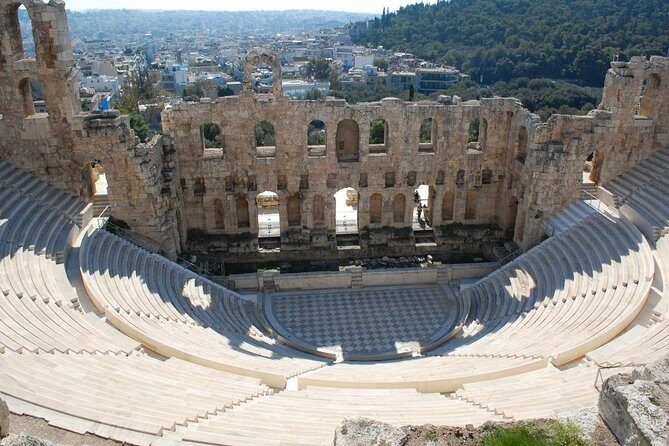
The tour overview includes the Odeon of Herodes Atticus and the Healing Temple of Asclepius. Even if you’ve heard of these places before, the guided approach helps you see their role in the broader story.
The Acropolis wasn’t just where people worshipped. It also hosted cultural and social functions, and it included areas associated with healing. That mix is what makes the site feel human instead of purely monumental.
This theme is especially helpful if you’re the type who likes your travel grounded in how people lived. When a guide ties buildings to purpose—belief, performance, healing, civic identity—you get a clearer mental map that doesn’t fade the second you leave the hill.
Erechtheion and the Porch of the Caryatids remains: the details that tug at you
The stop at Erechtheion brings you to the area described as the remains of the Porch of the Caryatids. Even as ruins, these carved figures are a big part of why the Erechtheion gets so much attention.
Here’s the key: this isn’t just a “pretty stone” moment. The Caryatid figures are a sculptural idea turned into architecture, and a guide can explain what you’re seeing in a way that makes the details feel purposeful rather than decorative.
Time is short at each specific point, so you’ll want to keep your attention tight. Let the guide point out what’s original, what’s damaged, and what still communicates the original concept.
Views from the Acropolis: the payoff after you understand the buildings
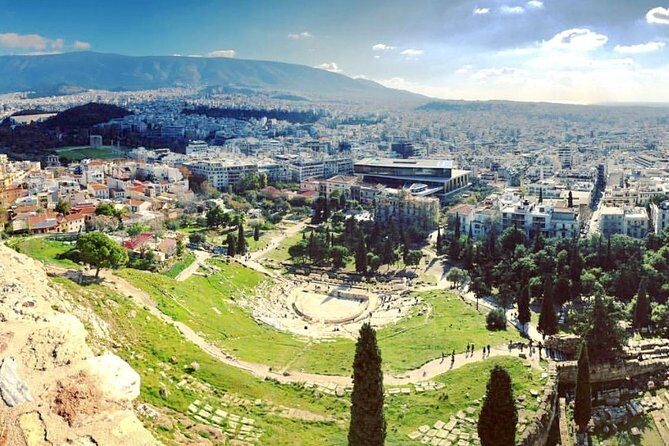
From the top, you get that iconic Athens view—almost all of the city spread out below you. But the bigger payoff is mental. After learning the roles of the Parthenon, temples, theater, and gateways, the view becomes a context tool.
You’re not only looking at scenery. You’re looking at the setting those buildings dominated. The tour gives you that advantage because it reduces guesswork: you understand what the monuments were for, and then you can see why they were built where they were.
If you’re prone to burnout from viewpoints, this approach helps. You’ll likely spend more time looking outward because you know what your eyes are supposed to connect to.
Group size and question time: why small feels better on the Acropolis
This tour is built as a small-group walk, and the caps listed (up to 25 per group, with the activity capped at 50) generally point to a less chaotic experience than the mass tours. That affects quality.
Smaller groups tend to mean:
- you can actually ask questions without losing the guide
- you don’t spend long periods waiting while people reposition
- you can hear explanations without constantly shouting over crowds
One review highlighted that questions were answered fully and in an easygoing way, and that participants were included in a respectful manner. That’s exactly what you want on the Acropolis, where the crowds can otherwise drown out nuance.
What might annoy you (and how to plan around it)
There are two likely “watch-outs” based on the provided details.
First, Parthenon entrance fees are not included unless you choose the entrance-ticket option. If you hate paying extras, check the booking option carefully before you go.
Second, the tour asks for moderate physical fitness. This isn’t a sit-down museum hour. Expect walking and stairs around uneven stone. Wear solid shoes, and don’t plan to arrive at the tour already exhausted.
Who should book this Acropolis Monuments tour?
You’ll probably love this tour if you:
- want a guided, structured way to understand the Acropolis rather than just photos
- prefer a German-speaking licensed archaeologist style explanation
- have limited time in Athens and want the big landmarks handled efficiently
- like your history explained in plain language, not a textbook voice
You might reconsider if you:
- refuse to pay separate Parthenon entrance fees
- want an ultra-flexible self-paced visit with no scheduled stops
- struggle with hillside walking and steps
Should you book? My straight answer
Book it if you want to see the Acropolis with meaning, not just monuments. The German-speaking licensed archaeologist format, the focus on the Parthenon and key surrounding sites, and the small-group pacing make it a strong value at $46.26—as long as you budget for Parthenon entry if it’s not included in your option.
Skip it and go self-guided only if you already know what you’re looking for, or if you strongly dislike paying separate site entry fees.
FAQ
How long is the Acropolis Monuments guided tour?
The tour lasts about 2 hours.
What language is the guide?
The guide is German-speaking, and the tour is led by a licensed guide described as an archaeologist.
Is the Parthenon entrance fee included in the price?
Parthenon entrance is not included unless you book the option with entrance tickets. Otherwise, you pay on the day.
Where do we meet for the tour?
You meet at Athens Walks offices near the Acropolis, listed at Athanasiou Diakou street 16. It’s about 5 minutes from Acropolis metro station.
Does the tour use a mobile ticket?
Yes. The tour features a mobile ticket, and you can also present a paper or electronic voucher.
Do I need a passport or ID?
A current valid passport or ID is required for ages under 25 years old.
Do you offer pick-up or drop-off?
No pick-up/drop-off is included.
How big is the group?
The tour/activity is described as having a maximum of 25 travelers, and the activity also states a maximum of 50 travelers.
What should I wear?
The dress code is smart casual and also listed as formal. Comfortable shoes are a good idea for the walking.
Is there free cancellation?
Yes. You can cancel for a full refund up to 24 hours before the experience starts.