REVIEW · ATHENS
Private Tour: Half day Athens Sightseeing and Acropolis Museum
Book on Viator →Operated by Keytours - Greece · Bookable on Viator
Athens in five hours, not rushed. This private half-day blends Acropolis temples and the Acropolis Museum with quick hits around modern Athens, so you get the full story without spending the whole day in lines. I especially like the way the day can flex to your group, and how a private guide can slow things down when people need it. One thing to keep in mind: some marquee moments (like the guards or the Panathenaic Stadium) can be view-only or limited by time, so it helps to ask what you’ll actually get to do at each stop.
What really sells this tour is the team factor: you ride in a luxury air-conditioned vehicle with hotel pickup/drop-off, and the guide-led walking comes with real context. In the guide lineup, I’ve seen glowing praise for people like Petros, Sophia, Demetrius, Anna, Christine, Stravos, Christina, Joanna, Ruli, Costas, and Emma—each described as tailoring the pace and making the monuments easier to understand.
In This Review
- Key highlights worth your attention
- Panathenaic Stadium First: The 1896 Olympic Start Point
- Syntagma Square to Olympian Zeus: Your Athens Highlights Loop
- Climbing to the Acropolis: Propylaea, Parthenon, and Erectheion
- Acropolis Museum: The Indoor Story That Makes the Temples Click
- Private Pace and Crowd Tactics: What Changes on a One-Group Tour
- Price and Value: When $795 Per Person Works
- Who This Half-Day Athens Tour Fits Best
- Should You Book It? A Practical Decision Guide
- FAQ
- How long is the Private Tour: Half day Athens Sightseeing and Acropolis Museum?
- What time does the tour start?
- Is hotel pickup and drop-off included?
- Is this tour private?
- Which language is the guide?
- Are entrance fees included?
- Are the tickets digital?
- What’s not included in the tour price?
Key highlights worth your attention
- A private, flexible route that can adjust for slower walkers and changing priorities
- Panathenaic Stadium (1896 Olympics) as your warm-up stop before the Acropolis
- Drive-by landmarks that frame the ancient sites including Syntagma and the Tomb of the Unknown Soldier
- A guided visit to the Acropolis monuments (Propylaea, Parthenon, Athena Nike, Erectheion)
- Acropolis Museum focus on what’s missing outdoors: Caryatids, and Parthenon pediments, metopes, and frieze
- Crowd tactics like pacing choices and time-saving help at the Acropolis ticket area (when possible)
Panathenaic Stadium First: The 1896 Olympic Start Point
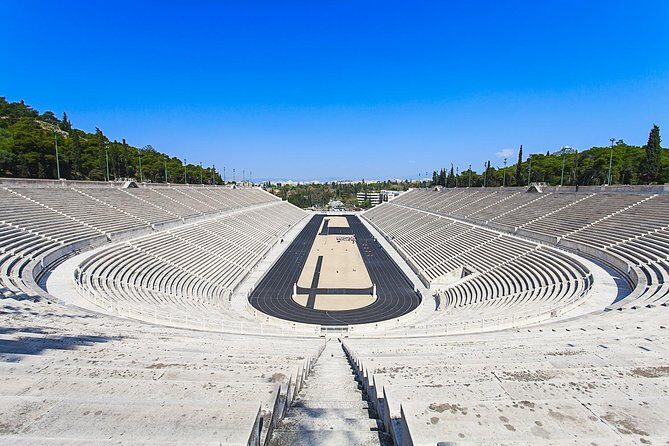
Your half day begins with a hotel pickup, then a short ride to the Panathenaic Stadium—famous as the cradle of the first modern Olympics in 1896. The stop is brief (about 20 minutes), but it’s a smart opener because it sets Athens up as a living city, not just a museum of ruins.
What I like here is the contrast. Before you climb toward ancient marble perfection, you stand in a venue tied to a modern global event. It helps you connect timelines fast: ancient Greece influenced the modern world, and Athens keeps reusing its own symbols.
Practical note: the stadium admission is listed as free. That’s a nice bonus in an itinerary where most major sites are paid or included through the tour.
Other Acropolis and Parthenon tours we've reviewed in Athens
Syntagma Square to Olympian Zeus: Your Athens Highlights Loop
After the stadium, your route threads through modern Athens landmarks that act like signposts for the ancient core. You’ll pass the Greek Parliament building in the area of the former Royal Palace, then have the chance to see the Evzoni guards in their amber tunics. This is one of those moments that many people hope to watch closely, but time and traffic rules can limit how close you can get. If seeing them clearly is a must for you, ask your guide to make that moment count early in the drive.
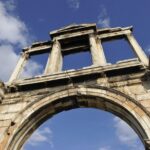
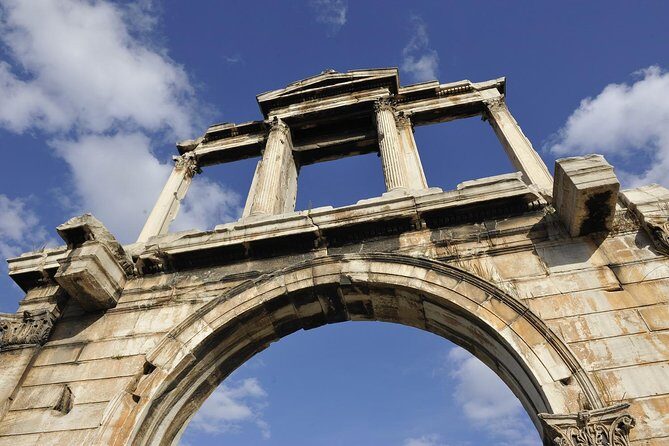
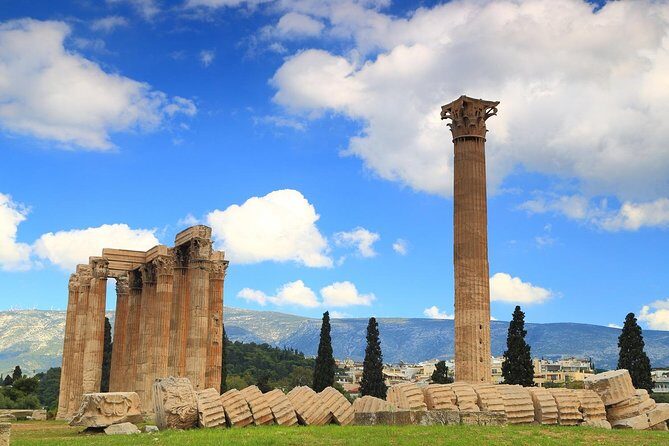
Next comes Zappion Conference Center in the National Gardens area, also used as a “visual reset” before the ancient monuments begin stacking up. From there, the itinerary flows past the Roman Temple of Olympian Zeus, Hadrian’s Arc, and the Tomb of the Unknown Soldier, again with Evzones at the memorial.
This part of the tour is where the guide’s routing matters. Even if you’re not walking at every stop, you’re getting orientation: where the city’s major pathways point, where the big monuments sit, and why the Acropolis is where it is. Along the way, you may also pass major architectural landmarks such as the Numismatic Museum at Schlieman’s House and the Catholic Cathedral, plus the neoclassical “trilogy” area.
One consideration: not every highlight here is a full stop you enter. In practice, some items are “see it from the road” segments. If you care about a specific stop being a proper visit versus a quick look, line that up with your guide at the start of the day.
Climbing to the Acropolis: Propylaea, Parthenon, and Erectheion
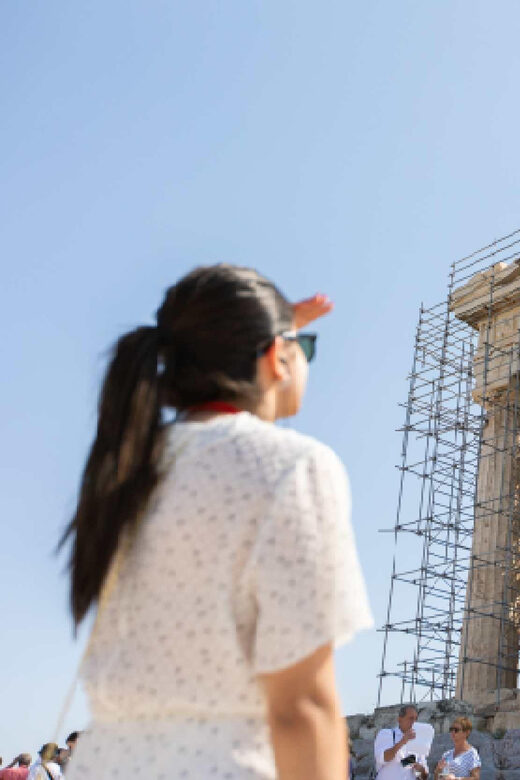
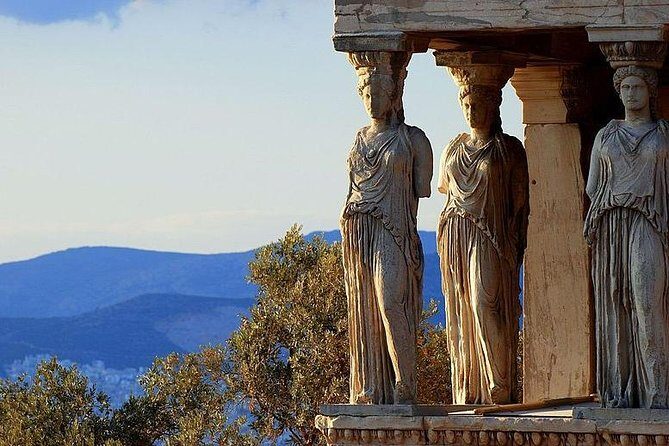
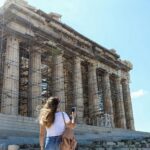
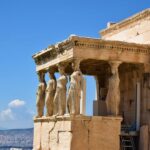
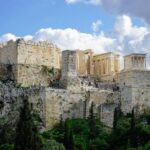
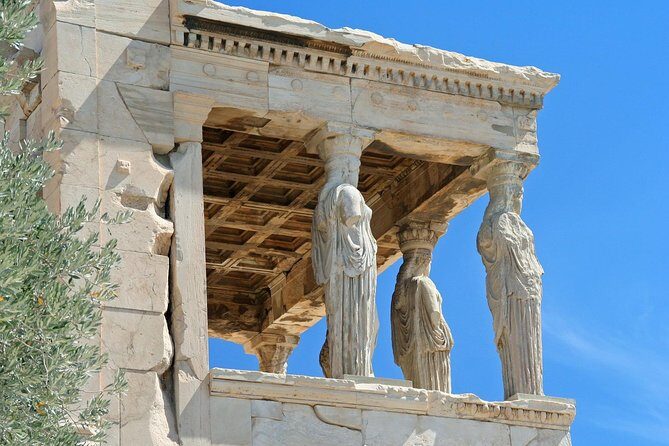
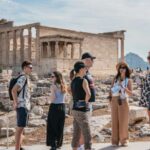
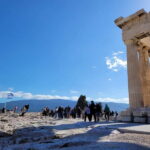
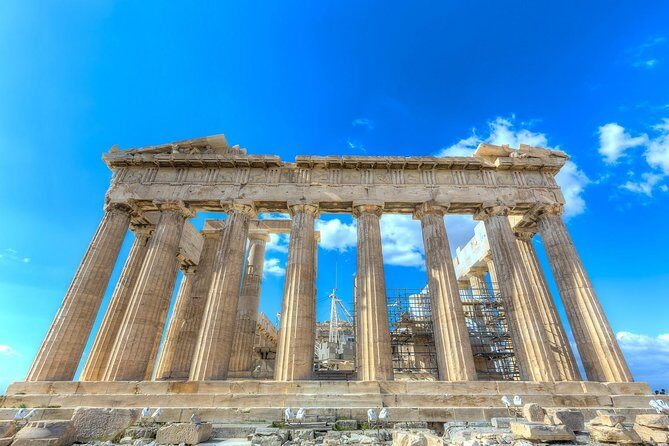
Once you reach the Acropolis area, you shift from driving-and-passing to walking and seeing. The core visit is about two hours and centers on the monumental marble gates of the Propylaea, the Temple of Athena Nike, the Parthenon, and the Erectheion, including the famous Porch of Maidens.
This is the heart of the trip, so your guide’s approach changes your experience more than you might expect. On private tours, you can get a route that matches your group’s pace, and that matters because the Acropolis terrain is uneven and step-heavy. In guide feedback, people repeatedly highlighted that the staff can handle mixed mobility needs—helpful if someone in your group has a broken toe, uses extra caution on steps, or just can’t do nonstop climbing.
What I think is valuable about covering Propylaea and the Parthenon as a connected story is that it forces you to stop treating the Acropolis as one big photo spot. You start seeing the plan: how spaces connect, where sightlines point, and why the monuments were designed for specific views.
Another practical point: when timing is tight and crowds are thick, the guide’s real-world strategy matters. Some people praised help that reduced wasted time around ticket lines at the Acropolis. Even when you can’t avoid everything, you’re more likely to lose less time when someone is directing the flow.
Acropolis Museum: The Indoor Story That Makes the Temples Click
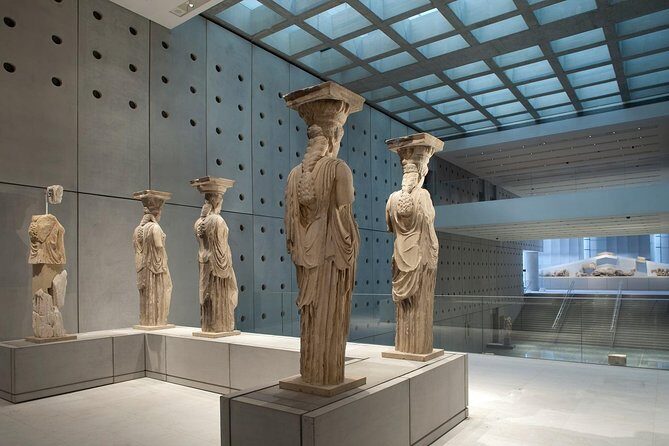
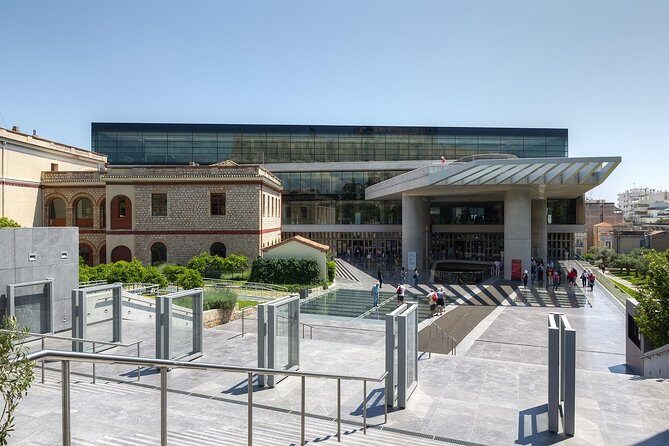
The Acropolis Museum visit is about 1.5 hours, and it’s where the outdoor monuments start making more sense. You’ll walk a short distance past areas like Herodion and the Dionysos Theater before entering.
Inside, the museum organizes the Acropolis story through artifacts and reconstructions, so you can zoom in on details you can’t fully absorb from the ground at the temples. The displays include votives and artifacts of everyday life, archaic statues, and the Caryatids—those iconic female figures associated with the Acropolis.
If you want the “why” behind what you’re seeing outdoors, this is the stop. In the Parthenon galleries, you’ll find displays from the pediments, metopes, and frieze. That’s the stuff that turns a quick glance into a real understanding of symbolism and design.
Here’s the simple value: the Acropolis is huge, and your eyes can get tired. The museum keeps you fresh and lets you look longer at the meaning behind the stonework. If you’re visiting for the first time, this is the part that often turns a list of monuments into a coherent picture.
Private Pace and Crowd Tactics: What Changes on a One-Group Tour
A private tour isn’t just fewer people. It’s control. And in this case, feedback repeatedly pointed to guides adjusting pace and day flow for real needs, not just a generic script.
You’ll see this in examples like guides who:
- adjusted walking pace for someone slower (including people dealing with injuries)
- paused often for explanations and questions without making you feel rushed
- used shade and smart stopping points on hot days
- helped manage timing so you spend less time stuck waiting
Some praised guides for using crowd-avoidance tactics by shifting the start time earlier to reduce bottlenecks. Others described a memorable add-on when timing changed—like shifting the ending to a panoramic viewpoint for sunset if the schedule didn’t allow everything they’d planned.
One more “private” advantage is flexibility about where you spend time. There are signs that some guides swapped out a stop if you’d already seen something the day before, or guided you toward an extra view spot based on your interests. That’s why customization can feel more real in a private format.
At the same time, a balanced warning: customization can hit limits when a segment is basically a viewing pass rather than an entrance you can easily control. For example, the Panathenaic Stadium may be treated more like a front view stop than a full deep-dive visit. The Evzones can be visible from the street, but you may not always be able to get up close. If something is a top priority, ask directly early: will we stop long enough to see it well, and can we step off to watch, or is it a drive-by moment?
Other private Acropolis tours we've reviewed in Athens



Price and Value: When $795 Per Person Works
Let’s talk money honestly. This tour costs $795.16 per person for about five hours. That’s a high price compared with group tours or self-guided options.
So where does the value come from?
1) You’re paying for coordination, not just sightseeing. You get a luxury air-conditioned vehicle plus hotel pickup/drop-off, which removes the biggest friction point in Athens: getting around efficiently while managing heat, traffic, and schedules.
2) Entrance fees are included. That matters because Acropolis-area admissions can add up fast. The tour also lists that the Acropolis visit is included (and Panathenaic Stadium admission is free), with other key stops tied into the included fees.
3) You’re buying time savings and better sequencing. The schedule is tight on purpose: you cover modern signposts, the Acropolis core monuments, and then the museum. If you try to stitch that together alone, you’ll spend extra time figuring out logistics and navigating lines.
4) You’re buying a guide who can adapt. The repeated praise for guides accommodating different walking speeds and keeping people comfortable isn’t a small thing. If your group includes older adults, teens, or anyone with mobility limits, a private structure can justify the price quickly.
Who should pause before booking? If you’re traveling solo, athletic, and okay with a less guided pace, you may find a cheaper alternative for a simple Acropolis + museum checklist. But if your goal is understanding plus efficient use of a half day, this is the kind of tour that can make your money feel more like an investment.
Who This Half-Day Athens Tour Fits Best
This is a good fit if:
- it’s your first time in Athens and you want the highlights tied together
- you like guided walking through major monuments instead of just looking at photos
- your group has mixed mobility needs and you want flexibility
- you want the Acropolis explained in a way that the museum reinforces
It may be less ideal if:
- you want a very loose, independent day with lots of unscheduled wandering
- you’re mainly chasing only one or two spots and want the cheapest option
- you assume every “highlight” stop comes with a long entry or up-close viewing time
One detail worth repeating: there’s walking on uneven terrain on the Acropolis. The tour format can help with pace and breaks, but it’s still not a zero-walking experience.
Should You Book It? A Practical Decision Guide
Book this tour if you want a structured half day that hits the Acropolis monuments and the Acropolis Museum, with a private guide who can adjust to your group and reduce wasted time. It’s especially worth considering if you care about the meaning behind what you’re seeing, not just the postcard angle.
Skip or shop around if your main priority is only the Acropolis for photos and you’d rather spend less money and accept the logistics yourself. Also consider asking a direct question before you confirm: which parts are entry visits, and which are view-from-the-road moments? That one clarification can prevent disappointment.
FAQ

How long is the Private Tour: Half day Athens Sightseeing and Acropolis Museum?
It’s listed as approximately 5 hours.
What time does the tour start?
The start time is 8:00 am.
Is hotel pickup and drop-off included?
Yes. Pickup/drop-off service from/to Athens hotels, apartments, or Airbnb is included.
Is this tour private?
Yes. It’s a private tour, so only your group participates.
Which language is the guide?
The tour is offered in English.
Are entrance fees included?
Yes. Entrance fees are included in the tour price (with Panathenaic Stadium admission listed as free).
Are the tickets digital?
You’ll receive a mobile ticket.
What’s not included in the tour price?
Food and drinks are not included, and gratuities are optional.