REVIEW · ATHENS
Athens: Acropolis Guided Private Tour without Entry Ticket
Book on GetYourGuide →Operated by Secrets of Greece IKE · Bookable on GetYourGuide
The Acropolis feels close enough to touch. This private, 2-hour walk turns the ruins into a story, with myth-and-history narration that makes the stones feel like scenes from a play. I especially like the small group feel, since you can actually ask questions instead of just staring at marble.
The second big win is the pacing: you’re taken through the key highlights in a logical route, then you can stay longer on your own after the tour. One catch: the entry ticket isn’t included, so you must secure your timed admission ahead of time (with specific time-slot guidance by season).
In This Review
- Key moments you’ll get from this Acropolis tour
- A private Acropolis walk makes the myths click
- Meeting point and the “start moving” advantage near Acropolis Metro
- Propylaea and Parthenon: the gateway-to-main-temple route
- A quick heads-up on timing with entry access
- Temple of Athena Nike and the small-temple stop you shouldn’t skip
- Caryatides and the Erechtheion: details that feel like characters
- Dionysus’s theater: why 17,000 seats changed Greek culture
- Odeon of Herodes Atticus and Asclepius: performance and healing
- The tour’s “ask questions” bonus (and why Spanish matters)
- Ticket strategy: entry isn’t included, so plan your timed slot
- If you arrive without the ticket
- The tour itself still lasts 2 hours
- Price and value: $292 per group up to 3
- Who this Acropolis private tour fits best
- Practical tips to make the 2 hours feel smooth
- Should you book this Acropolis guided private tour without an entry ticket?
- FAQ
- Is the Acropolis entry ticket included?
- Where do we meet the guide?
- How long is the tour?
- Is this a private tour?
- What language is the tour guide?
- What ticket time should I select?
- What if I don’t buy my ticket before the tour?
- Is the tour wheelchair or stroller-friendly?
Key moments you’ll get from this Acropolis tour

- Meet at the Acropolis Metro entrance and start right where the climb begins
- Propylaea and Parthenon viewpoints explained in plain language
- Theater of Dionysus (17,000 seats) and why festivals mattered there
- Odeon of Herodes Atticus and its role as a giant stone performance space
- Erechtheion, Caryatids, and Temple of Athena Nike with on-site commentary
- Licensed Spanish guide who keeps the walk conversational
A private Acropolis walk makes the myths click
The Acropolis can be a lot, fast. If you show up without a plan, you may see great structures and still miss the why behind them. A guided private tour fixes that by connecting the sites to the stories and rituals that gave them meaning.
What I like most here is the focus on how people in ancient Athens used these spaces. This isn’t just a photo stop list. You’ll hear mythology and historical context tied directly to what you’re standing in front of—so the Propylaea gateway and the temples don’t feel random.
And because it’s private for a group of up to 3, the guide can adjust to your pace. That matters on the Acropolis, where some visitors move quickly and others need a minute to absorb details.
Other Acropolis and Parthenon tours we've reviewed in Athens

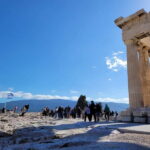
Meeting point and the “start moving” advantage near Acropolis Metro

You meet your guide at street level at the entrance of the Acropolis Metro station. That’s a good setup because you’re already in the right zone, with less scrambling to find a bus or a remote pickup point.
The tour ends back at the same meeting point. It’s a clean loop, which helps if you’re planning a longer day in Athens afterward.
One practical thing to be ready for: this is a walk uphill on uneven ground. Even if you’re fit, you’ll feel it on the Acropolis paths. Wear shoes you trust on stone.
Propylaea and Parthenon: the gateway-to-main-temple route
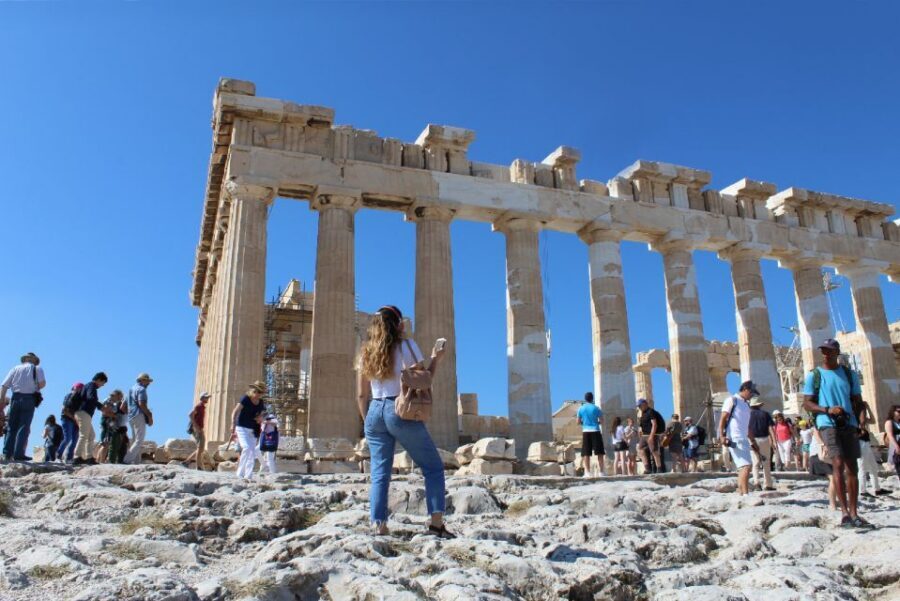
The tour route centers on the most recognizable “spine” of the Acropolis, starting with the monumental gateway: the Propylaea. You don’t just pass it. You’re meant to look at it and understand it as the entrance into sacred space—an architectural way of telling you you’ve crossed into a different world.
From there, you’re guided toward the Parthenon area for key views. You’ll also get context on the Acropolis as the stage for major religious festivals and celebrated Greek myths—so the site is framed not as an ancient museum, but as a place that once mattered daily.
If you’ve ever stood at a landmark and thought, Okay, but what was the daily point of this?—this part is the answer. You’ll learn how the layout tied the experience of worship, ceremony, and civic pride together.
A quick heads-up on timing with entry access
Because the tour doesn’t include admission, your ability to move through the site depends on your ticket. More on that in the ticket section below, but it affects the whole flow of your morning or afternoon.
Temple of Athena Nike and the small-temple stop you shouldn’t skip
One of the most satisfying moments on this tour is the Temple of Athena Nike, described as the smallest temple. Small doesn’t mean minor here. On the Acropolis, even the “smaller” structures can be the ones that reward a careful look.
The guide’s commentary helps you see why. You’ll connect the idea of Athena as protector of the city with what you’re seeing, rather than treating the temple as a stop you only know from a textbook image.
This is also a great spot to slow down. It’s where the narration can help you read the site’s symbolism, not just its shape.
Other private Acropolis tours we've reviewed in Athens






Caryatides and the Erechtheion: details that feel like characters
The Erechtheion is a name you’ll hear often around Athens, but the best part is what you’ll do with it on this tour: stand there long enough to notice what makes it unusual.
The Caryatids—those stone female figures used as supporting elements—are a highlight. With the guide’s on-site explanations, they stop being a “cool sculpture” and start feeling like functional art tied to the temple’s identity.
This is one of those areas where a guided visit helps you slow down without wasting time. The guide gives you the story so you know what to look for.
And since this is a private group, you can ask questions when you’re staring at the details that confuse you. That’s often the difference between a quick walk and a memorable visit.
Dionysus’s theater: why 17,000 seats changed Greek culture
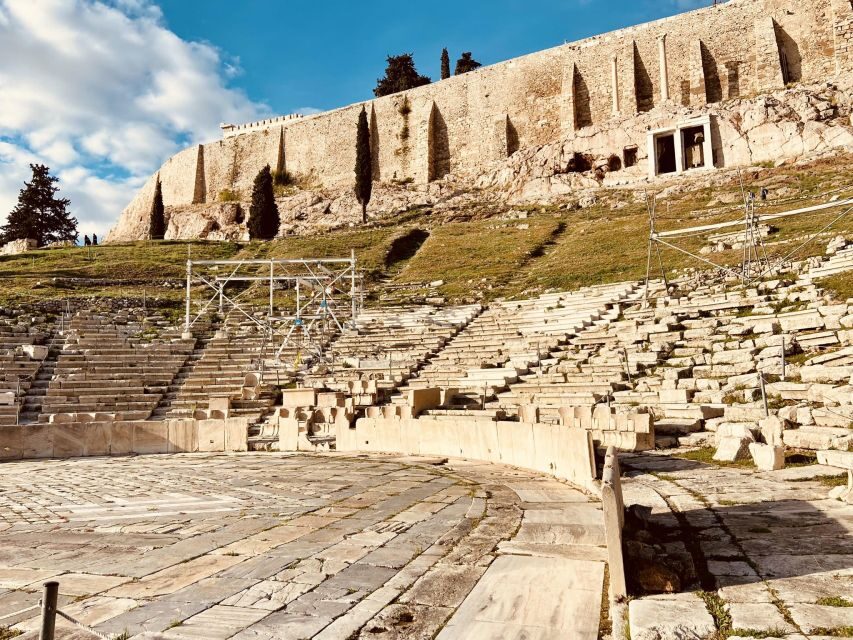
The theater of Dionysus is a major stop, and the number the tour highlights—17,000 spectators—isn’t just a trivia fact. It tells you how seriously Athens took performance, religion, and civic identity.
You’ll hear about festivals honoring the Greek god Dionysus, and how the theater fit into that calendar. When you understand the festivals behind the seats, the scale makes sense. Otherwise, you’re just looking at empty stone.
This part of the tour is especially good if you like culture that connects art to public life. Greek drama wasn’t “entertainment only.” It was part of the social and religious fabric of the city.
Odeon of Herodes Atticus and Asclepius: performance and healing
Two other stops round out the “life on the Acropolis” feel.
First is the Odeon of Herodes Atticus, described as a giant stone theater. Seeing it while you’re guided helps you understand it as a performance space, not just another structure in the skyline.
Second is the temple of Asclepius. This is where the Acropolis story broadens beyond politics and drama. Asclepius was linked to healing, and knowing that context changes how you interpret the space—suddenly it’s not only about festivals and gods you already know from myths.
If you like your archaeology with a human angle—beliefs, rituals, and what people hoped for—these stops do that work.
The tour’s “ask questions” bonus (and why Spanish matters)
Your guide leads the tour in Spanish. If you’re comfortable in Spanish, you’ll likely get a lot more out of the myth explanations, because you can follow the conversational parts.
Even if you’re not fluent, a good guide can still help you connect the dots. The private format makes that easier, since you can ask short questions without competing with other groups.
Guides like Sara and Amancio have been highlighted for excellent guiding—especially the ability to make the site readable and keep the group moving at a comfortable pace. That’s exactly what you want on the Acropolis, where everyone’s energy and attention span vary.
Ticket strategy: entry isn’t included, so plan your timed slot
Here’s the big practical detail: tickets to the venue must be purchased prior to the start of the activity, and the tour guidance requires choosing a specific time slot based on season.
- High season (01/04–31/10): select ticket 08:00–09:00
- Low season (01/11–31/03): select ticket 09:00–10:00
If you can’t get a ticket because there’s no availability, the operator says they’ll help you. That’s a relief, because Acropolis ticket access can be tight.
If you arrive without the ticket
If you don’t purchase your entry ticket ahead of time, you’ll need to go to the ticket office area of the South entrance 30 minutes before the tour time. The meeting point is less than 2 minutes’ walk from there once you have the ticket.
This matters because the Acropolis can frustrate you if you’re rushing. If you want a calmer experience, buy the ticket online and come ready to walk.
The tour itself still lasts 2 hours
The guided portion is listed as 2 hours, so don’t expect the whole day to be “covered.” Think of it as the guided part that gets you oriented, then you’re free to explore on your own after.
Price and value: $292 per group up to 3
At $292 per group (up to 3 people) for a 2-hour private tour, you’re paying for two things: a licensed guide and the flexibility that comes with private pacing.
If you’re traveling as a pair or small family and you care about understanding the site, this can be a good value compared with buying separate tickets to a “see it fast” group experience. The key is that you’re not just paying for movement—you’re paying for interpretation, and on the Acropolis that’s the difference between seeing and understanding.
Two cost points to keep in mind:
- Admission to the Acropolis is not included.
- This is a walking uphill experience, so it rewards travelers who are comfortable with uneven stone paths.
If you’re solo, it may feel pricier. But if you prefer a calmer visit with direct answers and you want the guide to shape your route, private can still be worth it.
Who this Acropolis private tour fits best
This tour is a strong match if you:
- Want a guided explanation of myths tied to the actual monuments
- Prefer a small group where you can ask questions
- Like cultural context (festivals, gods, and how people used these spaces)
It may be less ideal if you need heavy assistance moving around. The tour notes walking uphill and on uneven surfaces, and it also lists limits like no baby strollers and no electric wheelchairs/non-folding wheelchairs.
If that describes you, it’s worth looking for a tour option designed for your mobility needs.
Practical tips to make the 2 hours feel smooth
Keep these in mind, because they affect comfort and enjoyment more than you’d think.
- Start with good shoes. Uneven stone and uphill paths are real.
- Bring water if you’re visiting on a warm day. The tour is short, but the Acropolis sun adds up.
- Plan your ticket time slot ahead. Since you’ll be choosing specific entry times by season, don’t treat this as an afterthought.
- If you want photos, don’t try to do everything at once. The guide’s route and stopping points help you capture key structures without sprinting.
After the tour, the offer includes free time to stay longer and explore at your own pace. That’s useful because the Acropolis rewards lingering. You’ll likely want a second look once you understand what you’re seeing.
Should you book this Acropolis guided private tour without an entry ticket?
I’d book it if you want the Acropolis to make sense. The best part isn’t just the big monuments—it’s the way the guide connects Propylaea, Parthenon-area views, Athena Nike, Caryatids, Dionysus’s theater (17,000 seats), Odeon of Herodes Atticus, and the temple of Asclepius into a story you can remember.
Skip booking if you:
- Don’t want to handle the entry ticket process yourself
- Struggle with uphill walking on uneven surfaces
- Prefer to freestyle without any structure or interpretation
If you’re comfortable buying your timed admission in advance, this is a smart way to see the Acropolis with context—and spend the rest of your time simply enjoying the views.
FAQ
Is the Acropolis entry ticket included?
No. The guided tour includes the guide, but the Acropolis entry ticket must be purchased separately.
Where do we meet the guide?
You meet your guide at the entrance of the Metro station Acropolis, on the street level.
How long is the tour?
The guided experience is listed as 2 hours.
Is this a private tour?
Yes, it’s a private group experience.
What language is the tour guide?
The live tour guide language is Spanish.
What ticket time should I select?
For low season (01/11–31/03), select 09:00–10:00. For high season (01/04–31/10), select 08:00–09:00.
What if I don’t buy my ticket before the tour?
You need to go to the ticket office area of the South entrance 30 minutes before the tour time to buy tickets while waiting in line, then walk to the meeting point (less than 2 minutes away).
Is the tour wheelchair or stroller-friendly?
No baby strollers are allowed, and non-folding wheelchairs/electric wheelchairs are not allowed. The tour also requires walking uphill and on uneven surfaces.