REVIEW · ATHENS
Athens: Acropolis Guided Walking Tour without Entry Ticket
Book on GetYourGuide →Operated by Secrets of Greece IKE · Bookable on GetYourGuide
Stone steps, big myths, and clear context. This 2-hour Athens Acropolis guided walk turns the ruins into a story you can actually follow, with a licensed Spanish guide and time to look around afterward. I like the way the route links monuments into Greek mythology and real ancient life, not just a list of stones.
Two things I’m especially happy about: you’ll get small-group-style attention (so you can ask questions), and the guide points out the theatrical and religious details that most people miss. One thing to watch: it’s an Acropolis tour without an entry ticket, so you’ll need to sort your own ticket time slot before you go.
In This Review
- Key Things to Know Before You Go
- Acropolis With No Entry Ticket: What That Really Means
- Meeting Point at Metro Acropolis: How to Start Without Stress
- Building the Story: Propylaea to the Parthenon
- Theatre of Dionysus: Where Greek Drama Had Real Stakes
- Erechtheion and Caryatids: When Details Do the Talking
- Odeon of Herodes Atticus and the Temple of Asclepius
- After the Tour: Use the Acropolis While It Still Feels Clear
- Price and Value: Is $32.75 Worth It?
- Who This Tour Suits Best (and Who Should Rethink It)
- Booking Thoughts: Should You Book This Acropolis Tour?
- FAQ
- Do I need to buy the Acropolis entry ticket separately?
- Where do I meet the guide?
- How early should I arrive?
- How long is the tour?
- What language is the guide?
- What sights are included on the guided walk?
- Is the group size small?
- Are strollers or wheelchairs allowed?
- What if I can’t get the ticket for my time slot?
- Are there specific ticket time-slot rules for certain tour times?
- Can I stay longer at the Acropolis after the tour?
Key Things to Know Before You Go
- Parthenon to Propylaea, as one connected walk, so the site makes sense fast
- Theatre of Dionysus (17,000 seats) explained with the festivals behind the drama
- Erechtheion and Caryatids treated as more than photo ops
- Temple of Athena Nike highlighted as the smallest temple with big symbolism
- Asclepius and Odeon of Herodes Atticus show the hill wasn’t only for priests
- Time to continue on your own after the tour while the ruins are still fresh in your head
Acropolis With No Entry Ticket: What That Really Means
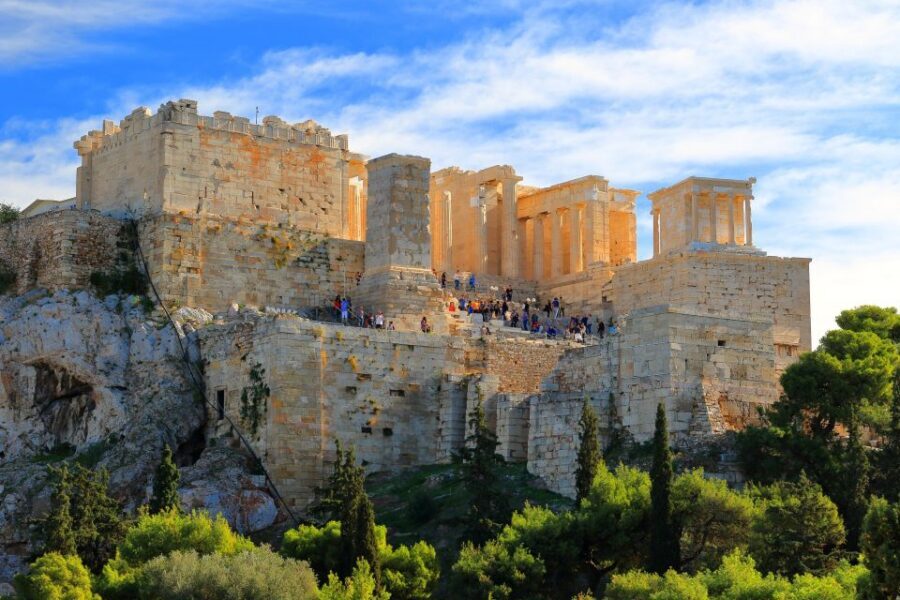
This tour is built around a guided walk of the Acropolis, but it does not include your entrance ticket. The upside: the price is lower, and you’re forced to pick the ticket time that matches your plan. The downside: if your ticket isn’t timed correctly, you can lose energy before the tour even starts.
You’ll be buying the Acropolis ticket beforehand (online is mentioned). For certain departure times, the operator expects you to purchase a specific time-slot window. In low season (01/11–31/03), for the 09:15 tour you need the 09:00–10:00 slot, and for the 14:30 tour you need the 14:00–15:00 slot. In high season (01/04–31/10), for the 08:15 tour you need the 08:00–09:00 slot, and for the 17:00 tour you need the 17:00–18:00 slot.
If you can’t get the ticket because there’s no availability, the company says it will help you. That’s reassuring, but I’d still try to lock your ticket early so your day stays smooth.
Other Acropolis and Parthenon tours we've reviewed in Athens

Meeting Point at Metro Acropolis: How to Start Without Stress
The tour starts at the entrance of the Metro station Acropolis, on the street level. You should arrive 10 to 5 minutes early, and the tour ends back at the meeting point.
Why this matters: the Acropolis hill area can feel chaotic, especially with ticket lines and people trying to find the right entrance. A clear start spot near the Metro makes it easier to get oriented quickly, and it also helps you time your own ticket purchase without scrambling.
Also note the tour language is Spanish. If you don’t speak Spanish, you may still follow visually, but the real value here is the explanation, and you’ll want to be comfortable with the language.
Building the Story: Propylaea to the Parthenon

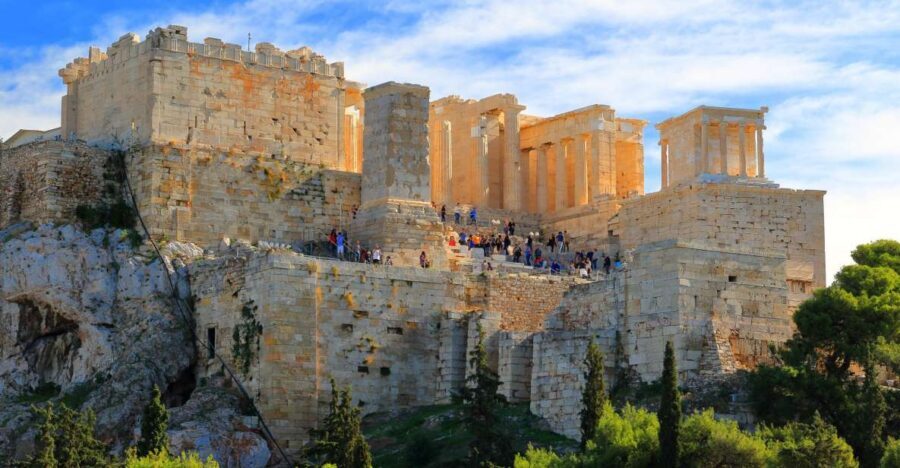
The walk’s backbone is the gateway into the citadel: the Propylaea. This isn’t just a “look here” moment. It helps you understand that the Acropolis is designed like a guided experience—even when you’re standing still now.
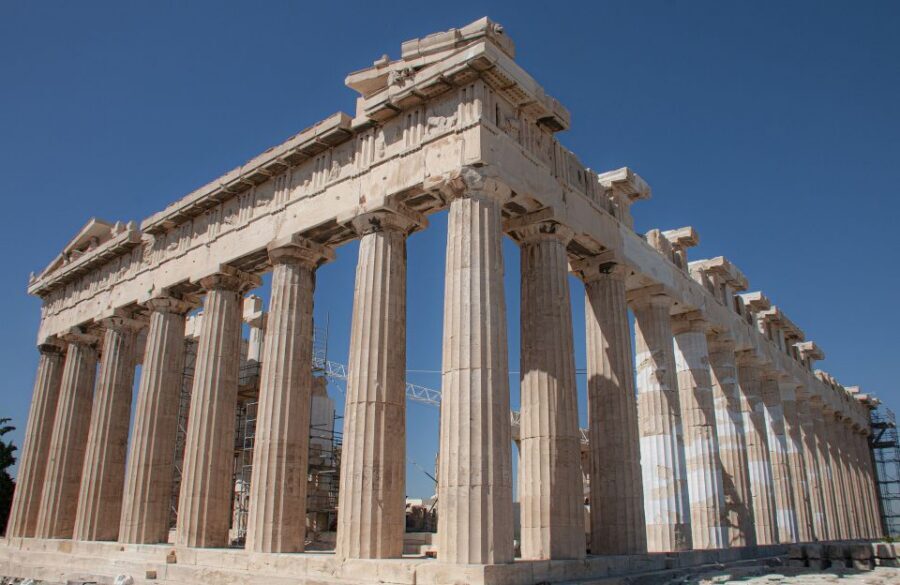
From there, the route moves you into the main sacred area dedicated to Athena, the protector of the city. The guide ties the monuments to the myths and the religious festivals that made these spaces important. That context is what turns the Parthenon from a famous name into something you can “read” in layers.
You’ll also get to gaze at the Parthenon itself and see the temple of Parthenon-era mythology in place, even though you’re not entering every structure as part of this tour package. The commentary helps you notice the relationship between architecture and belief—why the Greeks built in certain ways, and why those choices mattered.
Practical note: expect the walk to include stairs and uneven stone underfoot. Wear shoes you can trust.
Theatre of Dionysus: Where Greek Drama Had Real Stakes
One of the strongest parts of this experience is the emphasis on the theatre of Dionysus. The tour framing is clear: this place held around 17,000 spectators, and it was used for festivals honoring the birth of the Greek god connected to theater and performance.
So when you stand in (or near) the theatre area, the guide’s job isn’t only to point out seats. It’s to explain what audiences came for, why the city gathered, and how performance fit religious and civic life. That’s the difference between seeing a theatre and understanding it.
If you’ve ever wondered how a myth can feel “real” to the people who lived with it, this is your answer. The space itself was built for attention and emotion, and the guide’s historical notes make the architecture feel purposeful rather than just ancient.
Downside consideration: theatres on hills can be exposed. Heat and sun can be part of your experience, so plan water and consider timing that matches your stamina.
Erechtheion and Caryatids: When Details Do the Talking
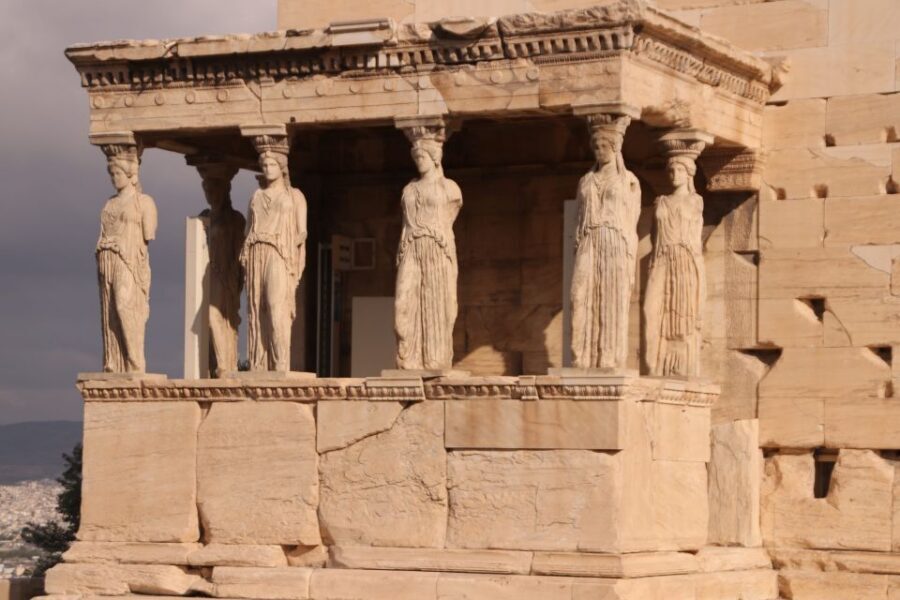
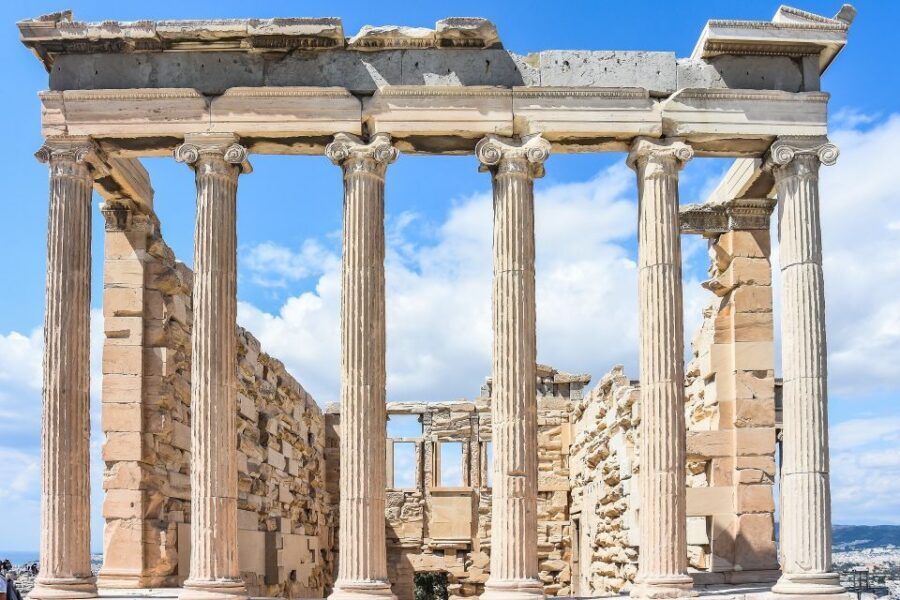
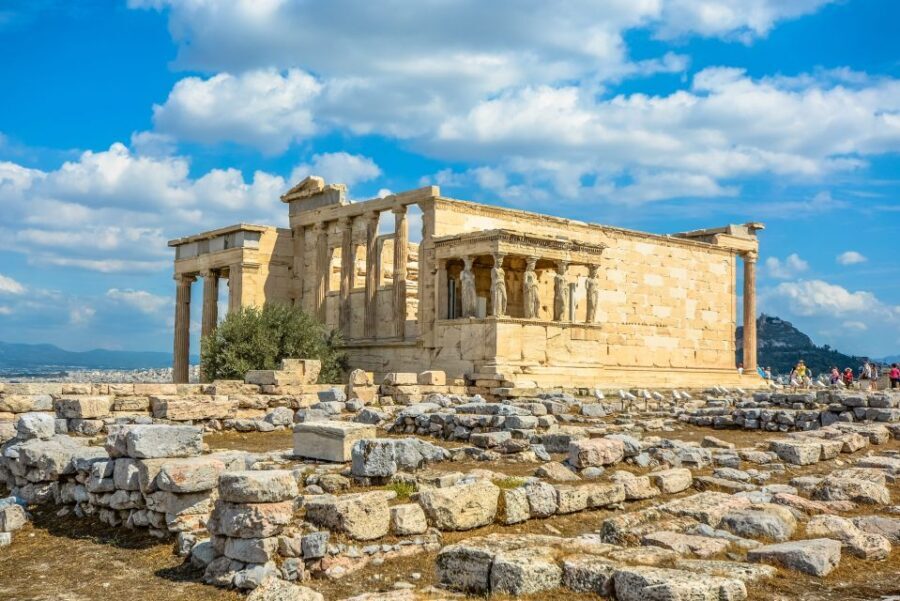
Next come the parts that reward slow looking: the Erechtheion and the Caryatides. The Erechtheion is named after Erechtheus, a demi-god tied to the mythic background of Athens, and that naming matters because it connects the building to identity—who Athens believed it was descended from, and who it thought protected it.
The Caryatides are stone figures that people love for photos, but on this tour they’re also used as a teaching moment. The guide helps you understand what you’re seeing and why those human-form columns were part of the symbolism of the place.
This is a great stop if you’re the kind of traveler who likes to ask questions. In the style described by past guides, the explanation gives you something specific to look for next, rather than vague “it’s impressive” statements.
Also, the tour includes a look at the Athena Nike temple, described as the smallest temple. That detail is a clue: small doesn’t mean minor. The guide uses it to show how Athenians could pack meaning into compact sacred spaces.
Other Acropolis walking tours we've reviewed in Athens





Odeon of Herodes Atticus and the Temple of Asclepius
The Acropolis wasn’t only for priests and ceremonies. You’ll also see elements that point to entertainment and healing.
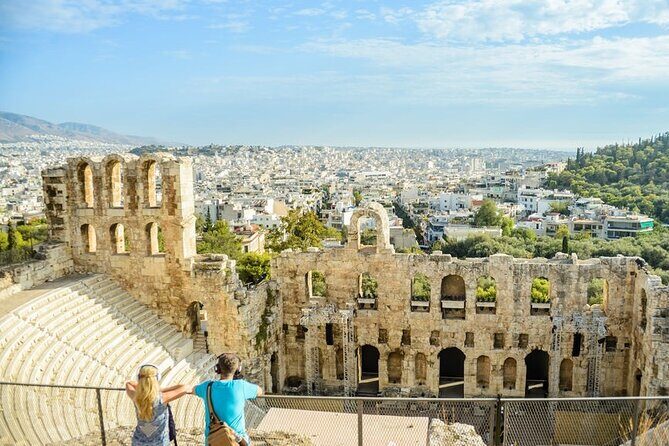
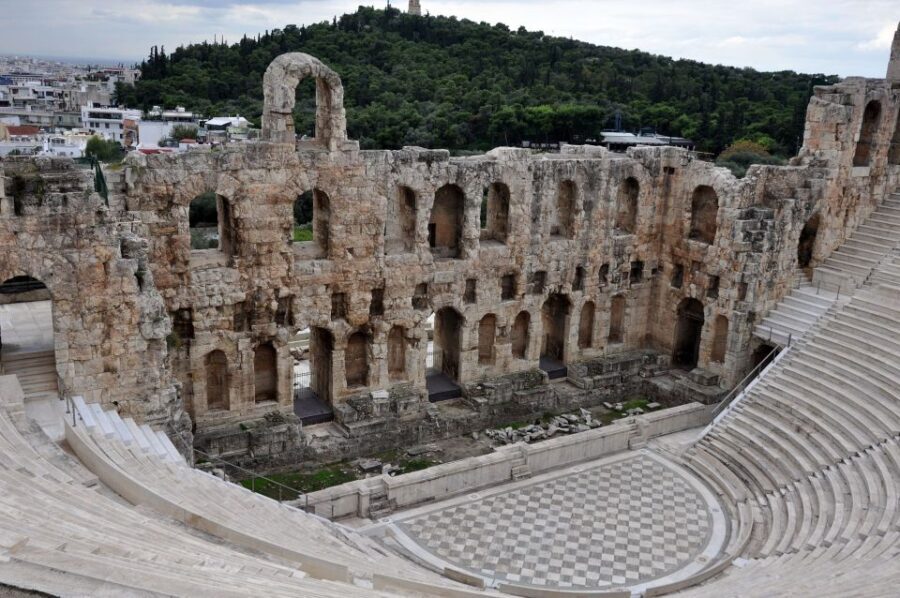
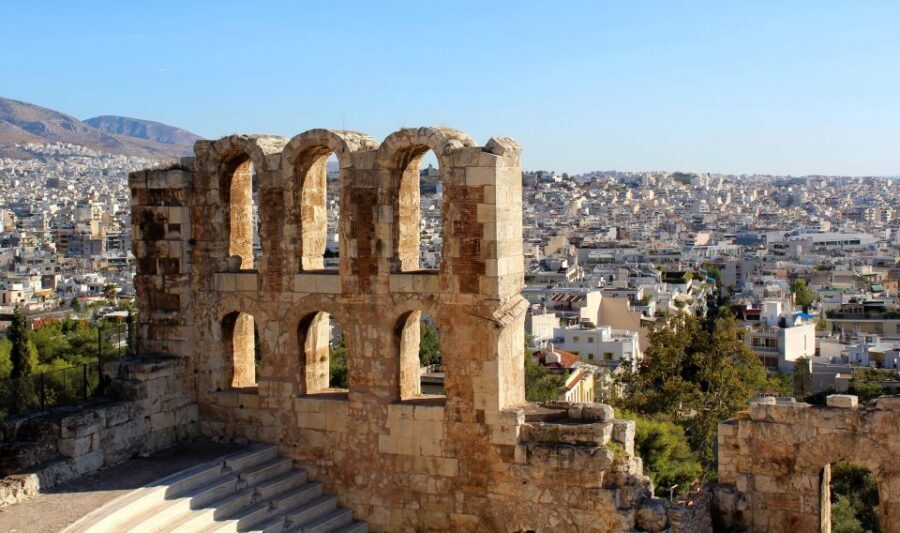
The route includes the Odeon of Herodes Atticus, called a “giant stone theater.” The guide’s commentary puts this monumental performance space into the bigger picture of why theatre, gathering, and civic identity mattered in ancient Athens.
Then there’s the temple of Asclepius, tied to healing. Even if you don’t know much about Greek medicine myths, hearing the story while you’re looking at the ruins changes how you interpret the site. It becomes less like a single sacred monument and more like a hill that supported multiple needs—belief, community, performance, and care.
This balance is one of the reasons this format works. The Acropolis can feel like one big highlight. With stops like these, it starts to feel like a functioning ancient center.
After the Tour: Use the Acropolis While It Still Feels Clear
Once the guided portion ends, you get free time to stay longer and explore at your own pace. I like this approach because it lets you return to the areas that clicked for you during the explanations.
It also helps with a common Acropolis problem: you can walk fast and miss everything, or walk slow and get tired. A guided 2-hour start fixes the “what am I looking at” problem. The extra time afterwards lets you choose what to photograph, what to revisit, and what to ignore.
Just remember: since your entrance ticket is separate, your timing should be aligned with your ticket window. Don’t book a start time and then assume entry will sort itself out at the last minute.
Price and Value: Is $32.75 Worth It?
At $32.75 per person for a 2-hour guided walk, the value is mostly in two places: the licensed guide and the fact that the guide turns the Acropolis into a coherent story you can follow.
You’re not paying for an included entry ticket here. That can be a good deal if you already plan to buy your ticket early, or if you want control over the exact time slot. It can be annoying if you wait and then can’t find availability, which is why the operator’s note about assistance if tickets are unavailable is important.
Compared with random self-guided wandering, this tour saves you time and confusion. The guide doesn’t just repeat myths; the explanations help you connect what you see (Propylaea, Parthenon, Dionysus theatre, Erechtheion, Caryatids, Athena Nike, Odeon of Herodes Atticus, Asclepius) into one big picture.
If your Spanish is solid enough to track details, the value rises. If not, you’ll still benefit from the walk and the visuals, but you’ll miss part of what you paid for.
Who This Tour Suits Best (and Who Should Rethink It)
This is a strong fit for you if you want:
- A guided route that makes the Acropolis understandable quickly, not just landmarks
- Greek mythology explained on-site, connected to the archaeological remains
- The ability to ask questions during a small-group experience
- A tour format that still gives you time to explore after with fresh context
It’s probably not the best match if you:
- Need stroller access. Baby strollers aren’t allowed.
- Rely on certain wheelchairs. The listing says non-folding wheelchairs and electric wheelchairs aren’t allowed.
- Want an English-only experience. The live guide language is Spanish.
Booking Thoughts: Should You Book This Acropolis Tour?
I’d book this if you’re aiming for smart timing, clear explanations, and a route that connects major stops into a story. The guide-led approach is the real “ticket” here, and it matters at the Acropolis where so much is famous yet easy to misunderstand.
Before you click confirm, do two things:
1) Secure your Acropolis entry ticket in the correct time slot for your tour start time.
2) Make sure you’re comfortable with a Spanish guide, since the mythology and architecture are explained in that language.
If you handle those, this tour is a practical way to get more meaning out of the hill without burning your whole day.
FAQ
Do I need to buy the Acropolis entry ticket separately?
Yes. This tour does not include the entry ticket, and you must buy it previously yourself (online is mentioned).
Where do I meet the guide?
Meet at the entrance of the Metro station Acropolis on the street level. The tour starts and ends at the same meeting point.
How early should I arrive?
You’re asked to be at the meeting point between 10 and 5 minutes before the tour starts.
How long is the tour?
The guided walk is listed as 2 hours. Starting times depend on availability.
What language is the guide?
The live tour guide is Spanish.
What sights are included on the guided walk?
The tour covers major Acropolis highlights such as Propylaea, the Parthenon area, the theatre of Dionysus, the Erechtheion, the Odeon of Herodes Atticus, the temple of Asclepius, the Caryatides, and the Temple of Athena Nike.
Is the group size small?
The experience is described as having a small group, with the chance to ask your guide questions.
Are strollers or wheelchairs allowed?
Baby strollers are not allowed. The listing also says non-folding wheelchairs and electric wheelchairs are not allowed.
What if I can’t get the ticket for my time slot?
The information says that if you can’t get the ticket due to no availability, the operator will help you.
Are there specific ticket time-slot rules for certain tour times?
Yes. The rules differ by season. For example, in low season (01/11–31/03), the 09:15 tour requires a 09:00–10:00 slot, and the 14:30 tour requires a 14:00–15:00 slot. In high season (01/04–31/10), the 08:15 tour requires an 08:00–09:00 slot, and the 17:00 tour requires a 17:00–18:00 slot.
Can I stay longer at the Acropolis after the tour?
Yes. After the guided portion, you’ll have free time to stay and explore at your own pace.