REVIEW · ATHENS
Ancient Athens tour: Acropolis, Parthenon and Acropolis Museum
Book on Viator →Operated by Athens Walks Tour Company · Bookable on Viator
One hill. One museum. Endless stories. This Acropolis, Parthenon, and Acropolis Museum tour is built for seeing the big landmarks fast, then making sense of what you just watched with a guide’s context. I like that licensed guides (I’ve seen names like Giannas, Selena, Afrofithi, and Bernardos in other groups) turn the ruins into something you can actually picture.
Two things I really like: the pace stays comfortable, with frequent “stop and look” moments instead of a race to the top, and the museum visit helps connect the sculptures and artifacts to what you saw on the rock. The Acropolis Museum stop is a highlight by itself, and the guide’s explanations help you notice details you’d otherwise walk right past.
One drawback to plan for: some parts of the Acropolis walk can feel slippery underfoot, and you are working on uneven stone in the heat, so good shoes and hydration matter.
In This Review
- Key things that make this tour worth your time
- The point of this Acropolis tour: fast clarity, not just photos
- Morning start at 9:00 and why it changes everything
- Getting to the meeting point: Porinou 5, simple and central
- Stop by stop: what you’ll actually do on the Acropolis
- Acropolis of Athens: the big orientation moment
- Parthenon area: a quick hit that still matters
- Theatre of Dionysus: two brief moments in the same area
- Herod Atticus Odeon: Roman Athens, still functioning
- Propylaea: the formal gateway that sets the tone
- Erectheion and the Caryatids: the part you want to look at twice
- The Acropolis Museum: seeing the sculptures after the walk
- Why the museum feels worth it even if you think you know the Parthenon
- Group size, pace, and how crowded time feels
- What to bring so the sun doesn’t beat you
- Price and value: what you pay, and what you still need to budget
- Who this tour is best for
- A quick practical reality check before you book
- Should you book this Acropolis and Museum tour?
- FAQ
- What’s the duration of this Athens tour?
- What time does the tour start?
- Where does the tour meet and end?
- Is the tour in English?
- How many people are in the group?
- Are tickets included in the price?
- What if I didn’t book the entrance ticket option?
- What are the entrance fees for the Acropolis and the Museum?
- Is there a physical fitness requirement?
- Is free cancellation available?
Key things that make this tour worth your time

- Licensed guide, not a script: real storytelling tied to what’s in front of you
- Short, targeted Acropolis stops: Parthenon area, Propylaea, Erectheion, and more without long wandering
- Acropolis Museum included: you see the artifacts in context right after the monuments
- Small group size (max 20): easier photo moments and more control in crowded areas
- Sun-smart comfort: bottled water is provided, which you’ll genuinely use
- Ear/mic support in crowds: you’ll have help hearing the guide when it gets busy
The point of this Acropolis tour: fast clarity, not just photos
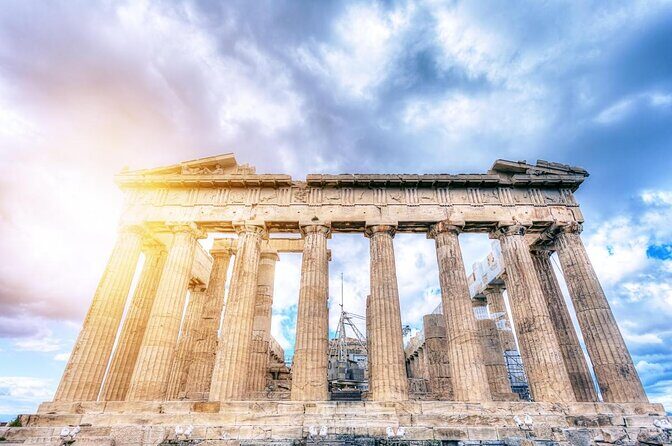
The Acropolis is one of those places where the view can steal the show. But if you only look, you miss the why. This tour is designed to get you from landmark to landmark while a licensed guide gives you the threads that connect them—religion, politics, art, and everyday life around the site.
You’ll also feel the difference between “being there” and understanding what you’re seeing. The guide helps you frame what to notice at each stop, so the Parthenon area isn’t just stunning architecture—it becomes a story you can follow.
Other Acropolis and Parthenon tours we've reviewed in Athens

Morning start at 9:00 and why it changes everything
This tour runs with a 9:00 am start, and that’s not a small detail. Athens can go from warm to punchy fast, and the Acropolis is mostly sun, stone, and stairs.
An early slot also tends to keep the climb more manageable, especially if you want clear photo angles at the top. You still get crowds at the main sites, but the tour’s timing makes it easier to breathe, take breaks, and move as a group without losing your mind.
Getting to the meeting point: Porinou 5, simple and central
The meeting point is Porinou 5, Athina 117 42, Greece. The tour ends back at the same spot, so you’re not stuck figuring out your next move on a hill.
It’s described as near public transportation, which matters because you don’t want to burn your energy on getting there. If you’re using metro or bus connections, you’ll likely find it straightforward to line up the morning start.
Stop by stop: what you’ll actually do on the Acropolis
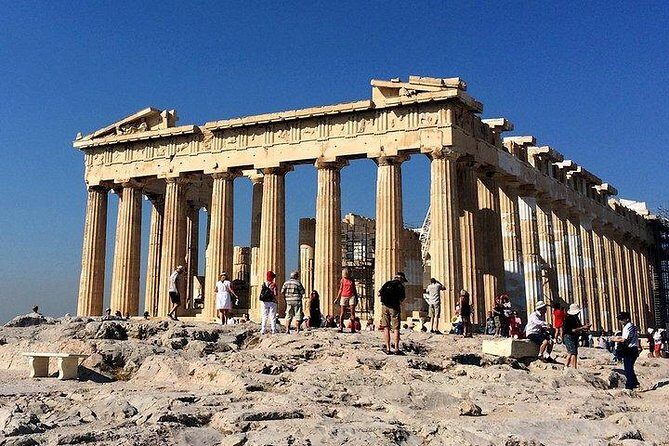
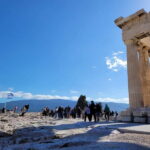
The heart of the tour is the Acropolis walk, with about two hours at the site plus quick, guided pauses at key landmarks. You’re not expected to memorize everything; the structure helps you see the main monuments while getting the meaning behind them.
There’s also an important reality check: your time at each highlight is relatively short. That’s good for value, but it means you’ll want to decide what you want most—views, photos, or extra lingering.
Acropolis of Athens: the big orientation moment
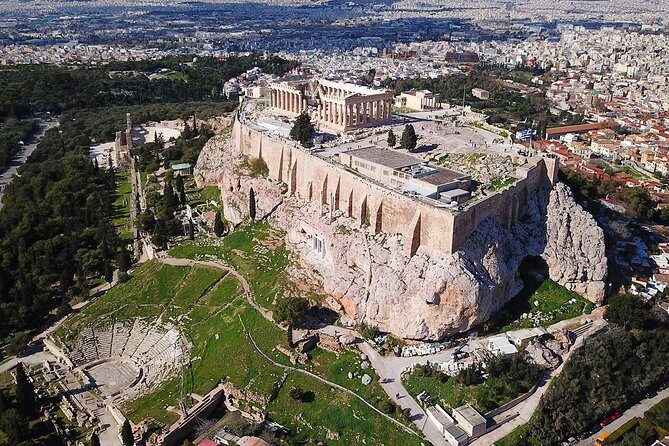
You start with about 2 hours at the Acropolis of Athens. This is your orientation. You’ll get help understanding the layout—where the major buildings sit, why the hill mattered, and how the structures relate to ceremonies and civic pride.
This is also the stage where the guide can help you move efficiently through crowds. A lot of people wander aimlessly here because the scale is huge. With guidance, you get your bearings fast and you stop spending your energy guessing where to look next.
Other Acropolis Museum tours we've reviewed in Athens





Parthenon area: a quick hit that still matters
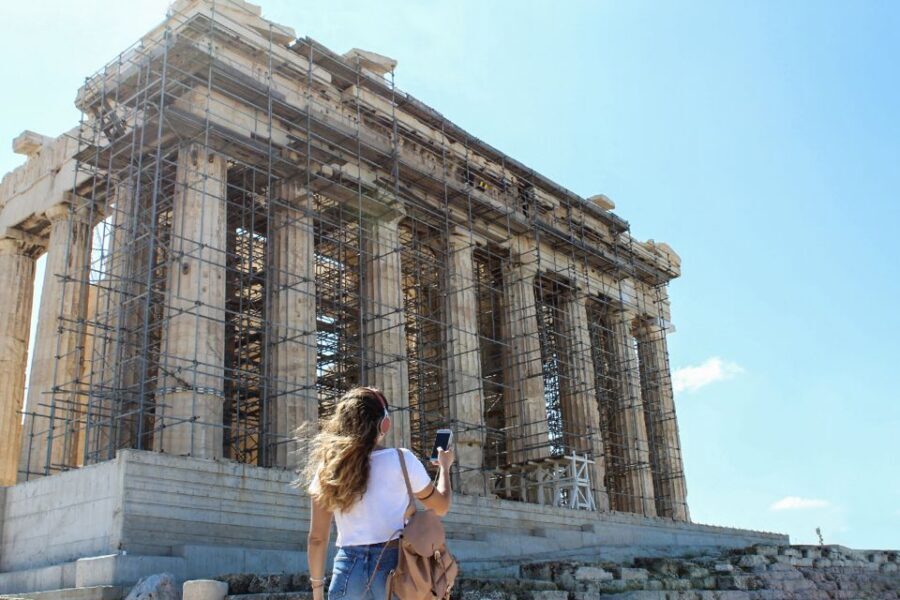
Next is the Parthenon stop, listed at about 10 minutes. That might sound short, but the goal is quality over lingering. You’ll likely step into the right viewpoints, learn what the Parthenon represents, and connect it to the broader message of Athens at the time.
A key benefit of a guided stop: you know what you’re looking at. When you can name the purpose of a structure and understand what it symbolizes, the time feels longer than it is.
Theatre of Dionysus: two brief moments in the same area
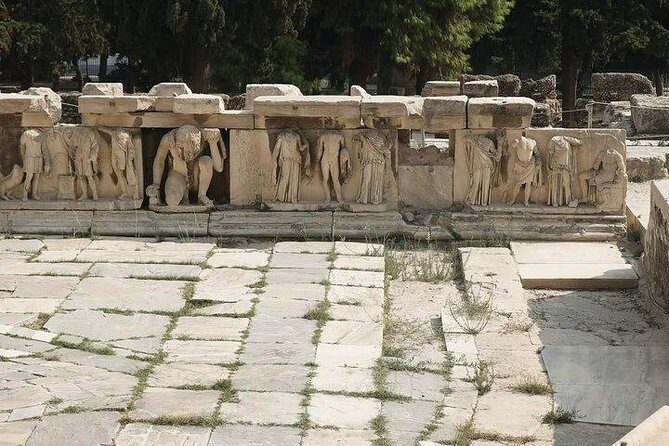
You’ll spend time near the Theatre of Dionysus—listed twice for about 10 minutes each. That repetition usually means you get at least two chances to absorb the space: once for orientation and once for another set of details or photo angles as the group moves.
This is a big deal because Greek theater wasn’t just entertainment. It was a civic and religious event tied to the culture’s way of processing ideas in public.
Herod Atticus Odeon: Roman Athens, still functioning
The Herod Atticus Odeon stop is another short 10 minutes. What makes this stop interesting is that it’s described as a Greek Roman temple that still operates.
So while you’re looking at ancient stone, you’re also seeing something that connects past and present. It’s one more reason the guide’s framing matters here—you don’t just view ruins; you see how they continue to live in the city.
Propylaea: the formal gateway that sets the tone
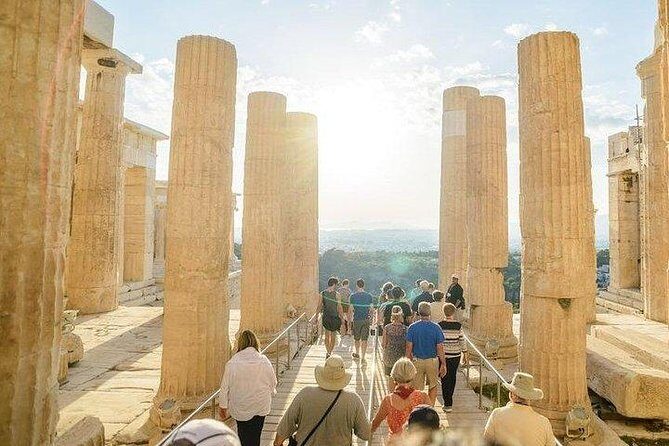
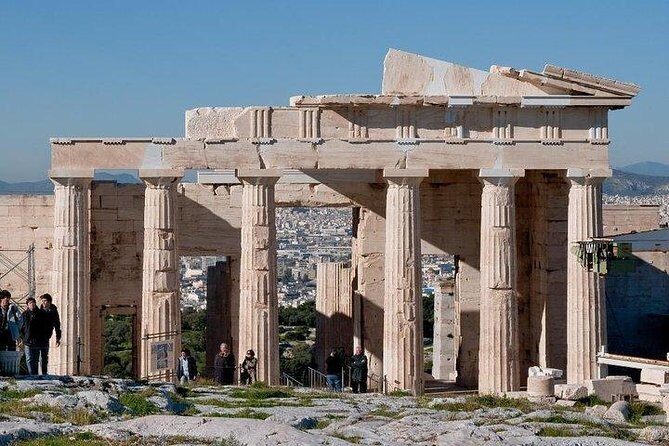
At Propylaea (about 10 minutes), you’ll be looking at the ceremonial gate. This stop helps you understand that the Acropolis wasn’t a random pile of buildings. It was a designed approach—almost like an introduction to the sacred ground above.
Even in a short stop, this is where you can start noticing symmetry, placement, and how movement through the space would have felt.
Erectheion and the Caryatids: the part you want to look at twice
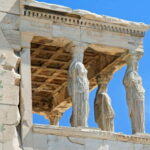
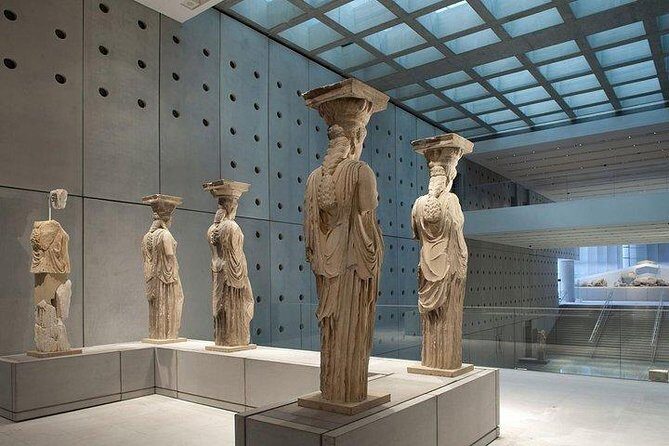
The final Acropolis highlight is Erectheion, also around 10 minutes. This is where the Caryatids come in—famous female figures that are part sculpture, part architectural statement.
This is often the moment when people stop walking for a few seconds longer, even if the clock says otherwise. The guide can point out why these figures are iconic and what role they played in making the building memorable.
The Acropolis Museum: seeing the sculptures after the walk
Then you go to the Acropolis Museum for about 1 hour, and the museum entry is listed as included.
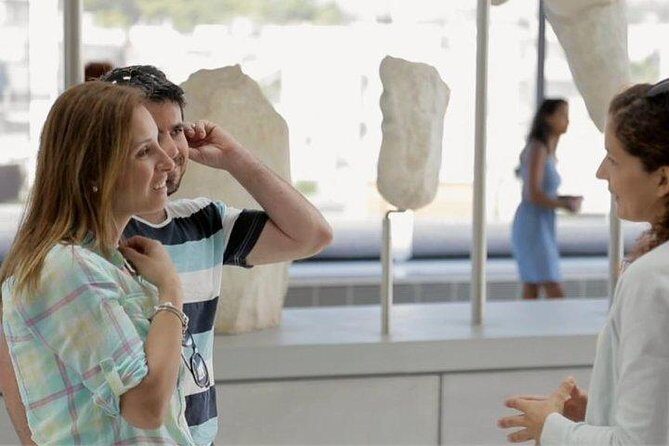
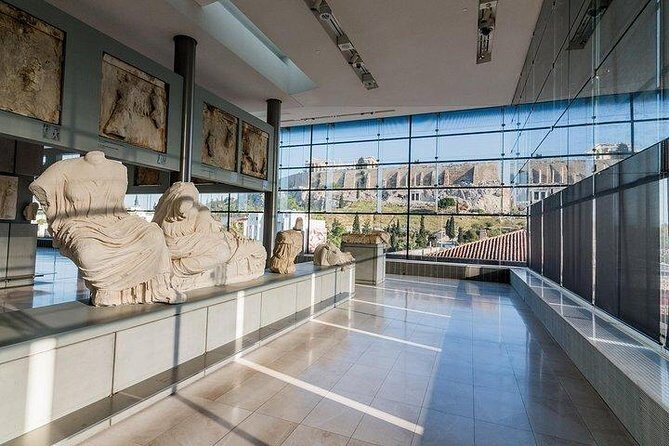
This part can quietly save your whole day. Museums work best when you’ve just seen the site. After walking the Acropolis, the artifacts stop being abstract. You can connect what you saw on the rock to what’s preserved inside.
The museum is focused on finds from the Acropolis site, spanning from the Greek Bronze Age through Roman and Byzantine periods. It’s also built over ruins of parts of Roman and early Byzantine Athens, so you’re not only looking at history—you’re standing in a layered time capsule.
Why the museum feels worth it even if you think you know the Parthenon
Even if the Parthenon looks instantly familiar, the museum adds the missing pieces: context and detail. You get to see preserved elements of decoration and artifacts that help explain the artistic choices you might not notice at the open-air monuments.
The result is a shift from “wow” to “oh, that’s what it meant.” For many people, this is the stop that makes the Acropolis click.
Group size, pace, and how crowded time feels
The tour caps at 20 travelers. That small group size is one of the main practical advantages. In places like the Parthenon area and the pathways between monuments, bigger groups can turn a visit into stop-and-stare chaos.
Here, you’ll have a more realistic chance to hear the guide, find decent photo spots, and take short breaks without the whole group getting tangled.
The tour also signals a moderate physical fitness level. Translation: expect stairs, uneven stone, and a steady uphill walk. It’s doable for most people who can handle walking at a decent pace, but it’s not built for wheelchairs or folks who need long flat stretches.
What to bring so the sun doesn’t beat you
The tour includes bottled drinking water, and that’s a smart start. Still, I strongly recommend you bring your own extras too, because Athens heat can surprise you.
Based on what I’ve seen emphasized by people who did this type of walk, plan for:
- Sunscreen (you’ll use it)
- Good shoes (some rocky sections can feel slippery)
- A hat or something for shade when you pause
- Your own small fan if you’re sensitive to heat
If you’re not used to stone steps, take it slow on the first part of the climb. The guide’s job is the history; your job is staying steady.
Price and value: what you pay, and what you still need to budget
The tour price is $72.59 per person for about 4 hours.
The big value question is entry fees. The Acropolis entry fee is not included unless you pick an option that includes tickets, and it’s listed as €30.00 per person. The Acropolis Museum fee is listed as included in the itinerary, and it’s shown as €20.00 if you’re looking at it separately.
So if you want a clean budget, treat the tour as the guiding service plus museum access, and plan to add €30 for the Acropolis ticket if you didn’t select the ticket option. That’s the difference between paying for scenery alone versus paying for a guided experience that helps you understand the scenery.
Who this tour is best for
This works well if you:
- Want to hit the Acropolis + key monuments without getting lost in the layout
- Prefer a licensed guide who can explain what you’re seeing in plain language
- Like the idea of walking the site first, then consolidating it at the Acropolis Museum
It’s also a good match for first-time visitors who only have a half-day. You’ll see the core highlights and leave with a clearer mental map.
If you’re the type who wants to roam for hours on your own, you might find the monument stops a bit tight. This is structured time, with the guide keeping the group moving and the key points covered.
A quick practical reality check before you book
This is a walking tour on uneven ground with sun exposure. You’re going to be outside a lot, and the famous sites can get crowded.
That doesn’t make it bad. It just means you should go in with the right expectations: you’ll get an efficient route and strong interpretation, not a leisurely drift through every corner.
Should you book this Acropolis and Museum tour?
If you want the Acropolis to make sense fast, I’d book it. The combination of a guided walk across the major monuments plus a museum visit included is a smart way to turn scenery into understanding. You’ll also get practical comfort like bottled water, and the small-group format keeps things manageable.
Skip it only if you’re planning to spend most of the day wandering freely on your own, or if you know you won’t handle uphill walking and uneven stone well. For everyone else, this is a solid use of a half-day in Athens.
FAQ
What’s the duration of this Athens tour?
It’s approximately 4 hours.
What time does the tour start?
The start time is 9:00 am.
Where does the tour meet and end?
It meets at Porinou 5, Athina 117 42, Greece, and ends back at the same meeting point.
Is the tour in English?
Yes, it’s offered in English.
How many people are in the group?
The tour has a maximum group size of 20.
Are tickets included in the price?
Acropolis entry tickets are not included unless you booked an option with entrance tickets. The Acropolis Museum entry ticket is included as part of the itinerary.
What if I didn’t book the entrance ticket option?
If you didn’t select the ticket option, you’ll need to buy the Acropolis ticket at the meeting point as described by the tour details (cash via your guide unless you already bought them).
What are the entrance fees for the Acropolis and the Museum?
Acropolis entry fee is €30.00 per person, and Acropolis Museum entry fee is €20.00 per person (unless included through the option/itinerary).
Is there a physical fitness requirement?
It requires moderate physical fitness due to walking.
Is free cancellation available?
Yes. You can cancel up to 24 hours in advance for a full refund. Cancellation rules follow the stated policy if you cancel later.