REVIEW · ATHENS
Athens:Half day tour to Acropolis and the must-see historical sites and downtown
Book on Viator →Operated by Greece Athens Taxi GAT · Bookable on Viator
Some cities feel big fast. Athens hits hard.
This is a private 4 to 5 hour Athens tour built for first-timers or anyone short on time: you cover the Acropolis, the Acropolis Museum, and major downtown landmarks without spending your day stuck in traffic. You get round-trip pickup and drop-off, plus an easy ride in a luxury Mercedes with Wi-Fi on board.
I especially like the way the day is structured to keep things moving while still giving you time to look up close. I also like that it’s customized—your driver can adjust priorities so your “must-sees” land where you want them. One drawback to plan for: the person in the car is a driver, not a licensed guide for inside sites, so your sightseeing includes time on your own at certain points.
In This Review
- Key things to know before you go
- The feel of this half-day Athens plan: transport first, sites second
- Price and value: what $180.42 per person really covers
- The driver vs. a licensed guide: expect explanations, not escorting inside
- Acropolis time: Parthenon views, the Erechtheion details, and key stops
- Parthenon: the icon you came for
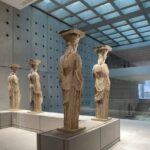
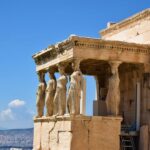
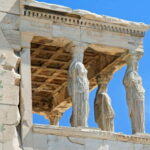
- Erechtheion and the Karyatids
- Propylaea and the flow of the hill
- Athena Nike, Theatre of Dionysus, and the Odeon of Herodes Atticus
- How to make your Acropolis visit easier (especially if you walk carefully)
- Acropolis Museum: why this stop turns ruins into a story
- Panathenaic Stadium and the shock of white marble
- Temple of Olympian Zeus: big scale, half-finished drama
- Syntagma Square to the Unknown Soldier: modern Athens with ceremony
- National Garden, Zappeion, and the neoclassical “palaces” vibe
- Plaka and Monastiraki: your last hour for photos and a real meal vibe
- Timing reality: why your exact start matters
- What I’d use this tour for (and what I’d skip)
- Should you book this Athens half-day tour?
- FAQ
- Is pickup from my hotel included?
- What’s the duration of the tour?
- Is Wi-Fi available during the ride?
- Are tickets included in the price?
- How much are the Acropolis and Acropolis Museum admissions?
- Will the driver enter the sites with me?
- Is the tour private?
- Is the tour offered in English?
- Are there dates when the Acropolis is closed?
- Can I cancel for a full refund?
Key things to know before you go

- Private, customized pacing so your time on the ground matches your interests
- Mercedes ride with Wi-Fi, A/C, water, and chargers for comfort in the heat
- Skip-the-line help for ticket purchases (you still pay the entrance fees)
- Acropolis Museum included as a core stop, not an afterthought
- Downtown highlights between Syntagma Square and Plaka, with the Unknown Soldier ceremony
The feel of this half-day Athens plan: transport first, sites second

Athens can be a lot. Roads are busy, parking is a puzzle, and the Acropolis crowd can turn your plans into a waiting game. This tour tackles the biggest headache by handling the driving with door-to-door pickup and drop-off. The Mercedes setup matters more than it sounds—there’s Wi-Fi, A/C, and bottled water, so you’re not starting the day dehydrated and frazzled.
The “private” part is real. It’s only your group, so you can move at a pace that fits you. In practice, this means you’re more likely to actually look at details (marble, carvings, city views) instead of getting swept along on a rigid schedule.
Just understand the tradeoff: this is a private transport-led experience. The driver can share context and point you toward what to notice, but a fully licensed guide inside the archaeological sites is not built into the baseline tour.
Other Acropolis and Parthenon tours we've reviewed in Athens

Price and value: what $180.42 per person really covers
At $180.42 per person for a 4 to 5 hour private experience, you’re paying for three things:
- Door-to-door pickup/drop-off (including hotel/Airbnb/Port of Piraeus)
- Private Mercedes transportation with Wi-Fi and comfort extras
- Assistance purchasing tickets, including help with skip-the-line entry
The key is that entrance fees are not included. The Acropolis admission is €30 per person, and the Acropolis Museum is €20 per person. That means at minimum, those two major stops add about €50 per person on top.
Is it worth it? Usually, yes—if you value convenience and want a clean flow from monument to museum to downtown without juggling taxis, buses, and lines. If you’re a do-it-yourself planner who’s happy to buy tickets and figure out the route alone, you might spend less by booking only admission and transit. But you’ll likely spend more time, not less.
The driver vs. a licensed guide: expect explanations, not escorting inside
This tour’s biggest practical detail is also the one that can cause disappointment if you miss it.
Your English-speaking driver is not licensed to accompany you inside archaeological sites. That shows up in the experience in a simple way: you’ll receive orientation and explanations around the sites, then you’ll go in on your own for portions that require a licensed guide.
In the best cases, this works smoothly because your driver still gives you the story you need—like what to look for first, where views open up, and why certain buildings matter. You’ll notice this pattern in the way many guides (including Andreas, Spyros, and Konstantinos in guest feedback) were praised for organizing the route and keeping people comfortable.
If you’re the type who wants a step-by-step guide walking beside you inside every building, you may want to arrange a licensed guide separately (if it’s offered on request depending on availability, as listed).
Acropolis time: Parthenon views, the Erechtheion details, and key stops

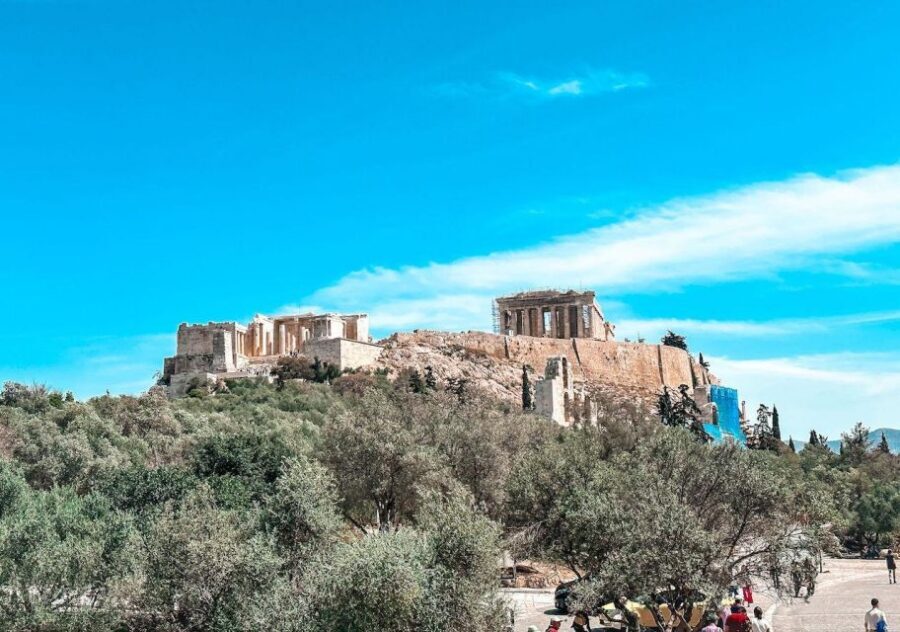
Your longest single block is at the Acropolis complex, about 1 hour 15 minutes. Admission isn’t included, so plan to budget for the €30 per person entrance fee.
Here’s what that time is aiming to cover. You’ll be focused on the major structures and the reasons they mattered:
Parthenon: the icon you came for
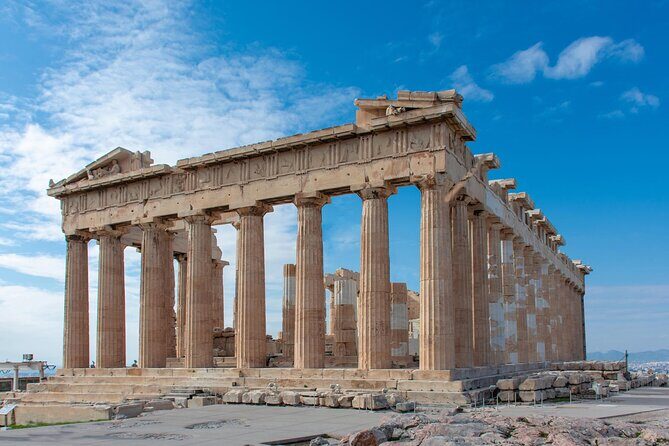
The Parthenon is the centerpiece—dedicated to Athena. Construction began in 447 BC and was completed in 438 BC, with decoration work continuing afterward. Even if you’ve seen photos, seeing it in person hits differently because of scale and the way light moves across stone.
Practical tip: at the Acropolis, your first job is orientation. The views and angles are as important as the building itself. Try to get a quick picture of your bearings early, then slow down for the parts you care about most.
Other Athens city highlights tours we've reviewed in Athens






Erechtheion and the Karyatids
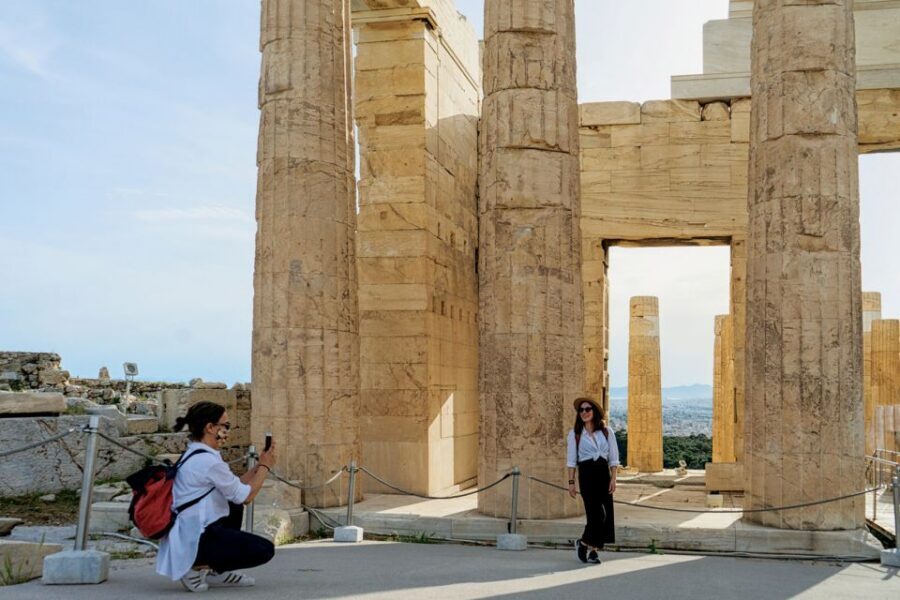
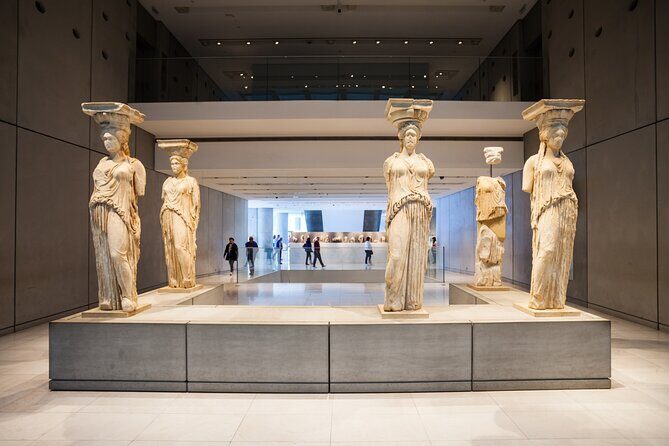
Next up is the Erechtheion, including the famous Karyatid figures. This is one of those stops where it helps to have someone point out what you’re looking at—because the difference between “old building” and “specific design idea” becomes obvious once you know the story.
Propylaea and the flow of the hill
You’ll also see the Propylaea area, which helps explain how you move into the Acropolis as a sacred complex rather than just a pile of ruins.
Athena Nike, Theatre of Dionysus, and the Odeon of Herodes Atticus
This part of the route rounds out the Acropolis so you’re not only standing in front of one monument. You’ll also see:
- Temple of Athena Nike (a temple dedicated to Athena and Nike)
- Theatre of Dionysus on the south slope (part of the Dionysus sanctuary)
- Odeon of Herodes Atticus (the Roman stone theatre structure)
If you love architecture and “how people gathered,” these stops add texture fast.
One small but real time-saver: if lines and crowd flow are an issue, ask your driver about the best approach. In guest experiences, Andreas guided people toward the south entrance because lines were shorter, which can make your Acropolis hour feel much less like waiting.
How to make your Acropolis visit easier (especially if you walk carefully)

The Acropolis is steep and uneven. If your group includes anyone with mobility limits or you’re worried about stamina, it’s worth flagging it before you arrive.
One guest shared that their guide, Andreas, explained options like taking a golf cart or the elevator to reach easier access points for the Acropolis. That kind of practical routing can change your day from stressful to enjoyable—so don’t be shy about asking what’s possible for your group.
Also, pack light. If you’re carrying a water bottle, hat, and phone charger, you’ll be fine. Your tour includes bottled water, and the vehicle has mobile chargers, which is helpful once you’re out on foot.
Acropolis Museum: why this stop turns ruins into a story

After the hill, you head to the Acropolis Museum for about 1 hour (tickets not included, €20 per person).
This is where the trip often becomes more meaningful. On the Acropolis itself, you’re looking at buildings and views. In the museum, you’re looking at evidence—artifacts from multiple eras, presented in a way that connects back to what you saw outside.
A few details that make the museum worth your time:
- It opened to the public in 2009
- It houses over 4,250 objects across 14,000 square metres
- It covers finds from the Greek Bronze Age through Roman and Byzantine periods
- It also sits over ruins of Roman and early Byzantine Athens
If you’ve ever stared at a temple and wondered what exactly you’re looking at, this is the antidote. Museum time gives context so the Acropolis stops aren’t just a checklist.
Panathenaic Stadium and the shock of white marble
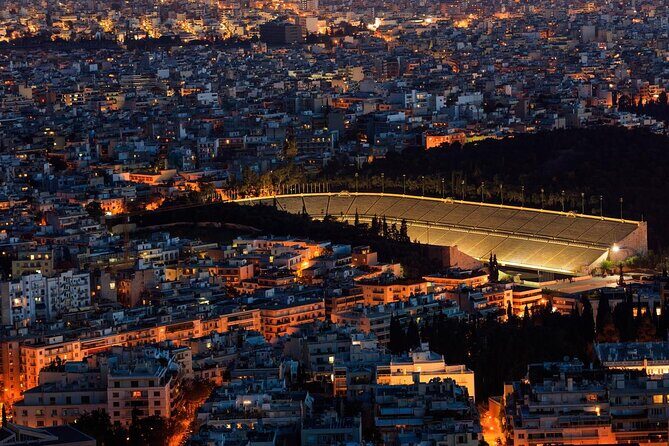
Next comes Panathenaic Stadium (Kallimarmaro) for about 10 minutes.
What makes it special is simple: it’s the oldest stadium still in operation that has hosted the Olympics three times, and it’s the only major stadium built entirely of white marble. Even if you’re not a sports person, it’s a fascinating contrast—classic architecture built for a modern kind of attention.
With only about ten minutes, you won’t have a deep dive. So treat it as a “quick awe stop,” then get back to the story your day is telling.
Temple of Olympian Zeus: big scale, half-finished drama
You’ll then visit Temple of Olympian Zeus for about 15 minutes.
This temple is famous for one thing you can’t miss: it’s half-complete, dedicated to Zeus, and it’s surrounded by other landmark areas. The site’s “incomplete” state is part of why it’s interesting—size is visible even when the full plan never fully landed.
Nearby landmarks you may connect with during this area include:
- Kallimarmaro Stadium
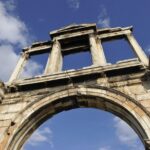
- Hadrian’s Arch (Hadrian’s Gate)
- Zappeion
- The National Garden areas
It’s also close to central Athens, around 500 meters east of the Acropolis, so the location helps the overall day flow.
Syntagma Square to the Unknown Soldier: modern Athens with ceremony
This portion moves from ancient atmosphere to present-day Athens in a hurry.
You’ll see Syntagma Square, the central square by the Greek Parliament (in the Old Royal Palace). There’s also a must-see practical moment: the Monument to the Unknown Soldier and the changing of the guard by the Presidential Palace area.
That stop is about 10 minutes, and the changing of the guard is free. It’s one of those experiences that doesn’t require deep background knowledge. You’ll feel the formality and attention, and it makes a great reset after the Acropolis’s intensity.
National Garden, Zappeion, and the neoclassical “palaces” vibe
Between the modern ceremony and the old-town streets, you get a calmer stretch through landscaped and landmark buildings.
The tour includes:
- National Garden (Royal Garden) behind the Parliament building
- Zappeion, a palatial building used for meetings and ceremonies
- Nearby landmark-style institutions like the National and Kapodistrian University of Athens, Academy of Athens, and the National Library reading room (Vallianeion)
If you like neoclassical architecture, this is where your eyes get rewarded. If you don’t, it still helps to break up your day so Plaka doesn’t feel like you rushed in at the end.
Plaka and Monastiraki: your last hour for photos and a real meal vibe
Plaka is about 1 hour. It’s the oldest and, frankly, most charming area—right below the Acropolis winding alleys, with neoclassical houses, red-tile roofs, and streets built for strolling.
This is a great time to:
- grab a coffee or frappe
- shop slowly (if that’s your thing)
- eat somewhere you can wander back from easily
Your route also touches on Monastiraki, known for the Ancient Agora zone and landmarks like Hadrian’s Library and the Stoa of Attalos. These stops help you connect ancient Athens to the modern street grid you’re walking through.
In at least one guest experience, the guide even dropped people near a restaurant tied to reservations. That’s a small thing, but it prevents the last-hour scramble that often ruins dinners.
Timing reality: why your exact start matters
The tour runs about 4 to 5 hours, with set time blocks at each stop. But real life changes the order and flow—crowds, heat, and traffic.
One guest had their start time adjusted to try to avoid crowds at the Acropolis, but the delayed arrival then turned into lots of waiting. That’s the kind of scenario you can reduce by thinking ahead:
- confirm your pickup time the day before
- plan for lines even with skip-the-line support
- keep your expectations flexible about minute-by-minute timing
Also note: the Acropolis is closed on specific dates (January 1, March 25, May 1, Easter Sunday, and December 25-26). If your dates hit those, you’ll need a different plan.
What I’d use this tour for (and what I’d skip)
I’d book this if:
- you’re visiting Athens for the first time and want the highest-impact sites fast
- you want door-to-door transport and a calm start
- you like the idea of seeing the Acropolis and then grounding it with the Acropolis Museum
- you enjoy walking and want a final hour in Plaka for food and photos
I’d think twice if:
- you want a licensed guide inside every archaeological site as part of the price
- you’re extremely budget-driven and don’t value private car convenience
- you hate any chance of waiting, since the Acropolis can be crowded no matter what
Should you book this Athens half-day tour?
If your priority is getting from place to place without friction, this is a strong choice. The value comes from the private Mercedes ride, pickup/drop-off included, and the way the day blends Acropolis highlights with the museum and major downtown monuments.
Just go in with eyes open: you’ll pay entrance fees separately, and your driver won’t accompany you inside as a licensed guide. If you’re okay with that trade and you want a smooth, efficient way to see Athens’s big hitters, book it. If you want full inside-site narration step-by-step, plan to add that separately.
FAQ
Is pickup from my hotel included?
Yes. Hotel/Airbnb/Port of Piraeus pickup and drop-off are included without extra charge. The driver can also pick you up from metro or bus stations.
What’s the duration of the tour?
It’s listed as about 4 to 5 hours.
Is Wi-Fi available during the ride?
Yes. The Mercedes vehicle includes Wi-Fi.
Are tickets included in the price?
No. Tickets for archaeological sites and museums are not included. The tour offers assistance purchasing skip-the-line tickets, but you cover the ticket cost.
How much are the Acropolis and Acropolis Museum admissions?
Acropolis admission is listed as €30 per person. Acropolis Museum admission is €20 per person.
Will the driver enter the sites with me?
The driver is not licensed to accompany you inside archaeological sites. You can still get explanations and guidance, but you may explore inside independently.
Is the tour private?
Yes. This is a private tour/activity with only your group participating.
Is the tour offered in English?
Yes. It’s offered in English.
Are there dates when the Acropolis is closed?
Yes. The Acropolis is closed on January 1, March 25, May 1, Easter Sunday, and December 25 and 26.
Can I cancel for a full refund?
Yes—free cancellation is available. You must cancel at least 24 hours in advance for a full refund.