REVIEW · ATHENS
Private local tour of the Acropolis Hill and the New Acropolis Museum
Book on Viator →Operated by Niki Olympic Tours · Bookable on Viator
One hill, two unforgettable perspectives: ruins and the museum built for them. This private tour pairs a smart, paced walk around Acropolis Hill with an up-close look at the New Acropolis Museum, including the glass-floor archaeology and Parthenon pieces. You’ll get clear storytelling of the Golden Age of Pericles while you’re moving through the exact viewpoints that make these monuments click. I particularly like how the guide sets you up for the best angles fast, and how the museum then explains what you just saw in real space.
What really makes this worth it is the private, certified guide focus and the way the route connects landmarks you might otherwise treat as a checklist. I also love that the guide meets you right by the Acropolis entrance and walks you upward with stops planned before key structures like the Propylaea, so you’re not just stuck in crowds guessing what matters.
The one consideration: it’s a strong walking-and-climbing experience. You’ll be ascending Acropolis Hill and moving through multiple museum levels, so if stairs and steep paths are a problem, you’ll want to think twice (or plan for a slower pace).
In This Review
- Key Highlights You’ll Want to Know Before You Go
- Entering Acropolis Hill With a Plan (Not Just Footsteps)
- How the Acropolis Climb Connects the Surrounding Hills
- The Best Pre-Top Viewpoints (Why Stopping Early Helps)
- Walking Through the Propylaea to the Peak
- Viewing the Parthenon and Erechtheion Without Feeling Lost
- The New Acropolis Museum: Where the Story Gets Its Proof
- Ascending the Museum Levels for the Parthenon Effect
- Price and Logistics: What $249.25 Really Buys You
- Timing and What It Means for Your Day in Athens
- The Guides: Pace, English, and Q&A
- Who Should Book This Tour (and Who Might Prefer Something Else)
- Should You Book It? My Practical Take
- FAQ
- How long is the Acropolis Hill and New Acropolis Museum private tour?
- Is this tour private or shared with other groups?
- Are entrance tickets included in the price?
- Where does the tour start, and where does it end?
- What language is the tour offered in?
- Do I get a mobile ticket?
- Is the tour physically demanding?
Key Highlights You’ll Want to Know Before You Go

- A guide-led climb that frames the Golden Age of Pericles so the hill feels like a living story, not scattered ruins
- Planned viewpoints before the Propylaea with sightlines toward Wingless Nike and the Ancient Agora
- Democracy context at the Pnyx and philosophical Athens around the Agora while you’re still on the rock
- Glass-floor archaeology at the New Acropolis Museum that visually links excavation layers to what you saw outside
- Top-floor Parthenon views through full glass walls plus Parthenon pediments and frieze
- Private-only group in English, with guides named Konstandina and Vicky noted for pace and Q&A focus
Entering Acropolis Hill With a Plan (Not Just Footsteps)
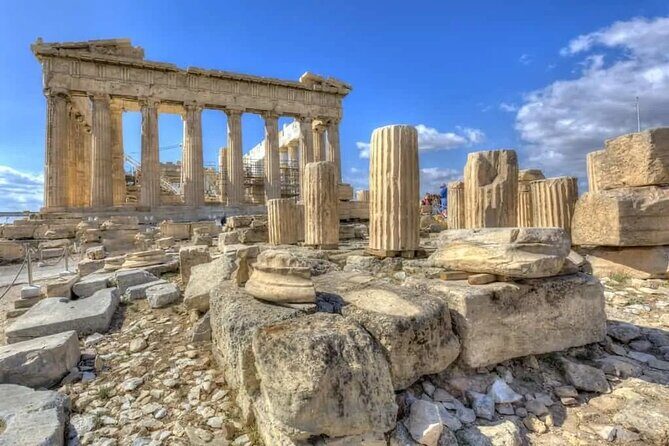
The Acropolis works best when you understand what you’re looking at while you’re looking at it. This tour gets you there with a guide who starts at the entrance and then moves upward with you, using stops to anchor the big picture. You’re not left reading signs while your energy fades; the guide keeps the flow moving and points out what to mentally “hold” as you climb.
I like that the climbing time isn’t wasted. The walk toward the top is treated as part of the experience, with explanations built around the landmarks you pass rather than saving everything for the end. That matters because on the Acropolis, views change constantly. If you wait until you reach the Parthenon to understand the surrounding hills, you lose half the effect.
One more practical win: the tour runs about 2 hours 30 minutes total, with about 1 hour 30 minutes on the hill and about 1 hour in the museum. That’s long enough to feel guided and connected, but short enough to stay on schedule in a city that can get crowded.
Other Acropolis and Parthenon tours we've reviewed in Athens

How the Acropolis Climb Connects the Surrounding Hills

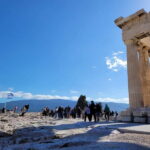
Your climb starts right by the entrance. The guide then takes you upward, stopping at key points on the way to help you visualize the Age of Pericles, when many major monuments on the hill were built. This is a smart approach because it keeps the story tied to the geography around you.
Along the route, you’ll hear about several named sites and hills around the Acropolis, including Filopappos hill, the Herodium odeon, the Dionysius theatre, the Pnyx hill, and the Areopagus hill. Even if you’ve seen these names on a map, it’s different when someone places them in your line of sight while you’re still climbing. You start noticing how the hill’s vantage points relate to civic life below.
Two context pieces you’ll likely remember:
- Pnyx is tied to the birthplace of Democracy, which helps you understand why people gathered here.
- Areopagus connects to civic and legal thinking, so the hill feels less like a temple complex and more like a center of public life.
The Best Pre-Top Viewpoints (Why Stopping Early Helps)
Before you reach the Propylaea, you’ll stop for an excellent view. This is one of those “small” details that changes the whole experience. Instead of charging straight upward and arriving breathless, you get a planned moment to look outward and get your bearings.
From this earlier vantage, you’ll have a view of the temple of Wingless Nike and the Ancient Agora, where philosophers like Socrates, Plato, and Aristotle developed their teaching schools. The practical payoff is that when you later focus on the Parthenon, you won’t see it as an isolated building. You’ll understand it as part of a wider civic landscape.
If you’re the kind of visitor who likes to photograph, this stop is also helpful because the angle and sightlines are often better when you’re not at the peak yet. You get the view first, then the monuments—rather than the other way around.
Walking Through the Propylaea to the Peak
After the pre-top viewpoint, you’ll walk through the Propylaea—the monumental gateway that leads you into the heart of the Acropolis area. This is where the tour’s pacing really earns its keep. The guide uses the approach to prepare you for what’s ahead, so you arrive with a mental map instead of a blank stare.
Once you reach the top area, you’ll see the two stars of the scene:
- the Parthenon
- the Erechtheion temple opposite it
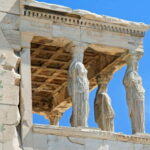
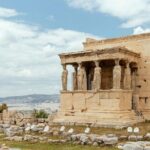
The Parthenon often steals the show, but the Erechtheion is what makes the view feel complete. The Erechtheion is known here for its Karyatides, the sculpted maidens that support the roof instead of traditional columns. When someone frames this feature clearly, you stop thinking of it as a decorative twist and start recognizing it as a design idea that’s central to how the temple carries its load.
Viewing the Parthenon and Erechtheion Without Feeling Lost
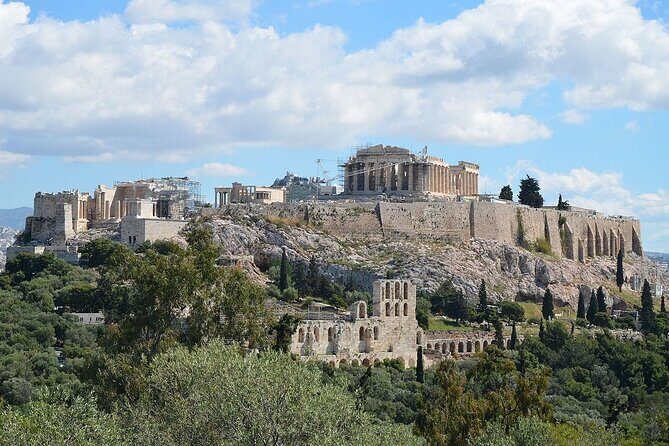
At the top, you get the moment most people travel for—the sweep of the Parthenon and the direct comparison to the Erechtheion across the space. With a guide, you’re not just taking in the scale; you’re seeing the structure of the place.
This is also where you benefit most from the earlier story. If you learned why the hill mattered in civic life, the Parthenon doesn’t feel like a random masterpiece sitting on a rock. It starts to feel like the main stage of an era, surrounded by other hills and civic spaces that helped define what Athens was doing at the time.
One practical note: you’re likely to spend some time looking upward and stepping around uneven terrain. Wear shoes with grip and plan for a steady pace. This tour asks for strong physical fitness, and the route is designed for active walking, not casual strolling.
Other private Acropolis tours we've reviewed in Athens





The New Acropolis Museum: Where the Story Gets Its Proof
After the Acropolis, the tour shifts to the New Acropolis Museum, and this part is a big reason the combo works. The museum is designed to connect what you see on the hill to what you find inside. In other words, the buildings don’t just sit in your memory; they get explained in the context of excavations and original fragments.
You’ll see parts of the ancient city excavations through a glass floor, which is one of those experiences that clicks immediately. Standing on a clear floor while you can see layers beneath your feet makes the history feel physical instead of abstract.
Then there are the famous sculptural displays—especially the Kores and Kouroi statues. These are the types of pieces that can be underwhelming if you just glance at them. With a guide’s framing, they tend to register as a whole world of style, symbolism, and meaning rather than standalone figures.
Ascending the Museum Levels for the Parthenon Effect
The museum visit is structured with progression: as you ascend different levels, you eventually reach the top floor, which is described as all glass. This matters because the museum’s layout is built around you seeing the Parthenon again from inside the building.
On the top floor, you’ll admire remaining pediments and frieze of the Parthenon, and you’ll also get an excellent view of the Parthenon itself. This is where the outdoor experience and the indoor experience shake hands.
I love that this isn’t just a lecture in a dark room. You move upward and your sightlines keep changing, so you keep reinterpreting what you saw on the hill. By the time you reach the glass-walled top floor, the monuments feel less like distant objects and more like a continuous environment.
Price and Logistics: What $249.25 Really Buys You
At $249.25 per person, you’re paying for the private, certified guide experience. Entrance tickets are not included, so you should budget extra for:
- Acropolis Hill admission: €30 per person
- New Acropolis Museum admission: €20 per person
So you’re looking at guide value plus about €50 in site entry fees per person. That’s the math that helps you decide if “private” is worth it for your group.
In my view, the private format makes the most sense if you fit one of these profiles:
- You want your time structured so you don’t get stuck at the wrong angle or in the wrong line of sight
- You care about understanding what you’re looking at, not just checking off major monuments
- Your group has mixed ages or interests, and you want the guide to adjust pacing
On the other hand, if your group is comfortable exploring the Acropolis independently and you mainly want the view, you might feel the premium. But if you want the hill to make sense, this structure is exactly how that sense gets built.
Timing and What It Means for Your Day in Athens
The tour is about 2 hours 30 minutes, and it ends at the New Acropolis Museum. That ending location is useful. It keeps you close to where you can continue your day without needing to backtrack.
The itinerary duration also affects how you’ll experience it. With only about an hour at the museum, you don’t want to come in with the mindset of reading everything word-for-word. Instead, plan to focus on the major highlights your guide points to: glass-floor archaeology, Kores and Kouroi, and the top-floor Parthenon view with pediments and frieze.
Also, average booking timing shows this is something people plan ahead for—on average, it’s booked about 78 days in advance. So if you’re traveling in peak season or on a limited schedule, earlier booking can give you more choices.
The Guides: Pace, English, and Q&A
Two guide names come up in the strongest way. Konstandina is praised for being a top-tier guide with perfect English, tireless energy, and a sensitive approach to pacing and interests. Vicky is described as fantastic, with a strong focus on answering questions and keeping things engaging.
Even without a named guide guaranteed in advance, these comments tell you what to expect from the experience style: active listening, clear explanations, and time for questions without feeling rushed. For a site as visually complex as the Acropolis, that’s not a small detail—it’s the difference between admiration and real understanding.
Who Should Book This Tour (and Who Might Prefer Something Else)
This tour is a good fit if you:
- want a private guide for a focused, efficient route
- enjoy learning while walking, especially with landmark-by-landmark context
- want the museum visit to directly reinforce the hill visit
- are comfortable with stairs and uphill paths, since the experience calls for strong physical fitness
It might be less ideal if you:
- need frequent rest stops or struggle with steady climbs
- have limited tolerance for crowds and long standing/viewing moments
The good news is that the route is designed as a guided circuit, not a random wander. That tends to help you stay oriented and efficient.
Should You Book It? My Practical Take
If your goal is to see the Acropolis and leave with a clear mental picture—views, key monuments, and why the hill mattered—this is a strong choice. The combo of a paced Acropolis climb plus the New Acropolis Museum’s glass-floor archaeology and top-floor Parthenon viewing is built to connect the dots.
Book it if you value:
- guided viewpoints rather than aimless wandering
- a private group experience with room for questions
- the museum layout that turns the Parthenon into something you can see from inside the story
I’d only skip it if your group is mainly there for photos and you know you’ll be fine exploring independently, or if the physical demands of the hill don’t suit your pace. Otherwise, this is exactly the kind of structured tour that makes the Acropolis feel understandable, not just impressive.
FAQ
How long is the Acropolis Hill and New Acropolis Museum private tour?
It runs about 2 hours 30 minutes (approx.), with around 1 hour 30 minutes on the Acropolis and about 1 hour at the New Acropolis Museum.
Is this tour private or shared with other groups?
It’s private. Only your group participates.
Are entrance tickets included in the price?
No. Entrance fees for the Acropolis Hill are €30 per person and the New Acropolis Museum is €20 per person.
Where does the tour start, and where does it end?
The tour meets at XPCF+G9 Acropolis of Athens, Athina 105 58, Greece. It ends at the New Acropolis Museum.
What language is the tour offered in?
The tour is offered in English.
Do I get a mobile ticket?
The experience includes a mobile ticket feature.
Is the tour physically demanding?
Yes. Travelers should have a strong physical fitness level because the route includes climbing on Acropolis Hill and walking through the museum.