REVIEW · ATHENS
Acropolis Guided Tour with Skip-the-Line Access
Book on Viator →Operated by Olive Sea Travel · Bookable on Viator
Golden hour on the Acropolis is pure magic. I love the evening views that make the Sacred Rock feel different from the usual daytime crowds, and I love that skip-the-line access keeps your time focused on real monument time instead of waiting. One consideration: you’ll walk on marble and stone with stairs and uneven ground, so you’ll want grippy shoes.
This is a small group tour (up to 15) with a licensed guide, plus a mobile ticket so you can get moving. The tour starts at 5:30 pm and runs about 2 hours, so you get a tight, see-the-best-bits overview without feeling like it’s dragging.
In This Review
- Key things to know before you go
- Golden-hour pacing on the Sacred Rock
- Meeting point and the 5:30 pm rhythm
- Skip-the-line access: what you gain in real time
- Propylaea and the approach into the sacred area
- Temple of Athena Nike: the wingless victory idea
- Parthenon time: what to notice in 30 minutes
- Erechtheion and the Karyatides porch
- Theatre of Dionysus: the Acropolis with a performance past
- Price and value: what $156.20 buys you here
- What to expect on the ground: comfort and timing
- Who should book this evening Acropolis tour?
- Should you book this tour or not?
- FAQ
- Where does the tour start?
- What time does the tour begin?
- How long is the Acropolis guided tour?
- Is the tour in English?
- Is skip-the-line access included?
- Is the Acropolis ticket included in the price?
- Is a licensed tour guide included?
- What is the maximum group size?
- Is hotel pickup or drop-off included?
- What is the cancellation policy?
Key things to know before you go
- 5:30 pm start for cooler light: it’s timed for that late-day feel rather than the harsh midday sun.
- Skip-the-line access: you trade queues for time with the monuments.
- Licensed guide included: you’re not just scanning stones; you’re getting the how-and-why.
- Main buildings in one route: Propylaea, Temple of Athena Nike, Parthenon, Erechtheion, and Theatre of Dionysus.
- Up to 15 people: pacing stays manageable on steep, rocky paths.
Golden-hour pacing on the Sacred Rock
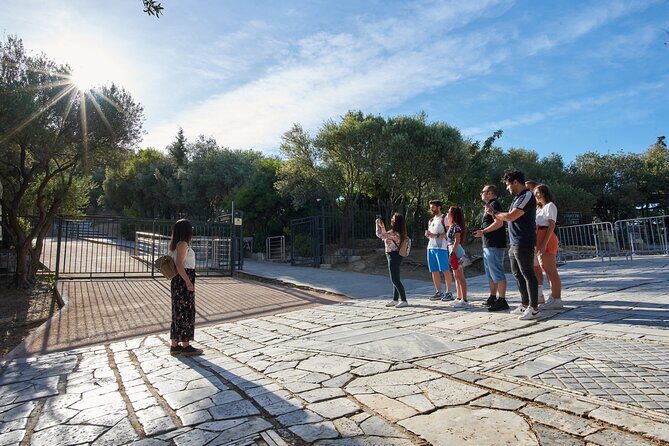
The Acropolis is famous, but timing changes everything. This tour is designed around the idea that you’ll see the main buildings in the evening rather than during the day. That matters because the light is softer, the air often feels more comfortable, and the whole hill looks less like a checklist and more like a living viewpoint over Athens.
I also like that the route doesn’t try to cram in everything. You’ll spend just enough time at each site to understand what you’re looking at, then move on before your legs turn to jelly. It’s a smart fit for people who want the big monuments with a guide, not hours of wandering.
The one real trade-off is that it’s still the Acropolis: stone steps, marble ground, and an incline that you feel in your calves. If you go in flip-flops, you’re choosing chaos. Comfortable walking sneakers with good grip are the practical move here, especially in warmer months when it can feel hot.
Other Acropolis and Parthenon tours we've reviewed in Athens
Meeting point and the 5:30 pm rhythm
You meet at Herodion Hotel, Rovertou Galli 4, Athina 117 42, Greece, and the tour ends back at the meeting point. Start time is 5:30 pm, with an approximate duration of 2 hours.
This timing is part of the value. A late start gives you the chance to catch the Acropolis when it’s not at its most punishing. It’s also a good plan if your daytime schedule is already full with museums or neighborhoods, because this slots neatly as a “capstone” activity.
A small-group format (maximum 15 travelers) also helps with the flow. On a hill like this, crowding can make simple moments—like standing at a vantage point or moving through an entrance—feel stressful. Keeping the group tight means you spend less time compressing into other people’s photos.
Skip-the-line access: what you gain in real time
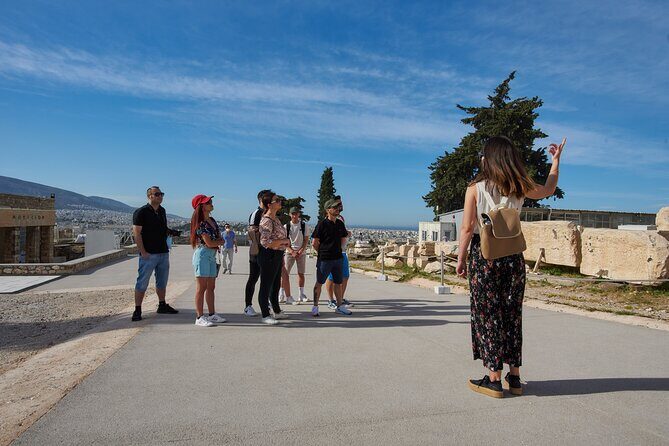
Skip-the-line access doesn’t just sound nice. It changes the tour’s rhythm. Instead of absorbing delays before you even start climbing, you’re already on the hill and under the guide’s narration when your attention is freshest.
That matters for the Acropolis because the place is packed with architectural meaning. A licensed guide can point out details while you still have momentum, rather than forcing you to rush later to “make up time.” When you don’t have to fight queues, the route feels more like a guided walk than a timed scramble.
Also, the included Acropolis ticket is part of the package. You’re paying for a guided experience with admission handled, not paying separately and then hoping everything lines up. For many visitors, that reduces planning stress more than the sightseeing alone.
Propylaea and the approach into the sacred area
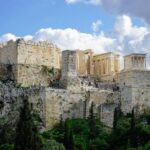
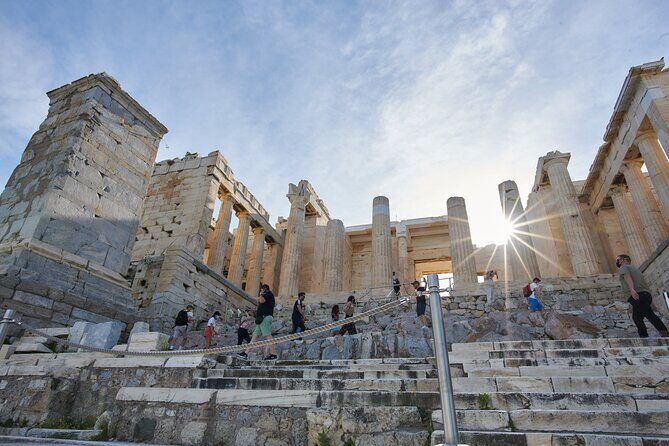
Your first big moment is the Acropolis hill itself—often called the Sacred Rock of Athens. You get a guided orientation to why it matters: it’s the city’s most important site, tied to ancient Greek culture and the artistic height of the 5th century BCE. The tour frames the hill in the context of Perikles’ Golden Age, when some of the defining architectural masterpieces were erected here.
Then you move to the Propylaea, the monumental entrance to the sacred area dedicated to Athena. This part of the story is built into the architecture: it was designed by Mnesicles using Pentelic marble, and the design was considered avant-garde. Even if you’ve seen photos of the gate, a guide helps you “read” the structure—why it looks the way it does and how it functions as a formal threshold.
A great detail to notice from here is the Ionian temple of Apteros Nike nearby, on a rampart protecting the main entrance. That sets up the next stop nicely, because you’re not just walking from one highlight to another. You’re learning the layout and the relationship between buildings.
At this stage, the practical reality is that you’ll move in short bursts. You get about 10 minutes at Propylaea, which is enough time to absorb key points without turning it into a long detour.
Temple of Athena Nike: the wingless victory idea
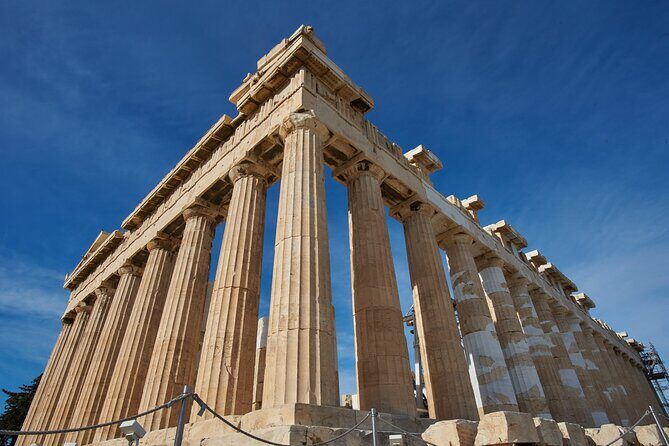
Next comes the Temple of Athena Nike, built between 426 and 421 BC. It sits on a bastion at the southwestern edge of the Acropolis and it replaced older temples whose remains are preserved inside the bastion.
This is where the guide’s explanations can really help you see the place with your own eyes. The temple is tied to the statue of Athena Nike, associated with victory. But the name shift is the interesting part: Nike usually has wings, yet in this case the statue was wingless, giving rise to the name Athena Apteros—meaning wingless.
Even if you don’t remember the details later word-for-word, the wingless concept makes the temple feel more specific than just another small structure on the hill. It’s a reminder that the Acropolis isn’t only about massive “main temples.” It’s also full of symbolic choices.
You’ll have roughly 10 minutes here. That’s perfect for staying focused: read what’s important, look at the structure in context, then keep your legs fresh for what’s ahead.
Other skip-the-line Acropolis tours we've reviewed in Athens
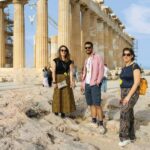
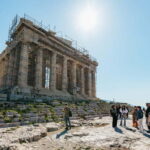


Parthenon time: what to notice in 30 minutes
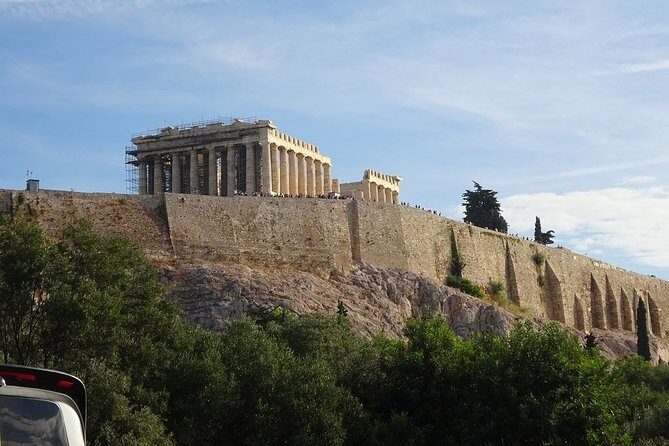
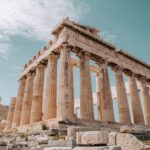
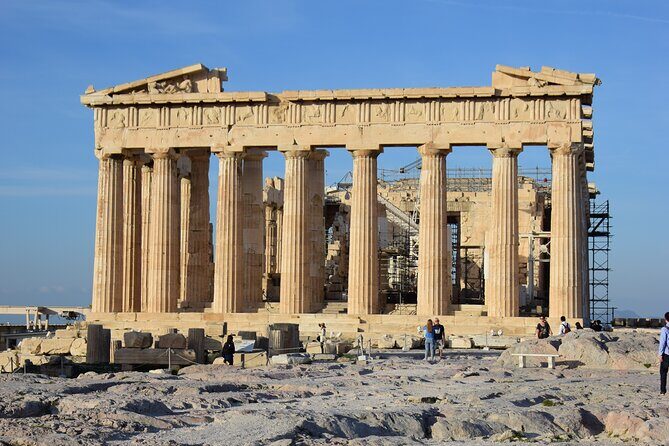
The Parthenon is the big one, and the tour gives it the most time—about 30 minutes. It’s dedicated to Athena Parthenos, the Virgin, and it was built between 447 and 438 B.C.E. The temple is in the Doric order and made almost exclusively from Pentelic marble.
What I like about having a guide here is that the Parthenon can feel like a single icon if you just look at it from afar. The guided approach helps you notice the structure’s “logic.” For example, it’s described as peripheral, with eight columns on each of the narrow sides and seventeen columns on each of the long ones. Once you have that column rhythm in your head, the building stops being only a silhouette.
The sculptural decoration is another layer where a guide helps you connect the dots. The Parthenon combines Doric metopes and triglyphs on the entablature with an Ionic frieze on the walls of the cella. The metopes depict different myth scenes: Gigantomachy on the east, Amazonomachy on the west, Centauromachy on the south, and scenes from the Trojan War on the north.
That’s a lot to hold in your brain for one stop, which is exactly why the guide matters. Instead of you trying to interpret everything alone, you get a structured way to look.
And for the evening timing? The Parthenon often looks better as light fades because shadows sharpen the carvings and column depth. This is one of the reasons an evening slot can feel like more than just convenience.
Erechtheion and the Karyatides porch
After the Parthenon, you’ll head to the Erechtheion. This elegant building dates to 421–406 BC. The name comes from Erechtheus, the mythical king of Athens, who was worshipped.
Like the other major stops, the material story is important. The Erechtheion is made of Pentelic marble. Its frieze uses Eleusinian grey stone with white relief figures attached, and the foundations are described as Piraeus stone. You’ll also hear about the idea that the stone paving was thought to preserve traces from Poseidon’s trident, which supposedly struck the ground and produced salt water.
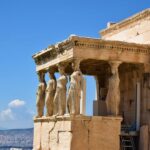
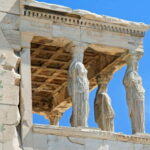
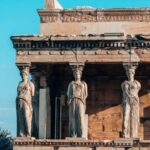
The most famous visual element is the porch of the Karyatides. Instead of columns, it features six female statues supporting the roof. The tour notes that five are in the Acropolis Museum and another is in the British Museum, while the ones on the building are casts. That detail is handy because it helps you interpret why the statues look “complete” here even though originals live elsewhere.
The time you have—about 15 minutes—means you should focus on the big visual: the Karyatides and how they replace conventional columns. If you’re the type who loves symbolism and design choices, this stop is often the one people remember later.
Theatre of Dionysus: the Acropolis with a performance past

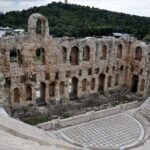
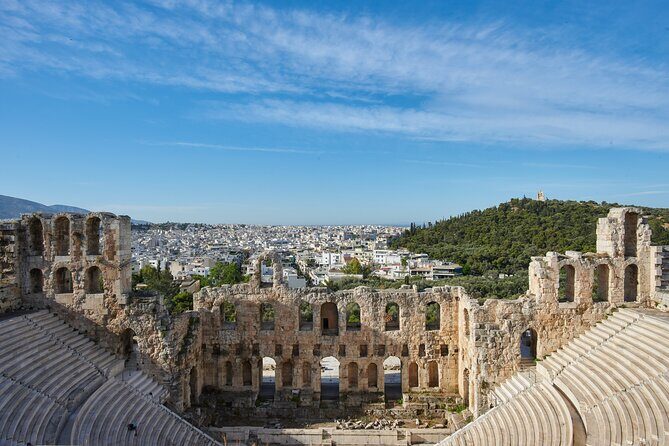
The final stop is the Theatre of Dionysus. This ancient Greek theatre sits on the south slope of the Acropolis hill and was originally part of the sanctuary of Dionysus Eleuthereus.
You’ll get a quick orientation to the site’s timeline. The first orchestra terrace was constructed around the mid- to late-sixth century BC, and it hosted the City Dionysia. That means you’re not only looking at a religious and architectural complex; you’re seeing a place tied to public life—festivals, storytelling, performance, and civic culture.
You’ll have about 10 minutes here. The time is short, so the goal isn’t to treat it like a museum walkthrough. It’s to understand what the theatre is doing in the bigger system of the Acropolis.
Price and value: what $156.20 buys you here
At $156.20 per person, this tour is not a cheap add-on. The value is in what’s included: a licensed tour guide, skip-the-line access, a small-group format (maximum 15), and an Acropolis ticket. You’re also getting a structured route that hits the key buildings without forcing you to navigate every entrance and interpretation alone.
The fact that it runs about 2 hours matters too. You’re not paying for a full-day commitment, and you’re not paying extra for the ticket itself. For many people, that bundle approach is what makes the price feel fair.
What’s not included is hotel pickup and drop-off. You need to get yourself to the Herodion Hotel meeting point. The good news is the start location is described as near public transportation, so you’re not forced into complicated logistics.
If you’re the kind of visitor who wants an expert voice for the Parthenon and enough context to make the Erechtheion and Theatre of Dionysus more than just “more stones,” this price usually pencils out well.
What to expect on the ground: comfort and timing
This tour is best thought of as a guided walk on steep, historic terrain. The reviews and site conditions point to the same practical lesson: bring comfortable walking shoes with good grip. You’ll be on rocky and marble ground, with stairs that can feel intimidating before you start moving, then much more manageable once you’re actually climbing.
Also, plan for weather. In warm months, Athens can feel hot. The late-day timing is helpful for comfort, but you still need footwear and sensible expectations.
If you prefer minimal walking, or you’re sensitive to stairs and uneven surfaces, this may not be the best match. But if you can handle a steady climb and short stops at major monuments, the route is a practical and satisfying way to see the highlights without turning it into an all-day ordeal.
Who should book this evening Acropolis tour?
Book it if you want:
- The main Acropolis buildings in a guided format with skip-the-line entry
- A tour timed for late-day light rather than peak daytime heat
- An architecture-focused guide who helps you understand what you’re seeing at Propylaea, Athena Nike, the Parthenon, Erechtheion, and the Theatre of Dionysus
- A small-group experience that stays manageable on a hill
Consider skipping or comparing options if:
- You don’t want any walking on steep, stone surfaces
- You only want the Parthenon and would rather spend longer there without moving around
- You’re looking for hotel pickup (this one does not include it)
Should you book this tour or not?
I’d book this if you’re trying to make the Acropolis pay off fast. The combination of a licensed guide, skip-the-line access, and a tight route through the top monuments is exactly how you get clarity and context without wasting your time waiting around.
If you’re the kind of traveler who reads every sign and wants to understand the symbolism behind design choices, the timing and guided stops feel especially worth it. Just come prepared for stone stairs and grabby shoes, and you’ll be in good shape for a memorable evening on the Sacred Rock.
FAQ
Where does the tour start?
The tour starts at Herodion Hotel, Rovertou Galli 4, Athina 117 42, Greece.
What time does the tour begin?
The tour starts at 5:30 pm.
How long is the Acropolis guided tour?
It lasts about 2 hours (approx.).
Is the tour in English?
Yes, it is offered in English.
Is skip-the-line access included?
Yes. Skip-the-line Acropolis access is included.
Is the Acropolis ticket included in the price?
Yes. The Acropolis ticket is included.
Is a licensed tour guide included?
Yes. A licensed tour guide is included in the price.
What is the maximum group size?
The maximum group size is 15 travelers.
Is hotel pickup or drop-off included?
No. Hotel pickup and drop-off are not included.
What is the cancellation policy?
You can cancel for a full refund up to 24 hours in advance of the experience’s start time. If you cancel less than 24 hours before, the amount paid is not refunded.