REVIEW · ATHENS
Acropolis & Parthenon Walking Tour with Optional Acropolis Museum
Book on Viator →Operated by Keytours - Greece · Bookable on Viator
The Acropolis looks different when you arrive early. This small-group Athens walk pairs early access with a guide who ties the monuments to stories and mythology, plus optional Acropolis Museum time. You’ll see the big names—Parthenon and friends—without spending the day stuck in the slowest lines.
I like that this tour is built around clear guidance: licensed guide, audio headsets, and a max group size of 20 so you’re not lost in the crowd. I also like the option to include museum entry, which helps you connect what you see on the hill with the artifacts inside.
One consideration: the climb is steep. Even on a good day, the ascendance can feel intense—especially in summer—and it’s not a good match if you have mobility limitations.
In This Review
- Key highlights to know before you go
- Early-Start Acropolis Access That Actually Helps With Crowds
- Price, Groups, and What You Get for $34.94
- Meeting at Key Tours and Setting Your Pace
- Stop 1: Theatre of Dionysus and Why It Sets Up the Myths
- Stop 2: The Acropolis Walk to the Parthenon, Erechtheion, and More
- Stop 3: Acropolis Museum When the Stones Become Artifacts
- Audio Headsets, Shade Stops, and How Guides Keep You Oriented
- Who This Tour Fits Best (and Who Might Want Another Plan)
- Should You Book This Acropolis & Parthenon Tour?
- FAQ
- How long is the Acropolis & Parthenon walking tour?
- Is the Acropolis entry ticket included?
- Does the tour include the Acropolis Museum?
- Where do I meet the guide?
- What group size should I expect?
- Is this tour offered in English?
- Do I need to buy a ticket for the museum if I didn’t choose the museum option?
- Is the tour physically demanding?
- What kind of ticket do I receive?
- What should I bring for comfort during the climb?
Key highlights to know before you go
- Early Acropolis entry focuses on beating the busiest hours for better photos and breathing room
- Small group (max 20) means less waiting and more time at key spots
- Audio headsets help you follow the guide even if you’re not standing right next to them
- Story-driven stops link the Theatre of Dionysus, major temples, and mythology to what you see
- Optional Acropolis Museum adds context after the monuments, not before
Early-Start Acropolis Access That Actually Helps With Crowds
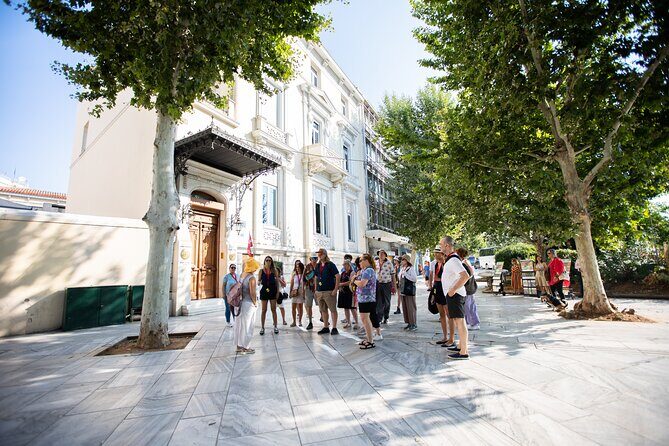
The biggest reason I think this tour is worth your time is the start. You go in the morning, with an early access approach designed to help you avoid the worst crush at the Acropolis. That matters because the hill gets hotter, louder, and slower as the day goes on, and the best photo angles vanish once people stack up shoulder-to-shoulder.
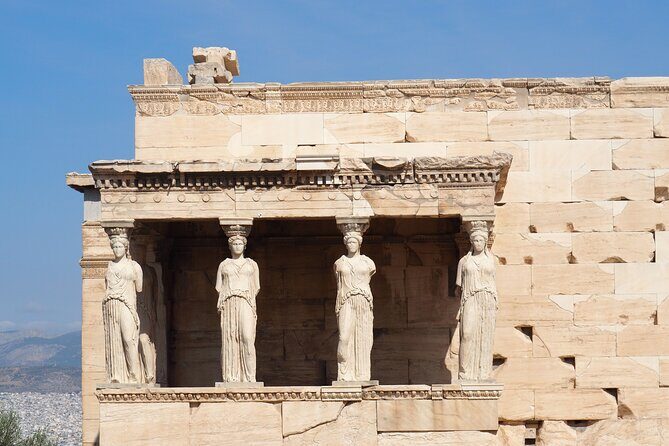
You also get a structured route, which helps your brain. Instead of seeing random stone blocks and columns, you learn what you’re looking at while you’re still standing in the right spot. Guides often keep pulling you back to the most important elements—the Parthenon’s placement, the Erechtheion’s details, and the way the complex feels like a whole system, not separate buildings.
Is early access perfect? Not always. One review noted that after the walk and many narrative stops, the Parthenon area can still feel crowded by late morning. So if your top goal is ultra-clear temple photos with no people at all, you might still find a guided group won’t magically erase every crowd.
Other Acropolis and Parthenon tours we've reviewed in Athens
Price, Groups, and What You Get for $34.94
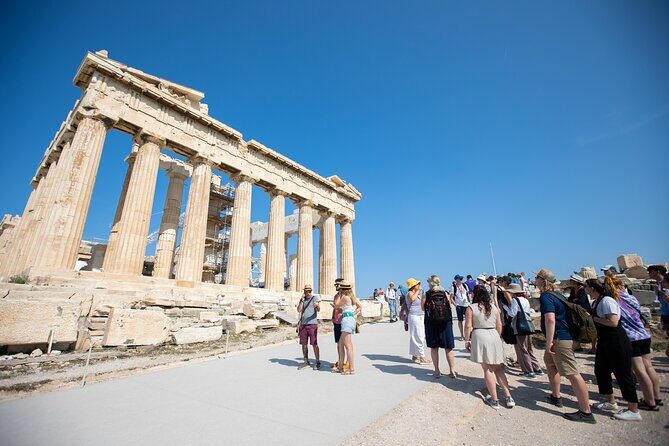
At $34.94 per person, this tour sits in the “good value” zone because you’re paying for more than movement—you’re paying for a licensed guide plus audio headsets and a guided pace over the hill. A basic self-guided entry can be cheaper, but you lose the ability to understand why each structure matters and how the myths connect to the architecture.
The other value lever is the ticket option. The tour lists an entrance ticket as included only if you select the option with tickets. If you choose the version without tickets, you’ll need to buy the Acropolis ticket before the departure time slot, and museum entry follows the same logic if you don’t add it. The standalone fees listed are €30 for the Acropolis and €20 for the Acropolis Museum if you’re purchasing separately.
So here’s the practical math: if you’re not sure you’ll want the museum, pick your priorities. The museum stop is where a lot of the history becomes tangible. But if you’re laser-focused on just getting good temple views and you already have tickets, the no-ticket option can make sense.
Finally, this is a small group (max 20). That’s not a random marketing detail—it affects how often you stop, how quickly you move, and how much of the guide’s commentary you can actually hear and absorb.
Meeting at Key Tours and Setting Your Pace
You start at the Key Tours office area on Athanasiou Diakou 26, Athens. The meeting point is convenient for public transportation, and the end point is at the Acropolis of Athens area, so you’re not trekking back and forth to the city center afterward.
Expect about 4 hours total. The pace is “moderate difficulty,” and that label isn’t about walking slowly—it’s about the ascendance to the Acropolis, which can be demanding in summer. Wear sturdy shoes. Plan on water. Reviews repeatedly flag the heat up top as real, not theoretical.
Bring a mindset for a walking tour: you’re there to follow along, stop when the guide stops, and take pictures in short windows. That’s also why the group size helps. With a larger group, those windows can shrink fast.
One more thing to note: the tour uses audio devices. Most reviews praise the headsets as a must, but a couple also mention static or microphone issues. In other words, for the best experience, don’t treat this like a silent museum—you still need to stay attentive and positioned enough to hear.
Stop 1: Theatre of Dionysus and Why It Sets Up the Myths

Your first meaningful stop is the Theatre of Dionysus and sanctuary area. You spend a short chunk of time here (about 10 minutes), but it’s a smart opener because it frames the Acropolis as more than a pile of temples. Dionysus connects to performance, festivals, and the cultural life of ancient Athens—ideas that make the later temple architecture feel less like random monuments and more like a living society.
This stop is also useful for orientation. Before you climb into the main sanctuary zone, you get a quick visual and story foundation. You’ll likely hear about why this area mattered to Athenians and how mythology and civic life were intertwined.
A short stop can be a drawback if you want more time to wander freely right away. But as a warm-up, it works well: you’re not yet exhausted by the full climb, and you’re building context before the biggest photo moments.
Stop 2: The Acropolis Walk to the Parthenon, Erechtheion, and More
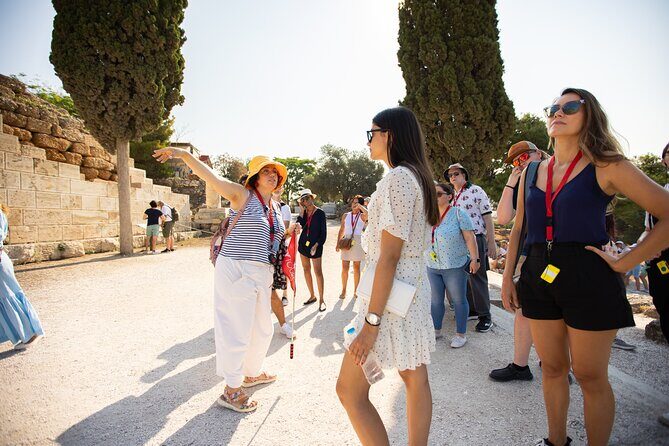
This is the main event: a guided climb up to the Acropolis with stops for key monuments and photo moments. The time window listed for the Acropolis itself is about 1 hour 50 minutes (without counting the short theatre stop).
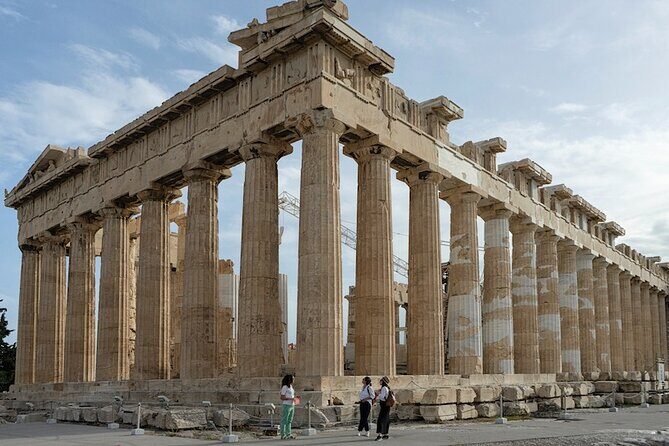
At this stage, you’re looking for the “why should I care?” layer. Guides focus on the structures you came for: the Parthenon, Erechtheion, Propylaea, Temple of Athena Nike, and the Pedestal of Agrippa. The guide’s job here isn’t to recite facts like a textbook; it’s to help you recognize what you’re seeing—like how the layout and details reflect the beliefs of the time.
The best reviews repeatedly mention storytelling that makes these places click. Names show up in feedback: Krissa, Nikos, Victor, Lilly, Dora, Sophia, Myrto, Angela, Marina, and Anna. The common thread isn’t just knowing details—it’s pacing and keeping the group engaged with humor and clear explanations.
That pacing can be a mixed bag. One review felt the tour pauses and descriptions slowed progress so much that the crowd avoidance advantage faded by the time they reached the Parthenon area (around late morning). Another review complained about being rushed and said the museum felt more rewarding than the hill portion.
Still, most people seem to like the stop-and-explain rhythm, especially because it helps you understand why the Acropolis feels so deliberate. If you’re the type who likes to look at stone and think, I wonder what this was for, you’ll benefit most.
Practical tip: if you want the “no-stress photos,” don’t wait until you see the most famous view. Take a few quick shots at each major stop while your group is still positioned well.
Other Acropolis Museum tours we've reviewed in Athens




Stop 3: Acropolis Museum When the Stones Become Artifacts

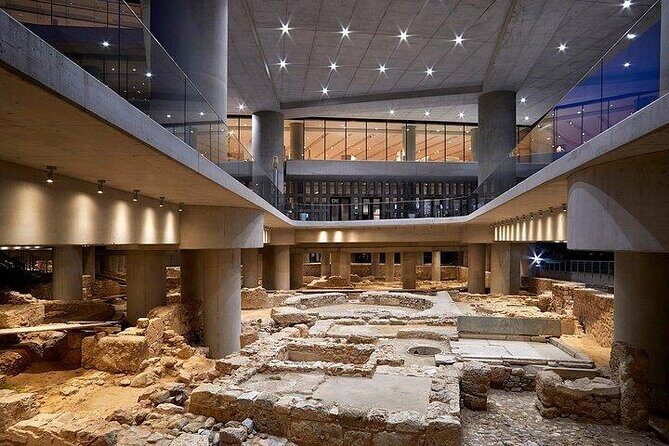
If you book the option that includes it, you head to the Acropolis Museum for about 1 hour 30 minutes, with museum admission included. This part can be a game-changer. On the hill, you mostly see architecture and the scale of the complex. In the museum, you get to see surviving pieces, and the story gains texture.
Reviews often say the museum is better than expected. That makes sense: it’s where you can connect the mythology and civic pride you just heard on the Acropolis to objects and displays that survived (or were recovered) from different eras. You also get a break from outdoor heat, wind, and dust—though it will still depend on your season and the day.
One consideration from feedback: a couple people felt time felt tight or the tour pace rushed them, particularly if they wanted more open time in the museum after the Acropolis. So if you’d rather wander and linger, choose a tour time wisely and keep your expectations aligned with a guided schedule.
If you’ve ever visited a big site and felt like you needed a second day to understand what you saw, the museum stop is the bridge. It’s not required to enjoy the Acropolis—but it often makes the visit feel complete.
Audio Headsets, Shade Stops, and How Guides Keep You Oriented
This tour is designed for clarity: a licensed guide plus audio devices so you don’t lose the commentary if you’re a few steps back. Many reviews highlight the headsets as a must-have for hearing details in a crowded setting. When they work well, they change the whole experience. You can focus on what’s in front of you instead of straining to catch phrases above noise.
You’ll also benefit from the way some guides manage comfort. Several reviews mention shaded breaks and ensuring the group rests during the climb. That’s not just nice—it’s practical. Fatigue makes it harder to absorb information, and the Acropolis is already a physical task.
That said, audio is not guaranteed to be perfect. One review mentioned microphone wind and poor clarity through the earphones, and another complained about static and the guide speaking in a way that was hard to follow. These sound like outliers, but they’re worth factoring in.
Bottom line: stay close to the guide at each stop, keep your headset in place, and don’t assume you’ll hear every word from anywhere. If you know you struggle with audio in noisy environments, consider bringing your own earbuds-style comfort and keep expectations flexible.
Who This Tour Fits Best (and Who Might Want Another Plan)
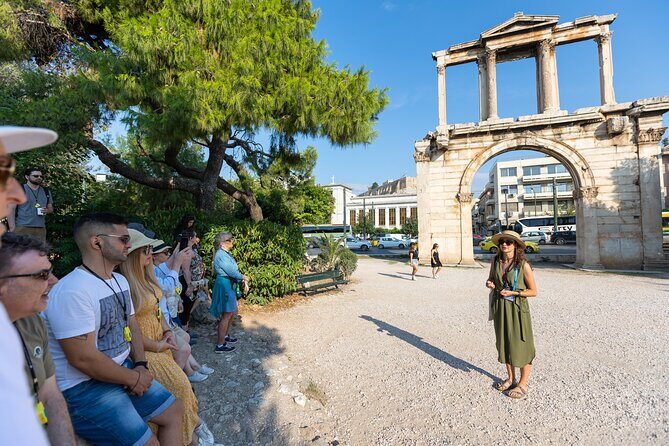
This tour fits you if:
- You want the Acropolis explained, not just photographed
- You like a guided route that helps you identify major monuments quickly
- You prefer a small group to reduce waiting and crowd chaos
- You’re open to a bit of walking and climbing in the Athens heat
It’s less ideal if:
- You have mobility impairments or difficulty with steep ascents (the tour notes it’s not recommended)
- You want long, unstructured free time to roam
- You get easily frustrated by a guided pace, especially if you’re chasing the quietest possible photo conditions
A nice sign for value: multiple reviews mention guides who stayed engaging even when the area around them was crowded. That’s a hard job, and the best guides turn the crowd into background noise.
If you’re traveling in a shoulder season like November, you may find the crowd levels and temperatures more manageable—which can make the early access plan feel even smarter.
Should You Book This Acropolis & Parthenon Tour?
I’d book it if you want an efficient, guided way to understand the Acropolis without losing time guessing what you’re looking at. The price is reasonable for a licensed guide, audio devices, early access, and small-group management—and adding the Acropolis Museum option is often what turns the visit from impressive to truly memorable.
Skip or reconsider if your priority is purely photographic solitude or you’re not comfortable with a demanding climb. In that case, you may prefer a different plan that gives you more independent time and flexibility.
My recommendation: choose the museum option if you can. The hill gives you scale; the museum gives you meaning. For many first-time visitors, that combination is exactly what makes Athens feel like more than postcards.
FAQ
How long is the Acropolis & Parthenon walking tour?
The tour runs about 4 hours total. The Acropolis portion is about 1 hour 50 minutes, and the optional Acropolis Museum visit is about 1 hour 30 minutes.
Is the Acropolis entry ticket included?
Entrance to the Acropolis is included only if you select the option that includes tickets. If you select the option without tickets, you’ll need to buy the Acropolis ticket before the tour’s departure time slot.
Does the tour include the Acropolis Museum?
It includes the Acropolis Museum only if you book the option that adds it. Museum admission is included in that case.
Where do I meet the guide?
You meet at Athanasiou Diakou 26, Athina 117 43, Greece (Key Tours office area). The tour ends at the Acropolis of Athens.
What group size should I expect?
This is a small-group tour with a maximum of 20 travelers.
Is this tour offered in English?
Yes. The tour is offered in English.
Do I need to buy a ticket for the museum if I didn’t choose the museum option?
If you didn’t choose the museum option, the museum ticket would not be included. If you did choose the museum option, the museum admission is included.
Is the tour physically demanding?
Yes. It’s described as moderate difficulty, and the climb to the Acropolis can be very demanding, especially in summer. It’s not recommended for travelers with mobility impairments.
What kind of ticket do I receive?
You receive a mobile ticket.
What should I bring for comfort during the climb?
Wear sturdy walking shoes and come prepared for heat. Reviews specifically suggest bringing water and a hat/sunscreen, and some recommend rain gear depending on conditions.